A VC Proposal Turned Down
By Geoff Simpson
Gibraltar to Malta Convoy
Operation Substance took place in July 1941. It involved two convoys. GM1 sailing from Gibraltar to Malta carrying supplies, equipment and fresh troops to the much threatened island and MG1, with empty merchant ships, making the return journey.
GM1 attracted three days of heavy Italian air attacks from July 23 to July 25. On the third day there were contrasting fates for two Royal Navy pilots, both veterans of the Battle of Britain and both shot down. One was recommended for a posthumous VC which was refused and the other earned the DSO and lived to be 99.
With GM1 south west of Sardinia, a force of SM.79 torpedo bombers was detected approaching.
Aircraft launched from Ark Royal
In response Lieutenant Richard Cockburn, airborne from HMS Ark Royal, lead Fairey Fulmars from Nos 806, 807 and 808 Naval Air Squadrons.
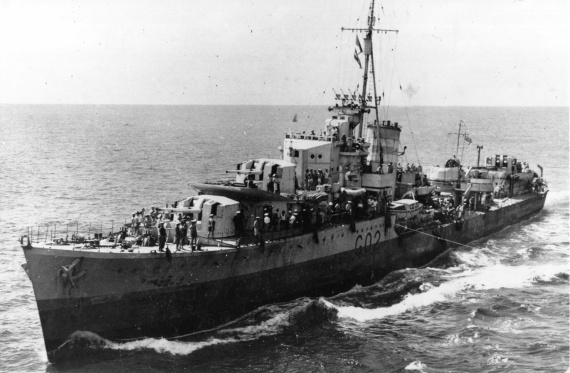
The enemy aircraft were driven off with two of them destroyed and one damaged but three Fulmars went into the sea. Two of the crews were lost, Sub-Lieutenant K G Grant, flying with Telegraphist Air Gunner H McLeod and Lieutenant A T J Kindersley with Acting Petty Officer F A Barnes. Cockburn and his crewman, Petty Officer Cuttriss, were picked up by the destroyer, HMAS Nestor.
Recommendation for a VC
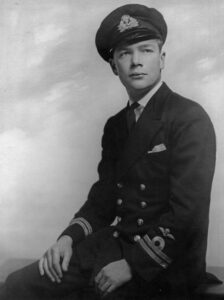
A recommendation for awards was made, including a posthumous VC for Kindersley and a DSO for Cockburn. When Cockburn’s DSO was gazetted the citation stated that:-
“In company with another pilot, the late Lieutenant A T J Kindersley RN, this officer, whilst patrolling over the Fleet on 25th July 1941, intercepted a formation of twelve S79 [sic] aircraft. The two Fulmars attacked immediately and forced the formation to turn away. They shot down two of the enemy for certain and probably a third, and severely damaged another which was later shot down by another Fulmar. They made attack after attack until they expended their ammunition, but before this occurred they forced many of the enemy to jettison their bombs and finally broke up the attack.
“Both Fulmars were finally shot down, Lieutenant Cockburn being picked up by one of our destroyers. As Air Gunner in Lieutenant Cockburn’s aircraft, P.O. Airman Cuttriss used his Thompson sub-machine gun to good effect, damaging one of the enemy bombers as his aircraft passed under it at 50 yards range. He showed consummate coolness throughout the action and by his observations helped his pilot achieve the success that we won.”
Cuttriss received the DSM.
The Second Sea Lord has his say
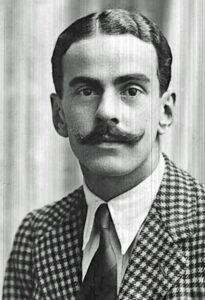
The award of the VC for Kindersley fell foul of the Second Sea Lord and Chief of Naval Personnel, Admiral Sir William Whitworth. He wrote:-
“I am not sure that there is a strong enough case for giving Kindersley a posthumous VC.
“Kindersley and Cockburn in company achieved the same success in the face of heavy odds: Cockburn survives and is recommended for a DSO, Kindersley is killed and it is proposed to award a posthumous V.C. There is no saying that Cockburn was not the more valiant of the two. It is also observed that the FOH [Flag Officer Home Fleet] puts Lieutenant Lewin, another Ark Royal pilot, ahead of Kindersley in his order of merit.
“I feel, therefore, that a Mention for Kindersley would be more equitable unless it is particularly desired to give the Fleet Air Arm a VC.”
The "turn" of a branch of the services
Had Kindersley’s award been made after those comments, it would have been far from the only 1939-1945 example of a VC going to an individual because it was the “turn” of his branch of the services.
Matters rested with the Second Sea Lord’s verdict. Both Kindersley and Barnes were Mentioned in Despatches. During the Second Word War King’s Regulations only permitted posthumous awards of the VC, GC (instituted in September 1940) or a “Mention”.
One of the Few?
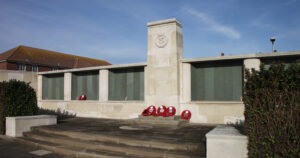
Alistair Kindersley’s body was never found. He is remembered on the Fleet Air Arm Memorial, Lee-on-Solent and on a plaque in St Michael the Archangel church at Shalfleet on the Isle of Wight, close to where the Kindersley family lived.
Richard Cockburn stayed in the Navy until the beginning of 1946. He never flew again after that and, according to his widow Mary, did not need to work. He was entitled to wear the 1939-1945 Star with Battle of Britain Clasp but refused to regard himself as one of the Few, having qualified for the award with No 808 Squadron, flying Fulmars in Scotland, well away from the Battle’s frontline.
Roll out the Red Carpet?
Shortly before he died, aged 99 on 8 December 2013, he did consent to his family taking him on the short journey from his home to the National Memorial to the Few at Capel-le-Ferne between Folkestone and Dover. While there he saw his name amongst the list of the Few on the Christopher Foxley-Norris Memorial Wall. He did not identify himself to those on duty, so there was no hint of a red carpet.
Lieutenant Commander Cockburn was part of a distinguished family. One cousin was Lieutenant Commander (later Captain, DSC) John Cockburn who commanded No 804 Squadron in the Battle of Britain and another was Flight Lieutenant, later Wing Commander, Roderick “Babe” Learoyd, VC, whose decoration came for his heroism during the Hampden attack on the Dortmund-Ems Canal on the night of August 12/13 1940.
Geoff Simpson is consulting editor to the Database of the Few.

Click to see full BMMHS event listing pages.
Contact us at [email protected]
Copyright © 2026 bmmhs.org – All Rights Reserved
Images © IWM & NAM