Air America

The Strange Story of a Phantom Airline

by Nick Brazil

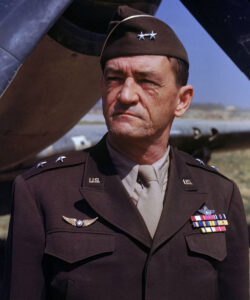
Clare Chenault an American fighter ace

At the end of the Second World War, thousands of serving pilots found themselves redundant. With no war to fight, they no longer served a purpose and the future must have seemed bleak. However, a handful of these men found an opportunity in this dire situation. One of these was Clare Chennault an American fighter ace.

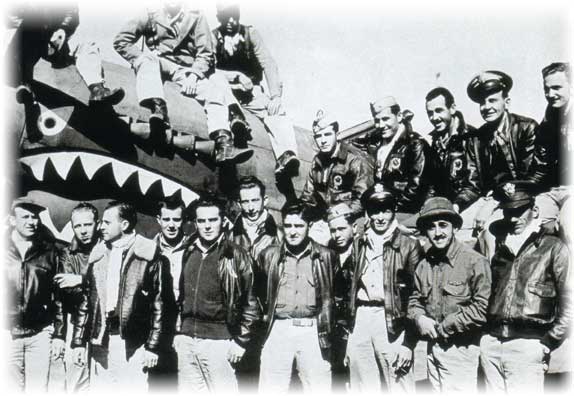
In 1946, he saw an opening for an air transport company in China. As Commander of the Flying Tigers fighter squadron, he knew this territory well. During the Second World War, it was their job to defend China against the invading Japanese forces. Painted in the colours of The Republic of China Airforce with their distinctive Tiger Tooth motif, Chennault’s Curtiss P-40B Warhawk fighters became a familiar and feared sight in the skies above China.
Air America
Lieutenant General Claire Lee Chennault (September 6, 1893 – July 27, 1958, shown as Major General in this photo), was an American military aviator. A contentious officer, he was a fierce advocate of "pursuit" or fighter-interceptor aircraft during the 1930s when the U.S. Army Air Corps was focused primarily on high-altitude bombardment. Source Wiki
Air America
Flying Tigers personnel 1942. Source Wiki

The Flying Tigers

That vast country now found itself at war again when Generalissimo Chiang Kai-Shek’s Koumintang Army fought Mao Tsedung’s communist forces in a civil war for the soul of China. Chennault was not only fervently anti-communist but also a great supporter of Chiang. With these main motivations, he established his airline with a diplomat friend called Whiting Willauer. Its primary task was to fly in supplies to Chiang’s troops in war ravaged China. Initially it had the rather unwieldy name The Chinese National Relief and Rehabilitation Administration Air Transport.  This was soon shortened to Civil Air Transport. Chennault recruited many of its pilots from three ranks of The Flying Tigers.

A vital aerial supply line for Chiang Kai-Shek

By 1947, CAT had five Skytrain transport planes and 150 employees. Its work was a mixture of flying UN aid into China and straightforward passenger and commercial transport flights. Always tight on resources, its schedule was demanding and often dangerous. Many of the airfields in China had runways that were heavily pockmarked with shell and bomb craters. This made landing very tricky.
 

Unfortunately, the war did not go Chiang Kai-Shek’s way and in 1950, Mao’s victorious People’s Liberation Arm entered Beijing. Meanwhile, the Nationalists sought sanctuary on the island of Formosa (Taiwan). Following this defeat, money for Chennault’s air lift dried up forcing him to sell his airline. In that same year, he found a ready buyer in America’s intelligence agency, the CIA. How the Agency found out Chennaut’s air service was up for grabs remains one of the mysteries of this story. Suffice to say that the CIA was in need of just such an air service for their covert missions. They bought CAT for $500,000. Both its founders, Claire Chennault and Whiting Willauer were left in place to run airline for its new owners.

On 25th June 1950, Communist North Korea invaded its southern neighbour. The Army of the Republic of Korea and a multinational UN force confronted them. CAT approached the American commander of this army General Douglas MacArthur. They suggested he could use CAT aircraft to ferry supplies to his troops and rescue UN airmen who had been shot down behind enemy lines. Initially, MacArthur rebuffed their approach. However, as the war progressed, he had a change of heart and signed up the airline. During three years of fighting, CAT performed a large number of missions in this, the first proxy conflict of The Cold War.
Ferrying French troops

Air America Dien Bien Phu
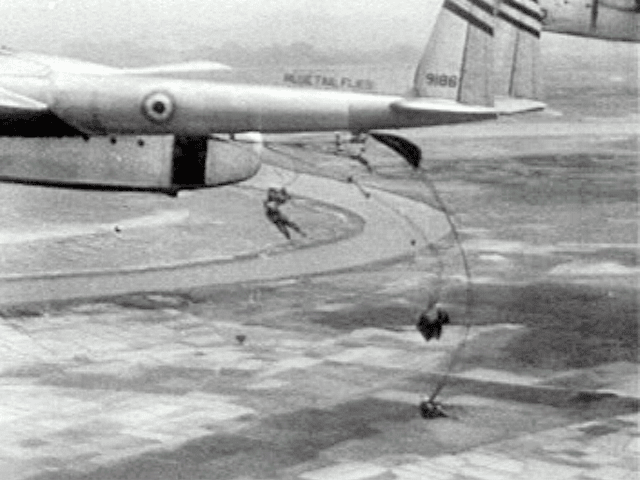
CAT pilots flying C-119 during the siege of Dien Bien Phu in May 1954. Source Wiki

It was a time when the flames of war were spreading across South East Asia.  Since 1947, the French had been fighting the Communist insurgents known as The Viet Minh to wrest back control of their colony of Indo China. CAT aircraft were on hand in this war to ferry French troops and supplies across the battlefront.

On 23rd August 1959, the first two CAT aircraft touched down in the Laotian capital of Vientiane. This marked the beginning of a twenty year long involvement by the CIA in the wars of Indo China. This was no doubt prompted by the invasion of Communist Pathet Lao forces supported by The Soviet Union and North Vietnam.

North Vietnam invades Laos

At that time the landlocked monarchy of Laos was ruled over by King Savang Vatthana who relied heavily on American aid. However, the country was riven by competing political factions which made it inherently unstable. In April 1953, North Vietnam and 2000 Pathet Lao guerillas invaded Laos. This army was commanded by the legendary Vietnamese Gerneral Võ Nguyên Giáp. Following this intervention, Laos was plunged into a proxy war between the US and The Soviet Union.

In 1959, Air America as it was now called, grew rapidly greatly expanding its fleet of planes and helicopters. These aircraft ranged from the short take off Pilatus PC – 6 Porter to large transports such as the Fairchild C123 Provider. Its fleet of Helicopters was equally diverse including Bell Hueys and Chinhooks. Its slogan was: “Anything, Anywhere, Anytime, Professionally”.

Whilst using Air America extensively for its covert operations, the CIA went to great lengths to disguise its ownership of the airline. To all intents and purposes, Air America maintained the pretense that it was a strictly civil aviation carrier. To this end it provided passenger services between various airport hubs in South East Asia. In December 1958 the CIA took this fiction one step higher when it forked out $4.5 million for a Convair 880, one of the new generation of jet airliners. This plane launched a luxury service dubbed The Mandarin Jet with the tag line: “Racing With The Sun.”. The inauguration ceremony was hosted by General Chang Kai-Shek’s glamorous wife Soong Mei-ling.
Air America
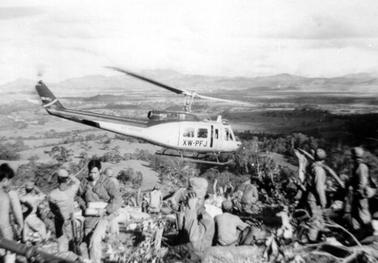
Air America Bell 205 helicopter leaving a Hmong fire support base in the Laotian Plain of Jars, c. 1969. Source Wiki
Air America
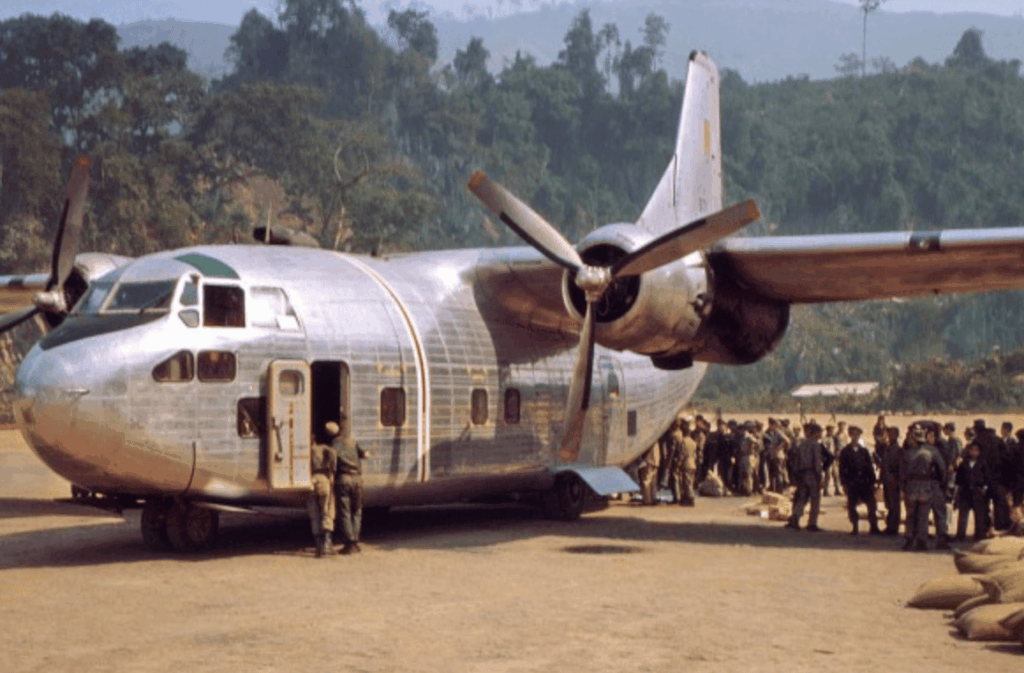
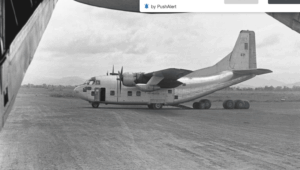
An Air America C-123 delivering supplies and picking up Laotian troops at Long-Tieng. Source vintageaviationnews.com

The PLA invades Tibet

In 1950, The Chinese communist People’s Liberation Army invaded neighbouring Tibet. Once there Mao exerted a brutal atheistic rule over that peaceful country. These Communist excesses sparked an indigenous uprising that took years to crush. During this time, the CIA worked with CAT (Air America) to drop aerial supplies to the Tibetan Khampa guerillas fighting the communists. Because of the hostile terrain and high altitudes of the Himalayas this was a challenging task for Air America which limited the payload of their supplies. Nevertheless, they continued to air drop weapons and food into Tibet until 1965.

In 1959 the CIA further assisted the Tibetans by guiding The Dalai Lama, their spiritual leader to safety in India. Whilst the Indian leader Nehru was happy to provide sanctuary to The Dalai Lama, this upset the Chinese Communists who regarded the Tibetan leader as nothing more than a bandit chief. Not only did this strain diplomatic relations between the two countries, it was one of the root causes of the border war between India and China in 1962.

The Bay of Pigs disaster

Whilst Air America’s operations centred on South East Asia, it did venture further afield on one occasion. In 1960, the CIA used the airline in Operation Pluto, otherwise known as The Bay of Pigs Disaster. The end result was not a happy one. Air America staff were given the job of training a group of Cuban exiles to invade their homeland and overthrow Fidel Castro.

Using ageing World War Two fighter bombers this emigre army would be parachuted into Cuba. However, the whole operation was a catalogue of disasters from dropping supplies destined for anti-Castro rebels into the hands of government troops to some of the planes  accidentally landing in neutral countries such as Mexico, Jamaica and The Cayman Islands. In Mexico’s case, one of the planes was impounded. Eventually only 69,000 lbs out of 150,000 supplies actually made it to the rebels on the ground.

In addition to this, a combination of poor intelligence and lack of discipline amongst the Cuban rebel army helped seal the fate of this unhappy episode of US-Cuban relations. The actual Cuban emigre invasion of The Bay of Pigs was defeated by Cuban forces led by Castro himself within three days.


The Vietnam War

From 1964, as the US involvement in the Vietnam War grew rapidly, so did Air America’s activities  with CIA activities. Whether it was inserting Agency operatives into enemy territory or evacuating injured troops, Air America became an integral part of the Agency’s operations. As a result, its number of aircraft from single engined “jungle hoppers” such as the Pilatus Porter to large transport jets grew to a fleet of 125 fixed wing planes and many helicopters.

Throughout the 1960s, Air America continued to be heavily involved with Laotian Government forces and its air force. This ranged from training their men to flying planes on active missions. This was covered by an Operation known as Water Pump when Air America pilots often flew into action on behalf of The Royal Laotian Air Force. Because their ageing fighters were returning with bullet and tracer holes in their fuselages, the US  Ambassador to Laos called a halt to such missions. However, he relented when it was pointed out this would hand the country to the communist forces on a plate. In the intervening years, memos between Henry Kissinger and President Nixon have come to light. They confirm that right up to the President, Air America’s role in CIA operations was considered crucial.
 
Air America
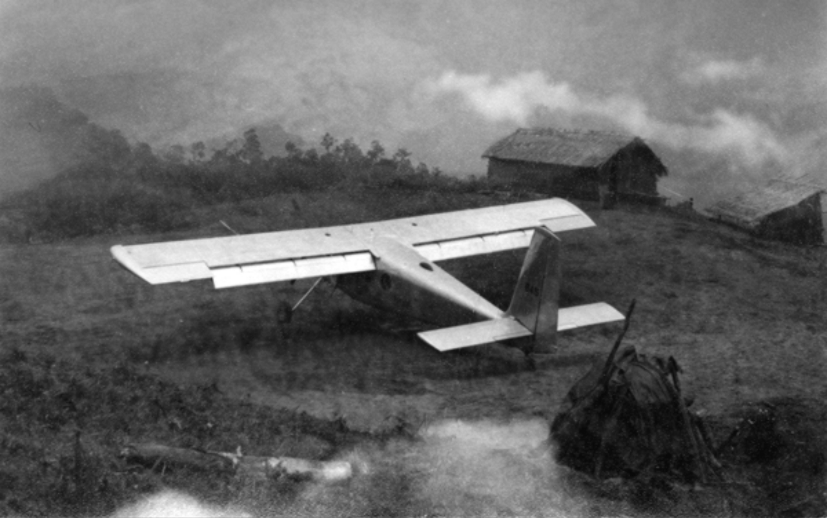
Air America U-10D Helio Courier aircraft in Laos on a covert mountaintop landing strip (LS) "Lima site". Source Wiki
Air America
Air America, an airline secretly owned by the CIA, was a vital component in the agency's operations in Laos. Source vintage aviation.com

The opium trade

However, its involvement with The CIA and the Government side in the Laotian War was not without controversy. To match the Communist Pathet Lao forces, the Kennedy Administration backed the establishment of a 20,000 strong guerilla army drawn from the Homong tribe. They were commanded by a charismatic Laotian General known as Vang Pao. Whilst part of this “Secret Army’s” funding came from the CIA, its core funding came from the illegal opium trade.

This was controlled by a mafia of French military veterans who had stayed on after the French withdrawal from Indo China. It was these veterans with their light aircraft that General Vang Pao relied on to export his opium to the wider world market. With typical gallic humour they called their operation Air Opium.  However, the ebb and flow of the Laotian War disrupted this supply chain. As a result, Air America took their place. As well as keeping General Vang’s army supplied with food and ammunition, the CIA set up remote mountain airfields along the Laotian border with Vietnam. The most famous of these was Lima Site 85 situated atop a rugged mountain in the badlands of Laos’ border country.

Using STOL aircraft such as the Pilatus Porter, Air America used these mountaintop bases to supply the Homong guerilla army. As the war turned in favour of the Pathet Lao forces, all these bases were taken by the Communist insurgents. The most grievous loss to the Hmong Army was the capture of the strategically and historically important site of The Plain of Jars. This robbed the anti-communists of their only viable airfield from which to fly out their illegally harvested opium.
 

Who knew exactly what and how much about the drugs carried on Air America planes remains a matter of debate. However, some are in no doubt about this. Alfred W. McCoy a professor of history who has specialised in the story of The Secret War in Laos and the drugs trade had this to say about it:

Air America began flying opium from mountain villages north and east of the Plain of Jars to Gen. Vang Paos headquarters at Long Tieng…The U.S. Embassy in Vientiane adopted an attitude of benign neglect toward the opium traffic.”

The CIA closes the airline

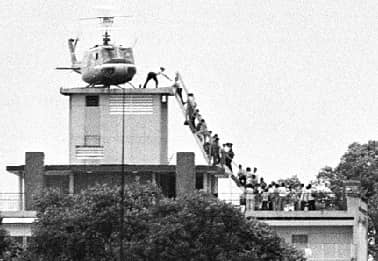
The long and colourful story of Air America finally came to an end when the Vietnam War finished in 1974. The CIA closed the airline down and liquidated its assets as quickly as possible. It is appropriate that one of Air America’s last missions was captured on film at this time. It is the photograph of one of its Huey helicopters airlifting staff off the roof of the US Embassy during the fall of Saigon.  It is an image that went around the world and has been republished countless times since.

Long after its demise, echoes of Air America’s story still reverberate through history. Many former employees including pilots were never paid any pensions or severance pay when the airline was so precipitately closed down. Amongst many, there is the feeling the CIA sold them short. The remains of Air America crew killed in air crashes are also still being discovered. Most recently, three crash victims were located in Laos in 2019.

It seems that once Air America ceased to be useful to the CIA, the Agency simply wanted to forget all about it and, if possible bury it. That was why for years they refused to admit any connection with this airline that never was.
Air America Saigon
A CIA officer helps evacuees up a ladder onto an Air America Bell 204/205 helicopter at 22 Gia Long Street on 29 April 1975. Source Wiki / Hubert van Es
Air America

©  Nick Brazil 2025

Photos: Wiki

About The Author

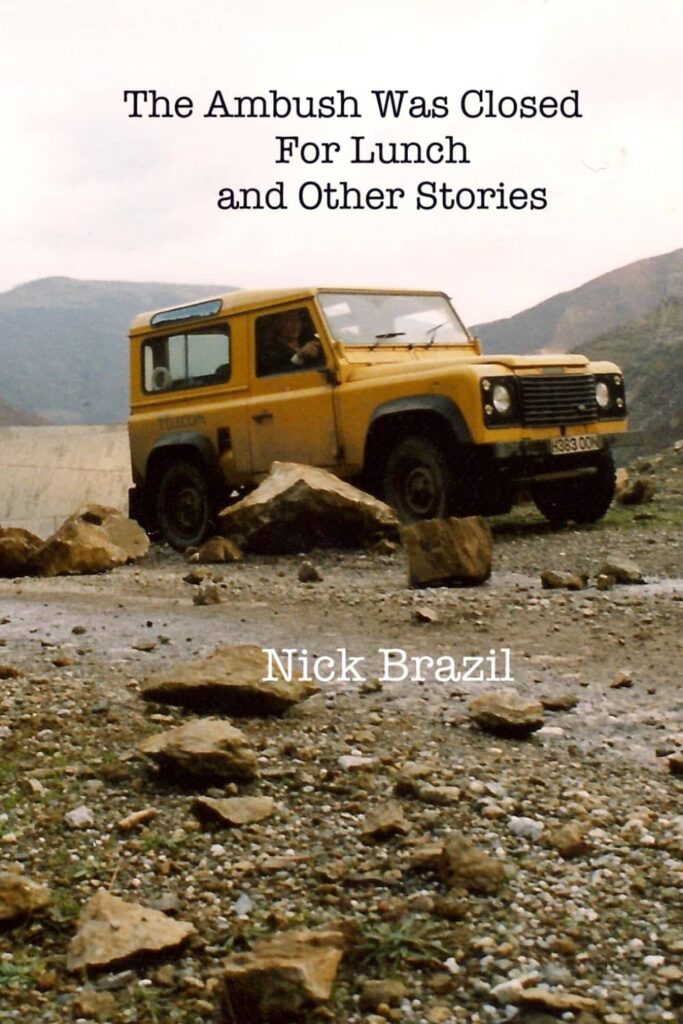
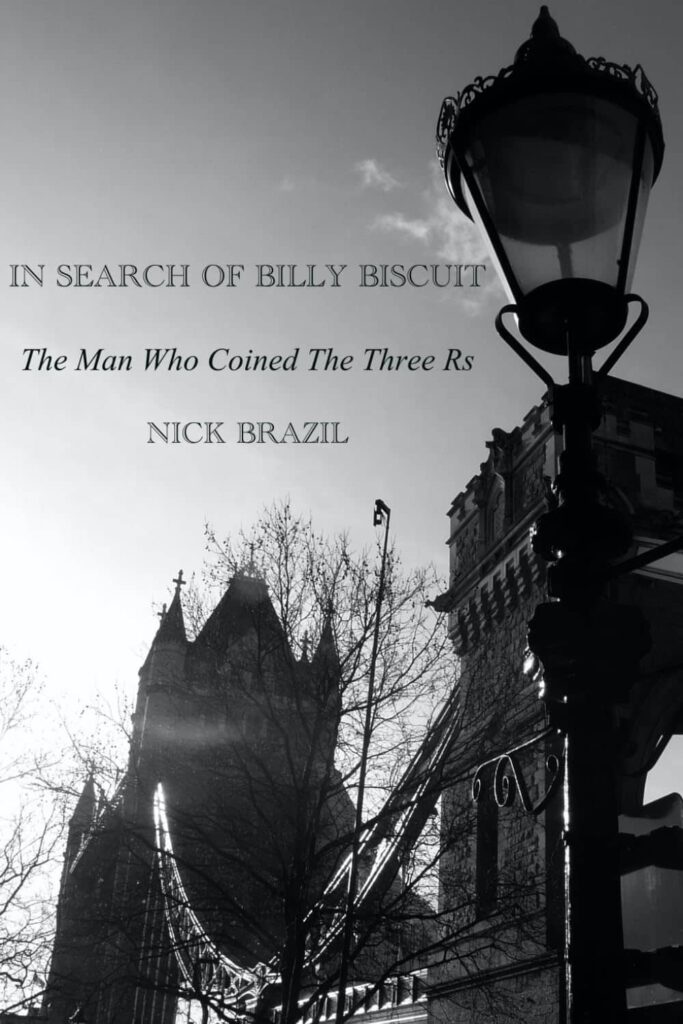
Nick Brazil is an author, film maker and photographer. He has made eight documentaries and numerous shorter videos for the internet. He has also published four books including Cheating Death – The Story of a PoW and Billy Biscuit – The Colourful Life & Times of Sir William Curtis which is the story of the man who coined the phrase “The Three Rs”and his latest book The Ambush Was Closed for Lunch and Other Stories.
Nick Brazil self portrait
Nick Brazil

Nick’s books are Available on Amazon

Click above to purchase

Click to see full BMMHS event listing pages.

Contact us at [email protected]

Copyright © 2026 bmmhs.org – All Rights Reserved

Images © Nick Brazil