Armies That Vanished

by Nick Brazil

A mighty army disappears in the desert

In 524 BC, the Persian king Cambyses II despatched a mighty army into the Western Desert. It was said to number 50,000 soldiers and its target was to subdue an Egyptian mystic called The Oracle of Amun who was based at the Siwa Oasis 350 miles from Cairo. Presumably, the Egyptian soothsayer was proving to be a pain in the neck for the Persians who believed that squashing a local troublemaker would be no big deal.

In the event, they were very wrong. According to the Roman historian Herodotus, the Persians were about halfway across the Egyptian Desert when they were overwhelmed by a massive sandstorm. After the storm had blown itself out, no trace of that mighty army could be found. Those fifty thousand warriors had simply vanished. Since that time there have been repeated searches for the Lost Persian Army of Cambyses all to no avail.

Whilst this strange disappearance of such a large fighting force is probably the most famous in history, it is thought by many historians and Egyptologists to be simply a legend. That has not prevented many modern-day explorers to search out the army’s remains. This has included Major General Orde Wingate who mounted an expedition in 1933. Since then, there have been several well-equipped modern expeditions throughout the 1980s and 2000s that have met with an equal lack of success. Precious little has been found of this lost army except tor some tumuli containing bone and pottery fragments
New Article - Armies That Vanished
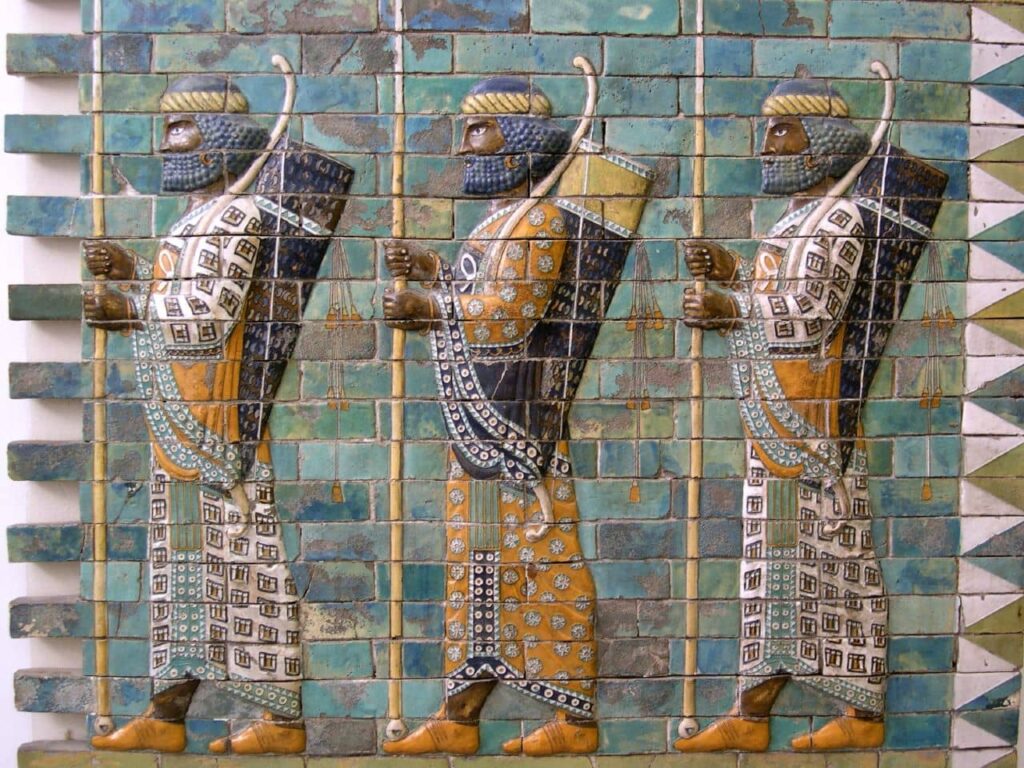
Engraved depictions of Persian soldiers from the Palace of Darius in Susa, now at the Berlin Museum. Source Wiki

A Roman Legion vanishes

New Article - Armies That Vanished
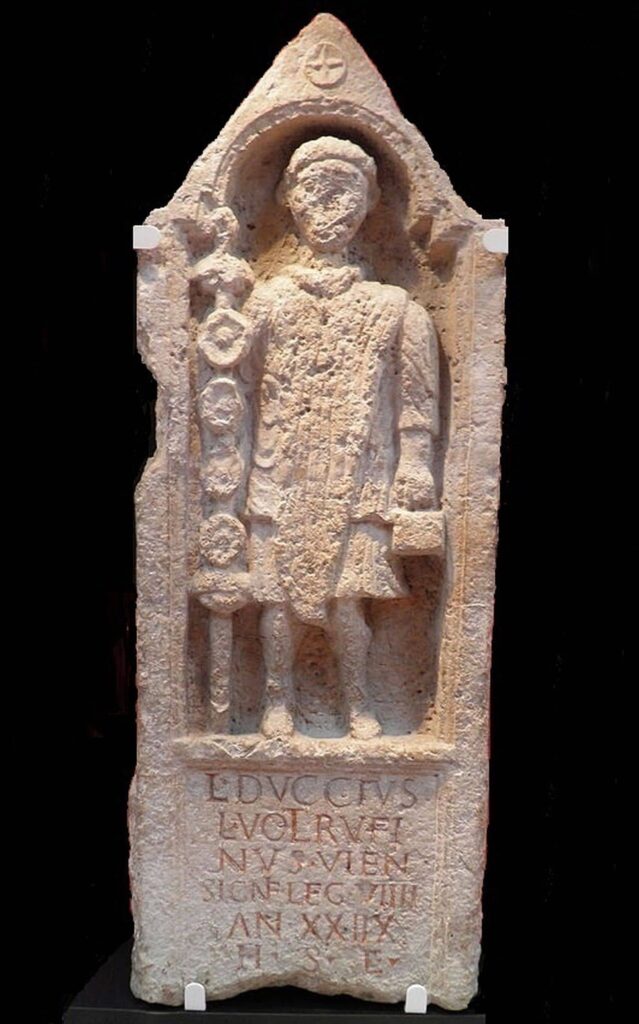
Memorial to Lucius Duccius Rufinus, a standard bearer of the Ninth Legion (LEG VIIII), in the Yorkshire Museum, York. Source Wiki
New Article - Armies That Vanished
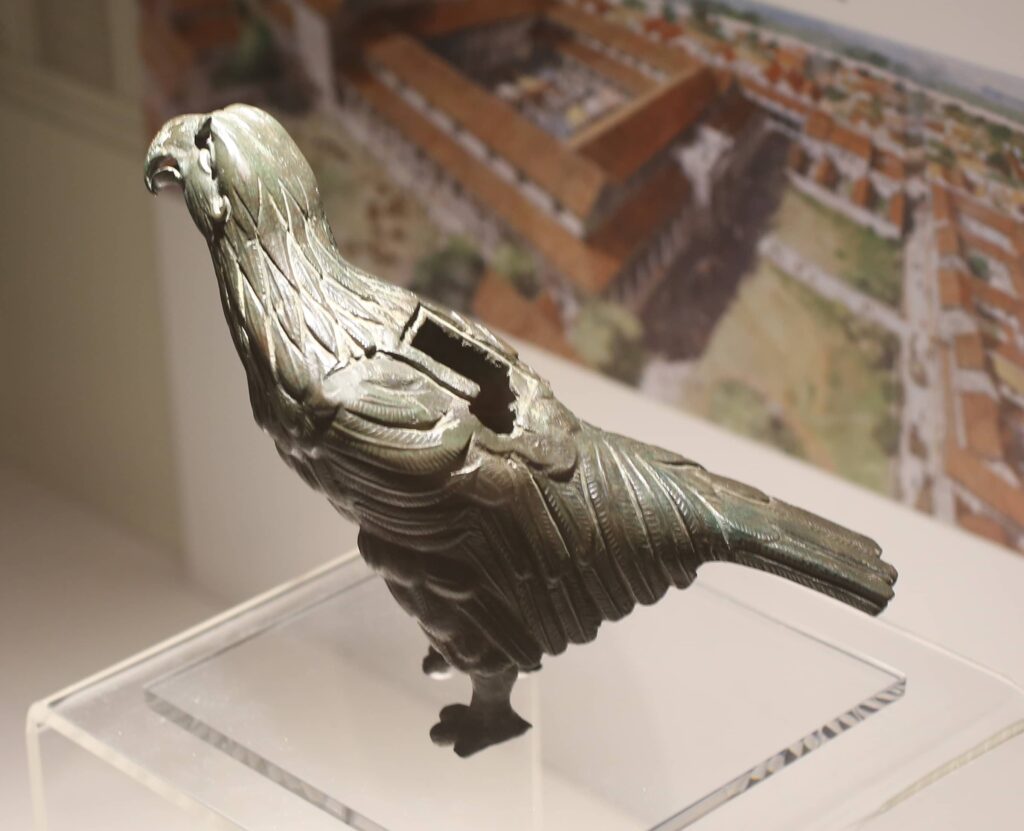
The Silchester eagle, the Roman eagle that inspired Sutcliff's novel. According to Reading Museum, it "is not a legionary eagle but has been immortalized as such by Rosemary Sutcliff. Source Wiki

Whether it was real or apocryphal, Cambyses Army was not the only fighting force to disappear. The Roman Legion known as the IXth Hispana was also thought to have vanished under disputed circumstances. Once again, it is thought a large, well equipped fighting force went up against an army of local tribesmen only to vanish completely.

The most popular theory the IXth’s fate was that it went north of Hadrian’s Wall to subdue the Picts in 108 AD. They were never seen again. That the whole fighting force was ambushed and slaughtered is perfectly possible. Over the years this theory has been given life in many books an films. The most famous is Rosemary Sutcliffe’s excellent adventure story The Eagle of The Ninth first published in the 1950s. Her story revolves around the IXth’s eagle being taken by a local tribe that had massacred the Romans. However, hers is a work of fiction and many archaeologists point to the evidence that the IXth Hispana were around in places like Nijmegen and Germany long after their disappearance north of Hadrian’s Wall sometime around early in the first century AD.

Whilst the disappearance of the Persian and Roman armies may well be just legends, there is an instance of a more modern army vanishing. Its destruction left the most powerful nation of the time in total shock.

The First Anglo Afghan War

In 1838, Britain initiated The First Anglo Afghan War against Dost Mohammed Khan who was ruling that mountainous land from Kabul. Their motive was to reinstall the previous ruler Shah Shujah Durrani who had been deposed by Khan. Initially all went well with a combined force of British Army and East India Company troops invading Afghanistan and capturing Kandahar, the impregnable fort of Ghazni and finally Kabul. At that time, the British garrison in Kabul had about 20,000 troops. However, this number was greatly reduced when a significant part of them was withdrawn to the fort at Jalalabad ninety miles away. This left 4,500 troops in Kabul of whom slightly less than 700 men were actually British. The other 3800 soldiers were all Indians.

Unfortunately, after that matters seemed to go downhill for the British. Durrani installed himself in the mighty Bala Hissar Fort in Kabul. From there he insisted the British move out of Kabul proper and set up their military base one and a half miles outside the city itself. It was strategically a poor location which proved to be difficult to defend when the major Afghan uprising occurred in the winter of 1842. The question is why The British command allowed themselves to be pushed into this position. It seems that when it came to military strategy and geopolitics, the latter won the day with the British diplomats bowing to the wishes of the re-installed Afghan ruler.

British monies dry up...so do tribal loyalties

As the war progressed, the British grip on Kabul was weakened by a succession of harsh winters and Afghan tribal uprisings. Their lords and masters in Calcutta did not help much either. The military leadership resented the cost of the Kabul Garrison. To reduce its cost, they cut back on the bribes being paid to keep the many Afghan tribes on the British side. When the British money dried up so did the tribal loyalties.

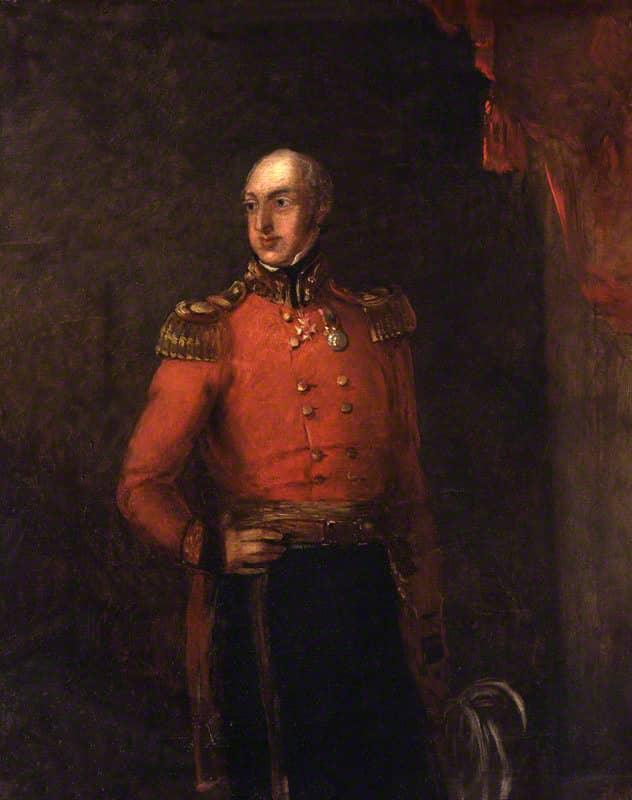
In 1840, when it seemed matters could not get any worse, the British authorities ensured that they would. In December of that year, command of the Kabul Garrison was handed to Major-General William Elphinstone.

Up to that point, his military career had not been a bad one, so his appointment must have seemed a fairly safe bet. Not only had seen service throughout the Napoleonic Wars, where he had led 33rd Regiment of Foot in The Battle of Waterloo. That earned him a number of decorations including Companion of the Bath. In 1825 he was effectively retired as a Colonel on half pay. In 1837, to alleviate this situation, Elipinstone lobbied his many influential friends for a full-time job as military officer.
New Article - Armies That Vanished
Portrait of Major-General William George Keith Elphinstone, CB by William Salter. Source Wiki

Embarking on a trek to damnation

In 1840 these efforts bore fruit when he was put in command of the Kabul Garrison. However, desperate though he was for a military command, Elphinstone knew he was not up to the Kabul Garrison job. The problem was that by this time he was a very sickly man on the verge of his sixtieth birthday. He also had little or no understanding of his new command, its troops or the violent tribal environment of Afghanistan. Since the Battle of Waterloo, twenty-five years previously, Elphinstone had seen precious little active military experience. This was probably why his many flaws did not come to light until the fateful events in Afghanistan in 1840.

The truth was that he was a weak and incompetent officer who was incapable of leading an army in the field. When faced with a serious tribal uprising in Kabul, he buckled. In early January 1842, he did a deal with Wazir Akbar Khan, Dost Mohammed Khan’s son who had been leading the Afghans against the British. It was agreed that the British would retreat from Kabul to Jalalabad with an escort, supplies of food for the journey and no molestation by Akbar Khan’s forces.

At dawn on 6th January,1842, Elphinstone led the British Army out of Kabul towards Jalalabad 90 treacherous miles away. Elphinstone thought he had secured safe passage for his Army to make the journey. Instead, they were embarking on a trek to damnation. No safety escort or food supplies ever appeared.

The remnants of the British Army makes a last stand

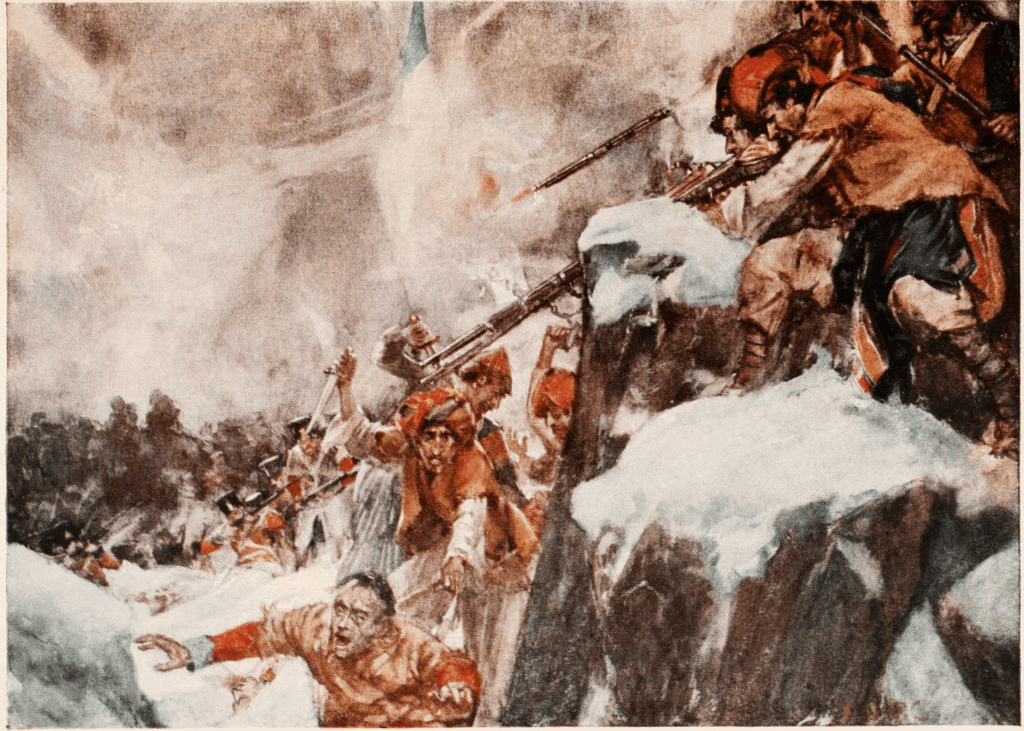
As the column made snail like progress through the bitter winter weather, they were constantly harassed and attacked by Akbar Khan’s warriors. In the following seven days, the British numbers were whittled down by these attacks. As well as this, their troops and thousands of camp followers fell victim to illness, exposure, massacre and capture.

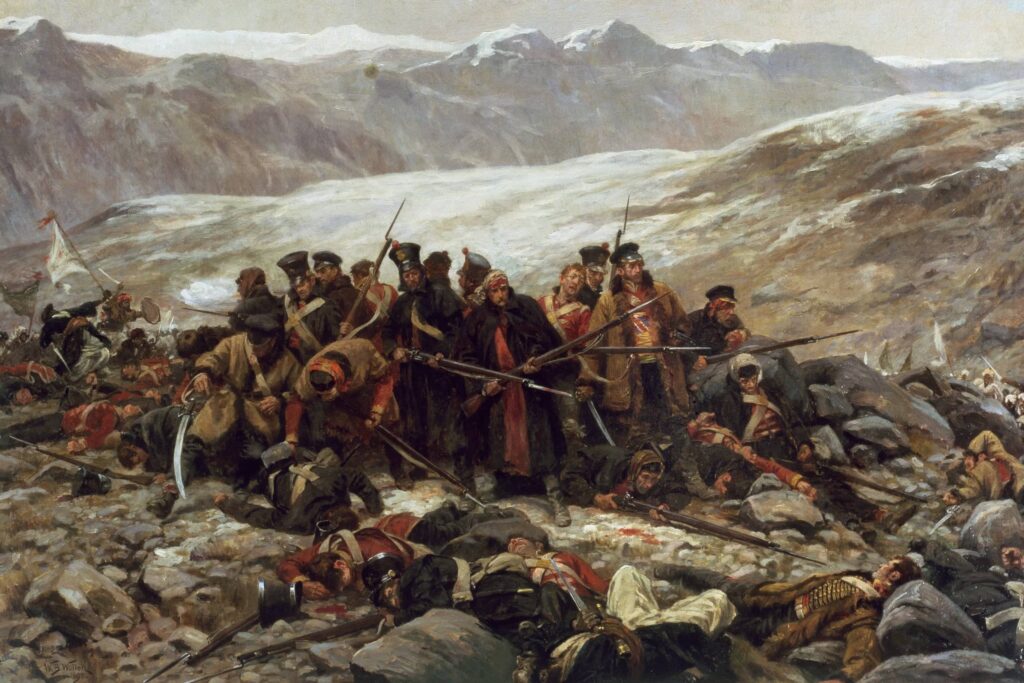
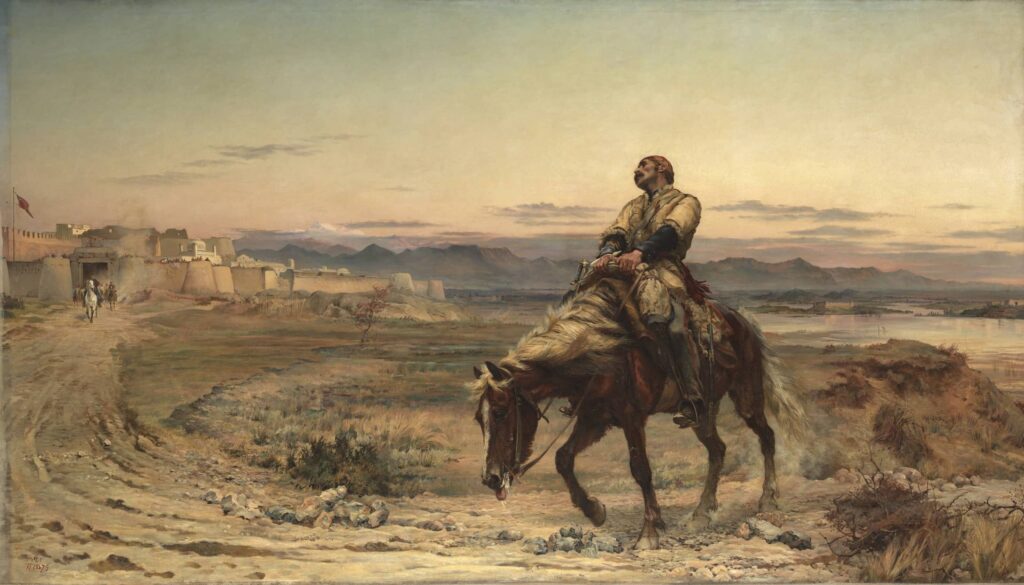
The remnants of the British Army made their last stand on 11th January in a valley called Jagadalak. Elphinstone was also captured with his second in command, when he went to negotiate further with Akbar Khan. Already a sick man, he would remain in captivity before dying a few months later.   Eventually, on 13th January lookouts at the British fort of Jalalabad spotted a ragged figure draped across an exhausted pony. This turned out to be Assistant Surgeon William Brydon. When asked where the rest of the British Force was, Brydon answered: “I am the Army.”

In the following days, a few surviving sepoys arrived at Jalalabad. But virtually the whole British Army had been eradicated by a tribal force thought to be far inferior to The British.

In those seven dreadful days. the 4,500 strong The British garrison from Kabul and 14000 camp followers had vanished in the mountain fastness of Afghanistan. It was a defeat that sent shockwaves through the British Establishment. The destruction of what many believed was the best army in the world by “ragged tribesmen” was simply beyond comprehension. It is also thought by some historians that the massacre of so many Indian troops of the East India Company’s Bengal Army during the retreat had long term consequences. Before the Retreat from Kabul, the average trooper felt he was part an invincible military machine. All that was shattered by Wazir Akbar Khan’s Army wiping out the British and would “grease the wheels” of The Indian Mutiny in 1857.

New Article - Armies That Vanished
Afghan forces attacking retreating British-Indian troops. Victor Surridge, Illustrations by A.D. Macromick - Romance of Empire India. Source Wiki
New Article - Armies That Vanished
The last stand of the 44th Foot, during the Massacre of Elphinstone's Army. The Last Stand, by William Barnes Wollen (1898). Source Wiki
New Article - Armies That Vanished
Remnants of an Army by Elizabeth Butler depicting the arrival of assistant surgeon, William Brydon, at Jalalabad on 13 January 1842. Source Wiki

The Army of Retribution

In view of his narrow escape from death at the hands of the Afghans during the retreat from Kabul, it seems remarkable that William Brydon returned to active duty. After recovering from his Afghan ordeal, he joined “The Army of Retribution” that returned for destroy much of Kabul and its bazaar. During that campaign, Brydon narrowly escaped being killed by a stray shell. This Army also managed to release 115 British soldiers and civilians who had been captured by the Afghans during the Retreat. In 1852, Brydon saw action again in The Second Anglo-Burmese War, another of Britain’s obscure conflicts. Finally, he was besieged yet again. This time he and his wife and children became entrapped in The Lucknow Residence during an uprising of sepoys in 1857. Once again, he narrowly escaped death when he was seriously injured in the thigh. Brydon was finally laid to rest in a churchyard near the village of Nigg in the Highlands of Scotland in 1873.

As for Elphinstone, his body was returned to the British.

©  Nick Brazil 2025

Photos: Wiki

About The Author

Nick Brazil is an author, film maker and photographer. He has made eight documentaries and numerous shorter videos for the internet. He has also published four books including Cheating Death – The Story of a PoW and Billy Biscuit – The Colourful Life & Times of Sir William Curtis which is the story of the man who coined the phrase “The Three Rs”and his latest book The Ambush Was Closed for Lunch and Other Stories.
Nick Brazil self portrait
Nick Brazil

Nick’s books are Available on Amazon

Click above to purchase

Click to see full BMMHS event listing pages.

Contact us at [email protected]

Copyright © 2026 bmmhs.org – All Rights Reserved

Images © Nick Brazil