Behind Enemy Lines

The story of Special Forces

by Nick Brazil

The need for unconventional forces

Throughout history, military leaders have found the need to raise unconventional fighting units in addition to their regular forces. These days, special units are usually referred to as Special Forces. Typically, they engage in covert reconnaissance and hit and run operations behind enemy lines. Such forces have a long history with both the ancient Chinese and Romans using them.

In modern times, particularly during The Second World War, a number of special forces were formed, most notably by the British. The first Special forces unit created in this War was The Long Range Desert Group. This elite unit was the brainchild of Major Ralph Alger Bagnold, an experienced explorer of deserts and a British Army officer.

After seeing action in The Great War, Bagnold re-enlisted with the British Army in The Royal Corps of Signals in 1920. He spent much of his spare time exploring deserts. Working out of Cairo he travelled across the Sahara looking for the lost city of Zerzura. He also explored the wilds of The North West Frontier. He left the Army in 1935 but rejoined on the outbreak of The Second World War.

The LRDG might never have seen the light of day

Were it not for an accident, the LRDG might never have seen the light of day. Bagnold was on a troopship that was involved in a collision that stranded him in Cairo. Whilst he was there, the Italians went to war with the allied forces. At some stage whilst he was waiting to resume his interrupted journey, Bagnold had the idea of an unconventional “scouting force” to confront Mussolini’s desert army.

In 1940, he persuaded his commanding officer, General Archibald Wavell of the need for an unconventional warfare group for deep penetration behind enemy lines for reconnaissance and attacks on Italian enemy forces.

Many of the men recruited into the LRDG were New Zealanders and Southern Rhodesians (now Zimbabwe). The total number of soldiers in the LRDG was 350. In founding and building the unit Bagnold used his extensive experience travelling across a variety of deserts in motorised vehicles. Being a pioneer in desert exploration using trucks and jeeps, he was able to ensure the LRDG were equipped with the most suitable vehicles for the job in hand. These were often Canadian Chevrolet or Ford trucks. To keep their weight and fuel consumption down these trucks were two-wheel drive. They were also stripped of any non-essential items such as windscreens and roofs to ensure they were as light as possible.

Bagnold's experience of desert driving

Behind Enemy Lines LRDG
Insignia of the Long Range Desert Group (LDRG) Source WIKI
Behind Enemy Lines LRDG
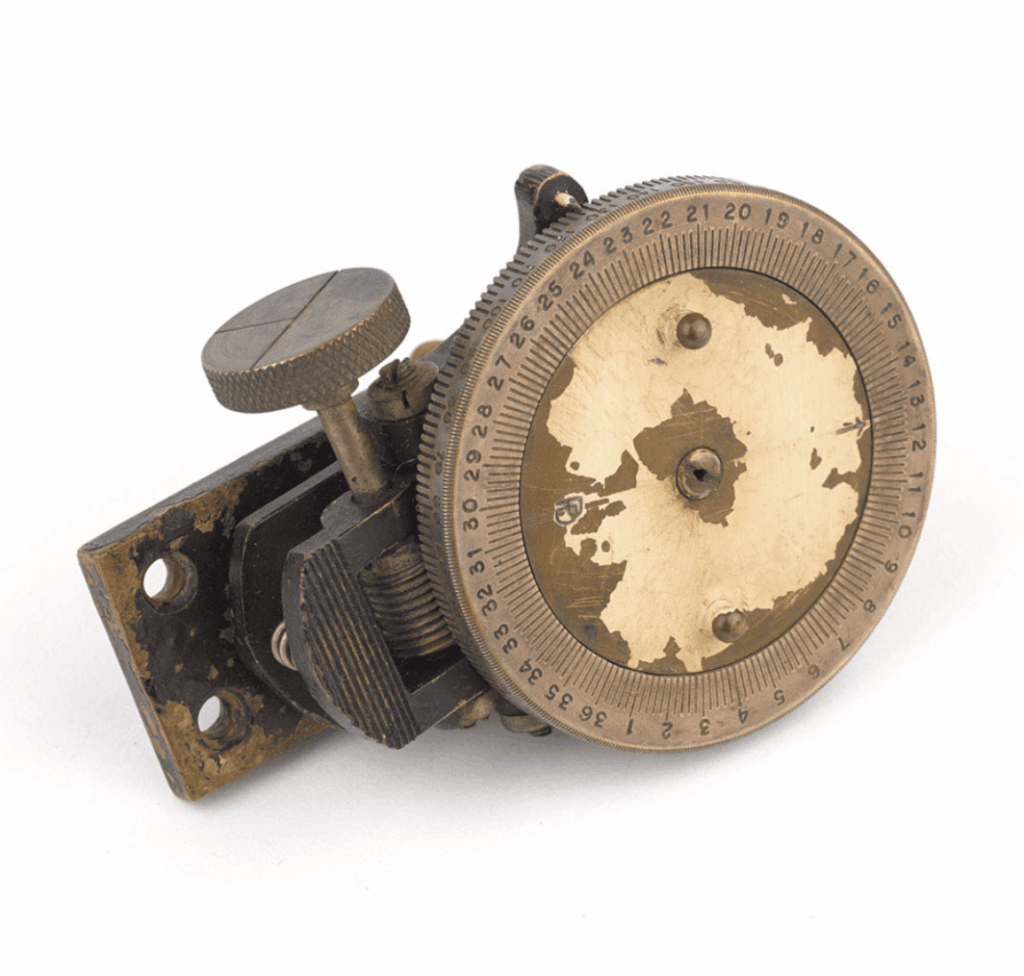
Sun compass used by the Indian Long Range Desert Squadron, 1941 (c). Source NAM [Image number: 240958]

Once again, Bagnold’s experience in desert driving came in to play. His trucks had low pressure tyres for travel over the treacherous sands of North Africa. He also equipped the LRDG trucks with extra-large radiators and condensers to ensure their engines did not overheat in the high temperatures of the desert. The vehicles’ springs were also modified to ensure they could take the punishing terrain without collapsing.

There was one vital piece of kit that went out with every patrol. This was Burt’s Solar Compass. Named after its inventor, William Austin Burt, this device had been used and improved upon extensively by Bagnold during his desert travels in 1930s. It was considered essential for every patrol to have one of these operated by an experienced navigator to guide them through the often-trackless terrain.

LRDG Operations

LRDG Patrols were also equipped with light weight high performance ordinance such as Lewis machine guns, Boys and Bofors anti-tank guns. In addition to this, the LRDG was also supplied with automatic weapons from the RAF because of their lethal rate of fire. Typically, this would include Vickers K or Browing Mark 2 machine guns. Combined, these weapons achieved a fire rate of 2,400 rounds per minute. In addition to this, patrol members carried a wide variety of side arms.

From its foundation in early 1940, The Long Range Desert Group took part in at least 200 operations across a broad canvass of the Western Desert. This took in large swathes of Egypt and Libya. With their characteristic stripped down Canadian Chevrolet trucks, these bearded soldiers with their iconic turban style head gear, typified the Special Forces operatives.

Probably two of their most effective LRDG operations were the Barca Airfield raid and “Road Watch”. In September 1942 Operation Caravan was launched against the Italian garrison and airfield at Barce. Involving 17 vehicles and 47 men, the LRDG force travelled over 1500 miles to their target and destroyed up to 35 enemy aircraft.

The second operation was known as Road Watch and involved the LRDG units watching and reporting back on Italian vehicle movements along the Tripoli to Benghazi road. Unlike Barce no shots were fired but a great deal of intelligence on enemy vehicle movements was gathered by the LRDG. This operation lasted from 2nd March to 21st July 1942.
Behind Enemy Lines LRDG
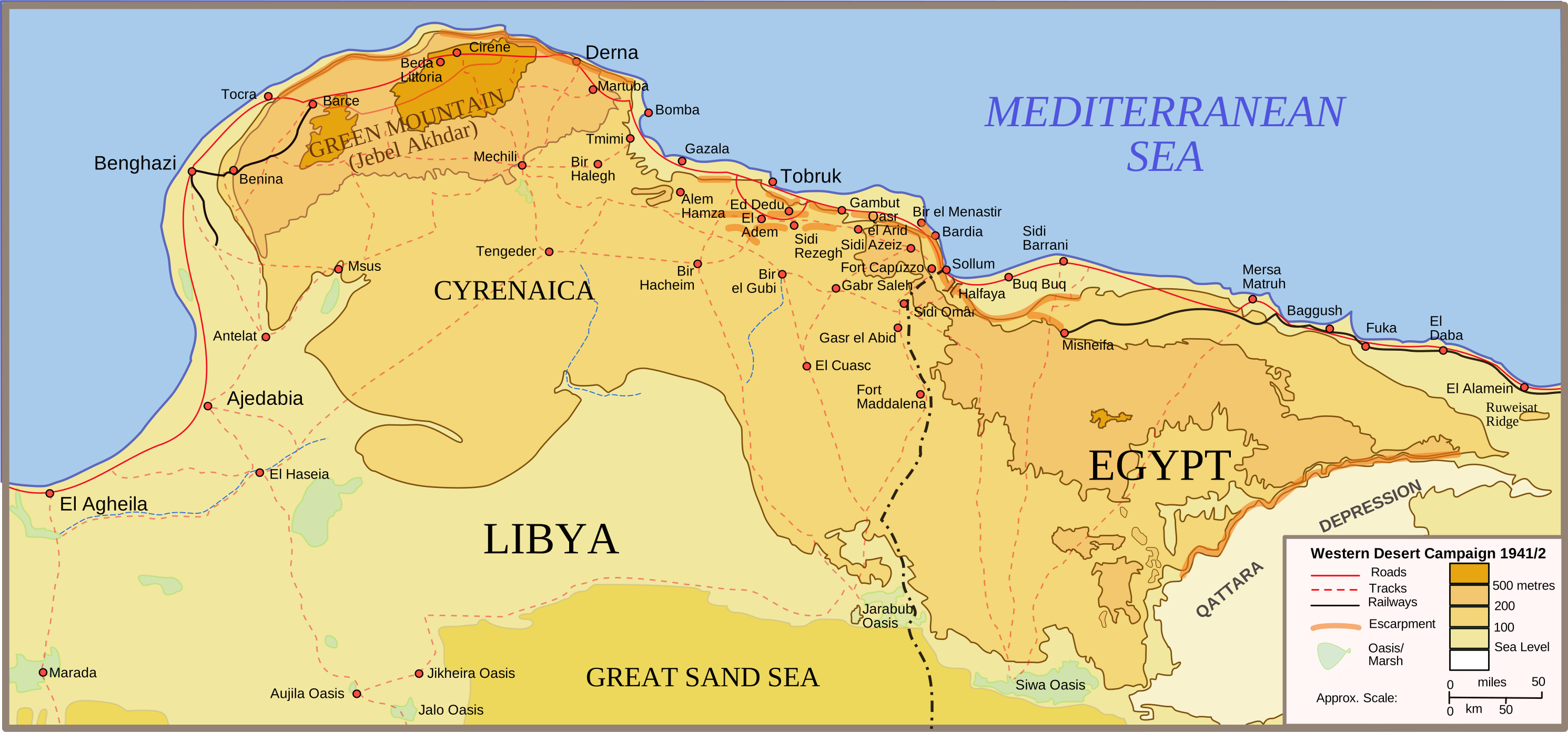
LRDG area of operations 1940–1943. Jalo oasis is on the left of the Great Sand Sea and Siwa Oasis is on the right. Barce is at the top left and Marble Arch is on the edge of the map, to the left of El Agheila. Source Stephen Kirrage/Wiki
Behind Enemy Lines LRDG
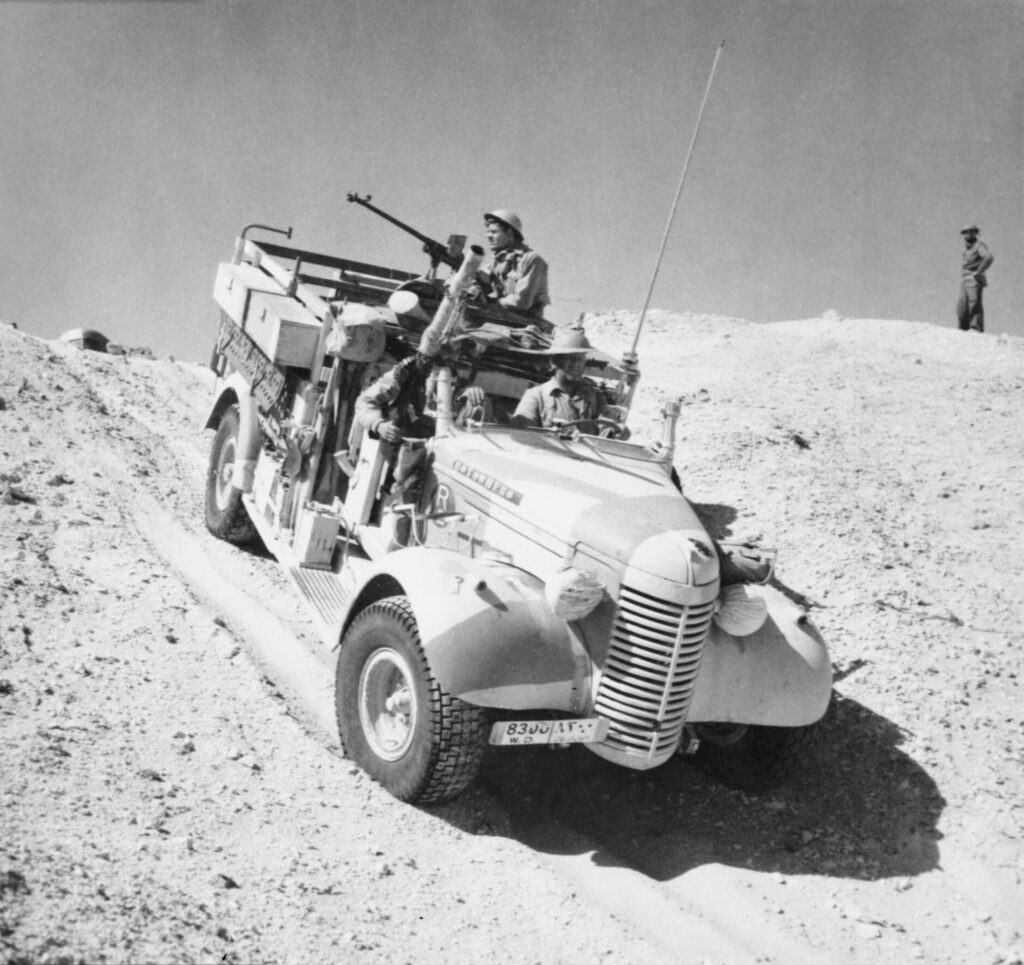
'R' Patrol Chevrolet WB radio truck; the rod antenna can be seen on the right. The man at the rear is manning a Boys anti-tank rifle. Source Wiki/IWM
Behind Enemy Lines LRDG
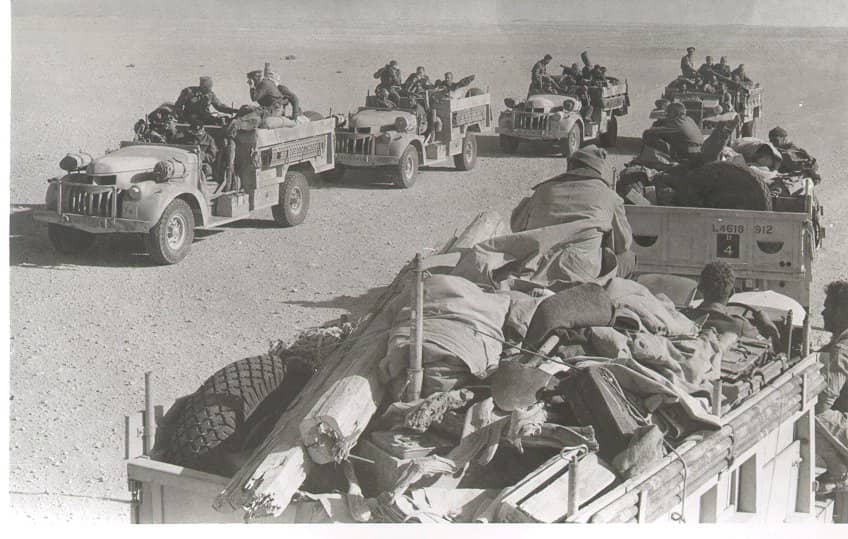
Y' and 'R' Patrol Chevrolets meet in the desert, mid-1942. Note the amount of equipment carried on the nearest 'R' Patrol trucks. Source Wiki

Action in Lebanon, Greek Islands and the Balkans

What is not generally known is that the LRDG also operated in other geographical areas besides the deserts of North Africa. Following the defeat of Italian Forces in North Africa in 1943, the LRDG saw action in the Mediterranean theatre of war. As well as Lebanon, it fought in the Greek Islands, Yugoslavia and Albania. In the Balkans, the LRDG supported the local Partizans under Tito and Enver Hoxha.

At the end of the War in Europe, the top brass of the LRDG requested to be transferred to fight the Japanese in the Far East. This was turned down and the LRDG was disbanded at the endd of hostilities. Why they were considered “surplus to requirements” and not used fighting the Japanese remains a mystery. Could it have been someone in authority was jealous of the LRDG’s success? Unfortunately, such acts of spite amongst rivals in armed forces are not uknown. Nevertheless, it seems a waste of such a fine fighting force.

If one was to sum up the LRDG, brave, bold and resourceful best describes these remarkable warriors.

The Special Air Service

In 1941, probably the most famous special forces unit was founded. This was The Special Air Service created by Lt Colonel David Stirling in July of that year. The primary task of the SAS was to attack German and Italian forces behind the lines in the North African theatre of war. It was initially made up of five officers and sixty other ranks.

Its first mission was Operation Squatter, a mission to attack Axis airfields in November 1941. However, partly due to heavy resistance by German and Italian forces, poor weather and probably inexperience, the operation was a failure leaving 22 SAS troops dead or captured. However, Stirling and his men were quick to learn and a second operation in conjunction with The Long Range Desert Group was successful. Sixty Axis aircraft were destroyed at their airfields in Libya without the loss of any SAS men. 

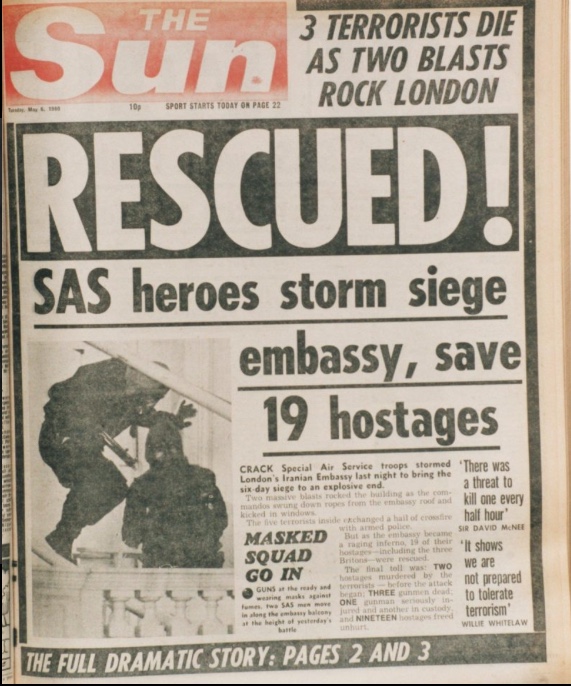
From then on until the end of The War, the SAS conducted many other effective and successful operations against Axis forces. Following the end of hostilities, the SAS were briefly disbanded but reformed in 1947. From their main base in Hereford, the SAS have been involved in many remarkable feats of arms throughout the Cold War and right up to the present day. Because of the clandestine nature of this force only a fraction of their operations are ever made public. Of these, the victorious Jebel Akdar War against a rebel uprising in central Oman in 1958, victory over the communists in the Malayan Emergency 1948-1960 and the successful resolution of The Iranian Embassy Siege in 1980 are probably the best known.

Behind Enemy Lines LRDG SAS
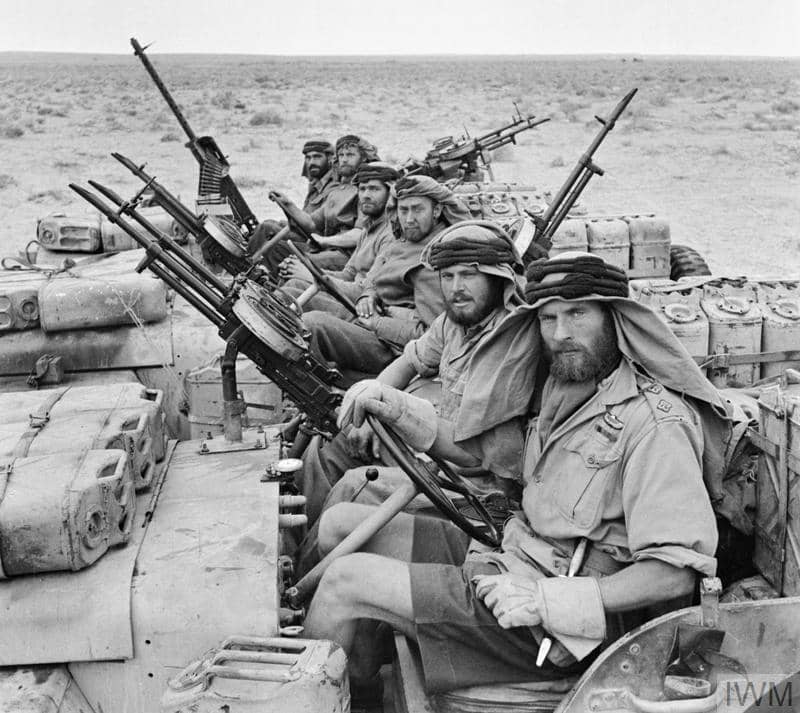
A heavily-armed patrol of 'L' Detachment SAS in their jeeps, wearing 'Arab-style' headdress, January 1943. Source IWM E 21337
The Sun reporting on the siege in 1980 Credit: NEWS GROUP NEWSPAPERS LTD

The SBS

The Royal Navy sister squadron of the SAS that would become known as The Special Boat Squadron was founded in the previous year. It was created by a very persistent commando called Roger Courtney. In 1940, he was posted to The Combined Training Centre at Auchnacarry in Scotland. He was convinced the Navy required a Special Forces unit for reconnaissance and offensive operations behind enemy lines. Initially, he had no success in persuading his commanding officers to give the green light for such a force.

Eventually, his efforts bore fruit when he successfully boarded HMS Glengyle, wrote his initials on the door of the Captain’s cabin and took a gun cover as a trophy. This sufficiently impressed his bosses that they allowed him to found `the `special Boat Service with an initial complement of twelve men. This unit was very active throughout the Second World War, particularly in the Aegean and Greek Islands. These operations included rescuing troops left behind after the fall of Crete and attacking enemy airfields on Rhodes.

As with the SAS, the SBS continues to be active although most of its operations remain secret. Since the end of The Second World War it has been in action across the globe in many locations including Palestine, Malaya, Suez, Cyprus and the Falklands War.  Its motto is “By Strength and Guile”

Long Range Penetration Groups...The Chindits

The most controversial of all Special Forces founded in the Second World War was The Long Range Penetration Groups. Usually known as the Chindits they operated mainly in the Burmese jungles fighting The Japanese behind enemy lines. The name Chindit is a derivation of the Burmese word Chinthe meaning lion.

This Special Forces unit was the brainchild of Major Orde Wingate who had already set up a similar force known as Gideon Force in East Africa. Made up of mainly Ethiopian and Sudanese guerillas, Gideon had been formed to fight Italian Forces in Ethiopia. This mission was a success and Gideon Force was disbanded on 1st June 1941.

General Wavell, Wingate’s commanding officer sent him out to Burma to create a similar force to fight the Japanese. The result was Chindits.

Behind Enemy Lines LRDG Chindits
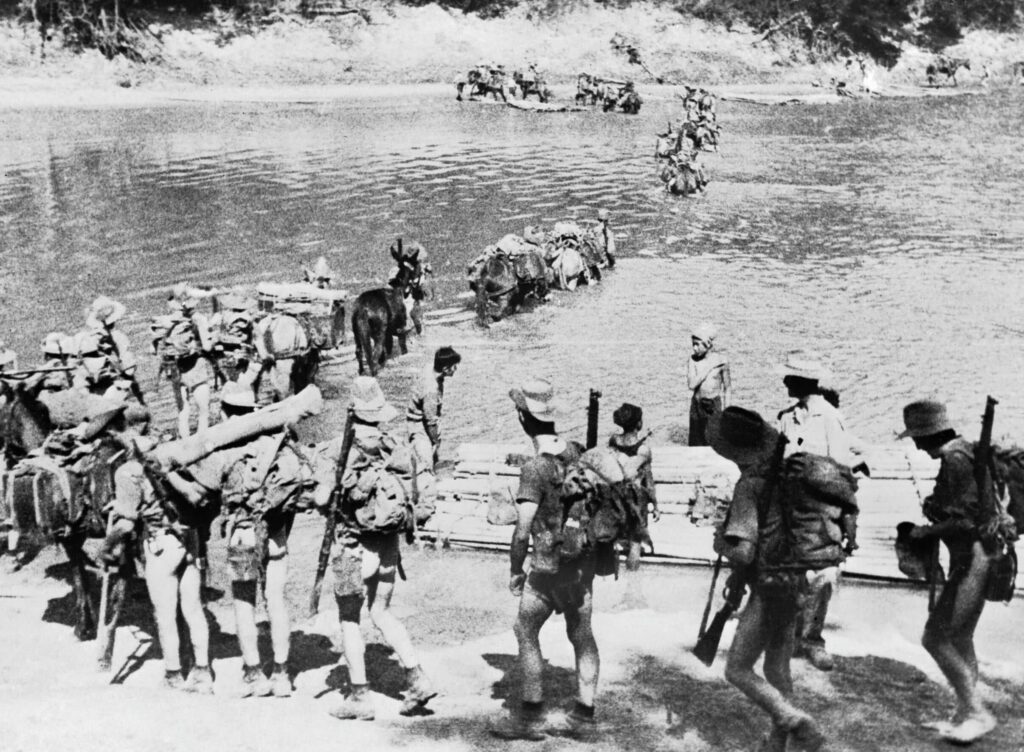
Chindit column crossing a river in Burma, 1943. Source Wiki/IWM (collection no. 4700-38)
Behind Enemy Lines LRDG Chindits
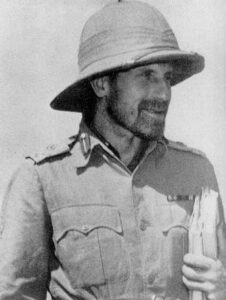
Brigadier Orde Wingate. Source Wiki

operation Longcloth

Characterised by long, difficult marches through treacherous jungle terrain, Chindit operations carried out numerous attacks on Japanese forces. However, they remain a matter of controversy due to high casualty rates. Many Chindits were older soldiers with underlying health issues such as malaria.

The first Chindit operation was Operation Longcloth in 8th February 1943. Involving 3000 Chindits, this was a daring large-scale incursion into Japanese occupied Burma. Its main mission was to disrupt Japanese army operations as much as possible. This also involved destroying. enemy rail transport. During this operation, the main Japanese railway through Burma was blown up in seventy different locations. However, the long-term damage and disruption was limited and the railway was fully operational after a week.

One of the mainstays of The Operation was RAF 31 Squadron whose Dakota and Hudson aircraft kept the troops on the ground going with regular supplies of food and weaponry. This Squadron also saved many lives by evacuating injured soldiers. Much of this squadron’s success during Longcloth was down to its Commander, Wing Commander William H. Burbury. Based at Agartala in India their supply missions to British troops in Burma were arduous and dangerous. Not only were 31’s aircraft up against rapidly changing weather conditions but also the constant threat of attack by Japanese fighters. They were backed up by 194 Squadron that also flew in vital supplies. As Brigadier Mike Calvert one of the commanders of the Chindits put it:

We had put our complete faith in the RAF transport squadrons and from then on and well into the 1944 Chindit operations, 194 Squadron and 31 Squadron never once failed us.”

Following the early reverses when the Imperial Japanese Army swept down through Asia, Operation Longcloth proved that the British could take the War to the enemy. It showed that Allied forces could operate deep behind enemy lines. Many believe this mission laid the ground for the British victories against the Japanese at the Battles of Kohima and Imphal. These successes in 1944 permanently blunted Japanese ambitions to capture India.

However, the high casualties sustained by the Chindits in this operation caused much controversy. Whilst 3000 Chindits went into action in Operation Longcloth only 2,182 returned at the end of the action. Just over a third of the fighting force – 818 men, were either killed, captured or died of disease.

The second major action in Burma that involved the Chindits was Operation Thursday.  In March 1944 a large Chindit force of about 10,000 men was flown in to confront the Japanese in Northern Burma. Over the next five months, this force would be engaged in some of the fiercest fighting of the `Burma Campaign. On occasions this involved hand to hand combat with Kukri knives and Japanese war swords known as Katanas. By the time the last Allied soldier was withdrawn from this theatre of war, they had suffered 1,396 killed and 2,434 wounded.  One of those to die was Orde Wingate whose plane crashed in the jungle during a heavy storm on 24th March 1944.

The Chindits were finally disbanded in early 1945. Opinions about their effectiveness and the qualities of their founder Orde Wingate continue to divide military historians.
©  Nick Brazil 2025

Photos: Wiki

About The Author

Nick Brazil is an author, film maker and photographer. He has made eight documentaries and numerous shorter videos for the internet. He has also published four books including Cheating Death – The Story of a PoW and Billy Biscuit – The Colourful Life & Times of Sir William Curtis which is the story of the man who coined the phrase “The Three Rs”and his latest book The Ambush Was Closed for Lunch and Other Stories.
Nick Brazil self portrait
Nick Brazil

Nick’s books are Available on Amazon

Click above to purchase

Click to see full BMMHS event listing pages.

Contact us at [email protected]

Copyright © 2026 bmmhs.org – All Rights Reserved

Images © Nick Brazil