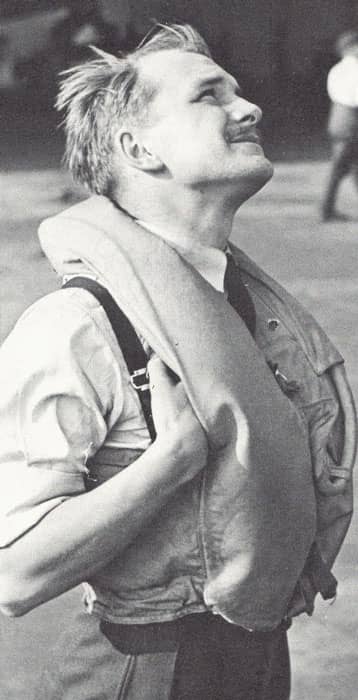
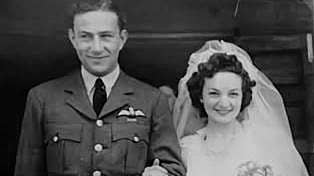
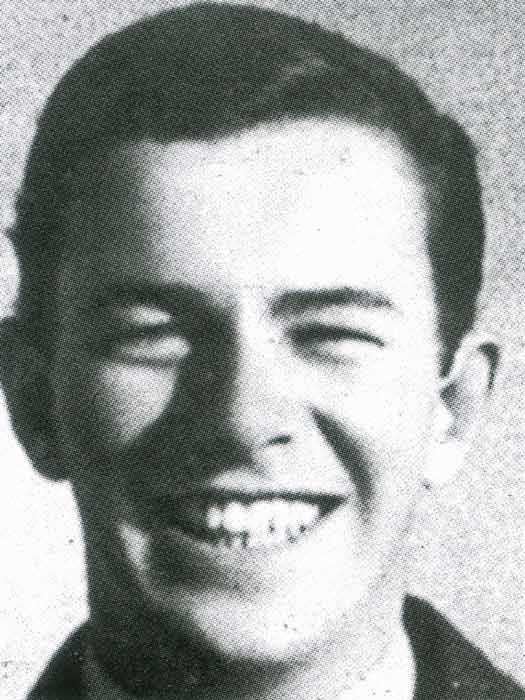
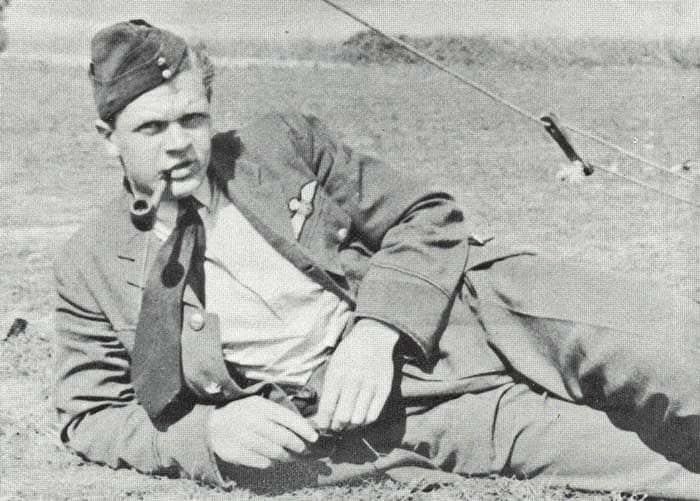

When Group Captain John “Paddy” Hemingway died on March 17 2025 it is highly likely that he was the last survivor of the Allied aircrew who flew in the Battle. After all he was 105. His status as the last, however, is something which cannot be proved. So many of the Few did not relish the idea of celebrity and deliberately disappeared from view after the war.
Some years ago, for instance, a fellow researcher noticed a Daily Telegraph death notice which seemed likely to refer to a former Hurricane pilot, whose whereabouts we did not know. I tracked down his daughter, living in France. She confirmed the death of her father and told me that he had left instructions that the RAF and associated bodies were not to be informed of his passing. She declined, however, to tell me the reason.
Some aircrew refused to wear the Battle of Britain Clasp or to regard themselves as members of the Few because their service at the time had been in Scotland well away from the front line. One who fell into that category was a Royal Navy pilot who was awarded a DSO in 1941 for an action in the Mediterranean, when flying from HMS Ark Royal. In later life he lived a very short drive from the National Memorial to the Few at Capel-le-Ferne near Folkestone. Just before he died, aged 99, he relented to the extent that he allowed his family to take him to the site and point out his name on the memorial wall. He did not, however, make himself known to staff.
Paddy Hemingway had kept a low profile, often not appearing on lists of the surviving Few, until he was very elderly. Interestingly the RAF had been determined not to announce anybody as the last survivor but had changed its mind by the time of Hemingway’s death.
No trust should be placed in claims to exactitude in relation to how many of the Few there were, how many were killed or what nationalities they were.
I normally say that there were circa 2945 Allied aircrew who qualified for the “immediate” award of the 1939-1945 Star with Battle of Britain Clasp by making one authorised operational flight with one of 71 accredited squadrons and other units, under the control of RAF Fighter Command, between July 10 and October 31 1940. However, one difficulty is that the list of men is still being added to.
As recently as 2024, the Air Historical Branch (RAF), the ultimate authority, announced, long after his death, that Flight Lieutenant Ronald Thomson was now considered one of the Few. In October 1940 Sergeant Thomson had joined No 616 Squadron to fly Spitfires. The poorly kept squadron operations record book did not show him making an operational flight before the end of the month. However, in 2024, his logbook came to light. It showed that he had been scrambled to deal with a report of an unidentified aircraft on October 20. This event qualified him for the Battle of Britain Clasp.
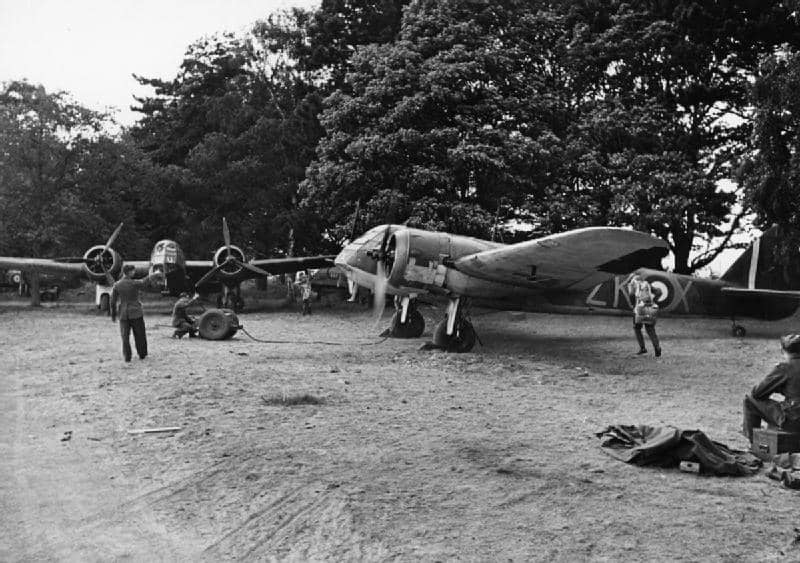
More people will be given Battle of Britain status in the future, particularly non-pilots who flew sorties in Blenheims.
Other factors that cause confusion over the number of Allied aircrew include the fact that it took a decade and a half from the announcement in 1945 of the Battle of Britain Clasp to the 1939-1945 Star for the list of qualifying units to be finalised. In the process two squadrons (Nos 53 and 59) were removed from the list and former members of those squadrons told to take down the Clasp. RAF personnel functions have been inclined over the years to be careless in telling former aircrew or their relatives that qualification for the Clasp was achieved, when it was not.
The figure of 544 Allied aircrew killed in the Battle is often quoted without any explanation of the definition being used. Are only people killed in action being included? In that case, does someone who crashes on returning from a sortie count? What about people killed in flying accidents on a qualifying squadron but before they had flown a qualifying sortie? Are those fatally wounded in the Battle whose deaths occurred after October 31 1940 included? What about the pilot who, having qualified for the Clasp, died on August 8 1940, while on leave, in a still not fully explained shooting incident? He died during the Battle of Britain.
To say “over 500 were killed on active service” is perhaps the safest option but a precise figure calls for a precise definition. Whatever definition is used, the figure 544 is likely to be too high.
The question of nationality of the Few is a minefield on which a book could easily be written. An obvious example is that around 10 of the Few are usually said to have held Irish nationality, including Paddy Hemingway. That may be so but the vast majority of the Few were born when the whole of Ireland was still British and the basis of claims to be Irish or citizens of the UK is not always clear.
It has been argued that no Australians or New Zealanders flew in the Battle of Britain. According to that belief they were all British because the nationality acts for Australia and New Zealand had not been passed in 1940.
There is the nonsensical suggestion sometimes made that a Palestinian (or even an Israeli according to the outstanding film Battle of Britain) flew on the Allied side. The man concerned was Pilot Officer George Goodman of No 1 Squadron. He was born in Haifa, then in Palestine, because his father was employed in that area at the time. George Goodman held a British birth certificate and a British passport.
Some accounts of nationalities involved include Barbados and or Jamaica. So why not Jersey? The Baliwick in the Channel Islands was and is a Crown Dependency, not part the UK. It was the birthplace of Pilot Officer Richard Malzard Hogg, killed in action with No 152 Squadron on August 25 1940. Malzard is a Jersey name and Dick Hogg’s mother was a Malzard, a family that farmed in the Jersey parish of St Peter. If you are sitting in an aircraft taking off or landing at Jersey airport (successively an RAF and Luftwaffe base in 1940) you may spot St Peter’s church nearby. The war memorial there contains the names of both Dick Hogg and his brother Ted, another Spitfire pilot killed later in the war.
Those are just some of the many difficulties in establishing nationalities, as well as some of the reasons why researching the Few, as I have for over 40 years, is a riveting and rewarding occupation.
Geoff Simpson is consulting editor for the Battle of Britain Memorial Trust’s Database of the Few.
© Geoff Simpson 2025
Click to see full BMMHS event listing pages.
Contact us at [email protected]
Copyright © 2026 bmmhs.org – All Rights Reserved
Images © IWM & NAM