Book Review: Lieutenant General Sir George Lea - The Soldiers General
Review by Andy Cockeram
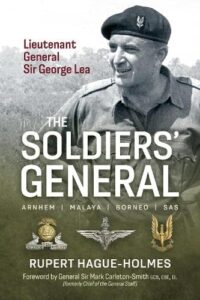
Lieutenant General Sir George Lea – The Soldiers General
Author- Rupert Hague-Holmes
Hardcover
299 Pages
ISBN 978-1-917120-19-7
Colour Images
This is an extremely well researched and detailed insight into an important yet probably a lesser known military figure to many.
Lieutenant General Sir George Lea rose through the ranks to senior levels towards the end of and in the years following the Second World War. Recognised by the top levels of the military and by the governments of the day Lea was promoted into key roles in the 1950s and 1960s a crucial time in the world. To some extent he had much the same profile as Dwight Eisenhower… a hugely capable army officer with the personality to manage to the politics, both military and diplomatically of the time.
It was a period that saw the declining influence of Britain with the changing balance of power in the world. A notionally bankrupt Britain from the lengthy exertions of World War Two saw various countries clamouring for independence away from the shackles of the British Empire and the Commonwealth. At the same time the British dominance of so much of the globe had given way to the might of the USA and the ambitions from the other end of the political spectrum, the USSR.
To re-build Britain in 1945 was a vast enterprise requiring successive governments to reduce military budgets to more manageable and circumspect levels in the midst of so many competing expenditure priorities. In parts of the globe internal insurrection and rebellion was driving the voice of independence – India, Malaya, Borneo to name but some – and it required people with great patience, authority, presence and charisma to work at the most senior levels of both UK and foreign governments to smooth through these significant changes. At the same time, great skill was required to work with the allies, not least the USA which not only wished to increase its own influence, but to ensure its allies including Britain did not reduce or weaken it military expenditure.
Cometh the hour, cometh the man, and George Lea possessed many of the required attributes.
This book brings out Lea’s great attributes and conveys why he was both successful and loved by his men. He loved flying and fast cars, as well as having a charm and charisma that ingratiated him to those that he met. With a big personality within a huge frame, he had originally wanted to join the RAF but failed his entrance exams at Cranwell and joined the Lancashire Fusiliers after Sandhurst being deployed to Shanghai then India which fostered a love of the east which was never to leave him.
As war broke out, Lea volunteered for the newly formed 156 Parachute Battalion in North Africa and Italy formed at Churchill’s instruction and subsequently the embryonic SAS in Malaya. Throughout these deployments, Lea was able to build up his network of close contacts not least with senior officers such as Brigadier John ‘Shan’ Hackett which was to serve him well in his later career.
As the tide of war turned, Lea was promoted to acting Lieutenant Colonel of 11th Parachute Battalion, Lea was a popular commander amongst his men, very visible and training them hard and fairly in the build-up, attributes that were to become hallmarks of his personable but firm personality. As things turned out the frailty the Arnhem ambition proved to be lowest point of Lea’s career, and one that would haunt him for the rest of his life. Dropping eight miles from the bridge, in the face of much underestimated German forces and resistance, their movement towards Arnhem bridge without reliable radio contact and conflicting orders at night, Lea and his battalion were soon surrounded by much superior Axis forces. Within 24 hours from landing, Lea and much of his battalion became POWs. He and the others were liberated in April 1945.
Post war he returned to Britain to head up a Territorial Army Parachute battalion.
A further milestone in Lea’s life was his marriage to Pamela in 1948, who he had met some years before. They were to form a strong and formidable partnership which provided the perfect combination and foundation for Lea’s family life and his future career as senior military officer having to navigate through the role of pseudo politician and diplomat. This was invaluable during Lea’s peace-making, independence negotiation and high-profile international assignments over the following years. Pamela, with her gregarious personality, played the perfect co-host and partner hosting heads of state, international dignitaries and senior British politicians and military figures from Brunei to Indonesia to Washington. Wherever possible Pamela and the children moved from location to location following in Lea’s footsteps.
Further deployments saw Lea in Malta, with Royal Marine 3 Commando and then to Hong Kong to ward off potential invasion from Mao’s Chinese People’s Liberation Army. Another move followed in mid-1950 with the Malaya Emergency and a redeployment of 3 Commando. The role was to carry out patrols to eliminate Communist Terrorists.
The next move saw a promotion to commander of the 22nd SAS once more with the mission to seek and destroy communist bases and insurgents. The reinstatement of SAS regiments was a surprise after their dissolution after WW2 but it was no surprise Lea was appointed given his experience and expertise in special forces operations, with the suspicion of the SAS within the regular army, Lea’s firm but fair demeanour was needed to knock them into shape which he duly did, and thereby elevating the respect from other regiments.
The final senior role was assignment to the British Embassy in Washington as the senior military figure. However, while an exceptional job it was plagued with political infighting both within the embassy and from the growing pressure of his US hosts. Lea alongside Pamela, playing the perfect military hostess role, required all his charm and diplomatic skills to placate the ambitions and often conflicting desires of both colleagues and US counterparts as British military budgets were being reduced and American world influence growing.
Hague Holmes has done an excellent job in researching and documenting the life and achievements of George Lea, a man of great ability and presence, faced with significant challenges in a changing post war world. This book gives a superb insight into the changing role of the time as Britain’s influence and power declined. It demonstrates the change required in the British military from a major power to a lesser role, having to manage the transition for independence and the reduced influence of the once great British Empire.
George Lea was an integral part of this and deserves greater recognition than perhaps history has given him. This fascinating book goes a long way to changing this perception.
Andy Cockeram
Chairman British Modern Military History Society


Click to see full BMMHS event listing pages.
Contact us at [email protected]
Copyright © 2026 bmmhs.org – All Rights Reserved
Images © IWM & NAM