Finland’s Winter Wars

The Conflict with Russia in The Second World War

by Nick Brazil

A key moment in Finland's history

It is unlikely that outside of Finland or its Baltic neighbours the date April 4th 2023 would mean very much to the average man or woman in the street. However, it marks a very important milestone both in Finland’s and the Western World’s history. On that day, Finland abandoned its long-held policy of neutrality to become the 31st member country of NATO. She did this in concert with their neighbour Sweden, another country with a long history of neutrality.

This sudden change in their international policy was sparked by the Russian Invasion of Ukraine on February 24th 2022. Apart from the invasion itself, the fact that Sweden and Finland dropped their long-standing policy of neutrality to join the Western military alliance is considered to be a major blunder by Russian leader Vladimir Putin. Finland becoming a member of NATO meant that it had the protection of article 5 of The NATO Charter. This states that if one NATO member is attacked, all the others must go to its aid.

Stalin invades

Another prime motivating factor that led to Finland’s membership was the bitter memories of the country’s recent past. On 30th November 1939, Soviet dictator Joseph Stalin invaded Finland sparking a bitter war that would claim thousands of lives on both sides. Lasting three and a half months, it became known as The Winter War. 

Stalin’s excuse for the invasion was that Leningrad was threatened by the possibility of hostile military action of Finnish forces. Stalin was especially fearful that the Finns might ally with the Germans to attack his territory. After demanding some land from the Finns who were not forthcoming, he triggered his invasion. This did not sit well with the International community and Russia was expelled from The League of Nations.

Whilst it is true that Leningrad (now known as St Petersburg) was close to the Finnish border and less than 240 miles from the Finnish capital of Helsinki, this is unlikely to be the real reason for Russia’s attack. The actual causus belli was a land grab by Stalin that would net him the whole of Finland. Like many other Russian leaders, Stalin wished to restore the lost lands of the Russian Empire. Finland had been a vassal state of Russia since 1809. Until 1917, when the country gained her independence, she was known as The Grand Duchy of Finland.

Stalin believed that Finland would be easy pickings

Winter War
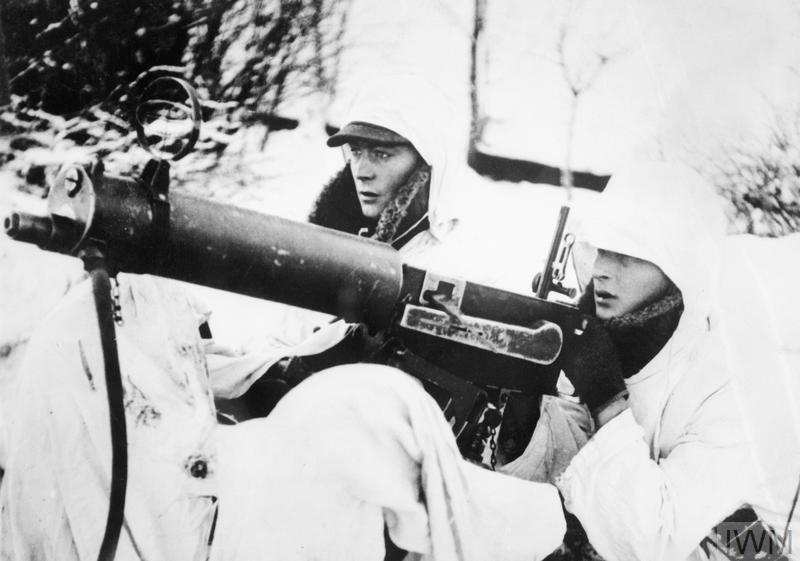
THE WAR IN FINLAND, 1940 (HU 52931) Two Finnish machine gunners wearing their concealing white capes and hoods, manning their gun in a trench on the southern Karelian front. Copyright: © IWM. Original Source: http://www.iwm.org.uk/collections/item/object/205083369

Stalin believed that Finland would be easy pickings for his vast army. However, he miscalculated the sheer grit and fighting qualities of his enemy.

Much of the fighting was conducted on the Karelian Isthmus, a tongue of land that bordered Russia. Stalin committed 750,00 men, over 2,500 tanks and just short of 4000 fighter aircraft to the invasion. This far outnumbered the Finnish Army of 350,000 men, 32 tanks and 114 aircraft. Nevertheless, the Finns stood their ground.

The Soviet Army is badly mauled

This was a bitter war fought in temperatures as low as -45 degrees. The Finns also knew their territory better than the invader, and in spite of superior man and firepower, the Russians made little or no headway for two months. During that time, the Soviets set up a puppet communist state known as The Finnish Democratic Republic. Exact figures are difficult to come by, but it is thought that in this short, war the Finns suffered approximately 25,000 dead or missing against the loss of at least 150,000 Russians.

In January 1940, the Finns won two major engagements. These were The Battles of Raate Road and Suomussalmi. Following this, the Soviets dissolved their puppet government and recognised the official Finnish Administration. At the end of January, the Soviets were discussing a peace deal with the Finns. Part of this was the ceding of some Finnish territory to Russia. The fact that Stalin was forced to do this is an indication of how badly the Finns had mauled his army.

The Winter Wars
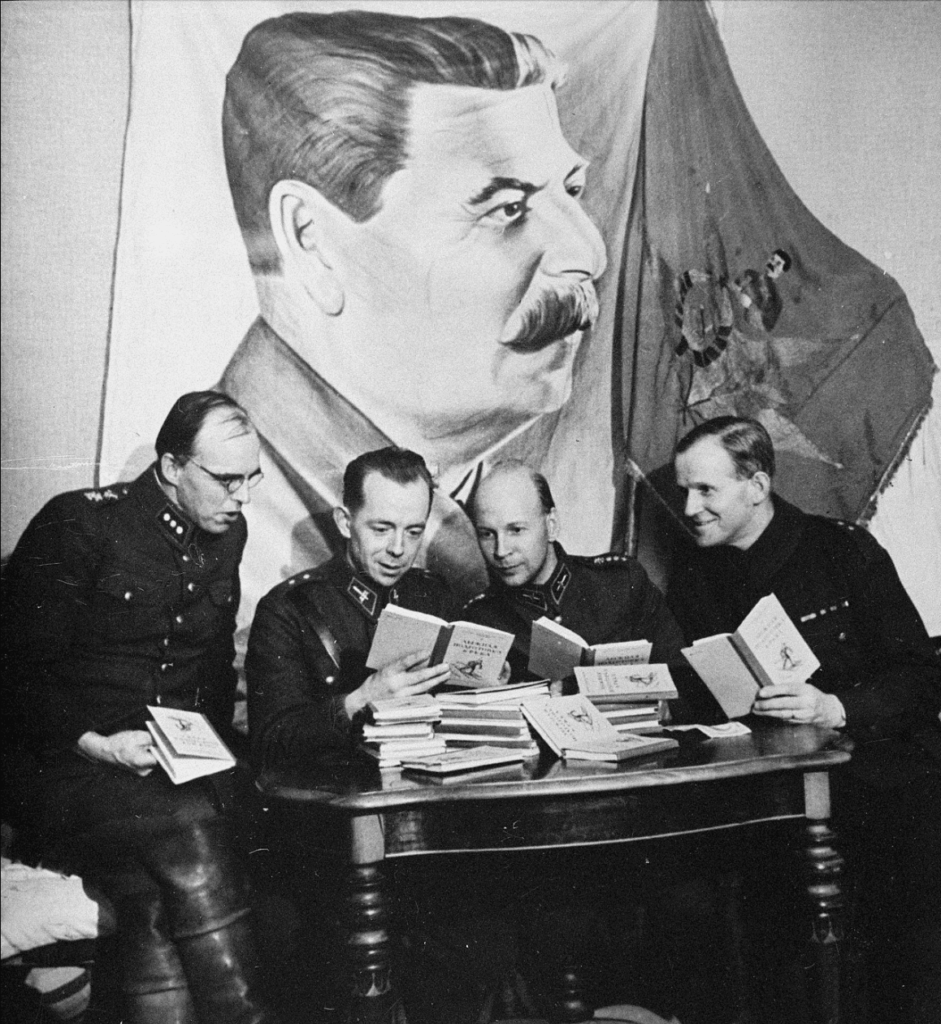
Finnish officers inspecting Soviet skiing manuals gained as loot from the Battle of Suomussalmi. Source Wiki
The Winter Wars
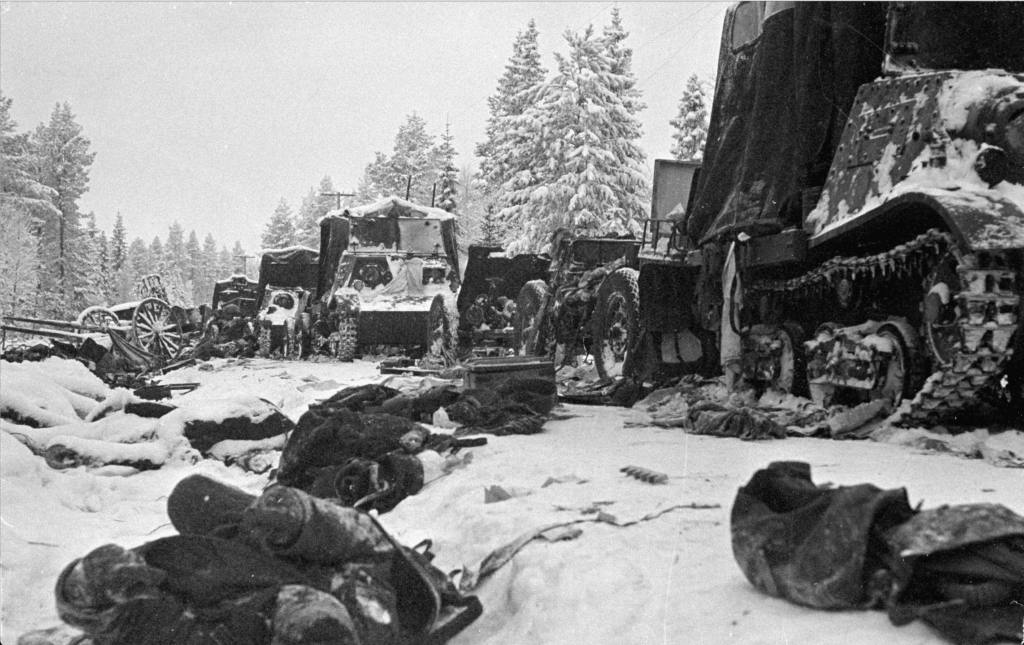
Dead Soviet soldiers and their equipment at Raate Road, Suomussalmi, after being ambushed and encircled at the Battle of Raate Road. Source Wiki/Finnish Wartime Photograph Archive

Finland fights alongside the Axis powers

These talks came to nothing and in retrospect, they were probably a ruse by Stalin to gain time and reorganise his fighting forces.  On 1st February 1940 Stalin mounted a massive attack on the Finn’s defences on The Karelian Isthmus. By 11th February Soviet forces had forced the Finns back and pierced their main defenses on the Mannerheim Line. Named after Finland’s leading general, Carl Gustaf Emil Mannerheim, this fortification stretched across the Karelian Isthmus as the main defence against Russian military incursions. However, this time the Soviet’s were too powerful for the Finns. On following day they sued for peace and a ceasefire between the two sides came into force on 13th March 1940.

However, The God of War was not finished with the Finns just yet. In 1941 she found herself at war with Russia yet again. This time, Finland was fighting alongside the Axis powers. The exact reasons for Finland allying with Nazi Germany and declaring war on Russia remain a matter for debate. The most likely factor was to regain Finnish land lost to the Russians during the previous Winter War. Finnish President Risto Ryti had a vision of a larger Finland created from these restored lands. The country’s military commander in chief Carl Gustaf Emil Mannerheim had a similar ambition which included seizing the province of East Karelia from the Russians.


Winter War
THE WAR IN FINLAND, 1940 (HU 52936) Finnish ski-runner patrols operating against Russian lines: Sergeant Pekka Niemi, world champion ski-runner, leading his patrol out on a raid. Copyright: © IWM. Original Source: http://www.iwm.org.uk/collections/item/object/205083374
The Winter Wars
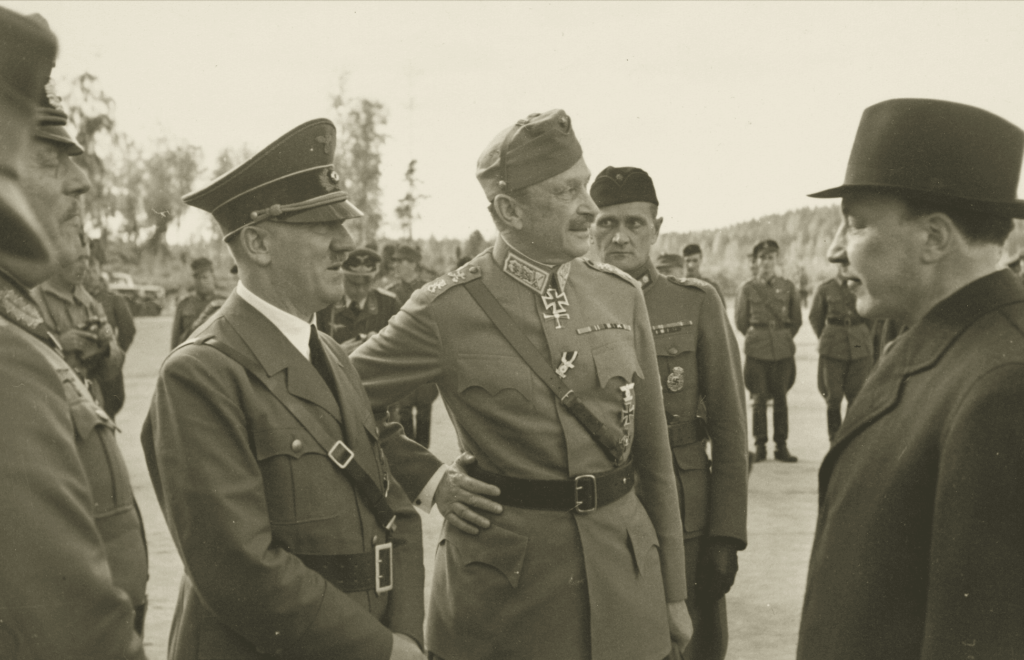
Discussion with Hitler, Marshal Mannerheim and President Ryti. Hitler visited Mannerheim on his 75th birthday. Source Wiki/Finnish Heritage Agency

The Continuation War

Following a heavy Russian air raid on Helsinki, the Finnish Government declared war on its neighbour on 25th June 1941.  At the same time, the Finns also allowed German forces to enter their territory to fight the Russians. This marked the start of what became known as The Continuation War. Why President Risto and his government opted to become Hitler’s allies is open to question. One important factor is that The Germans provided the Finns with generous amounts of ammunition, equipment and material. At this time when the Wehrmacht had invaded Russia and were sweeping all before it, Germany must have seemed invincible.

The Winter Wars
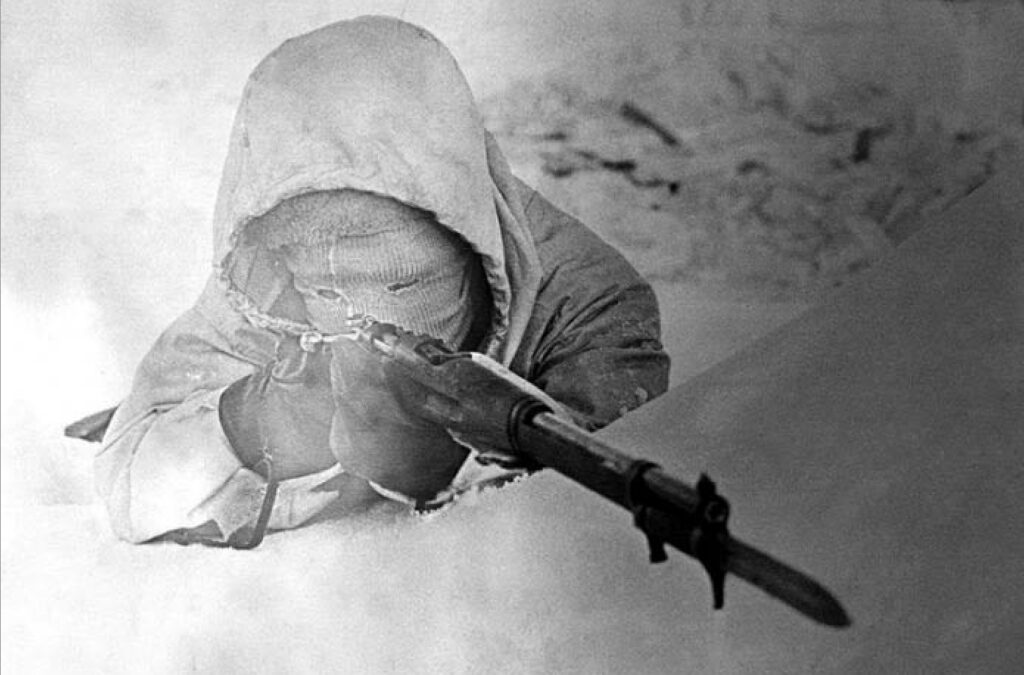
Swedish volunteer with a Carl Gustaf M/96 rifle. Source Wiki

A longer and bloodier affair

This War would prove to be a much longer and bloodier affair than The Winter War. Lasting over three years it would claim a massive number of casualties on both sides. The Finns are thought to have lost approximately 60,000 men while fatalities on the Russian side have been estimated to be between 250,000 to 300,000. The truth of the matter is that nobody really knows how many men died on the frigid soil of that terrible war.

Initially, the Finns made considerable progress in regaining their lost lands of Karelia and East Karelia. Pushing through the border to within 20 miles of Leningrad, they took part in the Axis siege of that city. Lasting nearly two and a half years, the siege would cost the lives of between 1.5 and 2 million people. It has its place in history as one of its most lethal sieges. However, the Germans and their allies were never able to physically conquer the city.  The siege was finally broken by Soviet Forces in late September 1944. At the same time, a joint German/Finnish offensive tried and failed to take the Russian port of Murmansk.

The Armistice terms exacted a heavy price

Inevitably, the tide of war was turned against the Finns by the much larger Red Army. A crucial campaign in this process was The Vyborg–Petrozavodsk offensive. Stalin’s plan was to use the Red Army’s massive fire, man and air power to overwhelm The Finnish Army. A prime objective in this was the capture of the Finnish city of Vyborg.

Although this two-month offensive by the Red Army was ultimately successful it was costly with 6000 dead. The Finns fought the Russians very hard in this campaign ensuring that it would not be an easy victory. However, it finally brought the Continuation War to an end. The Moscow Armistice was signed by the two sides on 19th September 1944 bringing hostilities to an end.

The Armistice terms exacted a heavy price from Finland for peace: 9% of its land was given up to the Soviets including the city of Vyborg. Finland also had to pay $US 300 million in reparations. In addition to this the Soviets occupied Porkkala Peninsula using it as a military base until 1956. Under pressure from the Soviets, Finland also agreed to put those responsible for these two winter wars on trial. Chief among the defendants was Ex President Ryti who was imprisoned for ten years.

The tale of Finland’s Winter Wars is a tragic one which had a profound effect on post Second World War geopolitics. In the chaos of war, Germany and its allies were severely damaged by the failure of Hiler’s invasion of Russia. Meanwhile, Stalin grabbed the three Baltic States of Lithuania, Latvia and Estonia. They would remain part of the Soviet Union until The Fall of The Berlin Wall in 1989.
 

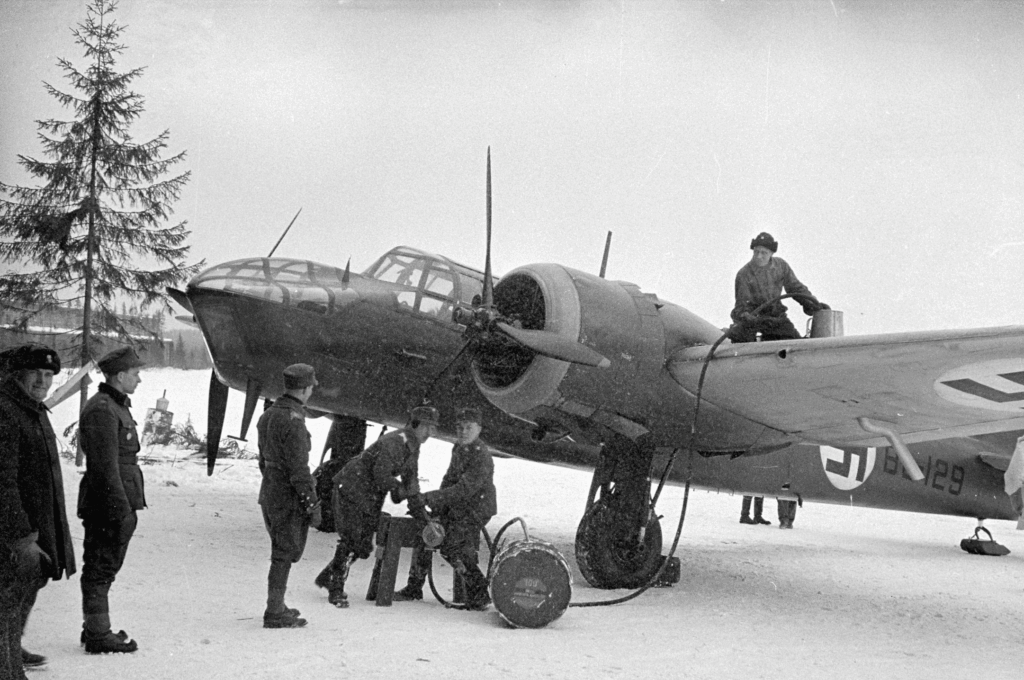
The Winter Wars
March 1940, a Finnish Bristol Blenheim Mk. IV bomber of the No. 44 Squadron refuelling at its air base on a frozen lake in Tikkakoski. On the fuselage is the swastika, which the Finnish Air Force had adopted as their symbol in 1918. Despite the similarity, it was not a Nazi design but was based on the personal owner; Eric von Rosen had donated the first aircraft to the Air Force. Source Wiki/Finnish Wartime Photograph Archive
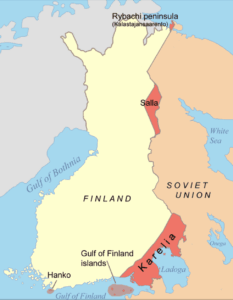
The Winter Wars
Finland's territorial concessions to the Soviet Union displayed in red. Source Wiki

The Russian invasion of Ukraine

Following the Second World War Finland would pursue a policy of uneasy neutrality particularly with reference to its large Soviet neighbour. Unlike many other Baltic Nations, it had escaped being subsumed by the Soviet Union. It remained a capitalist free market democracy. As such, it found itself in a unique position of being a neutral bridge between East and West. This policy involved a fair amount of kowtowing to the wishes of the Soviets. During the Cold War this policy became known as Finlandisation. This would continue until the Russian invasion of Ukraine and Finland joining NATO on April 4th 2023.

This has caused a drastic change in the balance of power on NATO’s eastern flank. It has also meant the Finns having to bolster their 830-mile-long border with Russia. At present, much of this consists of marker posts running through sparsely populated forest land. With a newly belligerent Russia whose future motives are less than clear, a much stronger barrier is needed.  To avoid a repeat of The Winter Wars, Finland is fortifying its eastern border with Russia considerably.

©  Nick Brazil 2025

Photos: Wiki

About The Author

Nick Brazil is an author, film maker and photographer. He has made eight documentaries and numerous shorter videos for the internet. He has also published four books including Cheating Death – The Story of a PoW and Billy Biscuit – The Colourful Life & Times of Sir William Curtis which is the story of the man who coined the phrase “The Three Rs”and his latest book The Ambush Was Closed for Lunch and Other Stories.
Nick Brazil self portrait
Nick Brazil

Nick’s books are Available on Amazon

Click above to purchase

Click to see full BMMHS event listing pages.

Contact us at [email protected]

Copyright © 2026 bmmhs.org – All Rights Reserved

Images © Nick Brazil