
Napoleon's Spies
by Nick Brazil
A fertile soil for the craft of espionage
The Eighteenth and early Nineteenth Century were turbulent times for Europe. Between 1799 and 1815, the continent was pockmarked with numerous wars, most of which are long forgotten. All this provided fertile soil for the craft of espionage. This was the era of gentlemen and lady spies. The list of participants is indeed a long one.
A fertile soil for the craft of espionage
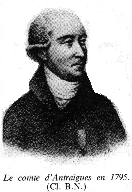
One of the most colourful was Louis-Alexandre de Launay, Comte d’Antraigues, a French aristocrat during the French Revolution. He can best be described as an intellectual wanderer who could change his allegiances at the flick of an eyelid. In the early part of his life, he was a friend and follower of such thinkers as Jean-Jacques Rousseau and the writer Voltaire.
As a well-known member of France’s aristocracy, he could well have been executed during the French Revolution. What saved him was his enthusiastic support for its ideals. However, all this changed when he witnessed the mobs attacking the bastions of the Royalist aristoracy, particularly Versailles. This caused him to do a volte face and support the Bourbon Monarchy. At this stage, he became involved in a plot to spirit the Royal Family, particularly Marie Antoinette, away to safety from the vengeful Revolutionary crowds.
Life would never be secure
When his role in this was exposed, a target was placed on de Launay’s back. He and his family then had to flee for their lives to the relative safety of Lausanne in Switzerland. From then on, de Launay adopted the life of an emigre, serving those who would pay him. This included the future King of France, King Louis XVIII for whom he became a spy in 1793. However, life would never be secure or easy for de Launay.
To cut a very long and complicated story short, he found himself apprehended by the French Revolutionary government when it invaded Italy in 1797. He was travelling with a Russian diplomatic legation at the time. But this did not save him from interrogation by none other than Napoleon Bonaparte. In the hands of his enemies, must have thought his date with the guillotine was not long coming. The fact that papers were found linking him with Montgaillard another anti-revolutionary spy did not help his cause. And yet, he was allowed to escape with his family to Austria. Nobody knows why Napoleon released him. The most likely reason was that Josephine Bonaparte who was a friend of Mme. De Launay successfully interceded on behalf of the de Launay family.
It seems the Russian Royal family had a soft spot for de Launay and his family. After fleeing to Austria, Czar Paul Ist of Russia financially supported the family for five years. This was probably payment for de Launay doing a bit of spying for the Czar although there is no evidence for this.
His death remains a mystery
de Launay was now a deadly enemy of the French Revolutionary Government. This obliged him and his family to move to the greater safety of England in1802. There he and his family set up home in Barnes. This would prove to be his final port of call. As always, he proved to be adept at making friends with those in high places. He became very close to George Canning, the British Foreign Secretary and the Duke of Kent, one of George III’s sons. It is likely he was also pressed into service as a spy by Canning.
In 1812, he and his wife were murdered in their home by a servant they had recently dismissed. Whether this was a simple act of vengeance or a political assassination ordered by Napoleon is unknown. Appropriately, the death of this man of mirrors remains a mystery.
A notable lady of letters
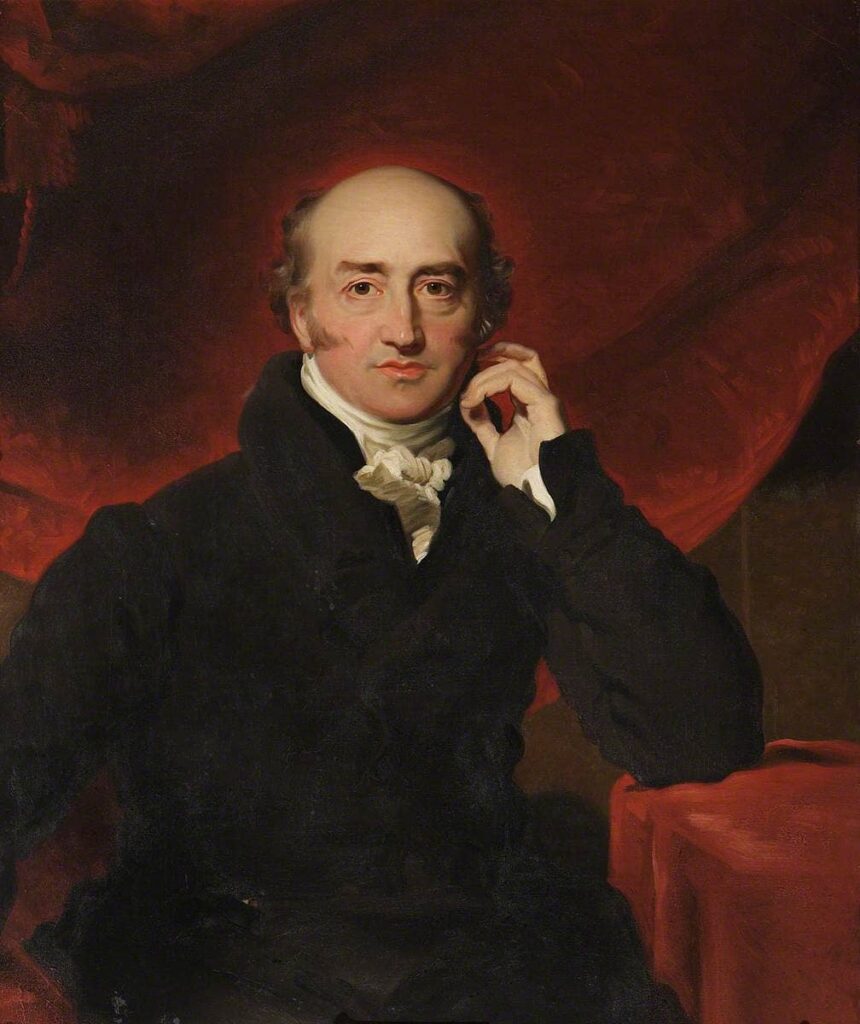
Mrs. Rachel Charlotte Williams Biggs was an entirely different type of spy to de Launay. Born into an English Georgian family in 1763 she would become a notable lady of letters and have the ear of prominent politicians such as Nicholas Vansittart, the long service Chancellor of the Exchequer.
However, her early life gave no indication of this. In her early twenties, she was abducted and raped by a man who was a control freak and obsessed with her. On both occasions, this steely Georgian lady escaped the clutches of her captor. In 1802, she began spending quite a bit of time travelling throughout France.
As a fluent French speaker, she passed as a local. In this capacity, she gathered a great deal of information about the economic and social state of post-Revolutionary France. She sent this information, particularly about French military preparedness to the British Government. Without doubt, this was very risky. She could have been betrayed at any time and face the guillotine as a spy. It says much about her courage and resourcefulness that her espionage was never discovered.
An agent for anti-revolutionary forces
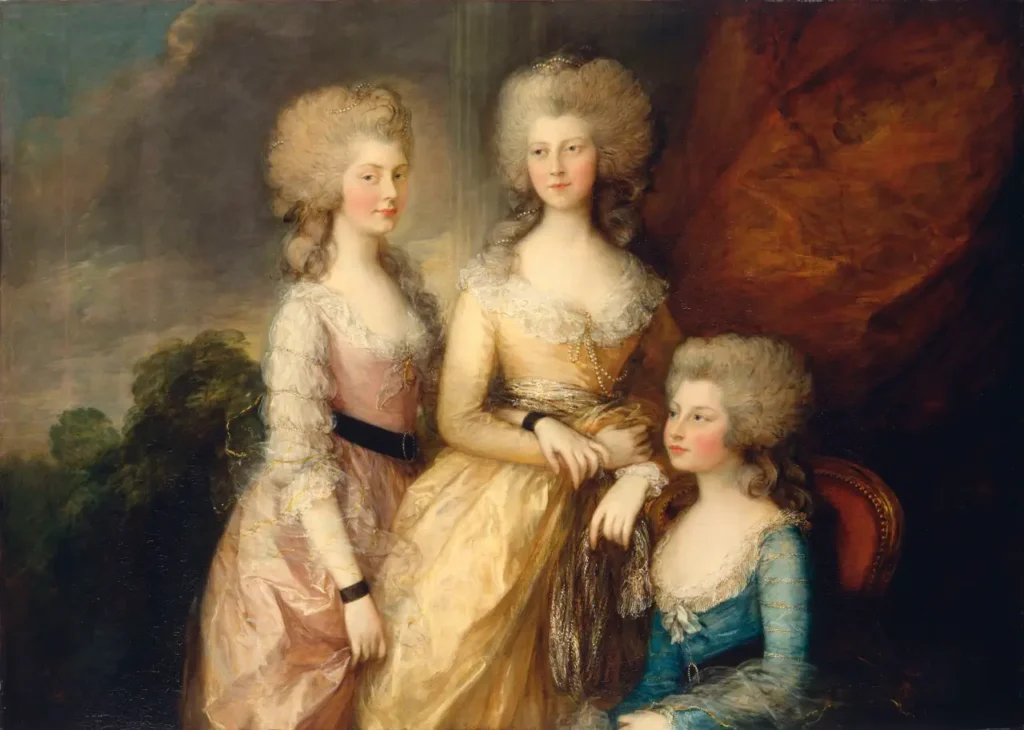
Michelle de Bonneuil was a female spy who arrived in Paris from her home on the Isle of Reunion in about 1768. She became renowned for her beauty and wit. Always a woman of very conservative beliefs, she became an agent for anti-revolutionary forces. This was likely due to her friendship with the spy de Launay. She is known to carry out missions to Spain and Russia, probably for the anti-Revolutionary cause. With many of her friends and relatives being executed during The Reign of Terror she became an outspoken advocate against the Revolutionary Government and had to flee abroad to escape being guillotined.
Napoleon's most prominent agent
Napoleon’s most prominent agent was Karl Schulmeister, who was born in Neu-Freistett, Alsace, France in 1770. In his youth, he became a shepherd under the guiding hand of his father. Being on the border with Germany, Alsace was also a hotbed for smugglers. In fact, most of the local community were involved in this activity including Schulmeister’s father. Carl carried on this smuggling tradition as a sideline for the rest of his life.
Initially, Schulmeister spied for the Austrians, but after meeting the French General Savary switched sides to spy for Napoleon. He was obviously good at his job since he ended up at the head of The French Secret Service. One of his major intelligence coups was to provide the French with information that defeated General Mack and The Austrians at the Battle of Ulm.
Napoleon’s fall and exile also brought down Schulmeister. He ended his days far from the seat of power as a tobacconist in Strasbourg.
Creating pastel portraits...and a spy
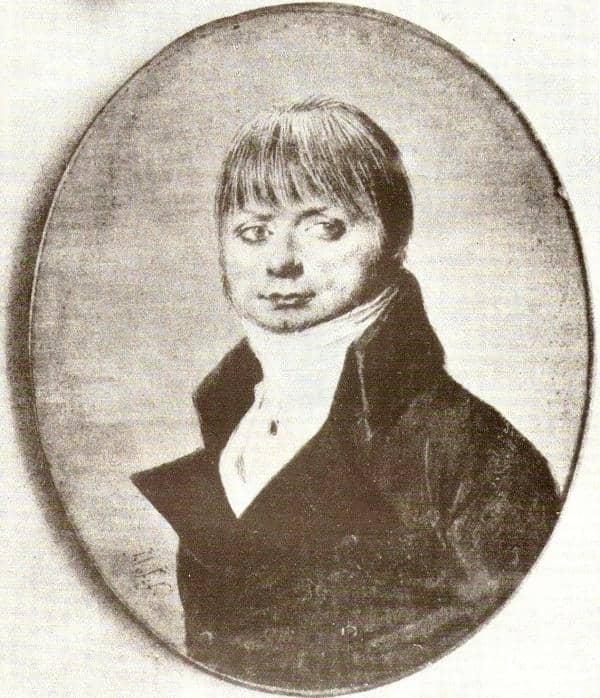
Another of Napoleon’s suspected agents was a French emigré whom we know simply as L. de Longastre. A former colonel in the French gendarmerie, he spent the last twenty years of his life in England. He made a very good living creating portraits in pastels of notable members of English society.
Among his many clients were James Watt, the steam combustion pioneer, Samuel Galton FRS a member of the Lunar Society and a number of its other members as well as those of The Royal Society. In 1794, he painted a portrait of a Mrs. Curtis. The head and shoulders study shows anattractive woman in her late thirties wearing a bonnet with green ribbons. There is some doubt about the provenance of the portrait, but expert opinion is that it is Longastre’s portrait of Anne Curtis.
As well as opening up the possibility of further lucrative commissions from Curtis, de Longastre may well have had a darker, hidden motive for the job of painting his wife’s portrait. At the time, he was widely suspected of being a spy for Napoleon. If this was the case, the job of a society portraitistwas an ideal cover for collecting sensitive information for his masters in Paris. It is intriguing to speculate what valuable titbits he may have gleaned from an unwary Anne during her portrait sittings. Any information about William Curtis’ dealings with the Government and the Navy would have been manna from heaven for the French Government.
Returned from the dead
In the tradition of all great spy stories, de Longastre mysteriously dropped out of sight in the late 1790s. Although he is thought to have died in 1799, he seems to have ‘returned from the dead’ in Birmingham in 1806.
In that year Matthew Bolton wrote a letter of introduction for an artist called de Longastre to John Wedgewood, son of Josiah, the celebrated porcelain manufacturer. In this letter, Bolton describes de Longastre as “a French emigrant gentleman” who was a “portrait painter in crayons” by profession.
If de Longastre feared imminent detection as an enemy agent what better way to disappear than to “die” before the English caught and hanged him? Even so, reappearing some years later in the Midlands was still very risky and indicates that like most master spies, he had nerves of steel.
His chameleon-like ability to blend in equally well with the French emigré community and theEnglish upper classes, his “faked” death and disappearance all bear the classic hallmarks of the secret agent. But we shall never know for sure, because, like all the best spies de Longastre was never caught.
The 'M' of his day
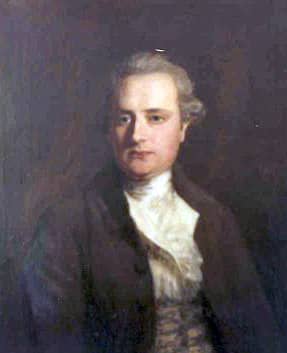
Most people think that the British spy network started just before or during the Second World War. In fact, the birth of British intelligence goes back much further than that. The “M” of his day was Evan Nepean, a Cornishman who became Permanent Under-Secretary of State for the Home Department in 1782.
In that capacity, he was responsible for all Naval and Political Intelligence. He was effectively the nation’s spymaster overseeing the recruitment of its spies. The most notable of these was Richard Cadman Etches a fur trader who began his espionage career spying for Catherine the Great. He then decided to offer his services as a spy for Britain. Napean took him on but never really. trusted the man, probably believing that ‘once Etches was a turncoat, he would always be a turncoat.” Even though he worked for and was paid by the British for six years Nepean never fully trusted him.
Nepean also recruited George Parker a rather unreliable individual who worked as a travelling actor before being recruited as a spy by Nepean. The fact that he was fluent in both Portuguese and French was probably a factor in his recruitment
However, Parker’s heavy drinking made him an unreliable agent. He also did not do himself any favours by boasting publicly about his secret exploits. After a while he was dropped by the Intelligence service. Eventually, he landed up in Fleet Prison.
Probably the most successful of all Nepean’s agents was Francis Drake, a British diplomat based in Genoa and Munich. Not only did he keep Nepean supplied with valuable intelligence, but he set up a variety of espionage networks.
The spy with the strangest reputation
The final word should go to the Napoleonic spy with the strangest reputation. This was a man known simply as Tarrare. He had an insatiable appetite to which he put to good use as the introductory act of a variety show. He would amaze his audience by swallowing everything from stones to live animals.
Around 1792, he joined the army to fight in the First War of The Coalition. It was here that his short career as a spy began. His unusual dietary habits caught the attention of General Alexandre de Beauharnais who decided to use him as a courier. The idea was that Tarrare would swallow his messages to travel through enemy lines. He would retrieve them from his excretia later.
His first and only mission was a dummy run by Beauharnais to see if his courier was up to the job. Tarrare was captured by the Prussians who beat him and subjected him to a mock execution. Eventually, when they discovered the “top secret” notes were bogus, they released him near the French lines.
Unsurprisingly, Tarrare did not make old bones and died at the age of 22. Like the rest of this crew of colourful early spies, he would then vanish from the pages of history.
© Nick Brazil 2025
Photos: Wiki
About The Author




Nick’s books are Available on Amazon
Click above to purchase

Click to see full BMMHS event listing pages.
Contact us at [email protected]
Copyright © 2026 bmmhs.org – All Rights Reserved
Images © Nick Brazil