On the Wings of Angels
The Story of Airlifts
by Nick Brazil
Medical evacuation flights in 1915
The use of aircraft to move troops, weapons or other supplies goes back to the early years of aviation in the first part of the 20th century. The very first airlift was conducted by French forces who were fighting the Germans and their allies in the Balkans.
In November 1915, single engined Farman MF11s flew injured French troops from the Macedonian (aka Salonika) battlefront These medical evacuation flights to hospitals in Corfu were long and arduous journeys necessitating a refueling stop in Albania. History does not record how many of those injured soldiers actually made it or how many died en route. This was just a few years after The Wright Brothers pioneering flight at Kitty Hawke and the early fighters such as the Farman’s were both slow and unreliable.
A testing airlift during the Afghan Civil War
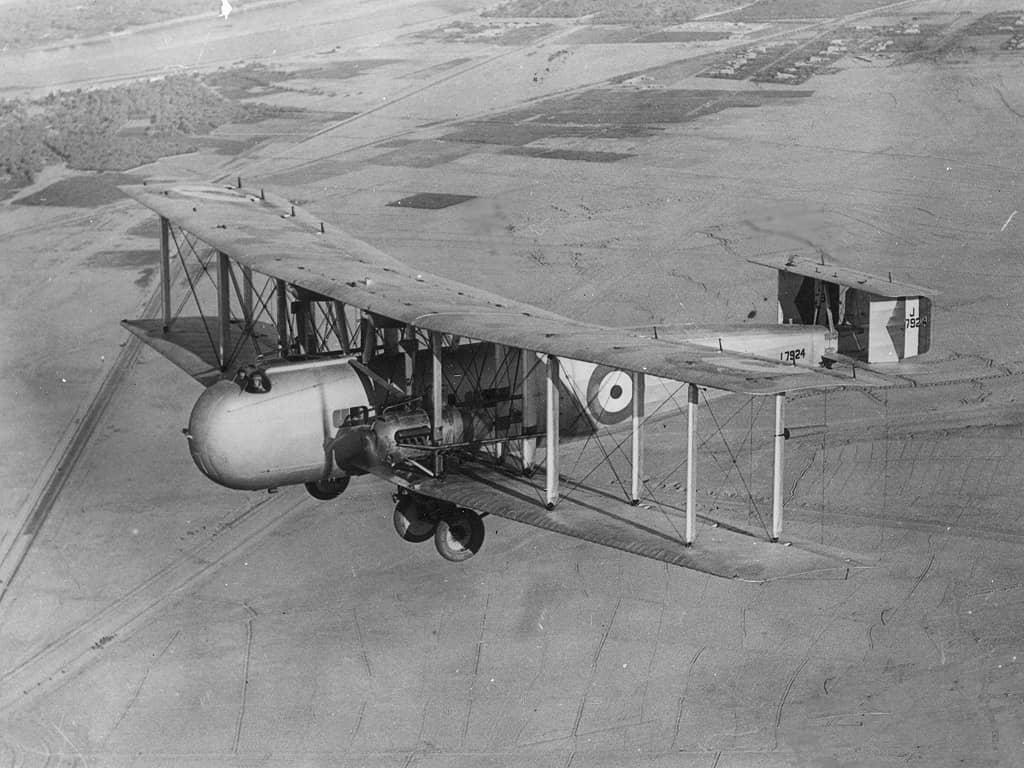
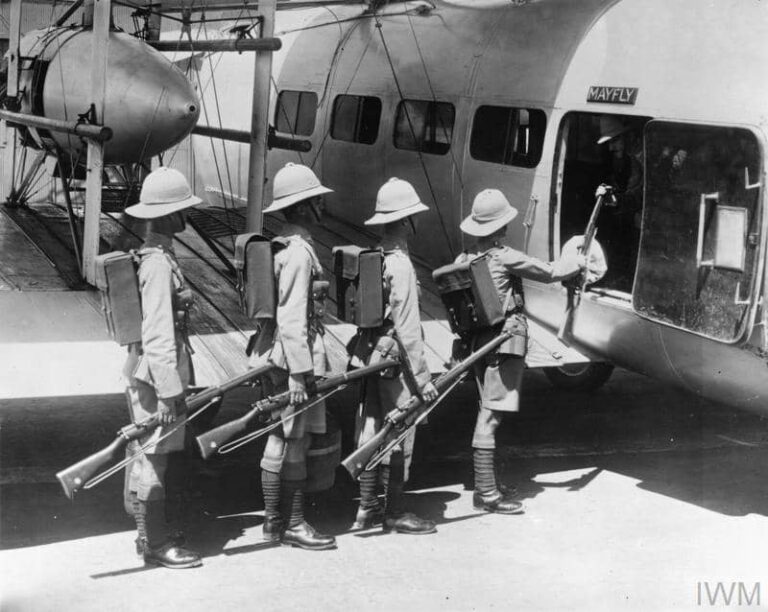
Eight years later, a truly testing airlift took place during The Afghan Civil War. In 1928, the British, no doubt mindful of what happened to their army retreating from Kabul in 1842 decided to move their Legation staff in Kabul out of harm’s way by air. In the earlier retreat under the incompetent William Elphinstone, the whole army was wiped out when marching from Kabul to Jellalabad. On this occasion it was decided to use air transport.
With the rugged and high mountains of the Himalayas with unpredictable and changeable weather this was still a risky venture. Nevertheless, in what became known as The Kabul Airlift, 586 staff and families were airlifted out of Afghanistan with no loss of life. This evacuation lasted from 23rd December 1928 to 25th February 1929. A variety of aircraft were used including eight Vickers Victoria troop transporters. By any standards this airlift was a remarkable feat of early aviation.
Franco's Army of Africa
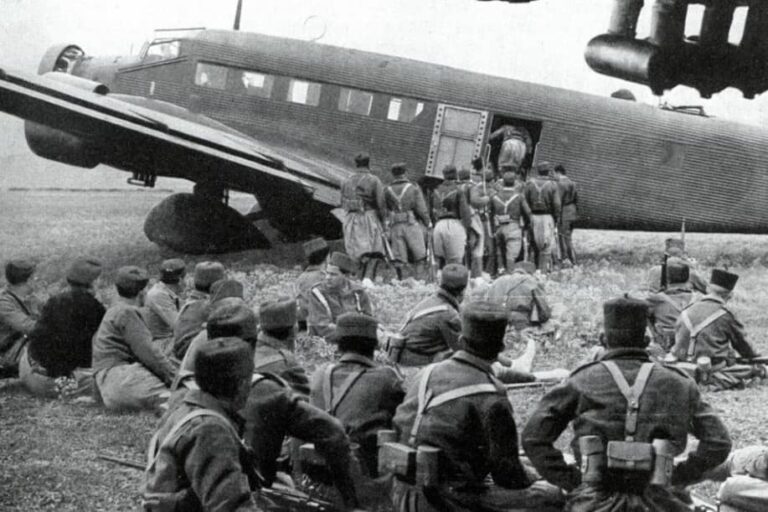
The next major airlift would not occur until the mid 1930s. Unlike that first French mission in the First War, it was not to save lives but had a totally belligerent military purpose. It took place in 1936 when The Army of Africa, was airlifted from the Spanish colony of Morocco to mainland Spain. These Spanish Forces were loyal to Franco’s nationalists and would take their side in the coming war. It was the first long distance airlift in history and could not have been accomplished without the logistical support of Franco’s German and Italian fascist allies Indeed, Franco’s victory in The Spanish Civil War may not have have occurred without their help.
The India-China Air Ferry
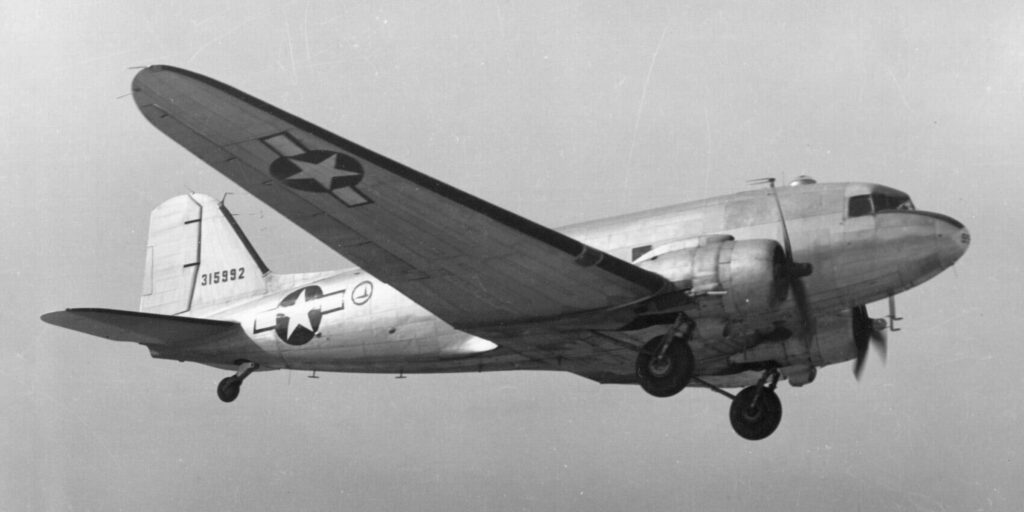
By the time the Second World War broke out, aviation technology had progressed in leaps and bounds. The transport aircraft that carried troops and materiel in this war bore no resemblance to the early stringbags that rescued injured French soldiers or British embassy staff. These modern planes were invariably twin engined C-47s and Dakotas that could fly far greater distances. This enabled one of the biggest airlifts in history to be successfully completed.
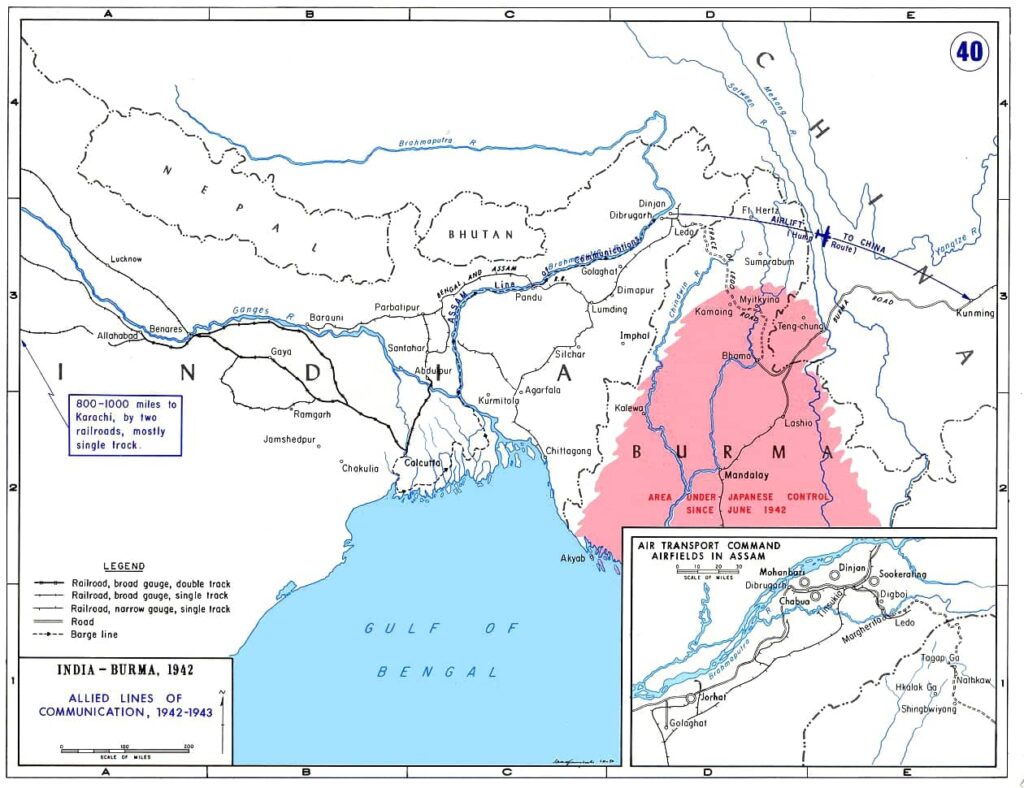
It became known as The India-China Air Ferry. Lasting from the Spring of 1942 until August 1945, it provided a lifeline of supplies to the allies in Burma and Chiang Kai Shek’s army in China. It was created because the Japanese forces controlled the land route to this theatre of war. Overall control was in the hands of the USAAF Air Traffic Command. As well as the US Air Force, both the British RAF and the Chinese nationalist air force played an important role in this ferry.
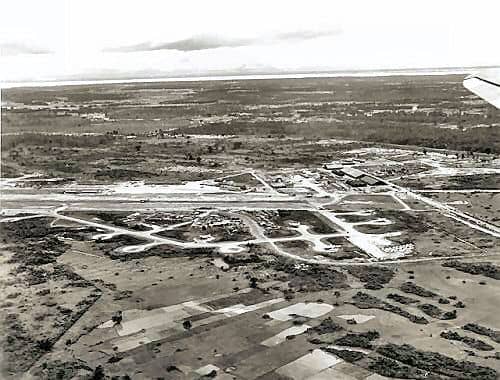
It was new ground for everyone involved. At this time, nobody had any experience when it came to airlifts. Whether you were a pilot, ground crew or an officer a sharp learning curve was involved. Flying supply planes from Northern India to the battle front involved a round-trip of 1000 miles across some of the most dangerous terrain in the world. A plane flying from the RAF base at Chabua in the Bramaputra Valley would have to climb from an altitude of 90 feet above sea level, to cross the Himalayan Mountain chain whose peaks averaged 14,000-16,000 feet. The pilots had their own name for this forbidding range which they christened The Hump.
Flying over The Hump pitted these pilots against often hostile weather conditions that could change at a moment’s notice.
Stalin tries to bully The West
The end of the Second World War left Germany in a messy political maze. Different areas of the country were controlled by various members of the victorious powers. The western part of Germany was in the hands of the the UK, France and the US whilst the East was occupied by Soviet Forces. The former Nazi capital of Berlin was situated in an enclave one hundred miles within the Soviet zone. Just to complete this confusing stew of power politics, the city was divided into four zones each of which was controlled by one of the four occupying powers.
The road and air routes into Berlin from the rest of Germany were also controlled and strictly limited by the Soviets. There were only three air corridors, two of which originated in the British zone and the third from USAAF air bases in the American zone. Such was the chaos during the Allies’ advance into Germany, no formal or written agreement existed between the Soviets and the other Allies laying down rules of access for the ground routes. These roads, railways, waterways relied totally on the goodwill of the Russians to stay open to the other powers.
From 1946, the Soviets upped the ante to pressure the Allies into quitting Berlin. From that year, they talked up the inevitability of not just Berlin, but the whole of Germany becoming a satellite Soviet state. On the ground, they cut off all supplies of agricultural goods from East Germany to Berlin. The US Commander retaliated by stopping the shipment of all dismantled industrial equipment to The Soviet Union.
By 1948 Stalin’s attempts at bullying the Western Allies out of Berlin became even more blatant. Fortunately, the Commander in charge of the US controlled area of Germany was an exceptionally tough and clear-thinking General called Lucius Clay. He flatly refused to be intimidated by the Russians.
Was he going to stand by and watch the Allies pushed out of Berlin? Hell no! In January 1948, the Soviets began insisting that the identities of passengers on all British and American trains to Berlin be checked. In March 1948, they turned the screw even tighter by restricting all American and British passenger traffic from the allied controlled area of West Germany to Berlin.
In that year, Stalin had openly spoken about “white anting” the Allies control of Berlin. He was also on record saying the whole of Germany would become Soviet communist state. In the air, the buzzing of western planes using the corridors by Russian jets became a regular occurrence. This dangerous practice inevitably ended in tragedy. On 5th April a Soviet Yak fighter came too close to a BEA Viking causing a midair collision killing everyone aboard the two planes.
Many people in high places began wondering whether The Soviet’s words and actions were a prelude to another shooting war. In a letter to The US Secretary to the Army Kenneth Royall, Lucius Clay outlined his fears for the future:
“For many months based on logical analysis, I have felt and held that war was unlikely for at least ten years. Within the last few weeks, I have felt a subtle change in Soviet attitude which I cannot define but which now gives me a feeling that it may come with dramatic suddenness ….”
In spite of this dangerous situation, the Western powers led by the Americans, believed the only way forward was for Germany to become a new democratic country with its own currency, the Deutschemark. This particularly irritated Stalin who wanted the old unstable Reichsmark to remain as the currency for Berlin and Germany. Something would have to give.
The Berlin Blockade
Between 18th and 28th June 1948, the Soviets introduced a series of measures that either stopped or severely obstructed all road, rail and canal links with Berlin. By the time the full blockade started on 28th June, Berlin was totally cut off from West Germany. There was also nowhere near enough food or other supplies such as coal to sustain its population of 2.5 million people.
The city could also not rely on the Western Allies coming to their aid militarily. The US and Britain had greatly reduced their armed forces in Germany and were completely outnumbered by the 1.5 million Soviet troops surrounding the city. Stalin believed the odds were in favour of him and the Western Allies would capitulate within weeks. This was a major miscalculation on his part.
Fortunately, unlike the ground routes, the Allies had a signed agreement that allowed three twenty-mile-wide air corridors between Berlin and West Germany. By the end of June 1948, Lucius Clay had agreed with the head of all US Air Forces in Europe General Curtis LeMay, to mount an airlift that would save Berlin.
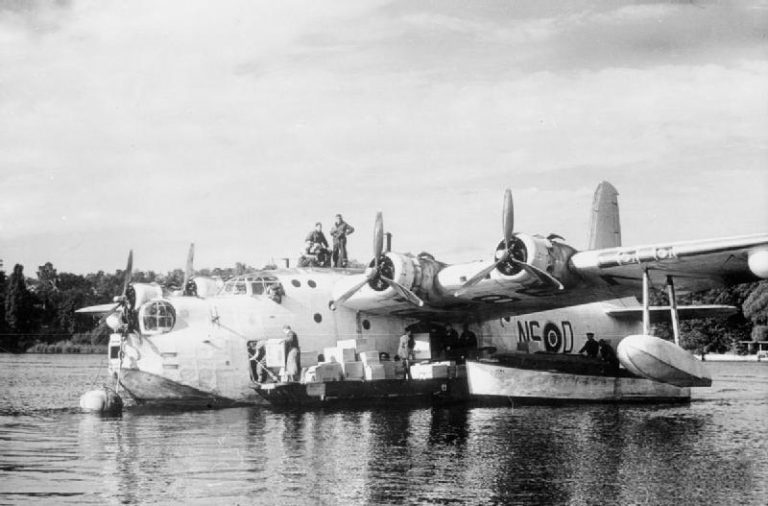
Initially, the number of aircraft available were limited. The Americans had about 100 C-47 Skytrains. They calculated the minimum tonnage of supplies required by the city every day would be 1,534 tons. These supplies would range from wheat to meat and dehydrated vegetables. An additional 3,475 tons of coal, oil and petrol would be needed daily to keep the city running.
The Berlin Airlift is transformed
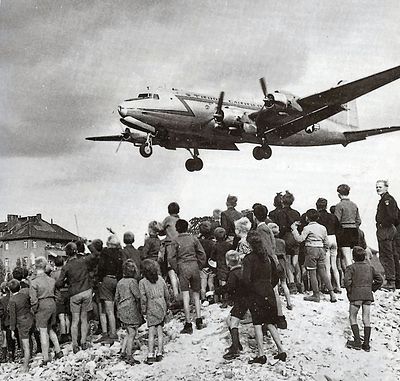
In the first week, the airlift delivered 90 tons of supplies every day. In the second week this total had risen to a thousand tons daily. Undoubtedly, everyone was “learning on the job”. Nevertheless, it was no mean feat handling so many different types of aircraft coming in from three different locations. The problem was that the US Air Force in Europe had no experience running such an operation. The result was that the airlift suffered shortfalls in operational efficiency. There were too many cases of aircraft standing idle unnecessarily, too many flights crewed by “joy riders” for their own aggrandisement and too many missed maintenance dates.
These problems were ultimately solved by the appointment of Major Gen. William H. Tunner in August 1948 to command the airlift. He had cut his teeth on running Air Transport Command in the Far East during The Second World War and was highly respected for his organisational abilities. During his time in that post, he had transformed The Hump Airlift over the Himalayas from India to China. On his watch, he doubled both the supplies and hours flown.
He rendered a similar transformation with the Berlin Airlift. Under his command underused aircraft and missed maintenance schedules became a thing of the past. All flights operated strictly to Instrument Flight Rules. The passage of aircraft from their bases was reorganised and highly disciplined. Each plane had to stick to a tight schedule. If they missed their landing in Berlin they had to return to the back of the queue at their home bases. His target was to have a plane land in Berlin every minute. Whilst he never quite hit that, at the height of the airlift, planes were landing every three minutes.
As the Berlin Airlift bedded in, the Soviet side began to realise they had seriously underestimated the resolve of the US and the Allied powers. They also found that far from damaging Berlin and Western Germany, their harassment was seriously hampering their efforts to rebuild the economy in the Soviet zone. An important crack in the edifice of their Blockade of Berlin appeared on 15th April 1949. On that day it was announced through TASS the official Soviet media mouthpiece that the Russians were prepared to raise the blockade.
Negotiations between the two sides began almost immediately with the Blockade officially ending at one minute past midnight on 12th May 1949. As soon as this had happened, a convoy of British trucks set out for Berlin. The first train from West Germany arrived in Berlin just after half pas five on the same morning.
This was not quite the end of the story. Because of the possibility the Russians might suddenly re-instate a blockade, the US and its Allies continued to fly in supplies, particularly coal. The city authorities would maintain six months of food and vital supplies until the reunification of Germany over forty years later. The Berlin Airlift officially ended on 30th September 1949. It had lasted 15 months.
Operation On the Wings of Eagles
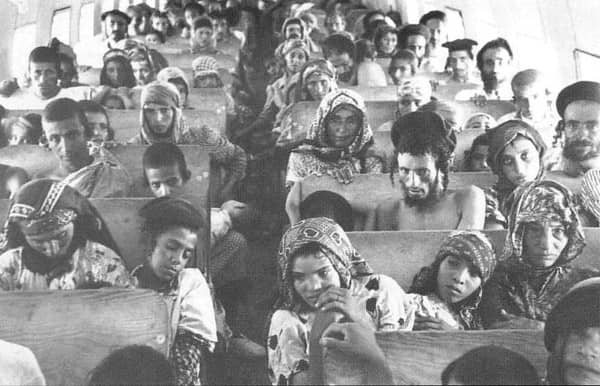
Since then, there have been a number of notable airlifts. Not long after the Berlin operation, the fledgling state of Israel took on its own aerial rescue missions. Israeli Air Force and El Al aircraft were despatched to various Muslim and Arab countries following the 1948 Arab-Israeli War. Their purpose was to rescue Jewish minorities from those countries where they faced persecution.
In 1949, an Operation Called ‘On the Wings of Eagles’ airlifted 50,000 Jews from the Yemen to Israel. Similar Israeli airlifts also rescued thousands of Jews from Iraq, Sudan, Yemen and Ethiopia it is thought these operations known as Aliyah saved three million lives since the foundation of Israel.
The Biafran War
Throughout The Cold War, as conflicts proliferated throughout the world so did the need for airlifts. In 1960 when Belgium pulled out of their colony of the Congo, the country collapsed in bloodshed and chaos. Countries such as Pakistan and Sweden under the aegis of the UN sent troops in to stabilise the situation in the Congo. Airlifting them and their supplies was organised and managed by the United States Air Force Military Air Transport Service. This operation was originally called Safari but the name was changed to New Tape. It would last three and a half years, a great deal longer than anyone expected.
In the years since that operation, there have been other notable airlifts many of which have saved countless lives. During the Nigerian Civil War in 1967-69, Protestant and Catholic Churches mounted an air bridge between the Portuguese colony of São Tomé and Príncipe and Biafra. Using ageing prop driven airliners such as DC-7s and Lockheed Constellations. It’s official name was Joint Church Aid which gave rise to its nickname: Jesus Christ Airlines.
This operation was prompted by the fact that the Nigerian Government blockade of Biafra was causing widescale starvation. Most of those who died were children. Flying only at night with no navigation lights, these planes brought in aid and extracted refugees who were mainly starving children, from an improvised airfield at the town of Uli. With the ever-present risk of being shot down by fighters of the Nigerian Air Force it was a very risky operation that cost the lives of many of these aircrafts’ crews. Nevertheless, this airlift is credited with saving a million lives.
The evacuation of Kabul
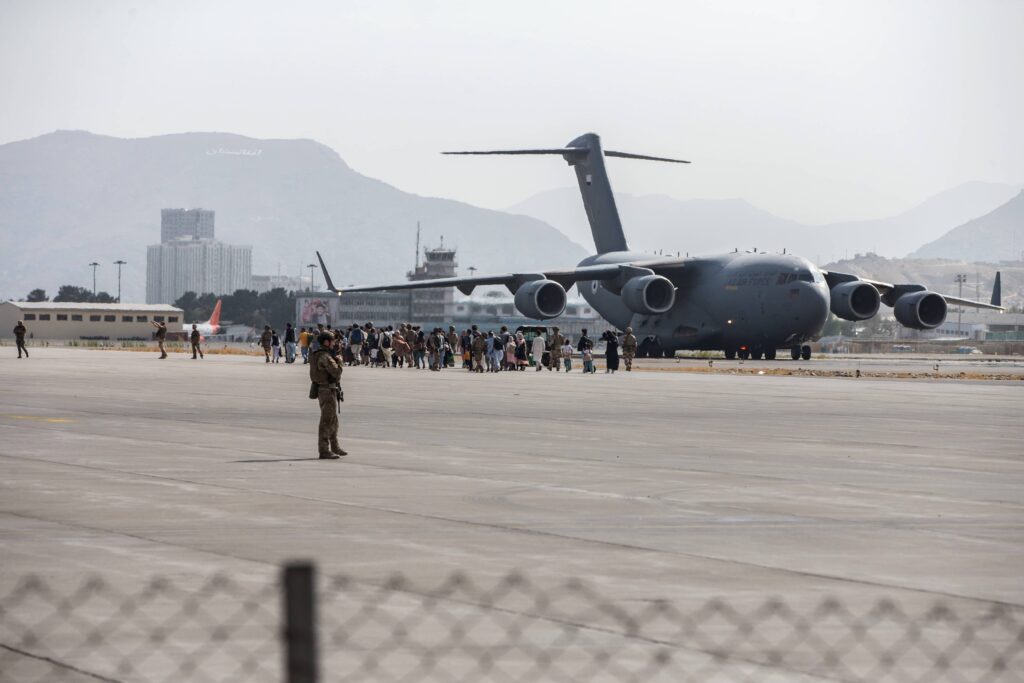
In 1990, when Sadam Hussein’s Iraqi army invaded Kuwait, many thousands of expatriate Indian workers found themselves trapped in both Iraq and Kuwait. This occasioned the largest civilian airlift in history with Air India jets flying out 176,000 Indian migrant workers to safety.
© Nick Brazil 2025
Photos: Wiki
About The Author

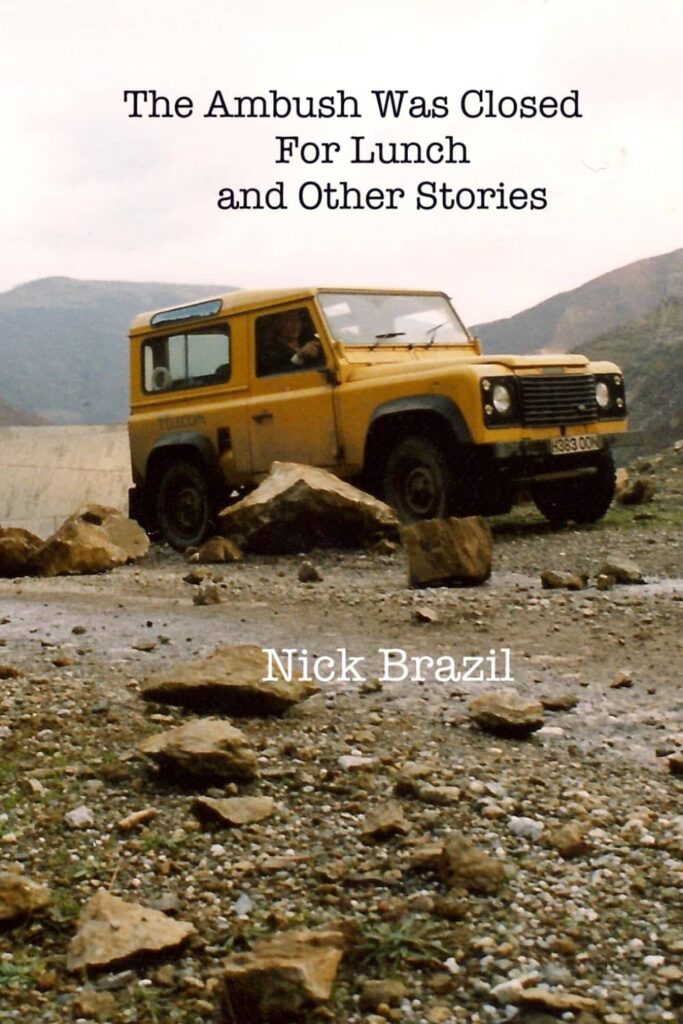

Nick’s books are Available on Amazon
Click above to purchase

Click to see full BMMHS event listing pages.
Contact us at [email protected]
Copyright © 2026 bmmhs.org – All Rights Reserved
Images © Nick Brazil