“One Of Our Aircraft is Stolen….”
by Nick Brazil
Espionage on a grand scale
Theft is the stock in trade of espionage. Indeed, without agents to purloin and copy secret documents or steal new technology, the whole business simply could not function. The majority of such espionage operations are carried out in complete secrecy and known only to a small group of people.
However, some espionage thefts are on a much grander scale. The most spectacular of these have been the theft of a hostile or competing nation’s aircraft. Because of the very size and nature of the prize, these operations are very risky. However, if successful, they offer huge rewards to the perpetrators.
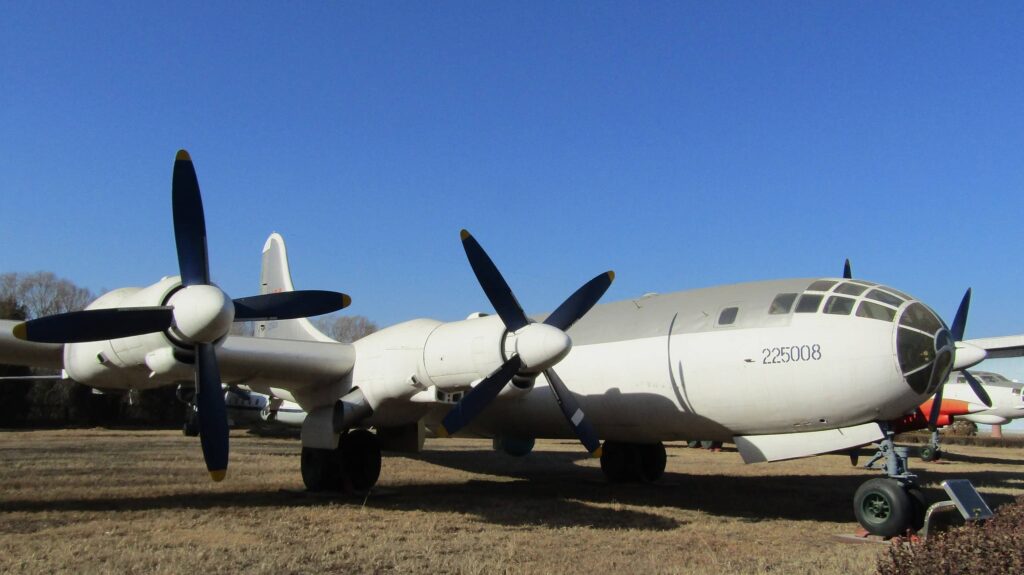
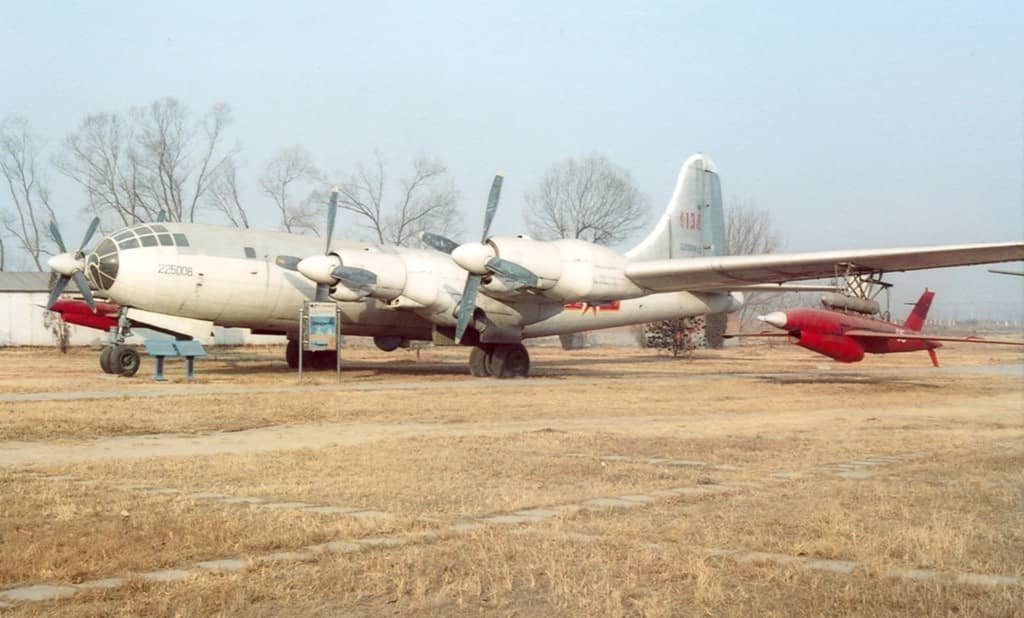
The Soviet capture of USAF B-29 Superfortresses
One of the most remarkable of these thefts was the Soviet capture of three USAF B29 Superfortresses in 1944. At the time, this Boeing bomber was a world beater and represented the very cutting edge of aviation technology. Brought into service in 1942, it had a pressurised cabin, enabling it to fly at nearly 32,000 feet. It also had the ability to conduct accurate low level night time bombing raids. In addition to this, its multiple analogue computer controlled machine guns enabled all its defensive armaments to be operated remotely by one gunner.
Its ability to carry a payload of 5000 lbs of bombs at maximum altitude or 12,000 lbs at medium altitude made it both deadly and versatile. For its time, the B29 was indeed the world’s leading warbird. No wonder the Allies’ enemies coveted it! However, it was not only their enemies who wanted to lay hands on this aircraft, but also their “friends”. Stalin and the Soviets wanted the B29 as an alternative to their slow and crude bombers.
The Russian leader twice requested US President Roosevelt to provide some of these Superfortresses under Lend/Lease. However, the US leader was no fool. No doubt he realised the Soviets were only allies whilst fighting the Nazis. When the war was won it would be a different story. With this in mind, he had no intention of making this highly strategic weapon a gift to a future enemy. Although the Americans provided the Soviets with thousands of fighters and lesser aircraft, they refused to supply any B29s.
"Ramp Tramp" turns towards Vladivostok
In 1944, the US Forces had the Japanese well and truly on the back foot. In those days, China had not fallen to Mao’s Communists. As a result, the USAF mounted intensive bombing raids on the Japanese mainland from China’s airfields. On one such mission, 100 American bombers took off from Chengfu airfield in China. Their target was the Anshan Steelworks in Japanese occupied Manchuria.
Captain Howard Jarrell commanded one of the B29s with its ten man crew on this raid. The name of his plane was “Ramp Tramp”. An initial problem with the plane’s auxiliary power unit delayed the aircraft’s departure and it took another two hours and a significant amount of fuel to catch up with the other bombers.
After dropping its payload, “Ramp Tramp” began the return journey to Chengfu. However, number three engine began playing up. Racing out of control, it was burning yet more fuel as well as running the risk of catching fire. Jarrell took the difficult decision to shut it down. With its props static, the faulty engine was now a drag on the whole plane causing it to burn more of its precious fuel.
Forced down by Soviet fighters
It soon became obvious that “Ramp Tramp” would run out of fuel before reaching Chengfu. The plane became a hive of activity as the crew set about destroying classified documents and anything else that might be useful to the enemy. They were still over Japanese territory forcing Captain Jarrell to make the decision to land on Russian soil. He turned towards Vladivostok in the Soviet Far East.
His plane was actually forced down by Russian fighters firing warning shots. The B-29 made a rough landing on a grass strip and the crew were taken into custody. The Russians lost no time in shipping “Ramp Tramp” to Moscow for analysis. Meanwhile, Captain Jarrell and his crew were interned and interrogated for three days. They were eventually released seven months later.
They were not alone. Another 100 American aircrew had also effectively been held prisoner when their planes were forced down in Soviet territory. Three of those planes were also B29s. All of them were shipped to the Tupolev aircraft design facility in Moscow. Despite angry demands from the Western allies, Stalin never returned those B 29s.
Stalin orders an exact copy
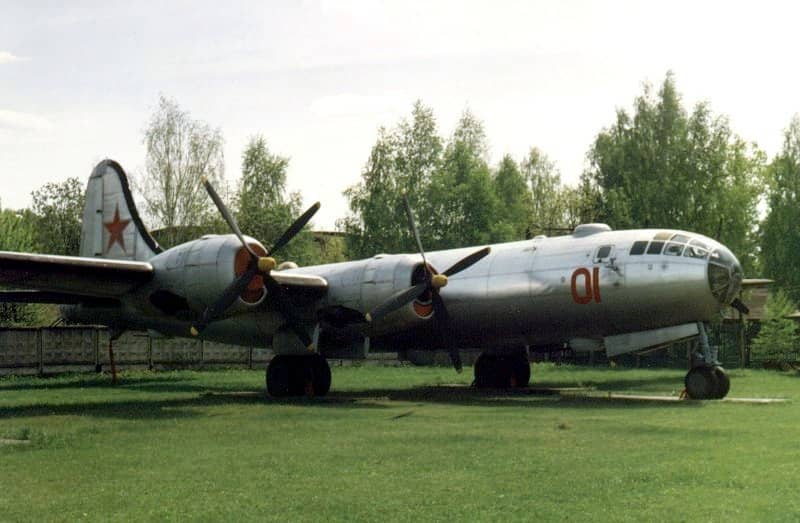
Stalin’s orders to Andrei Tupolev and his team was that they were to create an exact copy of the B-29 down to the last rivet. In addition to “Ramp Tramp” they had two other B-29s to help them in this task. They were named “ General H.H. Arnold Special” and “Ding How.” Both had landed intact near Vladivostok. By any standards this would be a remarkable feat of reverse engineering.
Much of the material that made up these bombers was simply not available to the Russians. For example the aluminium used on the fuselages was 1/16” thick and was far stronger and thinner than the Russian equivalent. The tyres for the landing wheels were also huge and had to be bought clandestinely by Russian agents from the western war surplus stocks.
Miraculously, within two years, the Russians had managed to complete a duplicate of the B-29. In August 1947, with the Cold War well under way, the TU-4 as the Russian plane was known made an appearance in front of an international audience of air attaches at Tushino Airfield near Moscow. For the first time, the Western powers became aware that The Soviet Air Force had well and truly come of age.
845 Tupolev TU-4s were eventually manufactured providing the Soviets with a fleet of high performance long range bombers to match western counterparts. Forming the backbone of the modern Soviet Air Force, these planes remained in service until 1955 and would serve as reconnaissance aircraft in the Korean War. Without doubt, Stalin’s theft of those three bombers played a significant role in modernising his air force.
Operation Diamond
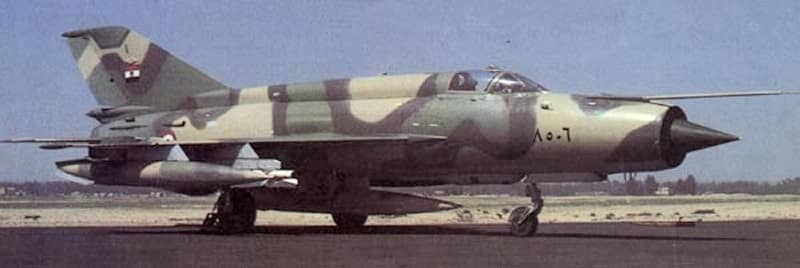
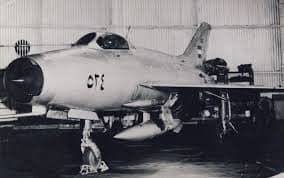
Whilst “confiscation” of those three B-29s was a theft of opportunity, Operation Diamond was one that was meticulously planned. In mid 1963 Mossad, the Israeli secret service organisation launched an operation to steal a Mig-21. This was Russia’s most advanced supersonic jet fighter and the first to achieve speeds of Mach 2. The Israeli Government knew that sooner rather than later, they would be at war with their hostile Arab neighbours. As client states of the Soviet Union, two of these countries, Egypt and Syria had been supplied with Mig-21s by the Russians. Before the shooting started, the Israelis needed to know the full capabilities of this potent aircraft. The only way to find this out was to acquire one of these fighter/interceptors.
The first attempt to steal a Mig-21 occurred in 1962. This involved a team of Mossad operatives based in Egypt and led by Jean Thomas. They offered Adib Hanna an Egyptian pilot $1,000,000 to defect with his Mig-21. In spite of the large sum, he was not tempted and he blew the whistle on Thomas and his team. Thomas and two others were subsequently executed. A second attempt to hijack an Iraqi Mig-21 also ended in failure.
Mossad strike gold
In 1964, Mossad finally struck gold in their search for a Mig-21. It came via a somewhat circuitous route. Joseph, was a sixty year old Iraqi jew living in Teheran where he worked for a Maronite Christian family. Having been brought up with the family since he was a ten year old boy, he had been totally absorbed into its Christian culture. Any fragments of his past as a jew were long forgotten. As he grew into manhood and middle age, he became revered as a father figure for the family. If any member needed advice or help in any matter, the wise figure of Joseph would always be first port of call.
Then one day all this was shattered by a few clumsy words spoken in a row with one of the other Maronite elders. Joseph would be nothing, he said were it not for their family. Instantly regretting his cruel words, the elder quickly retracted them, but the damage had been done.
Nobody knows exactly what was said in that row and whether it included a slur against Joseph’s semitic origins. However, it seems likely, since he went off and started research his jewish background. This turned him into an ardent Zionist and supporter of Israel.
Over the years he had built up friendships with other Maronites throughout the Middle East.One of these had told him of a friend who was married to a fighter pilot in the Iraqi Air Force. However, he was not simply any pilot but commanded one of the country’s elite Mig-21 jets. Apparently this man, called Munir Radfa was deeply dissatisfied with his lot since a recent Iraqi coup.
Because he was a Maronite Christian, he was effectively blocked from promotion in the Muslim dominated Iraqi Air Force. In addition to this, he disliked being sent on regular missions to bomb Iraqi Kurds. In fact, Radfa was so unhappy, he was thinking of leaving Iraq. Of course, because of his relatively exalted position in the Air Force this was next to impossible without external help. On hearing this, Joseph contacted the Israeli Government with information about this potential defector.
"lose your nerve, you are a dead man..."
Many in the Israeli intelligence community were skeptical about Joseph, believing him to be just a chancer out for money. However, Meir Amit, the newly appointed head of Mossad, was of a different opinion. Even when Joseph asked for more money, he stuck with him. It helped that Meir had the backing of Yizhak Rabin, the head of the Israeli Armed Forces. Had that not been the case the whole venture might have been stillborn.
As it was, Meir recruited one of Mossad’s top agents in Baghdad to seek out this candidate for defection. This was an attractive and engaging American woman. Little else is known about her, not even her name or whether she was a Jewish or contract operative for Mossad. Nevertheless, she was able to inveigle herself into the highest echelons of Iraqi society. In this capacity, she set her hat at Munir Radfa. She became a sympathetic ear to the man who poured out his woes. He told of his frustration at not being promoted and how much he hated bombing the innocent Kurd civilians. It was not long before Radfa and the American woman became lovers.
In July 1966, she arranged a holiday for them in Europe. It was during this break she told Radfa who she really worked for and persuaded the pilot to travel to Isreal to meet the intelligence and military chiefs. Realising he was in too deep to back out, the Iraqi pilot went along with the planned defection. This would involve breaking out of Iraqi air space on the northern border with Jordan and making a 900 kilometre zig zag dash from there to an Israeli air base in the Negev Desert. Mordecai Hod the Chief of the Israeli Air Force who briefed him, left Radfa in no doubt about the danger of the mission he was going to embark on:
“If you lose your nerve, you are a dead man. Once you have left your ordinary flight path there is no turning back,” Hod said with finality.
Great danger...Rich rewards
Although great danger lay ahead, the rewards for Radfa were considerable. Not only would the Israelis pay him a million dollars, they guaranteed him citizenship, a passport and a job for life. They also agreed to extract both his immediate and extended family from Iraq. To prevent an accidental leak to the authorities, none of them were told beforehand.
On 16th August 1966, Munir Radfa was scheduled to go on a regular training flight. One can only imagine the turmoil in the pilot’s mind since this was the day of his planned defection. Normally, his fuel tanks were not kept full as a precaution against him “doing a runner.” However, the Soviets had stationed their own minders at the base to keep an eye on their precious Mig-21s. These Russians tended to be heavy handed and patronising towards the Iraqi ground crews, something which the locals found very irritating. Radfa played upon this poor relationship to persuade the Iraqi engineers to top his tanks right up with fuel.
Jordanian Hunters give chase
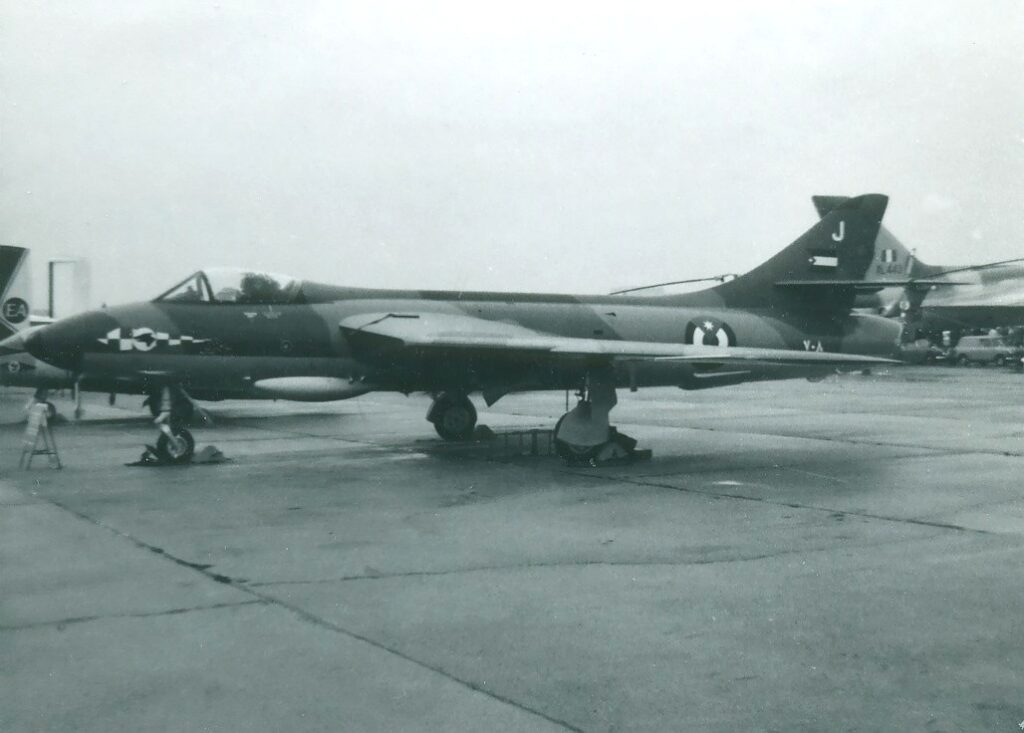
Shortly after takeoff Radfa veered away from his ordained route towards Baghdad. Instead he followed the perilous zig zag journey out over Jordan and into Israeli teritory. The region’s military radar screens lit up as Syrian, Jordanian and Egyptian air defences realised a defector was loose. At one stage two Jordanian Air Force Hawker Hunters gave chase, but they were no match for the speed and altitude of the Mig-21.
The Israelis had also been tracking the escaping jet and they sent up a flight of Mirage fighters to escort Radfa and his Mig-21 to a desert air base. When he finally landed safely at Hatzor IAF Base it was said his tanks were virtually empty.
On that same fateful day, the rest of the Radfa family were picked up in two trucks. They told neighbours they were off to a desert picnic. Instead, they travelled to Iran via a rebel area of Kurdistan and then by helicopter to Israel.
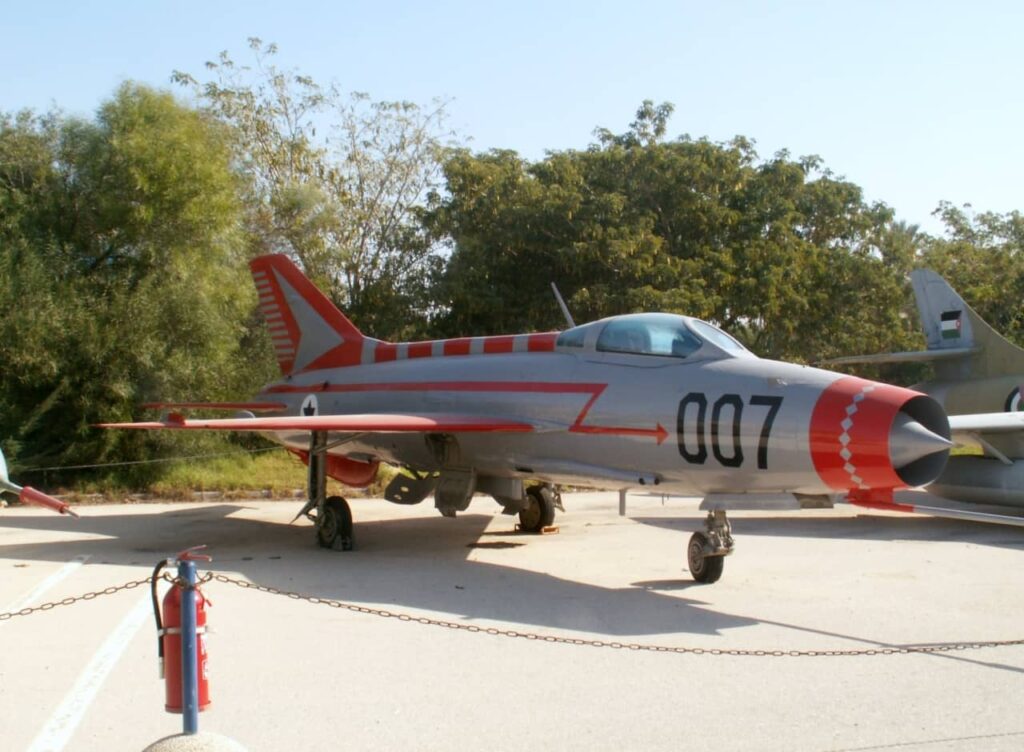
An international furore followed the defection and theft of the Mig-21 with both Russia and Iraq demanding its return. Resisting all pressure, the IAF put the Mig-21 through its paces. What they learned put them in good stead when the Six Day War broke out in June 1967. In one dogfight, Israeli Mirages used the knowledge gained to shoot down six Syrian Migs without loss of one of their aircraft. It was also believed that it helped them achieve vital air superiority in that lightning war. The United States also borrowed the jet to do their own tests.
Munir Radfa, lived out the rest of his life with his family in Isreal. He died in Israel aged 64 in 1998. His American lover who was a Mossad agent vanished back into the shadowy world of espionage. Joseph, who originally put Israeli intelligence in touch with the defector remained in Tehran as “a secret Zionist”. The Mig-21 is now on display at The Israeli Air Force Museum at Hatzereim. It still bears its renumber of 007 to honour the “James Bond” style of its theft.
© Nick Brazil 2024
Photos: Wiki
About The Author



Click to see full BMMHS event listing pages.
Contact us at [email protected]
Copyright © 2024 bmmhs.org – All Rights Reserved
Images © Nick Brazil