‘Better a horse in the German army than a soldier in the Romanian army’
Romanian Military Experience during the Second World War
by James Goulty
‘When it’s a question of action against the Slavs, you can always count on Romania.’
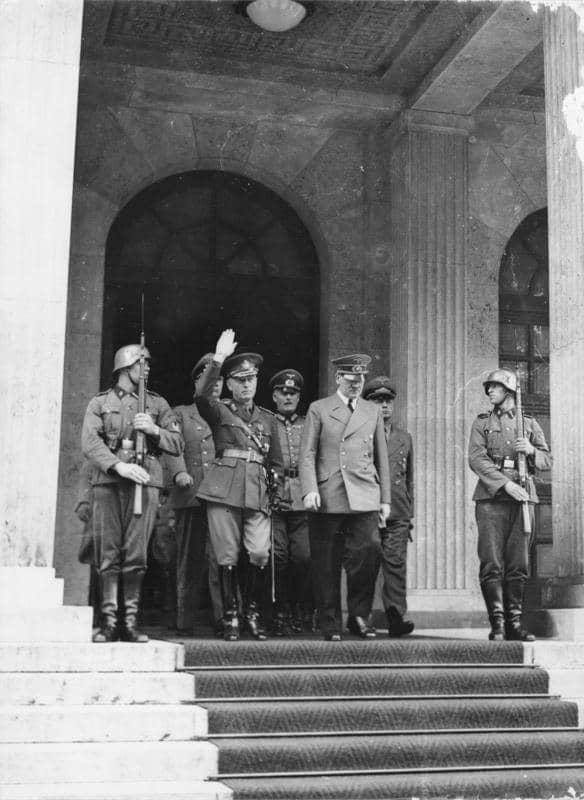
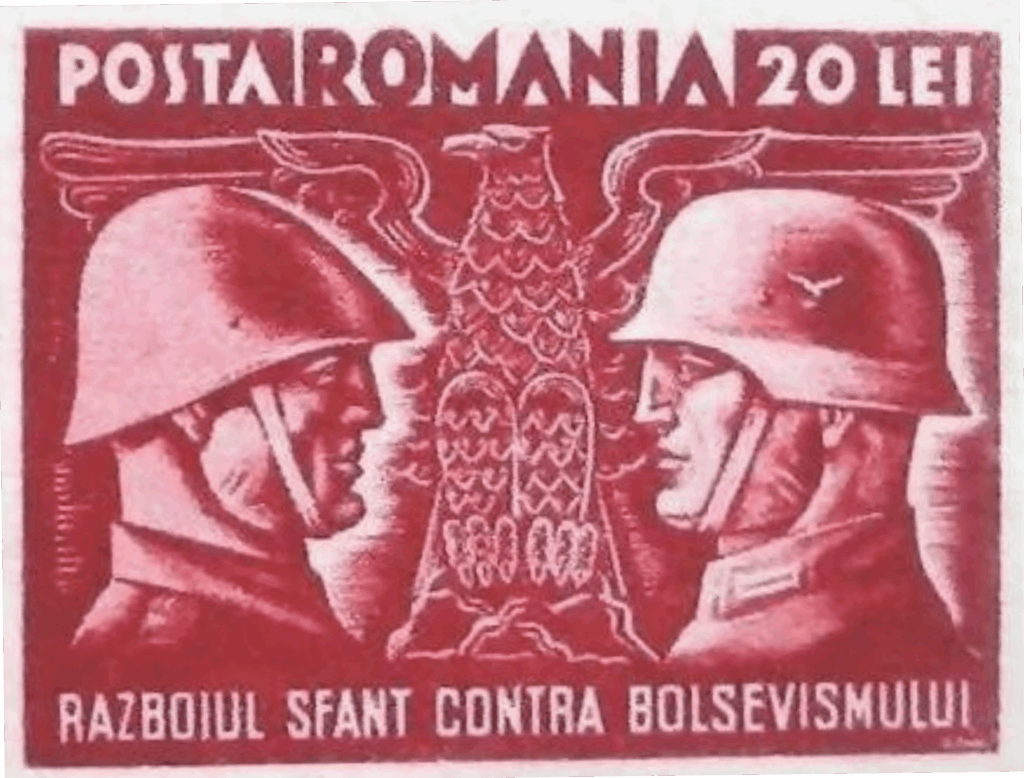
When Nazi Germany launched its war of annihilation against Stalin’s Russia in June 1941, its troops were not alone, as alongside the Germans, were armies from Romania, Hungary, Italy, Slovakia and Croatia. Typically, these Eastern Front Axis Allies hated each other more than the Russians. For example, there was traditional enmity between Romanians and Hungarians over Transylvania, and soldiers brought such tensions with them on active service. Despite this, the Romanian dictator, Marshal Ion Antonescu (1882-1946), on hearing about Operation Barbarossa, the Nazi’s invasion of Russia, was reputed to have told the Germans: ‘When it’s a question of action against the Slavs, you can always count on Romania.’
Even so, friction between these Axis Allies and their German counterparts sometimes marred battlefield co-operation, and typically German commanders tended to deploy their allies on secondary tasks. This scornful view extended to the Romanians, even though they attained notable, if costly, victories at Odessa and Sevastopol, achievements that set them apart from the other Axis Allies whose contribution was not as significant. In Panzer Battles, Major-General F. W. von Mellenthin, who had been Chief of Staff to XXXXVIII Panzer Corps in Russia, described an inspection he mounted of attached Romanian formations. He found that their artillery did not have any equipment to compare with modern German or Russian guns, and signals organisation and equipment was ‘insufficient to achieve the rapid and flexible fire concentrations indispensable in defensive warfare.’ Likewise, he deemed that the Romanian’s anti-tank provision was ‘deplorably inadequate’ and armour obsolescent, a state of affairs that reminded him of the Italian units he had encountered in North Africa. As he stressed: ‘Poorly trained troops of that kind, with old fashioned weapons, are bound to fail, in a crisis.’ Distinguished historian, Anthony Beevor, observed that Russian interrogation of Romanian POWs, even revealed cases of ‘fist fights’ between German and Romanian soldiers, and in one case it was alleged that a German officer was killed after shooting Romanian troops. To avoid such unsavoury incidents, the commander-in-chief of the Third Romanian Army, suggested that dinners and other social events should occur between the two allies, so as to forge closer bonds while in pursuit of common aims on the battlefield.
Bravery and desertion
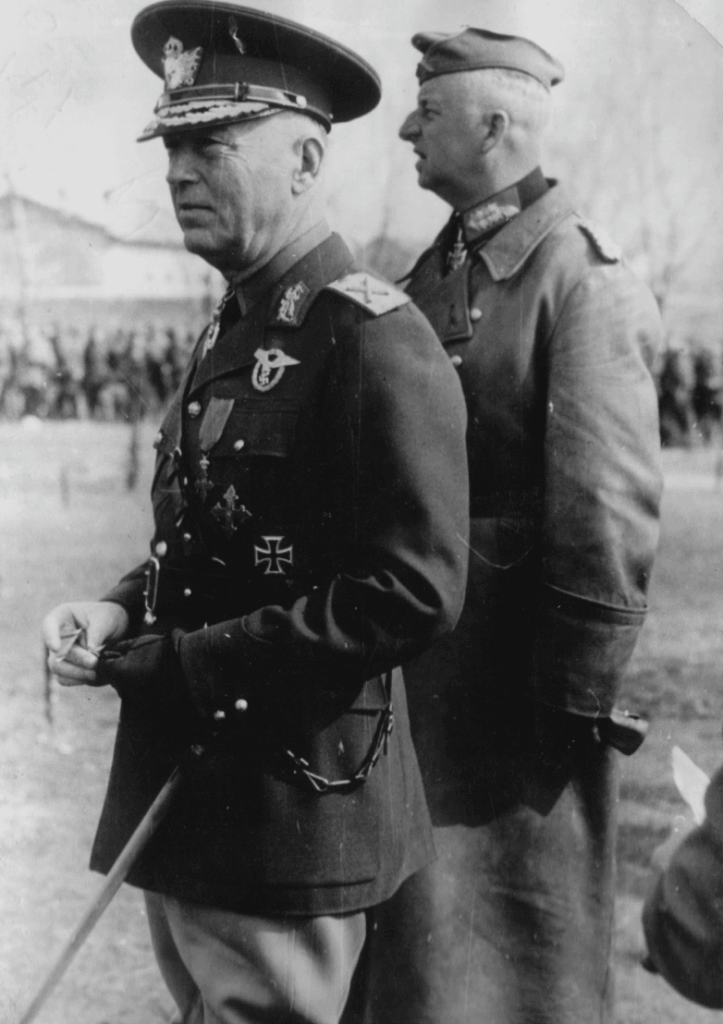
Desertion was another challenge, such as when the 82nd Romanian Regiment attached to the German 297th Infantry Division, came under heavy Russian bombardment during the fighting around Stalingrad, and according to a German staff officer ‘made a run for it.’ Field Marshal Paulus, commander of the German Sixth Army, was similarly deeply concerned about the detrimental effects that Russian propaganda printed in Romanian was seemingly having on his ally. Yet, for all these criticisms, Romanian troops, the majority of whom came from hardy peasant stock, were extremely resourceful, and capable of withstanding tough conditions and fierce fighting, despite their poor equipment. Equally, several units and even individual soldiers, proved capable of acts of extreme bravery and military competence. During Operation Uranus in November 1942, Romanian infantry knocked out several Russian tanks armed with nothing more than Molotov cocktails and hand grenades, and repulsed repeated Russian massed infantry assaults relying only on their small arms and mortars. Indeed the Transylvanians from 20th Infantry Division’s 82nd Infantry Regiment thwarted the attacks by two Russian divisions, and the entire unit received the Mihai Viteazul, or Order of Michael the Brave, Romania’s highest military award. Additionally, a number of citations were earned, plus 50 individual troops received Iron Crosses from the appreciative Germans.
‘Romania’s war not Germany’s war’
An indication of the Romanian contribution to the Axis cause, and the horrendous campaigns experienced on the Eastern Front, can perhaps be gleaned from casualty figures. By mid-1944 the Romanians had lost around 350,000 men fighting against the Russians. At least a further 170,000 were then lost during the final phases of the war, when Romania switched sides and fought against the Germans and Hungarians. According to Mark Axworthy, an authority on the wartime Romanian armed forces, the Romanians were able ‘to maintain an army of never less than six divisions, and on occasion up to 30 divisions, continuously on operations from 1941-44, usually supported by their air force, navy and armoured units.’ Moreover, unlike the next largest Axis contributor to the Eastern Front, the Italians, many of whose troops were engaged solely on occupation duties, ‘every Romanian division saw front-line service.’ It is also worth noting that approximately 50-60,000 Romanian-born Germans or Volksdeutsche served with units of the Waffen-SS, including 7th SS Mountain Division that earned a brutal reputation in the Balkans. A further 15,000 served with the German Army and Todt Organisation. By the same token, the Romanian contribution to the Allied cause was significant, as during 1944-45 over 530,000 personnel were deployed against their former Axis allies, putting Romania’s overall contribution fourth behind that of Russia, America and Britain. Similarly, the Tudor Vladimirescu Division was raised by the Russians in late 1943. It comprised largely former Romanian POWs led by exiled Communists, and went on to experience heavy combat in Transylvania, Hungary and Czechoslovakia, even gaining a battle honour at Debrecen in late 1944.
To better understand Romania’s war, it might be helpful to summarise her war aims in 1941, and provide a flavour of the campaigns involving Romanian troops, using Axworthy’s works as a template. As he states, ‘Romania’s war not Germany’s war’ and the motivation of her troops was different. Initially, the objective was to re-take territories lost owing to the Molotov-Ribbentrop Pact of 1939, notably Bessarabia (modern day Republic of Moldova and parts of southern Ukraine), and Northern Bucovina, which today straddles the Romanian-Ukrainian border, and was then occupied by Russia. Additionally, Northern Transylvania was dearly coveted by the Romanians, having been awarded to Hungary as a result of German-Italian arbitration that ignored Romanian interests. Accordingly, Romania opted to contribute to Operation Barbarossa, so as to recover Bessarabia and Northern Bucovina. When this was no longer tenable, Romania change sides with the hope of recovering Northern Transylvania. Consequently, as Axworthy explains, although Romania was inconsistent in her alliances, her war aims remained consistent in that they were all about the recovery of lost territories, and this could be extremely motivating for the troops on the ground.
Excessive casualties
The campaigns involving Romania were as follows: during June 1941-June 1942 the liberation of Bessarabia and Northern Bucovina was followed by the epic siege of Odessa, which cost around 98,000 Romanian casualties, many from infantry units. As an operation it perhaps benefited the Germans more than the Romanians, as it made the role of the German Eleventh Army breaking into the Crimea easier than it might otherwise have been had Odessa not been abandoned by the Russians, allowing Romanian forces to seize it. During summer to autumn 1941, the Romanian Third Army fought alongside the Germans in the Ukraine, and contributed towards the battles at Uman, Nogai Steppe, Kerch, Sevastopol and Kharkov.
Subsequently, Antonescu proved willing to supply Romanian troops, notably General Gheorghe Avramescu’s Mountain Corps, to support the campaign in the Crimea, during what was arguably a high point in German-Romanian relations. Yet, this all came at considerable cost. As Axworthy notes, by September 1941, Romanian forces on the Eastern Front equated to around 12 percent of the German total, but incurred 30 percent of the casualties. During July 1942-January 1943, Romanian forces were involved in the advance on the Caucasus, and then faced Russian counter offensives, that brought overwhelming force against the Romanian Third and Fourth Armies, leading to their destruction, something that perhaps might not have resulted if it were not for Hitler’s fixation with attacking Stalingrad, and his desire to capture the oil fields in the Caucasus.
Romania declares war on Germany
From January 1943-May 1944, The Black Sea Campaign raged resulting in the withdrawal from the Kuban Bridgehead and the fall of Crimea. However, were it not for the Romanian contribution, it was unlikely that the Germans would have succeeded in tying down over 30 Russian divisions with armoured support, away from the main front for as long as they did, even given that awkward geography of the region favoured the defender. Simultaneously, the Romanian III Corps began to assemble in Transnistria, but no attempt was made to hold the territory, and by mid-April 1944 Odessa was once again in Russian hands. By then Russian troops were within the Romanian frontier, and during August attacks on the Romanians south of Tiraspol and north of Iaşi resulted in massive breakthroughs. To try and save his country, Antonescu employed his entire remaining field army, but Russian reports suggest that Romanian resistance was disjointed and ineffectual. Opposition politicians, King Mihai’s court, army officers, and even Antonescu, had been searching for a way out. On 25 August this resulted in the country rejecting the Axis cause, and declaring war on Germany. As seen above, Romania then made a significant contribution towards Allied victory during 1944-45, her forces seeing action alongside the Russians in Eastern Europe, although unlike Italy, she was never granted co-belligerent status. Significantly, Romania’s defection denied the Third Reich access to invaluable oil reserves and other vital raw materials, which may have shortened the war by several months.
Reliance on horse drawn transport
Given the rank and file of the Romanian Army largely comprised tough peasants, many of whom were illiterate conscripts, this was both a blessing and a curse. As contemporary Western military observers noted, these men were good raw material as soldiers, able to withstand much hardship, survive on meagre rations, and march long distances etc. However, their poor standard of education made it difficult for the army to find enough men suitable as NCOs. Although this situation did improve during the war under German guidance, there was still a tendency for the average Romanian NCO, drawn from peasant stock, to lack the level of initiative required in a modern army. Neither, were these peasant soldiers readily able to adapt to the demands of modern warfare, which by the 1940s was becoming increasingly technologically based. Nor could they easily provide enough suitable men for training in technical branches, such as the artillery. As Axworthy puts it, ‘…in terms of education, industrial morale and technical ability, the typical Romanian peasant soldier was not well equipped either to conduct or face modern mechanised warfare.’ For example, it proved especially difficult to prepare troops to deal with the threat of armour, given that in a largely agrarian society few had prior experience of motor vehicles, let alone ever seen tanks. In the late 1930s, there were only 38,800 vehicles in the whole country, and only approximately 10,400 of these were commercial types that had any value to the military. Similarly, the reliance on horse-drawn transport rather than trucks for its logistical tail, hampered Romanian divisions throughout the war, and ensured that they lacked mobility and tactical flexibility, particularly when compared with their allies and the enemy.
A massive void existed between officers and their men
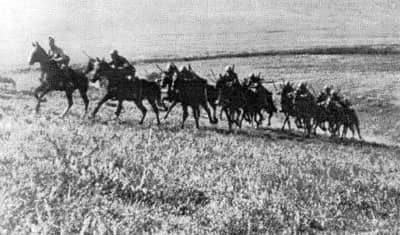
Having not undergone major changes during the inter-war period, at senior level, the Romanian Army was largely compelled to rely upon innately conservative and superannuated generals, who despite training in France, tended to lack significant campaign experience to draw upon. Unlike its German and Russian equivalents, the Romanian junior officer corps was also far less politicised, Antonescu having suppressed the Iron Guard, Romania’s leading fascist political party with support from the regular officer corps. That said, it was typically anti-Bolshevik, and many regular officers probably had sympathy with the Iron Guard’s nationalistic outlook, while reservists perhaps saw it as means to promote their civil views. Even so, the Romanian Army, with the exception of elite units such as the cavalry, where professional pride was at stake, did not tend to march with the same single minded zeal as its German and Russian counterparts. Neither was officer training, especially for reservists, who comprised the bulk of the junior officer corps, adequate. Too often professional and technical proficiency was lacking, so junior commanders favoured, bloody, uncomplicated tactics, such as massed frontal assaults. A massive void also existed between officers and their men, something that was reinforced by institutional corruption and harsh discipline, including brutal punishments, such as flogging. Beevor recounts how Germans of all ranks were deeply disturbed by the way Romanian officers treated their men, taking little interest in them, and effectively maintaining ‘an attitude of lords and vassals.’ One German corporal even noted how Romanian field kitchens prepared three meals: one for officers, one for NCOs, and one for the troops, who usually received very little.
Morale could be very poor
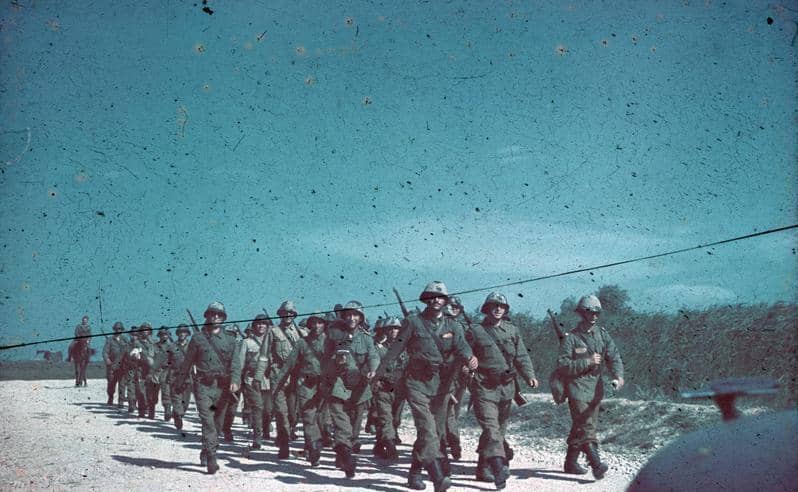
Likewise, a captured Romanian cavalry officer indicated to his Russian captors, that the daily pay of the average soldier was barely sufficient for him to purchase one litre of milk. Given the conditions alluded to above it was unsurprising that Romanian morale at times plummeted on the Eastern Front. This could lead to phenomenon such as self-inflicted wounds. Many soldiers also came to assume that their German ally was superior in almost every area, from food to weaponry. According to Axworthy, contemporaneous morale reports affirmed this, and although the presence of German troops, and exposure to their training and methods could be beneficial, the opposite was equally as true. For example, unflattering comparisons were made between the Romanian’s limited medical provision, which had evolved little since the nineteenth century, and the high standard of veterinary care available to the Germans, leading troops to quip: ‘Better a horse in the German army that a soldier in the Romanian army.’
Hampered by a lack of training
The Romanian Army was equally hampered by its training. As indicated, the background of many of its officers and other ranks was not necessarily conducive to producing a force capable of effectively handling the demands of modern mechanised warfare. At Odessa there were cases of Romanian armoured units being launched on attacks with infantry who had no training in co-operating with armour. Although the tanks breached the Russian lines, the infantry failed to follow-up closely enough, resulting in many of the tanks becoming isolated and falling prey to enemy field or anti-tank guns. While such failures were hardly unique to the Romanians, this was an example of a lack of preparedness. Until 1941, Romanian tactical doctrine had been based primarily around the French inter-war model, that gave precedence to a defensive outlook, and this ensured that it was not only difficult for the Romanians to appreciate the realities of modern warfare, but also to assimilate the teachings of their German ally once war commenced. In short their training, tactics, logistics and equipment were all geared towards outmoded operational concepts. Notably, as Axworthy commented, the lack of motorization ensured that the Romanian Army ‘…was constitutionally incapable of conducting or exploiting the major breakthrough and encirclement battles which were a decisive feature of both German and Soviet operations.’ The other side of the coin was that, the same weakness meant that the Romanian Army was also especially vulnerable to such operations. Not only that, but during the inter-war years, it had been starved of funds and resources, and bound by arcane regulations, including as military historian Jonathan Trigg observed, one that specified only officers could wear cosmetics!
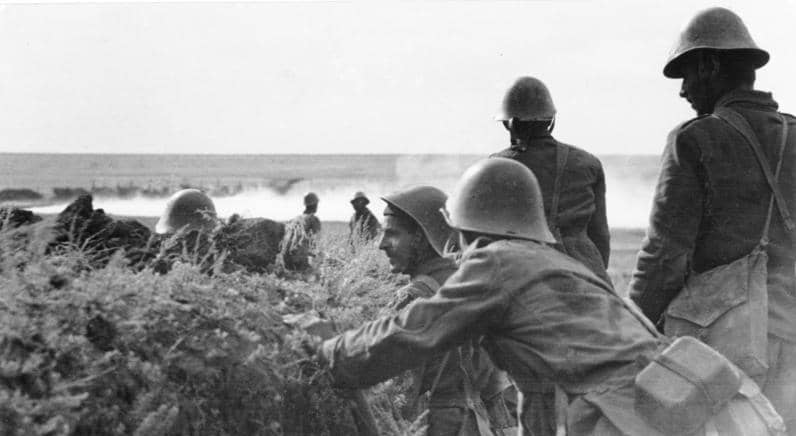
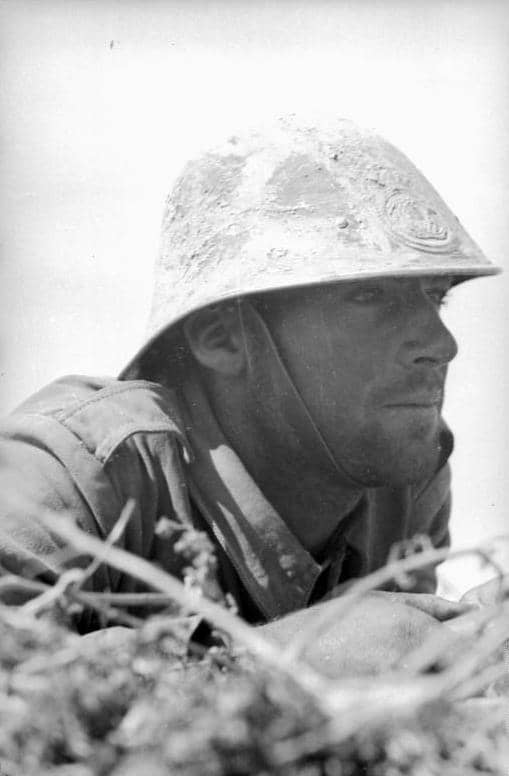
Equally, the wartime Romanian Army, was shackled by its weaponry and equipment. During the 1930s an English-style service dress became available for officers, while other ranks generally wore some form of khaki field uniform and a side cap. The standard steel helmet was the Dutch M1928 model, manufactured under licence, although judging by wartime photographs other types were used as well. Crucially, winter clothing was deficient, many troops in Russia having to rely on a lambs-wool cap, unlined great coat, thin trousers and short lace-up boots, so that frostbite was a constant danger. A degree of re-armament occurred during the 1930s, and Romanian industry, limited as it was, did succeed in putting into production a Czech light machine gun (LMG), and French 60mm and 81mm mortars, plus the Schneider 47 mm ant-tank gun, albeit this proved inadequate against Russian medium and heavy tanks. By luck the standard calibre of small arms ammunition employed was the Czech 7.92mm round, which was identical to the 7.92mm round employed by the Germans.
Notable gaps in Romania's armoury
Even so, there were notable gaps in Romania’s armoury during 1941, including the absence of a sniper’s rifle, no anti-tank rifle, or any form of sub-machine gun (SMG) comparable with that employed by many contemporary armies. Given this, reliance was placed on imported weaponry, especially from France and Czechoslovakia. The Germans also grudgingly supplied Romania with arms, notably limited numbers of tanks, many of which had already been heavily used, much to the Romanian’s consternation! Main divisional artillery was again horse-drawn, but there were no heavy guns when compared with the Germans and Russians. Generating a sufficient volume of firepower was therefore an issue, and significant in that artillery accounted for a large percentage of casualties on the Eastern Front. According to Axworthy, at the outbreak of war, a Romanian infantry division at full establishment, could only fire a third of the weight of shells that the German and Russian equivalents at full establishment could manage.
As the war progressed, new weapons emerged that went some way towards filling some of the above gaps, including the Oriţa, a 9mm SMG which appeared in 1943, and M42 Mortar based on the Russian 120mm mortar. In some cases locally produced weapons appeared, such as anti-tank shells for field artillery. Although it did not appear in frontline service until 1943-44, one the best domestically produced weapons fielded by the Romanians, was the 75mm Reşiţa Anti-Tank Gun, M1943, that adapted parts from Russian and German anti-tank gun designs, to produce a versatile weapon that was arguably among the best of its type during the war, no mean feat for a nation with limited contemporary military experience and a low industrial base.
Another solution to the challenge of providing adequate weaponry was to rely upon captured items. By 1942, the Russian 45mm anti-tank gun, for example, became standard issue in cavalry units. Likewise, captured Russian tanks were employed, although this was highly dependent on enough spare parts being available. To counter the threat of Russian medium and heavy tanks, the Romanians produced self-propelled gun conversions or tank destroyers, using captured weaponry, known as Tun autopropulsat cu afet mobile (TACAM). The TACAM T-60, employed the Russian T-60 light tank chassis mated with a Russian 76.2mm field gun, and similarly the TACAM R-2, was essentially a Panzer 35(t) chassis, mounted with the same Russian gun in an armoured compartment. Contrastingly, as noted above, many of Romania’s standard tanks were outmoded by the 1940s. The R-2, basically a Panzer 35(t) in Romanian service, was the backbone of the armoured forces for much of the war, but totally outclassed by tanks such as the T-34. Likewise, the Renault R-35 was obsolescent but many were up gunned, so as to try and improve their performance. The Vanatorul de Carre R-35 (Transformat) took this basic French tank design, and mounted a Russian 45mm gun in the turret. This gave it a degree of tank killing ability, but it was still hampered by its slow speed and one-man turret. Contrastingly, the Mareşal underwent various development trials, and was eventually fitted with the impressive 75mm Reşiţan Anti-Tank Gun, highlighted above. It was a squat looking tank destroyer, very reminiscent of the German Hetzer whose design it influenced, but never saw action.
Role in the Holocaust
It is difficult to discuss Axis forces without considering their role in the Holocaust. The role of ordinary German troops, as well as the Waffen-SS, in addition to the Einsatzkommando in the murder of Jews on the Eastern Front, has been well documented by historians. What about the Romanian Army? Within Romania’s borders there was plenty of open hostility towards the Jews, but this stopped short of their extermination. In the reoccupied territories it was different, and Romania was responsible for the deaths of at least 110,000 Jews, one reason Antonescu was deemed a war criminal. Many Romanian soldiers undoubtedly held deeply anti-Semitic views in keeping with wider Romanian society, and the army was actively involved in the killing of Jews during its re-conquest of Bessarabia and Northern Bucovina. Notably, a company of Romanians from the Romanian Special Information Service (SIS) even served alongside Einsatzkommando IIB, and participated in the massacre of Jews, and established primitive camps close to the frontlines as part of the Final Solution.
Immediate post-war in the grips of the Comunists
In the immediate post-war period the Romanian Army was rapidly demobilised by the Russians who had taken control of the country, save for loyal Communist formations and a handful of less well equipped other divisions. Although the country regained Northern Transilvania, Bessarabia became part of Russia/Soviet Union as the Moldavian Soviet Socialist Republic. By 1947, Antonescu had been executed, the King sent into exile, and Romania was firmly under the grip of the Communists.
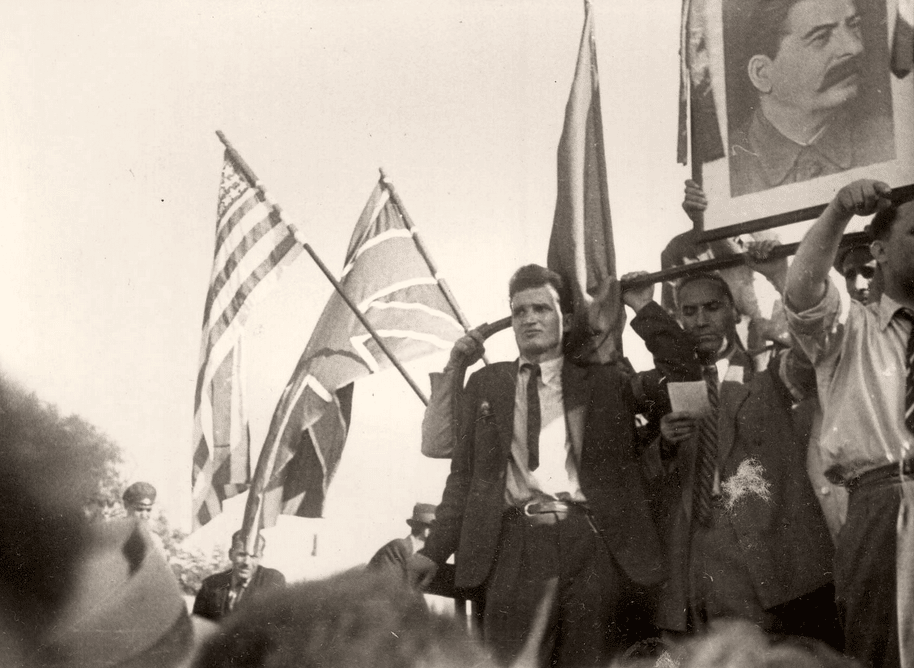
© James Goulty 2025
Bibliography/Further Reading
Articles/Chapters
Mark Axworthy, ‘Peasant Scapegoat to Industrial Slaughter: The Romanian Soldier at the Siege of Odessa’ in Paul Addison & Angus Calder (Eds), Time to Kill: the Soldier’s Experience of War in the West 1939-1945 (London: Pimlico, 1997), pp. 221-232.
Books
Abbott, Peter, Germany’s Eastern Front Allies 1941-1945 (London: Osprey, 1989)
Axworthy, Mark, Third Axis Fourth Ally: Romanian Armed Forces in the European War, 1941-1945 (London: Arms & Armour, 1995)
__________, The Romanian Army of World War II (Oxford: Osprey, 2005)
Beevor, Antony, Stalingrad (London: Penguin, 2007)
Bishop, Chris, Hitler’s Foreign Divisions: Foreign Volunteers in the Waffen-SS 1940-1945 (Staplehurst: Spellmount, 2005)
Mollo, Andrew, The Armed Forces of World War II: Uniforms, Insignia and Organisation (London: Black Cat, 1987)
Trigg, Jonathan, Death on the Don: The Destruction pf Germany’s Allies on the Eastern Front, 1941-44 (Cheltenham: The History Press, 2010)
Von Mellenthin, Maj-Gen. F. W., Panzer Battles (London: Futura, 1977)
Zaloga, Setven, J. & Grandsen, James, The Eastern Front: Armour Camouflage and Markings 1941-1945 (London: Arms & Armour, 1989)

About The Author
James Goulty holds a masters degree and doctorate in military history from the University of Leeds, and has a particular interest in the training and combat experience of ordinary soldiers during the world wars and Korean War.
He has published numerous articles and written 5 books for Pen and Sword Ltd, including The Second World War through Soldiers’ Eyes: British Army Life 1939-1945; and Eyewitness Korea: The Experience of British and American Soldiers in the Korean War 1950-1953.

Click to see full BMMHS event listing pages.
Contact us at [email protected]
Copyright © 2024 bmmhs.org – All Rights Reserved
Images © IWM & James Goulty