Sleeping With The Enemy
British Wartime Collaborators and Traitors
by Nick Brazil
Betraying your country
One of the great taboos of wartime is betraying your own country. The motivation for this usually boils down to one of two factors: money or ideological belief. Throughout history, wars have always unearthed a few traitors and collaborators. During the Second World War, s handful of British citizens became turncoats for Hitler’s Nazi regime.
Whether or not Sir Oswald Mosley could be classed as a collaborator and traitor is open to question. He was certainly very close to the German Nazi Hierarchy. His second marriage to Diana Mitford also an ardent Nazi, took place at Joseph Goebbels’ Berlin home in 1936. Adolf Hitler was also an honoured guest on that occasion.
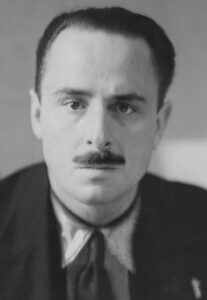
Sir Oswald Mosely collaborator and traitor
Were he alive today, Mosley would doubtlessly argue that he was a British patriot whose chief mission in life was to confront Bolshevism. He certainly served his country as an officer in World War One. However, his political career in the 1930s led inexorably towards Nazism and anti-semitism. Although a sympathiser and apologist for Hitler and the German Nazis, he never actively worked as a collaborator for them.
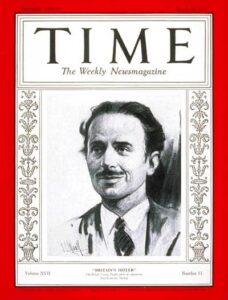
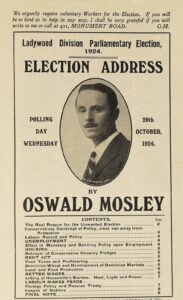
It is probably a surprise to many people to learn that having first entered Parliament as a Conservative MP in 1918, he eventually crossed the floor to sit as an independent member of the House of Commons. Then from 1924 to 1931, he was a member of Ramsay MacDonald’s Labour Government.
Founding the British Union of Facists
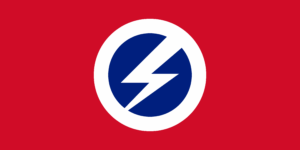
At that time, he was considered to be a rising star in the British political firmament and was even spoken of as a future Prime Minister. But his extreme right-wing politics and views would eventually come to the fore and stunt his ambitions for power. By the early 1930s he became increasingly impatient with the traditional two parties of power. This led him to found the British Union of Fascists in 1932. Over the years, the BUF’s platform became stridently pro-Nazi and Anti-Semitic. On the ground, Mosley’s group of paramilitary thugs known as Blackshirts regularly came in to violent contact with their Jewish and leftist opponents. The most famous of these confrontations was The Battle of Cable Street on 4th October 1936. On this occasion, an anti-fascist coalition prevented a large group of Blackshirts from marching through a predominantly Jewish part of East London.
In 1939, Mosely was linked to a plot to bring down the British Government. This was orchestrated by a fascist group called The Right Club. He denied any connection with the group but the damage had been done.
In 1940, the BUF was made illegal and Moseley was imprisoned until 1943. His career never recovered. In the post war period, he made several attempts at a political comeback, but they came to naught. He spent the remainder of his life in Ireland and France where he died at the age of 84 in 1980. Moseley remains the most important potential British collaborator of the Second World War.
John Amery discovers facism
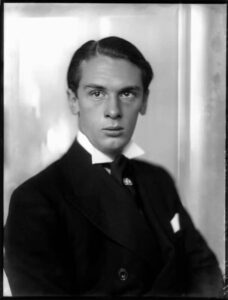
Another prominent fascist in the Second World War was John Amery, the son of Leo Amery a Cabinet Minister and Conservative MP. From the time he was a small child, John was a handful. His father tried having him taught privately by tutors, but none of the teachers he employed could handle this difficult child. In desperation, Amery senior sent John to Harrow but he only lasted there a year. A clue to the problems he created there can be gleaned from a comment by one of the teachers who claimed he was “the most difficult boy I have ever tried to manage.”
After a failed marriage to a prostitute called Una Wing, it seems John discovered fascism. This became his life’s belief. Still in his twenties, he moved from Britain to France. This was probably because he found his home country generally hostile to his extreme right-wing politics.
Living with the Nazis
Whilst in France, Jaques Doriot, the French fascist befriended him. The two travelled to Austria, Italy and Germany to witness fascism and what would become Nazism at first hand. In 1936, John Amery worked for General Franco during The Spanish Civil War.
With the fall of France, Amery found himself living in a country occupied by the Nazis. This suited him very nicely and it seems he impressed the German occupying authorities with his potential. However, his relationship with the Vichy collaborationist Government was not so placid. For some unexplained reason, he fell out with them. Perhaps they disliked his generally arrogant and combative nature or he behaved in some way that upset the Vichy Government, we shall never know.
Fortunately for him, the Germans came to the rescue. In 1942, a German Officer called Werner Plack took Amery to Berlin. Once there, he made propaganda broadcasts on German radio trying to turn the British populace away from fighting Germany to being their ally in the fight against Bolshevism.
Hitler also seemed to like Amery and allowed him to stay in Germany “as a guest”. During his time in Germany John Amery founded a unit of British collaborators which was part of the Waffen SS. Originally called The Legion of St George, it became The British Free Corps. His attempts to recruit British PoWs into the BFC was an almost complete failure. At its height, the BFC only had 54 members. Most of the time the figure was much lower being in the mid 20s.
Supporting Mussolini
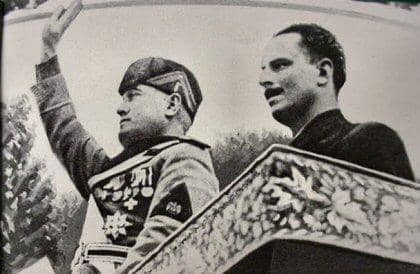
Towards the end of the War, Amery travelled to Italy where he made propaganda broadcasts supporting Benito Mussolini. After the Italian dictator was deposed and killed, in April 1945, Amery was captured by Italian partisans and handed over to The British. He was flown back to England under armed guard in the same Dakota as another suspected traitor, William Joyce, better known as “Lord Haw Haw”.
John Amery went on trial for treason in 1945. At the pre-trial hearing various pleas for mitigation were made on his behalf. These included the fact that he was not a traitor for the Nazis but an anti-communist. His brother Julian argued unsuccessfully that Amery was actually a Spanish citizen and therefore could not be tried for treason against Britain. Amery’s barrister also tried to argue that he was mentally ill but to no avail.
On the first day of the actual trial, Amery unexpectedly pleaded guilty to eight counts of treason. He was found guilty and subsequently hanged at Wandsworth Prison on 19th December 1945.
Recruiting for the British Free Corps
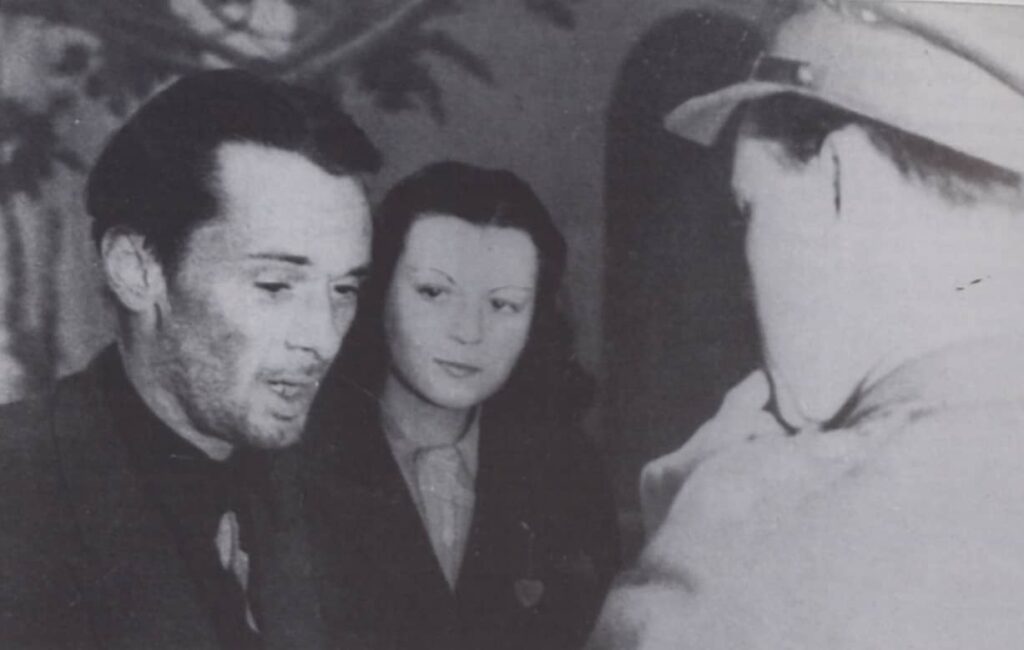
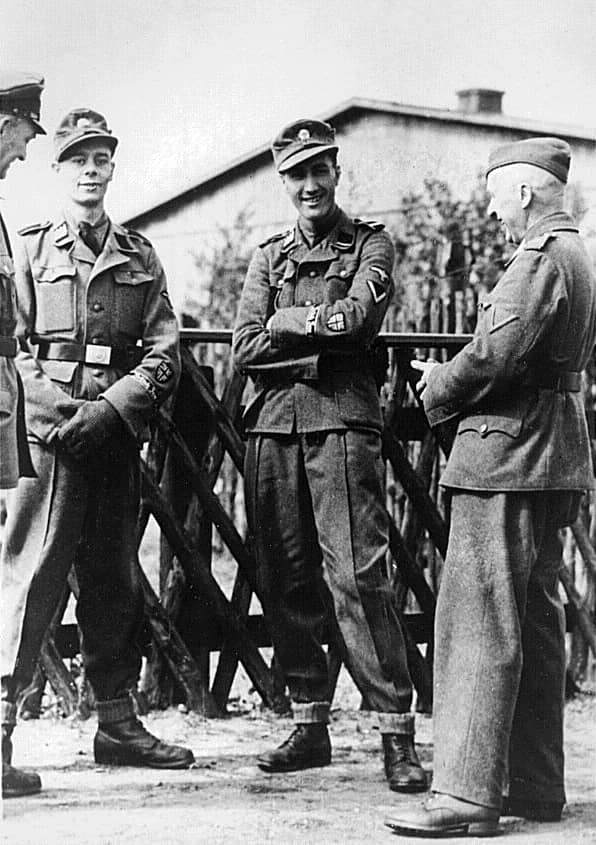
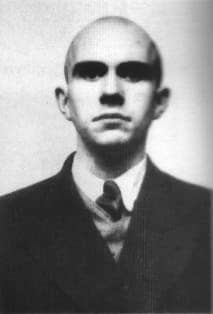
Amery enjoyed a limited success in recruiting some allied POWs into the BFC. Among those who featured prominently in the unit was Thomas Haller Cooper. In the 1930s he tried to join The Metropolitan Police, the Royal Navy and the RAF but was rejected by them all because his mother was German. Due to this, he held a held a grudge against the British authorities and joined Oswald Mosley’s British Union of Fascists in 1938.
As a fluent German speaker with a German mother, Cooper decided he would be more welcome in Germany than Britain. Shortly before the outbreak of war he went to live in Germany. Once there, he was employed in the Reich Labour Service (RAD). This harmless sounding title hid the real purpose of this organisation. Its main task was to militarise the workforce and inculcate its members with an unquestioning allegiance to the Nazi ideology.
Once Germany was at war with Britain, Cooper was arrested as an enemy alien. He was released after his mother intervened with a document stating her son was an ethnic German. Following this, Cooper joined the SS after some hesitation. He eventually landed up as an officer in The British Free Corps. At the end of the war, he was arrested and placed on trial for treason.
According to evidence given by other members of the BFC, Cooper took to his new role as an SS officer with considerable relish. It was alleged by these witnesses that he boasted about murdering a considerable number of Poles and Jews whilst serving in The Warsaw Ghetto. It is said that he bragged about shooting 200 Poles and 80 Jews on one particular day. However, it seems that Cooper fought bravely when in action. He was badly injured when fighting the Red Army in 1943.
On trial for High Treason
Cooper was eventually captured by the Allies and put on trial for high treason. Having been found guilty, he was sentenced to hang in January 1946. But, days before his execution, his sentence was commuted to life.
In view of the gravity of the crimes Cooper was convicted of, it seems strange that he escaped being hanged. The judge’s reasons for the change of sentence was that he was a simply a follower of the main traitors like Amery and not himself a leader. Perhaps the British Government thought hanging these collaborators would focus attention on the fact that we had ‘traitors in our midst’. This would have been bad for national morale.
Cooper was released from prison in 1953 after serving only seven years of his life sentence. After being released, it is thought he moved to Japan where he became a teacher and converted to Buddhism. By adopting such a pacifist religion and lifestyle may well have been his way of coping with the remorse for his earlier time serving the Nazis.
Other leading members of the BFC such as New Zealander Roy Courland, Frank McLardy and Kenneth Berry were also released after serving a fraction of their life sentences for treason. In Berry’s case, his sentence was just nine months hard labour. What saved him from a more severe punishment was the prosecution’s view that he was “an irresponsible youth who was easily led”.
The "Jelly Gang"
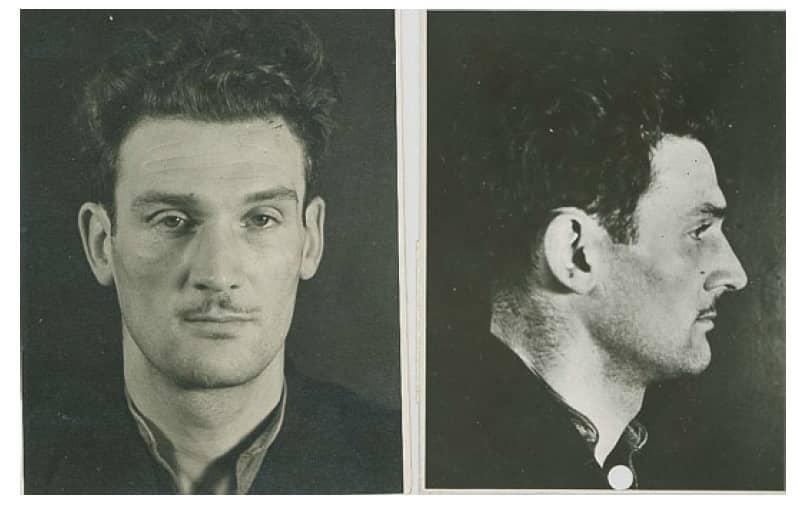
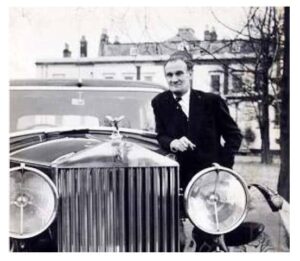
In working for the Germans during the Second World War all these traitors were motivated by Nazi and Fascist beliefs. This certainly was not the case with Eddie Chapman who became a notable double agent whose codename was Zigzag. It is fair to say that he was one of life’s great chancers who grabbed any opportunity that would benefit him.
In the late 1930s, he was a member of “The Jelly Gang”. They were a group of safecrackers who used gelignite when robbing safes of their contents. His luck ran out when he was arrested for blowing the safe of The Edinburgh Cooperative Society. Inexplicably, the authorities let him out on bail whilst awaiting trial. Chapman took that opportunity to flee Scotland for Jersey in The Channel Islands.
There, he continued to live the high life with his girlfriend Betty Farmer indulging in a bit of crime on the side. This eventually earned him a two-year sentence for burglary in the island’s main prison. Whilst he was inside, The Channel Islands were occupied by the Germans. When he was eventually freed, he and a cellmate called Anthony Faramus wrote a letter to the Germans offering their services to the Reich. Chapman always maintained this was a ruse to get back to Britain.
However, this backfired on them when the two men were arrested and taken to mainland France by the Germans. After being initially put in an internment camp, they were transferred to Fort de Romainville prison. It was here the Germans decided that while they had no use for Faramus, Chapman could prove to be a good secret agent. On April 26th, 1942, Eddie Chapman was recruited as an agent for the Abwehr, the German secret service. By all accounts, as “Agent Fritz”, Eddie Chapman had a high old time at the Germans’ expense with plenty of good food, alcohol and money.
After being trained in the black arts of intelligence and spying, he was parachuted into Cambridgeshire in December 1942. His mission was to sabotage the De Havilland Aircraft factory at Hatfield. However, Eddie had different plans. No sooner had he landed on British soil than he hot footed it to MI5 via the local police.
Having already broken the German codes, the security services were expecting Chapman’s arrival. With typical brass face, he did a deal with them that wiped his criminal record clean in return for him working for the British. MI5 accepted and with that, Agent Fritz became British Agent Zigzag.
In a masterpiece of subterfuge, the De Havilland factory sabotage was successfully faked by the British secret services. They concocted destruction to the factory that fooled the Germans into thinking this strategically vital establishment has been severely damaged.
In the meantime, Chapman returned to Germany via Portugal to ensure that his cover as an Abwehr agent had not been blown. For what they considered his outstanding work in sabotaging the de Havilland factory, the Germans awarded Chapman the Iron Cross. He remains the only British citizen to receive this honour.
In 1944, Eddie Chapman returned to England as an Abwehr agent. In reality, he resumed working for the British. His job was to transmit false information to the Germans about the effectiveness of their V1 and V2 rockets. Part of this involved supplying false targets to the Germans causing many of their rockets to land and explode in empty fields.
After the war Eddie was reacquainted with Betty Farmer, his long-time girlfriend whom he had last seen in the occupied Channel Islands. They were married and subsequently had a daughter. Just to show there were no hard feelings, Eddie’s old Abwehr boss Baron Stefan von Grunen was invited to the nuptials.
Eddie Chapman died at the age of 83 in 1997. He left behind three books about his colourful wartime exploits. In 1966 Christopher Plummer starred as Eddie Chapman in the highly entertaining film of his adventures, Triple Cross.
'the worst British traitor of the War"
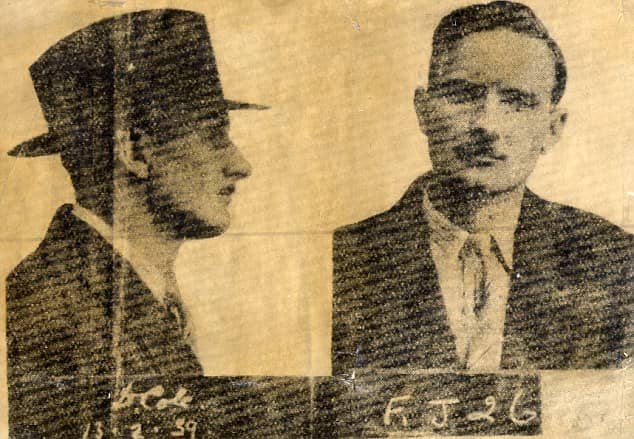
Harold Cole was another British double agent who worked for the Germans. Like Chapman he was always keen to grab any opportunity when it arose. However, unlike Chapman he was neither lovable nor patriotic. In fact, MI5 dubbed him “the worst British traitor of the War.” As far as they were concerned Cole was only out for himself, even if it meant betraying his fellow countrymen.
Born into poverty in London’s East End Harry Cole set the pattern of his later life from an early age. Leaving school when he was fourteen, he soon became involved in petty crimes for which he was repeatedly jailed between 1923 and 1939.
The Pat Line
At the outbreak of the Second World War, he joined the British Army and was sent to France with an engineering unit with the BEF. He can not have been too bad a soldier at this stage since he was promoted to a sergeant. But he persisted in his light-fingered ways. When France fell, Cole was serving time for stealing funds from the officers’ mess. The chaos of the German advance across France enabled him to escape further incarceration.
He managed to stay free, using his time organising an escape network to aid British soldiers and airmen on the run. Had he stayed on that course, he could well have ended up as one of the heroes of resistance rather than one of its villains. For a while he stayed one step ahead of the Germans by staying in different places around Lille. At this time, he was using one of his many guises as Captain Delobel, a British agent.
At this stage Cole undoubtedly helped a number of British servicemen to freedom. On his network, they were funneled away from Northern France to the freedom of neutral Spain through Vichy France, the collaborationist run south of the country. Cole operated his escape network in conjunction with another successful British operation called The Pat O’Leary Line or Pat Line for short. In doing this, he worked closely with Lt Ian Garrow the British officer in charge of the Pat Line.
A willing agent of the Germans?
This earned him brownie points with British Intelligence at the time but secretly he was stealing the money they were sending to run his network. Some closer on the ground in France saw through him. One of these was a member of the Resistance called Maud Olga Baudot de Rouville who remembered him as a rather flaky individual always on the cadge for money or fuel. She also recalled that he was more interested in living the high life of women and champagne than fighting the Germans.
Gradually, Garrow and the members of The Resistance became suspicious of Cole. His behaviour was too brazen for somebody on the run from the Germans. He also had access to a seemingly inexhaustible and mysterious supply of cash. In the latter part of 1941, Garrow was arrested by the Vichy police. It was then that the Belgian resistance fighter Albert Guérisse who took over The Pat Line finally rumbled Cole.
In November 1941, Guérisse lured Cole to a flat used by the resistance in Marseilles. Once there, Geurisse and a group of the Resistance confronted him with the evidence of his double dealing and theft. Cole immediately broke down and admitted his wrongdoing, pleading for forgiveness. He was locked in the flat’s bathroom whilst his captors decided on his fate. It is likely that Geurisse already suspected him of working for the Germans. He and the others worried that if this were the case, the Englishmen would give his new masters all the details of the escape network if they let him go. Perhaps, they reasoned, it would be better to shoot him there and then to shut him up for good.
As was so often the case in Cole’s life, the inveterate crook and conman was way ahead of his captors. When the resistance unlocked the lavatory to take Cole off to his fate, all they found was an open window. Their prisoner had broken out and was long gone.
Cole remained free until 6th December 1941, when the Germans finally caught up with him. He was hiding in an apartment in the La Madelaine area of Lille. It was while he was in captivity at this time, that the Germans finally “turned” him.
How willingly and easily Harold Cole became an agent for the Nazis is a matter of speculation. Either way, his conversion did not take long. The Gestapo round up of his former resistance colleagues began the next day. In total, it is thought that Harold Cole’s treachery cost the lives and liberty of 150 men and women. On occasions, it was said that he was actually present when resistance fighters were arrested and dragged off to be tortured.
Women and Cole were irresistibly attracted to each other. The list of those he had affairs and relationships with during his time as a Nazi traitor is a long one. Suzanne Warenghem was one of those women who became besotted with the silver tongued Englishman. He married her and gave her a child. Sadly, the little boy died in infancy. When the naive Suzanne was finally persuaded Cole was a nazi agent working for and not against the Germans, she went on the run in fear for her life. From then on, she habitually slept with a loaded revolver under her pillow in case Cole found her.
In the summer of 1942, it seemed as if Cole’s luck had finally run out. He was arrested by the Vichy authorities on a charge of spying. He was put on trial and sentenced to death. This was mysteriously changed to life imprisonment and he was actually released in the winter of the following year. He then went back to working with the Germans in the SD, the SS intelligence agency.
In 1944, as the invading allies fought across occupied Europe, Harold Cole left the German intelligence headquarters in Paris. With Hans Kieffer, his boss in the SD the two men headed for the American lines. Having destroyed all their German uniforms and papers, they handed themselves in to the American forces. Cole had re-invented himself as a British intelligence officer called Captain Robert Mason while Kieffer insisted he was just a low-ranking policeman.
The Americans took Cole on in an intelligence role. For some reason, Cole feared that the Americans might unmask his real identity, so he deserted them and went on the run again.
In the summer of 1945, he surfaced in the French sector of occupied Germany. Thinking he was an American officer, the locals gave him a good welcome. He resumed working for the authorities. This time he was hunting his erstwhile colleagues in German intelligence. It was said that he operated with the maximum brutality in this role. On one occasion he murdered an ex-SS officer in an extrajudicial execution.
Cole disappeared once again, only to reappear in Southern Germany in the Summer of 1945. There as the “British Intelligence officer Mason”, he offered the American authorities his services as a Nazi hunter. They accepted his offer and for a time, he won their confidence. On one occasion, he even threw a big party for all his new bosses in a house he had commandeered from a Nazi.
However, convinced he could not be caught, Cole was becoming careless. He sent a postcard to Charlotte Leblanc one of his many former girlfriends in Paris. When they were together, Cole had persuaded her to give him a large sum of her life savings. Of course, she never saw the money again and was one of the many who had a score to settle with Harold Cole.
British security also wanted to lay hands on him. Fortunately for them, they came into possession of the postcard. In it Cole had carelessly revealed his current address. This led to his arrest in June 1945. He was interrogated and imprisoned in Paris, but once again, Cole escaped. This time he walked out of the prison disguised as an American serviceman. He then disappeared into the chaotic firmament of post war Europe. But the clock was now ticking on arch conman and traitor Harold Cole.
If he had kept his head down, that might have been the last the various authorities saw of him. But Harold could not resist returning to his old haunts around Paris. In January 1946, he was hiding out above “Billy’s Bar” one of the city’s many nightspots.
As luck would have it, the French police were conducting a sweep of deserters at the time. Somebody tipped them off that they should have a look at Billy’s Bar. On 8th January 1946 they surrounded the place expecting to catch a German deserter. Instead, they became involved in a shoot-out with Harold Cole. It was his last stand and he died there riddled with bullets.
Appropriately, his body was identified by Albert Guérisse, one of his former Resistance colleagues whom he had betrayed.
The most famous Nazi Collaborator
Probably the most famous Nazi Collaborator of The Second World War was William Joyce. He was born in the US of a mixed Catholic and Protestant Irish family. After a few years, the Joyce family moved back to Ireland and settled in Galway.
During the Irish War for Independence 1919-1921 a teenage William worked for the British side running messages. After he was nearly murdered by the IRA whilst travelling home from school, his British minder moved him over to Britain for his own safety. Once there, he served with the Worcestershire Regiment, but that only lasted a few months since it was soon discovered that he was under age.
Joyce developed a serious interest in fascism when he was about eighteen. During the 1924 General Election, he was scarred for life by a facial razor cut delivered by a communist or Irish Nationalist supporter, accounts on this vary. This happened when he was stewarding a meeting for a Conservative candidate which was disrupted by left wing opponents.
In 1934, Joyce joined Oswald Mosley’s British Union of Fascists. He soon became a rising star in the movement, much in demand for his fiery oratory. In about 1937, after a major falling out with Mosley, he was ejected from the BUF. He founded his own breakaway nazi movement called The National Socialist League.
"Germany Calling"
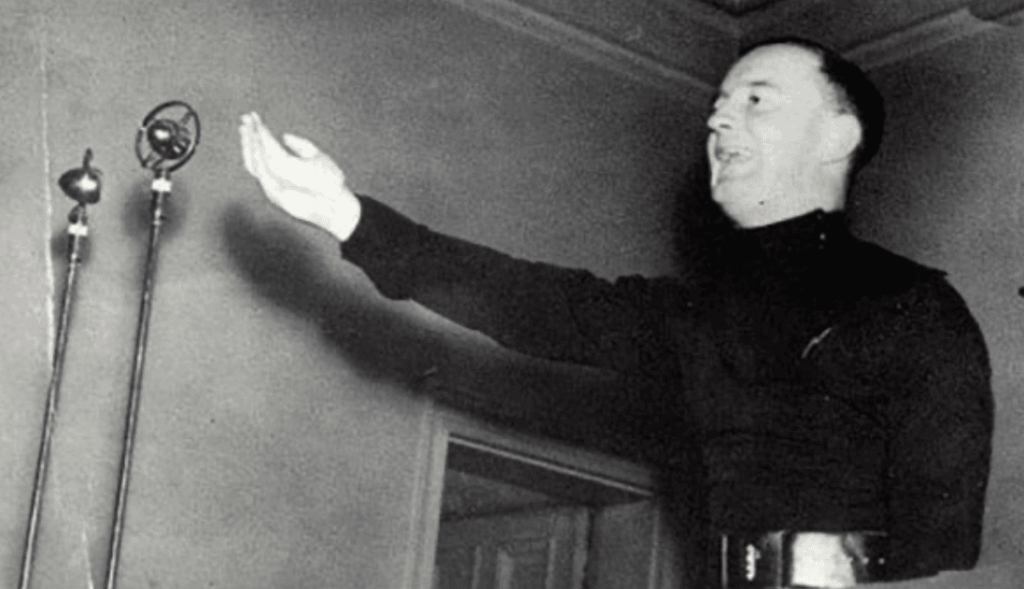
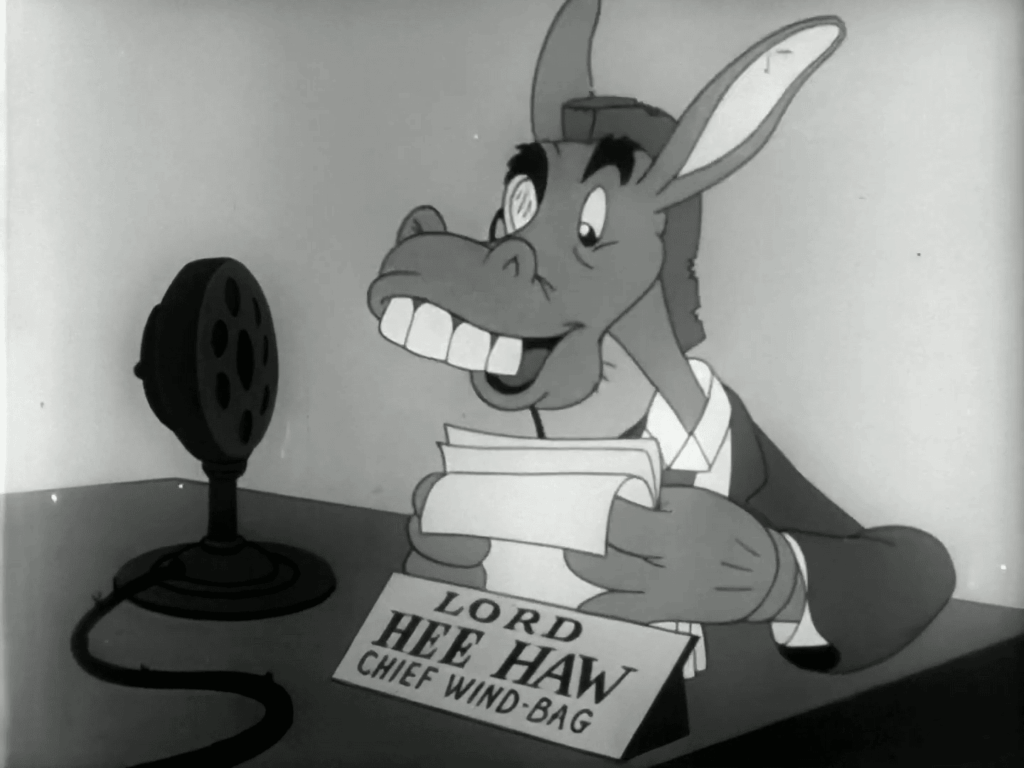
From his initial employment in the German government radio network, Joyce became an important part of the Nazi propaganda effort aimed at the British populace. His distinctly upper-class tones and sarcastic delivery soon earned him the nickname Lord Haw Haw. His call sign “Germany Calling” became a familiar call sign with his British listeners.
Eventually, the Nazis saw the propaganda value of the nickname and his broadcasts would often have the introduction “William Joyce, otherwise known as Lord Haw Haw.” It is thought this title was coined by Jonah Barrington, the radio critic of The Sunday Express. Ironically, Joyce had a wide listenership in Britain. This has been put down to curiosity about what the other side are saying about you.
Besides the broadcasts for which he is most famous, William Joyce worked tirelessly for the nazis whether it was attempting to persuade British POWs to join the `British Free Corps’ or publishing pro-Nazi articles. He also wrote a book called “Twilight Over England”. This was basically a propaganda piece comparing a corrupt Britain“dominated by Jewish capital” with the pristine state of Nazi Germany.
At the end of the War Joyce was captured by British forces at Flensburg in Schleswig Holstein. He was put on trial for High Treason at The Old Bailey and hanged at Wandsworth Jail on 3rd January 1946. He remained an unrepentant Nazi to the last. William Joyce was the last person to be hanged for treason in the UK. The Crime and Disorder Act 1998 replaced the death penalty with life imprisonment.
Even after so many years, controversy surrounds William Joyce. There are researchers and historians who claim that he was never actually a British citizen but either American or Irish. As such, he should never have been hanged for treason against a country that was not his.
Treason remains one of the most serious offences for which you can be charged. After the Second World War a whole generation of new traitors, this time working for the Soviets came to light. The motivation for their treachery and those who worked for the Nazis before them, remain a fascinating enigma.
About The Author


It is with great sadness that Nick Brazil passed away peacefully as we were finalising this book. Nick, a loyal BMMHS supporter and contributor, was very keen that his book Articles of War would help to raise money for Veterans With Dogs.
Click on the book cover to order your copy today



Nick’s books are Available on Amazon
Click above to purchase

Click to see full BMMHS event listing pages.
Contact us at [email protected]
Copyright © 2026 bmmhs.org – All Rights Reserved
Images © Nick Brazil