The 66th Berkshires and St. Helena
by Veronica Baker-Smith
What to do with a defeated enemy ?
After the Battle of Waterloo, it was for London to decide what should be done with the defeated enemy; when the Bourbon King Louis XVIII showed no sign of fulfilling British hopes that he would ‘hang or shoot Bonaparte’, the Duke of Wellington flatly refused to have anything to do with a suggested execution and the Prince Regent did not even reply to Napoleon’s appeal for ‘the hospitality of the British people’, exile was the only option. The British had argued strongly that Elba would never hold him, now he must not ‘have the means or the opportunity of again disturbing the peace of Europe and renewing the calamities of war’, and governmental paranoia produced a plan which two hundred years later would be termed ‘extraordinary rendition’. He was to be sent to a South Atlantic island which had been part of the dowry of Catharine of Braganza on her marriage to Charles II and had been granted by Charles to the East India Company – thus outside the rule of the British Crown, and, even more importantly, the jurisdiction of the English courts. The decision was made despite opposition from the Times – ‘shall we impose upon ourselves the disgraceful trouble of conveying his body to a distant island and there watching it’. This ‘disgraceful trouble’ would be the task of the 66th Berkshires until they escorted him to his grave in 1821.
‘Liberal bounty, good uniforms, generous pay ….'
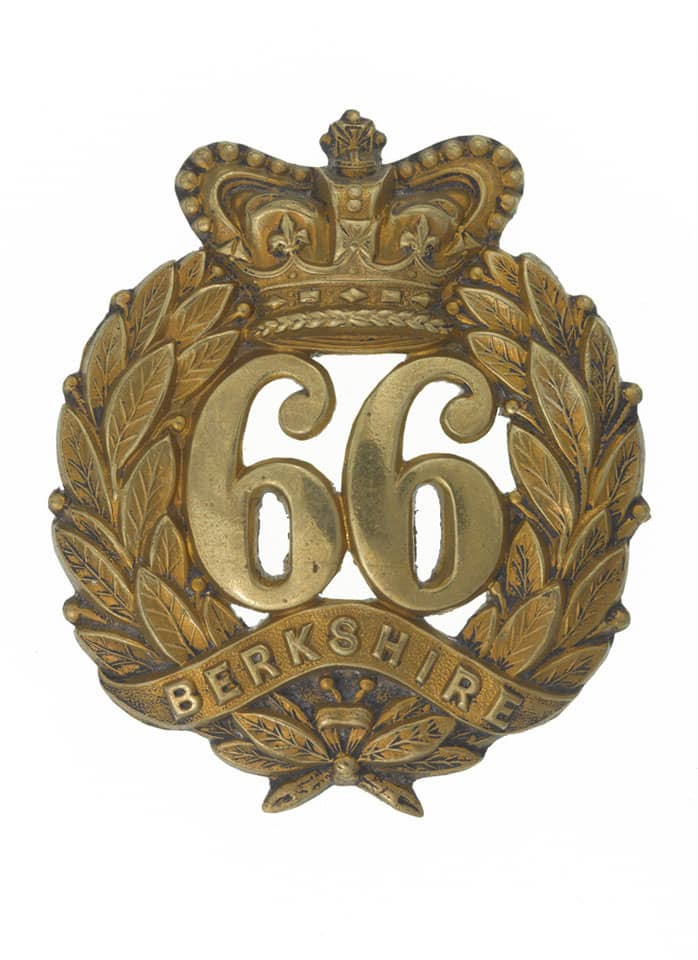
The regiment had been founded in 1758, initially for home service only, and thirty years later, in the effort to aid recruitment, it was attached to the county of Berkshire. After service in the West Indies where, while policing a civil war and the appalling atrocities of a slave revolt, deadly disease caused a mortality rate of 66 percent, the county was subjected to further years of the familiar, often questionable, ‘aids’ of recruitment. Likely lads would be plied with drink and assured when sober that they had volunteered and refusal was a crime against the state. Posters everywhere offered ‘Liberal bounty, good uniforms, generous pay …. for British Lads, light and straight, not under 5ft 6ins.’ A twenty-five year old shepherd, Benjamin Harris, was needed on the farm by his aged father ‘who would have tried to buy me off and would have persuaded the sergeant … that I was no use as a soldier from having a maimed right hand. The sergeant however said I was just the sort of little chap he wanted and off he went carrying me with him.’ Many volunteers were found in the jails, Berkshire’s Under-Sheriff once offered the regiment a number of men under sentence for highway robbery, ‘exceeding proper fellows they are for Land Service.’
So in 1809 the full-strength second battalion sailed for Portugal. General Roland Hill had personally selected the Berkshires as part of his command – referring to them frequently as, ‘my short-legged fellows who know how to advance’ – and as the Duke of Wellington’s most trusted subordinate this meant that the regiment was involved in almost every battle of the five-year desperate Peninsular Campaign.
Napoleon's prison at Longwood
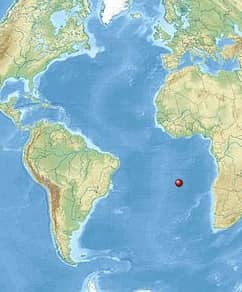
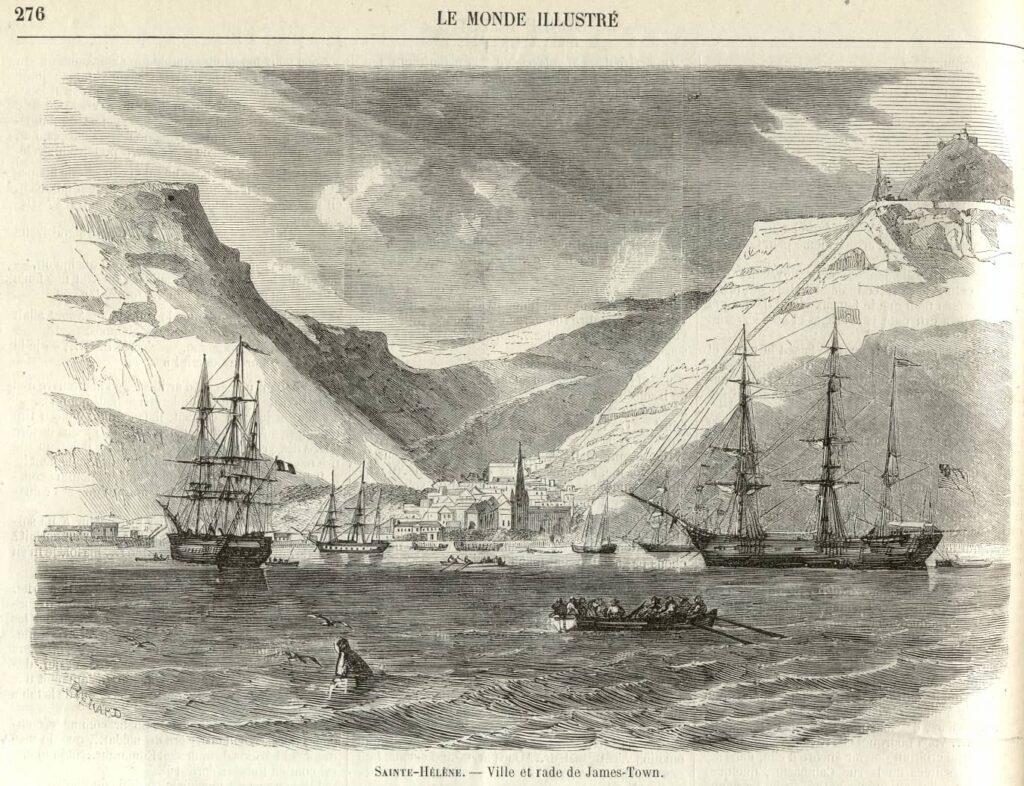
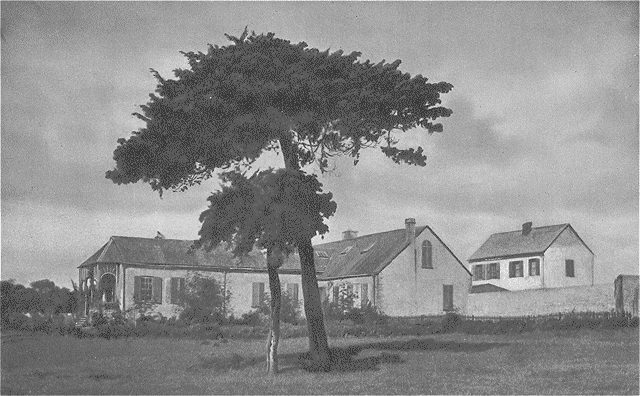
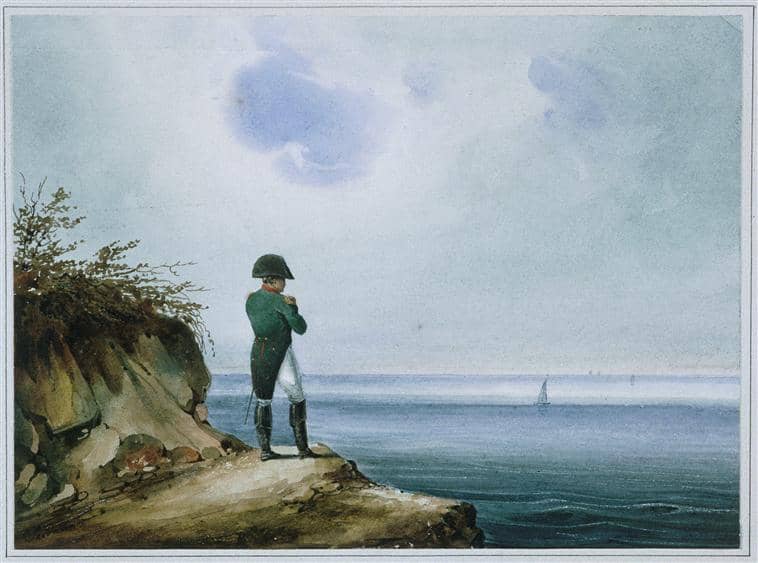
St. Helena is the farthest island in the world from a mainland, measuring ten miles by six, with sheer cliffs of volcanic rock, usually capped by cloud, surrounding a central plateau. The British took the precaution of annexing the nearest islands of Ascension and Tristan da Cunha (respectively 800 and 1300 miles away) and a squadron of frigates would endlessly circle St. Helena itself for the next six years. The main settlement, Jamestown, consisted of around two hundred houses, most of which were requisitioned by the garrison. Napoleon’s prison was Longwood, formerly a stone-built sprawling farmhouse, considerably extended round a courtyard by various wooden rooms which were often damp and infested with rats. Personal servants and a small group of loyal friends who had volunteered with their families to join his exile formed a protective entourage and a captive audience for his reminiscence, regrets and resentment.
Much of the island’s interior sheltered by the towering cliffs was surprisingly lush. The letters and memoirs of British officers and visitors describe views through well-wooded valleys cutting through to the sea, geranium hedges and citrus-groves, while fields of grazing cattle and sheep reminded one homesick correspondent of Norfolk. The tropical climate tempered by south-east trade winds allowed the cultivation of bananas and guavas while bamboo and coconut palms were abundant though they relied on the frequent rains and heavy cloud; Napoleon remarked that ‘even the English accustomed to dampness, complain of it’.
Cricket and a racecourse
But, as always, when Englishmen are gathered together there were cricket matches and a one-and-a-half-mile circuit of rough grass formed a racecourse for horses imported from the Cape. Game-birds were plentiful for carefully controlled shooting parties, and fishing was authorised although two officers were swept off the rocks by a freak wave and never found, presumably providing food for the sharks which patrolled the island. A large one was once sighted and hauled aboard the flagship at anchor off Jamestown; as the sailors cut it open they discovered the perfectly intact undigested blue jacket of an artilleryman who had been missing for two weeks.
While the officers were able to maintain some kind of a social life it was a time of utter boredom for their men. For the next five years not a single shot was fired as small detachments of soldiers were rotated round the island either on guard duty at Longwood or manning the five hundred cannon stationed at fortified strategic points. A few months later they were joined by the regiment’s first battalion who joined them direct from service in India. Life there had been luxurious and St. Helena was a most unpleasant shock. The Berkshires’ surgeon, Walter Henry, described a Mess dinner – ‘oily mutton soup followed by the island staple of mackerel “four ways” including curry and stew, then coarse Pork chops and lumpy Ration Beef, stripped off the thin-coated ribs of Benguela [Angola] bullocks.’ The only edible item for his first meal was a single yam.
Complexion olive, expression sinister
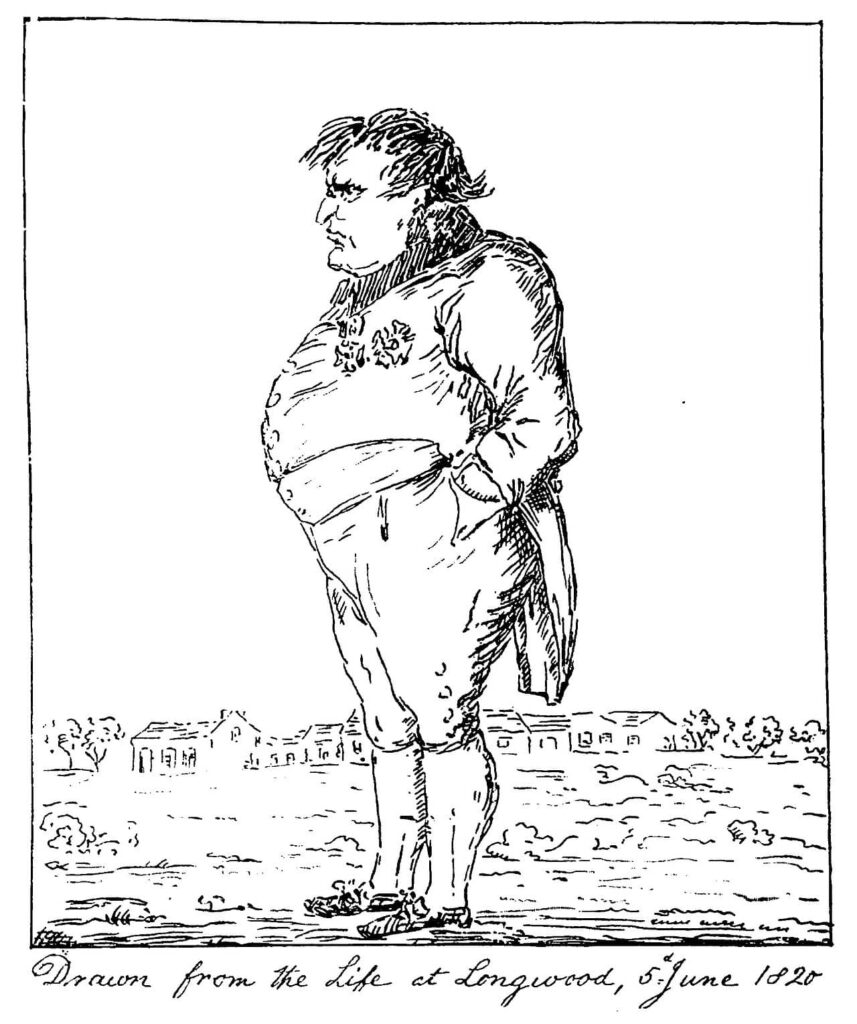
Occasionally a mock battle would be staged on the plateau, these would be watched with great interest by their prisoner through his spyglass and prompted the request for a formal meeting with senior officers. Ushered into the only sizeable room of the house, they were ordered to stand in a circle and submit to questions from the man who had so dominated their lives. His appearance disappointed them – ‘the stature was short and thick … complexion olive, expression sinister’ – but French charm was deployed as he exchanged words with each one about their military service
First in line was Colonel Nicol who had served in India and was asked about the acclimatisation time for European troops (‘three years’), the proficiency of the sepoys (‘excellent as long as they were commanded by British officers’) and hearsay reports of drunken evenings in the Jamestown mess (‘o no, sir, no’). Napoleon then pointed to Charles McCarthy, a Peninsula veteran who had been wounded at Talavera and before that had been involved in the fiasco in Buenos Aires (when a British expeditionary force had tried and spectacularly failed to take the Spanish colony of the River Plate) and, revealing his attention to careful briefing, he enquired to general amusement if, as a Roman Catholic, he had been sent to St. Helena as absolution for unknown sins. One man was excluded from the ceremonial courtesy: a certain Captain Ellis ‘ a Cambridgeshire man of most uncouth and forbidding exterior and physiognomy’ in fact ‘an evident descendant of a Colony of Barbarians settled in that County by a Roman Emperor’.
Napoleon's ceaseless resentment
The surgeon, Walter Henry, was questioned about his Indian experience in dealing with diseases of the liver. On hearing that bleeding was still the most potent treatment Napoleon exclaimed, ‘Ah, Dieu m’en garde!’ – French medicine queried its efficacy long before the British did. Hepatitis was certainly foremost on everyone’s mind since it was endemic on the island but there was a further political reason for the interest since the French never ceased to argue that it made his exile there too dangerous and he should be returned to Europe. Napoleon himself noted, ‘I bequeath the opprobrium of my death to the Reigning House of England.’ It is clear that the English often masked deaths from it to ‘seasonal fevers’ or dysentery; fifty-six men of the 66th men died in their first year ‘of dysentery’. Hepatitis is usually due to polluted water and the vast increase in population (not to mention Napoleon’s constant demand for hot baths) was undoubtedly a factor.
The 66th had arrived at the same time as the new Governor – Sir Hudson Lowe an army officer and colonial administrator. He has had few defenders since, despite bequeathing ninety-six volumes of his papers to the government in which ‘every act and word is faithfully recorded’. Socially awkward, ‘he was not what we should call in the best sense a gentleman’ as Lord Rosebery put it in his study of Napoleon; his indecision, irascibility and paranoia can only partly be excused by the strict surveillance from Whitehall and his own desperate insecurity about his situation. The treatment of the prisoner involved the most ridiculous regulations to prevent escape, an insistence that he should be addressed as ‘General Bonaparte’, and even extended to panic about the gift to an official of green and white haricot beans from the Longwood garden – green could be seen to represent the Napoleonic Empire and white the cockade of the restored Bourbons so this could be a coded message. As one of the French entourage admitted, ‘an angel from heaven would not have pleased us as Governor of St. Helena’ but there was such antagonism between Lowe and Napoleon that any meeting between them had to cease altogether after a few months. Lowe’s petty restrictions on any freedom of movement and Napoleon’s ceaseless resentment would endure – Napoleon once said he would never drink a cup of coffee which had been alone in a room with Lowe.
Attempts to recruit the doctor as a spy
The doctor in charge at Longwood initially was Barry O’Meara an Irish naval surgeon who had volunteered for St. Helena on condition he retained his rank as a British officer. Lowe tried to recruit him as a spy, demanding details of Napoleon’s health and conversations, and when O’Meara pleaded professional conscience the two men almost came to blows. The Governor then instructed the new commanding officer of the 66th – Edmund Lascelles – to ban the Irishman from the Jamestown mess. Lascelles had to obey but as an independent Yorkshireman he assured O’Meara,
‘the commanding officer and the officers composing the Mess [say] it is with much regret they hear of your departure… and they assure you they always conceived your conduct while with them to be perfectly consistent in every respect with that of a gentleman.’
Lowe heard of this, reported him to London for insubordination, and Lascelles was recalled, worsening the already fraught relationship between Governor and garrison.
‘sliding down a steep ravine to board a submarine boat’
Hudson Lowe somehow convinced himself that he must be assured at all times of Napoleon’s presence on the island (although where else he could ever have been is unclear – perhaps, as Rosebery suggested, ‘sliding down a steep ravine to board a submarine boat’). Another Peninsular veteran, Captain George Nichols, was ordered to to report to the Governor twice a day that he had ‘actually seen the prisoner’ and the hapless officer became the victim of Lowe’s paranoia as Napoleon embarked on a highly successful process of passive resistance. Since he now seldom emerged from Longwood, Nicholls was reduced to roaming round the house clutching a telescope and peering through windows. His reports were increasingly despairing, ‘I was nearly twelve hours on my legs this day endeavouring to see [him]’, and ‘there is a person sitting in the General’s dining room with a cocked hat on. If the French are accustomed to sit at dinner with a hat on, presumably this is Napoleon Bonaparte’. The French entourage joined in enthusiastically, helpfully directing Nicholls to the bathroom window which was, unsurprisingly, covered in steam, while he was the butt of mockery from the gardeners and servants.
The death of Napoleon
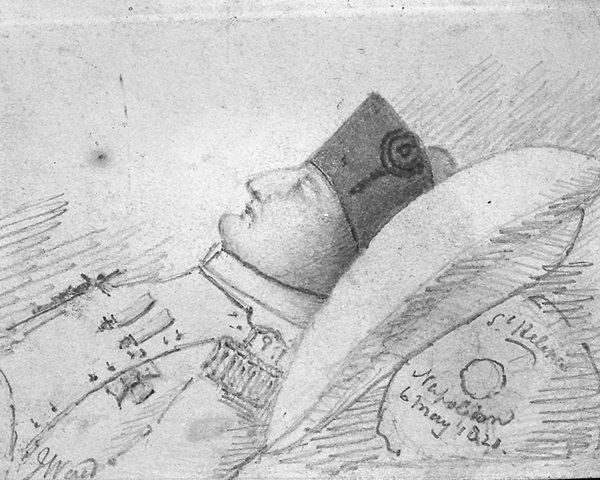
Napoleon died on May 5 1821 as an autumnal storm raged across the island. He had endured months of suffering though the post mortem revealed stomach cancer rather than hepatitis. Lowe, relieved at last of the tension, managed to rise to the occasion with the remark that ‘he was England’s greatest enemy, and mine too; but I forgive him everything. On the death of a Great Man like him, we should only feel deep concern and regret’. The ex-Emperor lay in state for three days on his camp bed which was covered with the blue and gold embroidered cloak he had worn at the battle of Marengo, he was dressed in the green uniform of the chasseurs a cheval de la garde and riding boots with silver spurs, his sword at his side and a silver crucifix which had belonged to his mother on his breast. The officers of the garrison, together with ‘every respectable person on the island’ filed past him, the latter bringing flowers, the former touching his hand in tribute, and many returning a second time to mark their recognition of a great soldier. Napoleon himself had acknowledged the empathy of military men, ‘I have no reason to complain of the English soldiers, they treat me with great respect, and even appear to feel for me’.
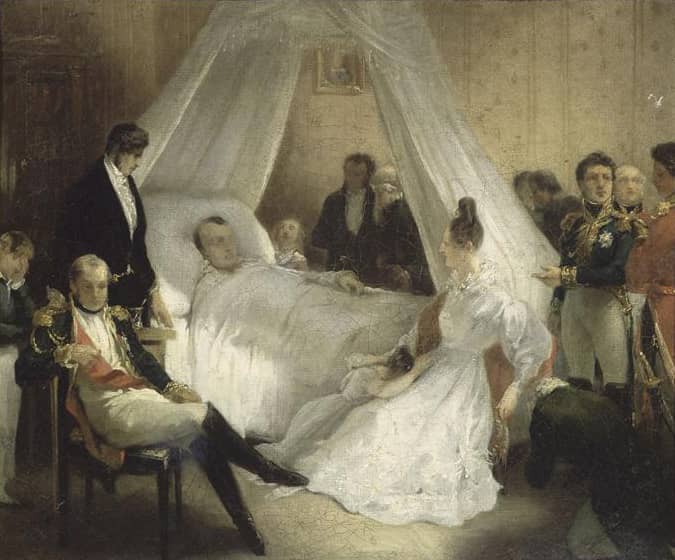
Napoleon is laid to rest
He was laid in a tin coffin lined with white silk and the sword was removed; one of the assistant surgeons surreptitiously scraped his name on a small metal plate and placed it by the body together with gold coins of the French Empire and the Kingdom of Italy. The coffin was then encased in lead and two further ones of mahogany forming a massive burden for the twenty-four grenadiers who carried it in relays to the grave Napoleon himself had chosen – by a spring under two weeping willows – which had been consecrated by both Catholic and Protestant rites. He had once remarked that only incense made religion worthwhile and the solemn procession moved through the clouds as the entire garrison lined the route two deep. They had been instructed as the Gentleman’s Magazine back in London carefully described, ‘to place the musket point on the left foot, left hand on butt and left cheek on hand’, and they turned in behind to follow. Ironically, their regimental colours which were formally displayed, had been carried at all the great Peninsular battles against the French. The band of each corps played a dead march and also a dirge composed by the Catholic Charles McCarthy who had been deeply moved by Napoleon’s absolution joke. Three volleys of musketry and three salvos from fifteen massed cannon were echoed by the warships out at sea and cannon from all the separate island forts. Napoleon’s chaplain, a priest from Corsica resplendent in gold embroidered vestments, conducted the funeral rites and it was noted that he appeared ill at ease although none could say whether this was due to emotion or to the fact that he was actually barely literate. A military guard would be permanently stationed by the grave; an NCO wrote to his mother, ‘I have a sentry promenading on each side to catch him if he gets up’.
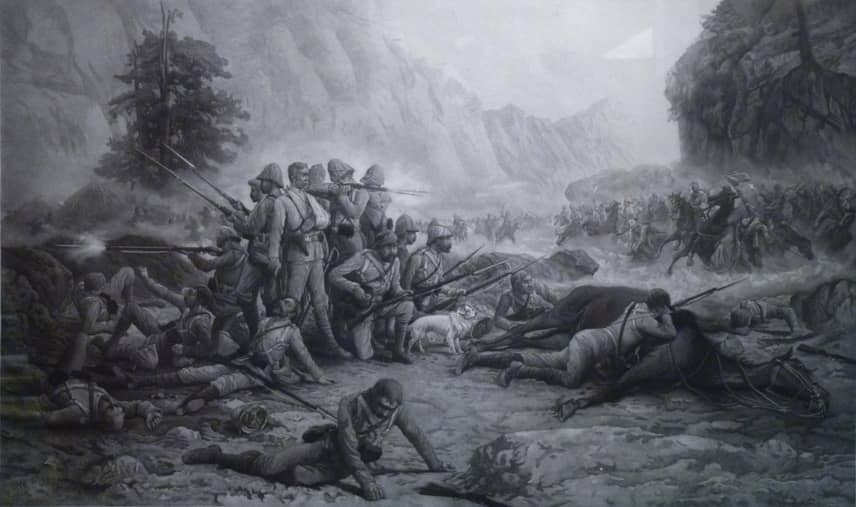
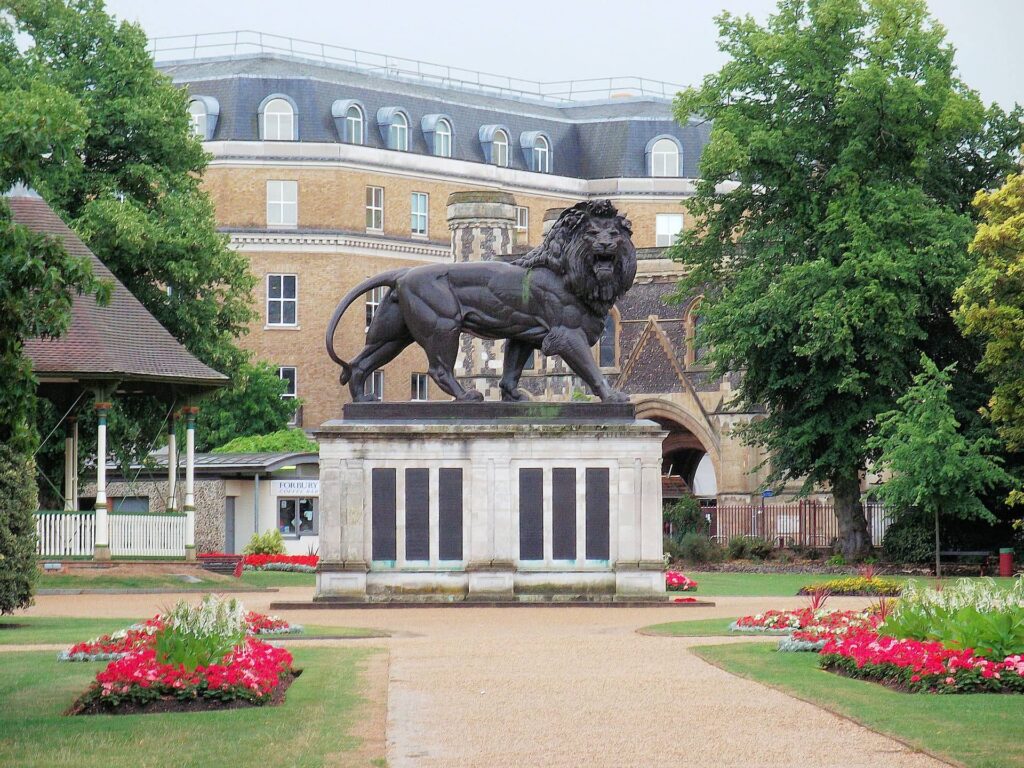
In September the 66th left Jamestown for England; sixty years of colonial service in Canada and India lay ahead of them before their virtual annihilation in Afghanistan at the Battle of Maiwand.
The 'Great Man' acquires mythical status
Hudson Lowe left the island two months later, sped on his way by a sermon from the East India Company chaplain, Richard Boys, yet another with whom he had conducted a long feud, the text chosen being ‘Verily I say unto you that publicans and harlots go into the Kingdom of God before you.’ The rest of his life was overshadowed by the controversy over his service on St. Helena as the ‘Great Man’ acquired almost mythical status. He was despatched to command the small detachment of British forces in Ceylon and at the end of that appointment returned to England to haunt Whitehall in search of employment. The Duke of Wellington received him courteously enough but his promise ‘that no motive or policy would prevent him from employing Sir Hudson wherever that officer’s service could be useful’ was decidedly ambiguous. He added, more forcefully, in response to the request for a pension that Parliament would never grant one, ‘nor would [the Prime Minister] ever consent to propose one to the House of Commons’.
The end of the affair
Nineteen years later the King of the French, Louis Philippe, planning ‘to regain all the Glories of France’ and incidentally strengthen his own shaky position, received British permission for the return of the ex-Emperor’s remains for burial in Paris.
A million francs was provided and a group of French grandees and former supporters arrived on St. Helena to be assisted by British soldiers in the exhumation. It took place at night in driving rain, and all were shaken when the corpse was revealed to be in an almost perfect state of preservation although embalming had not been possible. Re-coffined in ebony and placed in a candlelit chapel which had been formed on the stern of a French frigate, Napoleon returned to Paris.
There a 13-ton funeral carriage, gilded and veiled in purple, processed to the accompaniment of drums and cannon through massive crowds to the L’Eglise des Invalides where the requiem mass was sung by members of the Paris Opera. Saint Denis had been rejected – ‘he must not receive the ordinary burial of kings, [he must] reign and command in the fortress where soldiers of the fatherland will always rest.’
Bibliography
The Recollections of Rifleman Harris, Henry Curling (1848).
Surgeon Henry’s Trifles, ed. P. Hayward, P. Haythornwaite (1970).
Redcoat, Richard Holmes (Harper Press, 2011).
The 66th Berkshires, Frederick Myatt (Hamish Hamilton, 1968).
In the Words of Napoleon, ed. R. M Johnston (Frontline Books, 2015).
Napoleon the Last Phase, Lord Rosebery (Arthur L. Humphrey’s, 1906).
© Nick Brazil 2025
Photos: Wiki
About The Author - Veronica Baker-Smith
She is also the author of Royal Discord – a study of the family of George II.

Available on Amazon
Click above to purchase

Click to see full BMMHS event listing pages.
Contact us at [email protected]
Copyright © 2026 bmmhs.org – All Rights Reserved
Images © Nick Brazil