The British Expeditionary Force
by James Goulty
Military historian and author James Goulty has contributed a brief introductory article on the British Expeditionary Force from the Phoney War to the Blitzkreig, 1939 – 1940.
Britain sends the BEF to France
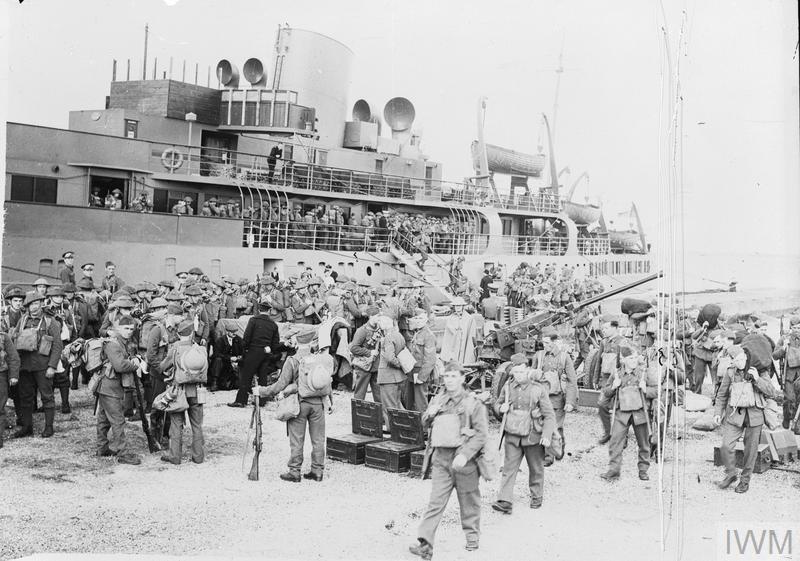
When the Second World War broke out in September 1939, Britain did not hesitate to send a British Expeditionary Force (BEF) to France. It comprised regular divisions, followed up by territorials, which were eventually organised into three corps together with GHQ troops, lines of communication personnel, and various reinforcements that arrived during April-June 1940.
All units came under the overall command of General (later FM) Viscount Gort, a much-decorated soldier of legendary bravery with an affable nature. According to one subordinate, Gort was an excellent ‘example of the best type of regimental officer; he knew everything there was to know about the soldier, his clothing and boots, and the minor tactics of his battlefield.’[1]
Gort out of his depth
However, critics believe Gort was out of his depth; he had only previously commanded an infantry brigade and was prone to ignore administration, something an Army commander could not really afford, plus his dispersed command made for an awkward communications network. Notably, at Battalion Headquarters there were no radios during 1939-1940, so that communication with companies downwards had to rely on telephone, motorcycle despatch riders or runners, which placed the British at a considerable disadvantage in the war of movement that eventually occurred. When faced with the collapse of France, Gort nonetheless deserves great credit for ensuring that over 338,000 troops were rescued via Dunkirk between 27 May and 2 June 1940, to arrive back in Britain to fight another day.
Complications of the chain of command
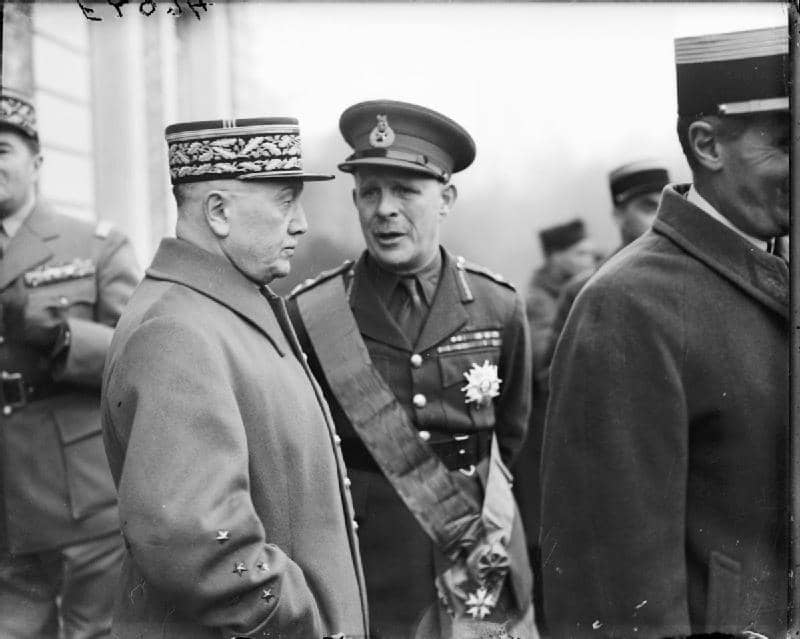
By mid-October 1939, the regulars from 1st Corps comprising 1st and 2nd Divisions under Lieutenant-General (later FM) Sir John Dill, and 2nd Corps comprising 3rd and 4th Divisions under Lieutenant-General Alan Brooke (later FM Viscount Alanbrooke), were posted to the Lille area facing Belgium. On their right was General Blanchard’s First French Army and to their left was General Giraud’s Seventh Army. The BEF was operationally subordinate to General Georges, who commanded what was grandly dubbed the ‘Armies of the North-East’, which referred to the nine French armies and one British positioned between the Alps and English Channel.
Further up the chain of command was General Gamelin, who commanded the entire French Army (including troops in North Africa). When the Germans attacked in May 1940, the situation was further complicated by the appointment of General Billotte who was to co-ordinate the actions of the BEF with those of the French formations on its flanks.
The BEF was strengthened in December 1939 by the all-regular 5th Division that joined 2nd Corps, and subsequently by the arrival of 48th (South Midland), 50th (Northumbrian) and 51st (Highland) which were all Territorial Army divisions. While territorials might have lacked the professional bearing of their regular counterparts, they were nonetheless typically enthusiastic and had high morale. Even so, as a whole, the BEF lacked training owing to the British Army having been starved of funds during the inter-war years.
During April 1940, 3rd Corps was also established under Lieutenant-General (later General) Sir Ronald Adam and comprised of 42nd (East Lancashire) and 44th (Home Counties) Divisions. By May 1940, the BEF was augmented by 12th (Eastern), 23rd (Northumberland) and 46th (North Midland & West Riding) Divisions. The state of these formations was especially perilous. They had no artillery, had received only limited equipment and training because they were earmarked as labour battalions, and were expected to continue their training in theatre.
Like many men, Bill Cheall had joined the Territorial Army during the 1930s, and served with 11th Battalion Green Howards, part of 23rd Division: ‘Bear in mind we were not equipped to do battle, apart from our rifles, which none of us had yet fired.’ Neither had anyone fired the limited number of Bren guns and anti-tank rifles available: ‘We had no Bren carriers or mortars and almost no signal equipment and no divisional artillery… And here we were waiting for the blitzkrieg.’[2]
The Gort Line
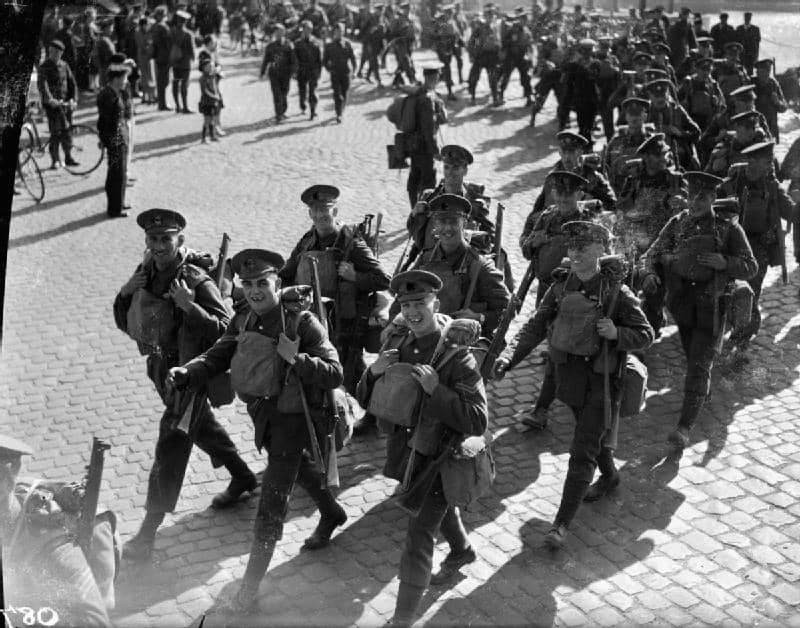
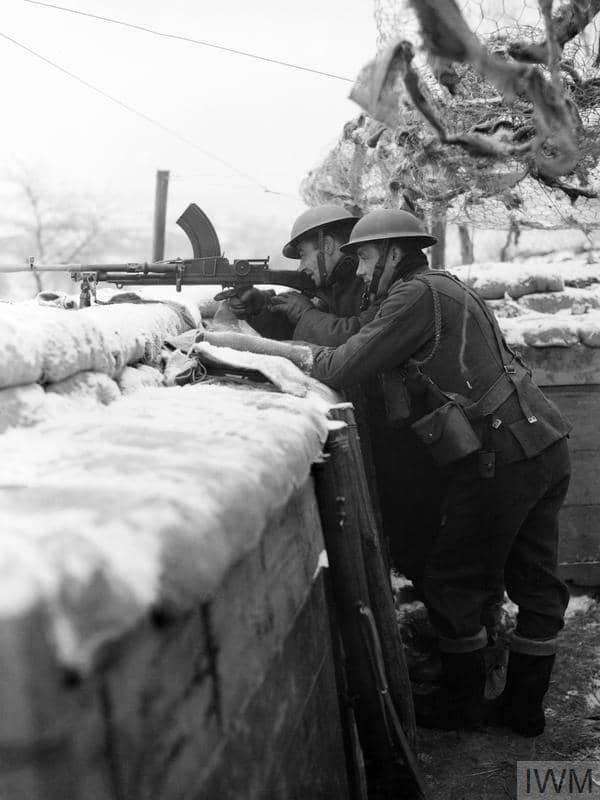
Despite Belgium’s neutrality, it was hoped that if the Germans invaded, French and British troops would be welcome to establish a defensive line on the River Dyle, while the French Seventh Army advanced into southern Holland, which would shorten the line north of the Maginot Line, the series of fixed defences stretching from the Swiss border to Malmédy, in which the French had invested great faith and resources during the inter-war period.
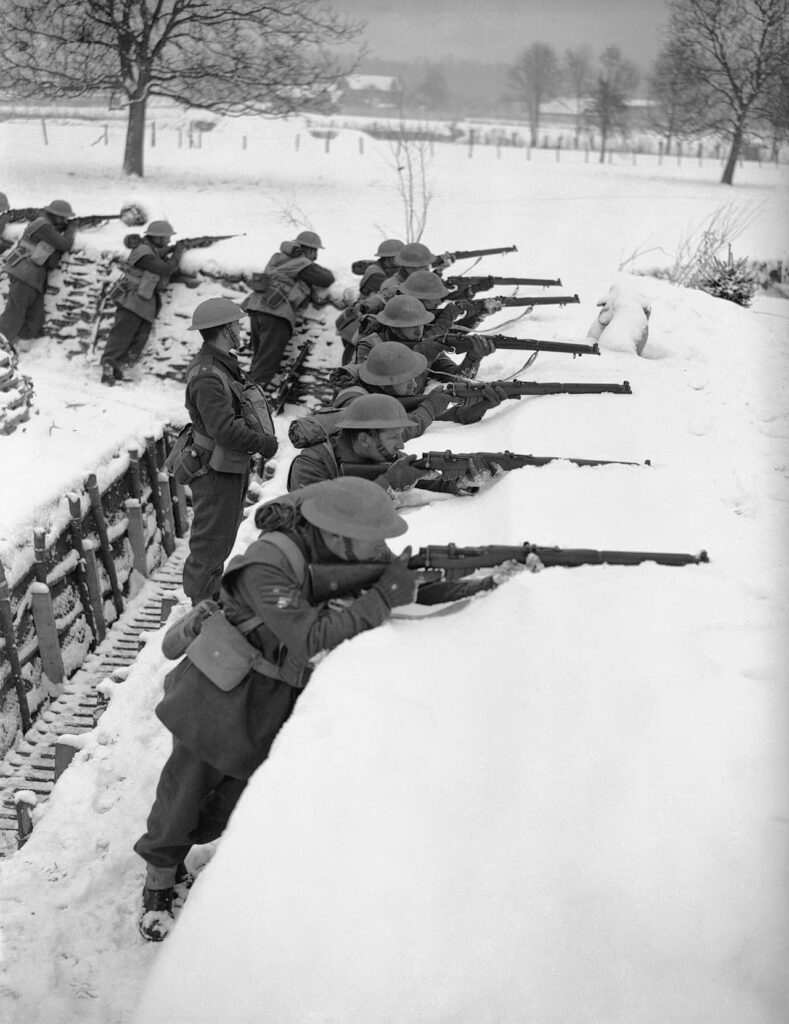
What transpired was that there was an eighth month pause between the German conquest of Poland in September/October 1939 and their invasion of France and the Low countries in May 1940. This became known as the ‘Phoney War,’ a period of uneasy suspense. During it, the BEF spent many hours digging defences in Flanders, constructing what was known as the ‘Gort Line’ in terrain which was eerily familiar owing to British experience during the First World War.
Personnel from 9th Battalion Durham Light Infantry were given a tour of First World War battlefields that featured strongly in that Regiment’s history, while men of 5th Battalion Border Regiment uncovered numerous 1914-1918 vintage pill boxes, some of which were incorporated into their defences.
Health & fitness
With limited sight of the enemy, winter weather, rat-infested billets and water-logged trenches, plus the monotonous digging and wiring, the Phoney War was a testing time for infantry battalions in terms of their morale and discipline. Drinking was common, not least because wine and spirits were cheap. Potentially drunken behaviour was therefore an issue, especially as the average soldier was liable to quaff French wine as if it was British beer. Those who transgressed might be subjected to hours of gruelling Pack Drill as punishment, which tended to have a salutary effect. Typically, among infantry platoons were, as Fred Welsh, a former NCO in the Durham Light Infantry recalled, ‘the same thirty-odd people: the boozer, the person who wouldn’t buckle down, those who wanted to try, those who weren’t interested in the war.’[3]
An even greater concern was the rate of VD, especially in forward areas, which as historian Mark Harrison in Medicine & Victory (2012) explained, was initially even higher than that recorded for the BEF in 1914-1918. Numerous measures were taken to counter it, including having licensed brothels with ablution rooms where troops were encouraged to take a series of preventative measures. Major-General (later FM) Montgomery, who commanded 3rd Division, notably irked his superiors when in a rather candidly composed Divisional Order he urged that condoms should be freely available in the NAAFI, sexual hygiene promoted, and the virtue of cleaner brothels extolled. The commanding officer of 1st/6thEast Surrey Regiment, a TA battalion with 4th Division, caused equal angst when he bought up all the condoms in his unit’s area, and distributed them to his men free of charge. Padres considered such actions as an open invitation to soldiers to sin. Yet, it is perhaps worth noting that the 1st/6th East Surreys had very few cases of VD owing to their CO’s initiative.
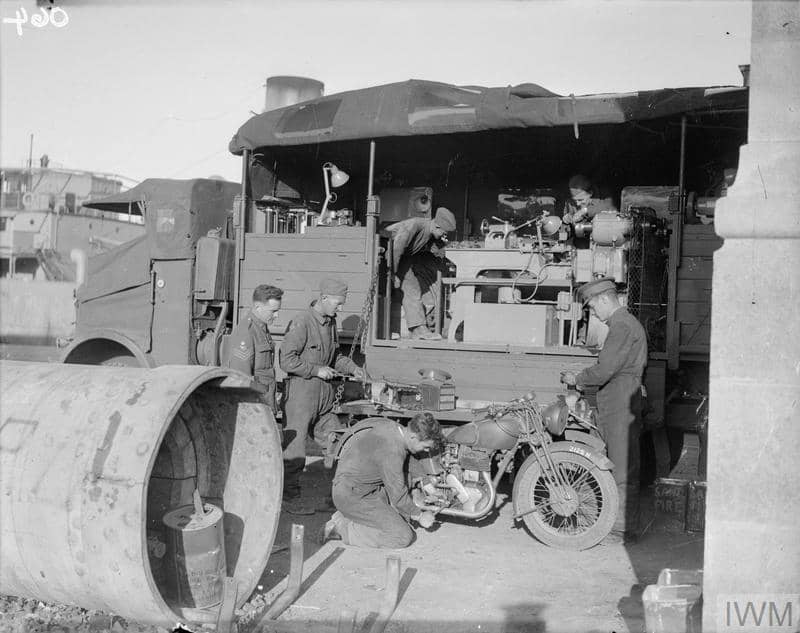
Other medical issues included the standard of men’s dental health, which was generally poor. Although soldiers were entitled to free dental treatment, the numbers of dentists and technicians available to provide treatment in the BEF was limited. Similarly, hygiene and sanitation were important, and a challenge, especially in the hard winter of 1939-1940 when most infantry were living and operating in fairly primitive conditions. Methods to improve men’s health included the well-established FFI – the ‘Free from Infection’ inspections that targeted skin diseases, such as scabies and lice. Together with the provision of mobile bath houses and changes of uniform, this might have had a positive effect.
To boost physical fitness in a largely mechanized army and maintain morale, sports, including football, hockey and rugby were encouraged, with every battalion being issued 800-weight of sports equipment. Mobile cinemas and shows also provided much needed entertainment. Another important issue was the provision of mail. The Army Postal Service dealt with thousands of letters, newspapers, food and comfort parcels and even a number of souvenirs sent home by troops in France. Letters from troops were still being accepted for posting shortly before the Dunkirk evacuation.
Patrols
During the Phoney War, there was scope for limited action, particularly when BEF battalions helped man the French sector of the Maginot Line. On the night of 3rd March 1940, B Company 5th Battalion Gloucestershire Regiment, serving in the Ligne de Contact in the Saar region, were tasked with despatching a patrol into No Man’s Land to listen out for enemy movement.
The Gloucester’s patrol was led by Lieutenant Michael Shepherd: ‘It was in the accepted tradition of patrolling. Cap-comforters were worn, faces were blackened, grenades were fastened to webbing belts by the hand-levers, and ammunition was readily available.’ Unfortunately, while the patrol was out, fighting commenced behind them because the Germans attacked the Battalion’s main positions, and they were pinned down. Having spent ‘an endless time of utterly unheroic waiting’ and with one soldier wounded, Shepherd decided it was time to return. They reached the village of Grindorff, where B Company was located, and managed to enter their lines without being fired on by the Germans or their own side while singing the Battalion marching song ‘Beggar I’ell.’[4]
As a form of low-level tactical activity, patrolling tested soldiers under awkward conditions and demanded an appreciation of essential infantry skills such as minor tactics, weapon handling and fieldcraft. In the context of the Phoney War, patrols were also a chance for soldiers to get to grips with an enemy who otherwise proved elusive and offered a break from the drudgery of their routine. Additionally, they were an opportunity for officers and men, be they regulars or territorials, to demonstrate bravery and fortitude under fire.
Among the first gallantry decorations awarded to the BEF were the immediate awards of the Military Cross to Captain (later Brigadier) Peter Barclay and Military Medal to Lance-Corporal M. Davies of 2nd Battalion Royal Norfolk Regiment. On 3rd-4th January 1940, their patrol was tasked with reconnoitring enemy positions around Waldwisse under moonlight and in heavy snow that hindered concealment. Barclay and Davies were in an advanced position ahead of the rest of their patrol when they came under heavy fire from a German outpost. They returned fire and in the bitter exchange threw a shower of hand-grenades at the Germans before Barclay skilfully extricated the entire patrol without loss.
However, the BEF did not always have it its own way. The war diaries of Field-Marshal Lord Alanbrooke highlight an incident that occurred in early March 1940 when posts held by troops from the Duke of Cornwall’s Light Infantry were raided by the Germans. After a heavy bombardment, during which the posts were enfiladed by light machine gun fire, German infantry assaulted, killing two British NCOs in the process.
Exercises & weaponry
Another feature of the Phoney War was that it provided time for the BEF to undergo training, something even regular troops required. During 1939-1940 in 3rd Division, Montgomery instituted a number of large-scale exercises. Divisional Exercise No. 3 on 7th-8th March 1940 closely foreshadowed what his troops were tasked with when the Germans actually invaded. It entailed a night advance to secure before daylight the following day, a river obstacle, sixty miles away, followed by a disengagement by night from close contact with the enemy, and a withdrawal to a position in the rear with the enemy being delayed in following up by the efforts of mobile troops, artillery, and aircraft.
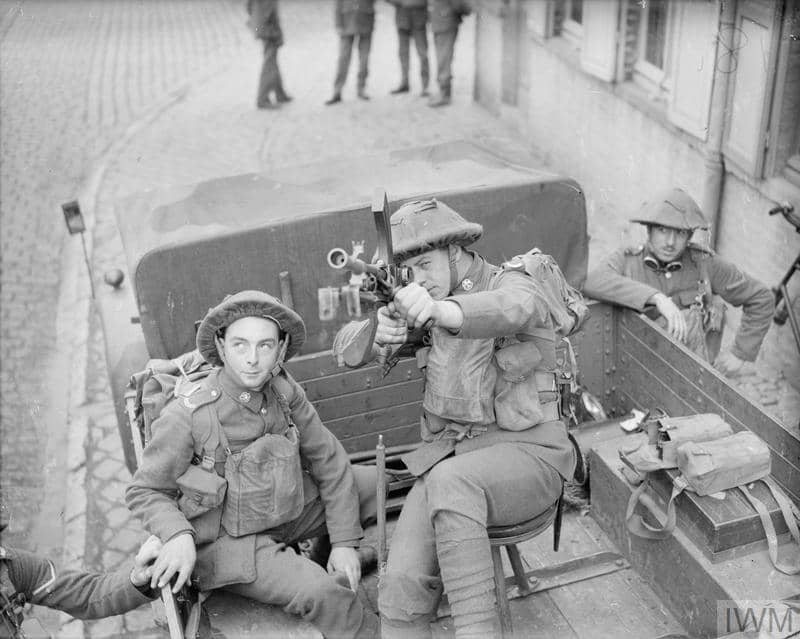
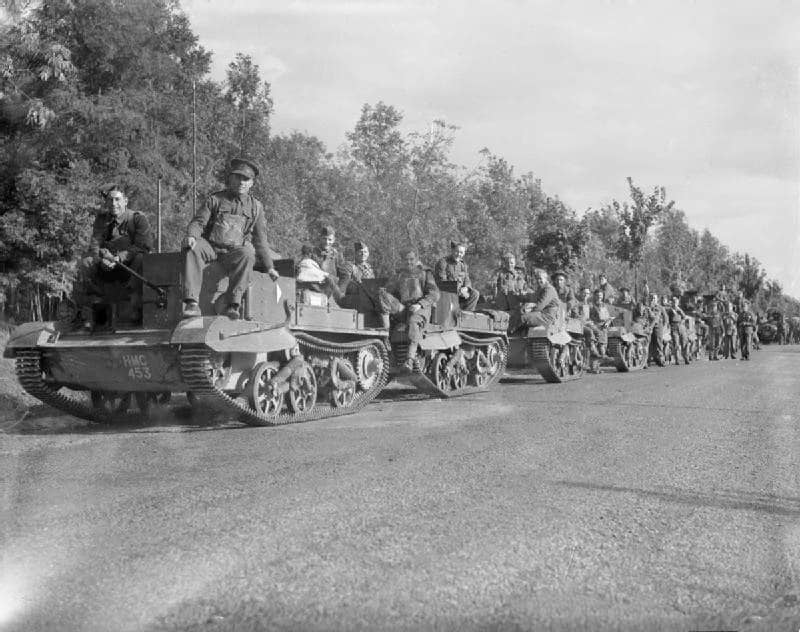
In part, training was based around the weaponry available to each battalion. The medium machine gun and mortar platoons provided fire to assist one or more of the four rifle companies in a battalion and were equipped respectively with the Vickers .303-inch medium machine gun and 3-inch mortar. Extra mobile firepower was available in the form of the carrier platoon, comprising six (later twelve) light armoured tracked vehicles known as carriers, each armed with a Bren gun.
By 1939, the Bren light machine-gun of .303-inch calibre had replaced the Lewis gun within rifle companies owing to its lighter weight which made fire and movement tactics more practicable. In other words, it was a tenant of infantry training that movement would be protected by fire, so if a platoon was deployed in sections one would try to advance under covering fire provided by the other two sections.
Another innovation was the light two-inch mortar, firing either smoke or high explosive bombs, although few soldiers may even have seen one in 1939. Theoretically the 0.55-inch Boys anti-tank rifle allowed infantry to counter armour, but in reality it proved unpopular, particularly owing to its vicious recoil.
As in the First World War, in an army that prided itself on its musketry, the standard personal weapon was the Short Magazine Lee-Enfield rifle of .303-inch calibre, accompanied by a long bayonet. Most infantrymen were taught how to use the No. 36 fragmentation grenade, developed from the famous Mills bomb. The new battledress provided soldiers with a working uniform, widely considered as eminently practical with its generous pockets for field dressings, maps, etc. This was often worn in conjunction with the 1937 pattern webbing equipment, replete with big pouches for spare Bren gun magazines.
Old trench warfare mentality
Although British infantry were well trained as individuals, units tended to lack collective training; that is, practice of employing collective tactics within a platoon or company, or even co-operating on a larger scale with other units, as in the divisional schemes favoured by Montgomery. Neither did many troops appreciate the application of fire, beyond the relative sterility of the rifle range. The experience of the First World War, plus campaigning on the north-west frontier of India, tended towards a deliberate approach regarding tactics.
In 1937, the publication of the official manual Infantry Training-Training and War attempted to prepare the army for modern warfare. It comprised over 240 pages and fifteen chapters covering: War Organisation; Infantry Weapons; Principles and Systems of Training; Drill; Field Formations; Field Signals; Training in Fieldcraft; Battle Procedure; Patrols; Protection; Attack; The Defence; Night Operations; Fighting in Close Country, Woods and Villages; and The Passage of Water Obstacles.[5] One wartime infantryman, who later attained senior rank, considered that the principles it enunciated ‘were thoughtful and practical.’
However, the shadows of the First World War remained, notably because ‘there was always the expectation of a deliberate attack as the only means of breaking the main enemy position,’ and when discussing defence doctrine the manual echoed ‘the old trench warfare mentality.’[6] Consequently, it did little to prepare the BEF for the most likely threat, namely that of a German breakthrough on a narrow front, supported by heavy firepower, with the intention of passing large numbers of troops rapidly through the gap/s so as to threaten a flank and rear areas. This was the very essence of Blitzkrieg or Lightning War, as devised by the Germans ahead of the Second World War.
Blitzkrieg
During late April 1940, the Anglo-French forces were eventually allowed to advance into Belgium. Then, on 10th May, the uneasy conditions of the Phoney War were shattered by the German invasion when Army Groups A (under Rundstedt) and B (under von Bock) advanced across the Belgium, Dutch, and Luxembourg borders. An effort was made to check them on the River Dyle, despite the Dutch Army capitulating on 14th May.
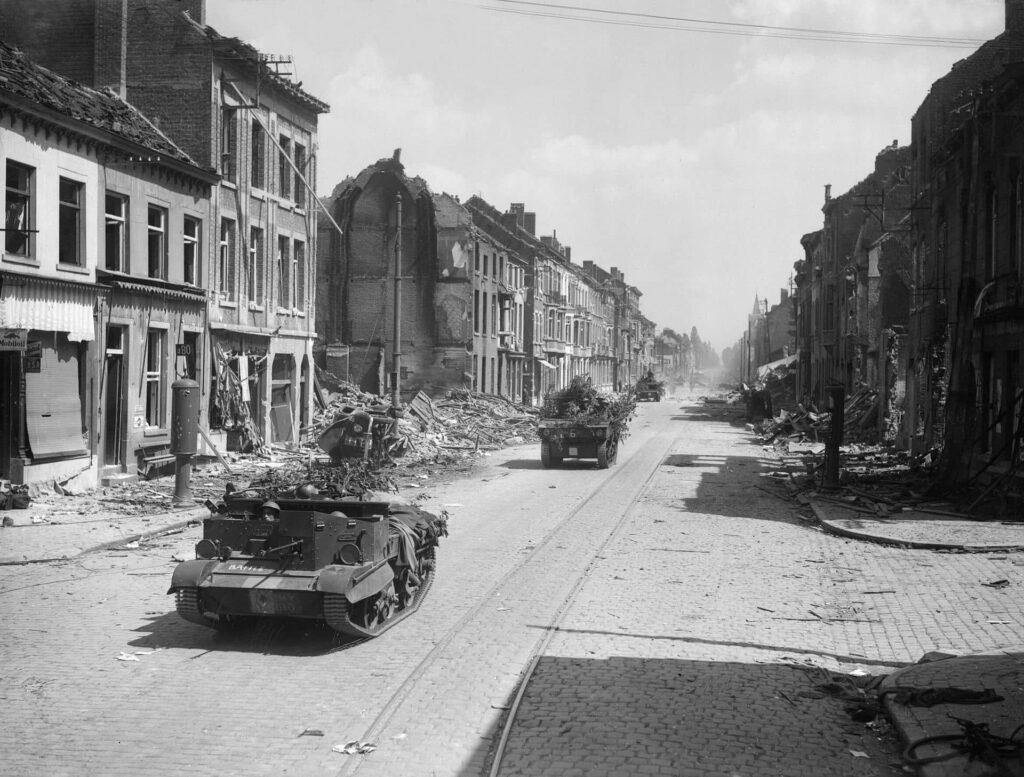
The Germans then launched a decisive thrust led by a Panzer group in the Ardennes region towards Sedan in terrain widely assumed to be impassable to tanks, and swept northwards threatening to trap the BEF and French troops in northern France and Belgium. Simultaneously, the Anglo-French forces came under increasing pressure from Army Group B. Arras was captured on 21st May after a spirited counterattack by the BEF had been repulsed, and over the following two days the Germans took Boulogne where 20th Guards Brigade and other troops had mounted a resolute defence until their position became untenable.
Simultaneously, Calais was isolated, and during a fierce four-day battle around 3,000 troops, including the highly trained infantrymen of the King’s Royal Rifle Corps, Queen Victoria’s Rifles, and Rifle Brigade, succeeded in holding off the Germans. When the town fell, only around sixty survived without being wounded or captured. Opinion has varied about whether the brave defence of Calais enabled the BEF to escape at Dunkirk, but it would seem to have posed a significant delay on the Germans by impressively holding down two Panzer divisions.
Equally, the BEF gained some respite owing to Hitler’s perplexing decision to order a halt to the advance, although on 28th May that order was lifted, by which time Operation Dynamo, the Dunkirk evacuation, had commenced. This proved another feat of endurance for the men of the BEF as they waited under fire on the beaches, and even had their ships bombed or crippled. Other units had to join 51st Highland Division, the only complete division left in France, and fight their way to St. Valéry-en-Caux in the hope of embarking there. The Germans then launched a second phase of their offensive on 5th June, which ultimately led to an armistice with the French.
During the summer of 1940, the Germans made preparations for the invasion of Britain. Units in the German IV Corps were furnished with a report outlining the qualities of the British soldier in light of experience gained during the French campaign. He was ‘in excellent physical condition’ and ‘bore his own wounds with stoical calm… He did not complain of hardships…he was tough and dogged.’ It continued that in defence, the British soldier ‘took any punishment that came his way. During the fighting IV Corps took relatively fewer prisoners than in engagements with the French or Belgians. On the other hand, casualties on both sides were high.’[7]
Realities of warfare
The campaign exposed British infantrymen to the harsh realities of modern mobile warfare, including aerial bombardment. For many, Stuka dive bombers seemed omnipresent, and the sirens they were fitted with added to the fear generated as they dived down onto targets. Charles Murrell, an NCO with the Welsh Guards, knew he would never forget these ‘terrifying engines of war.’[8] As the men of 1st Battalion Border Regiment, and many others discovered, roads were frequently clogged with pitiful bands of refugees, and all too frequently they also suffered in the bombing. Fear and confusion was additionally caused by rumours that German parachutists might land behind Allied lines, keeping in mind that in 1940 airborne warfare was still a relatively unknown phenomenon to most soldiers and had appeared devastating during the Nazi conquest of the Low Countries.
British troops found that they were urged by air-dropped German propaganda leaflets to surrender, but no one seemed to accept these offers. Neither were they necessarily safe from the paperwork generated by their own side. Even on active service, Army bureaucracy raised its head. Shortly before the invasion of Belgium, one company commander from 1st Battalion Border Regiment was irritated to be woken in the middle of the night by a despatch rider with a pressing message asking for the number of prayer books held by that unit!
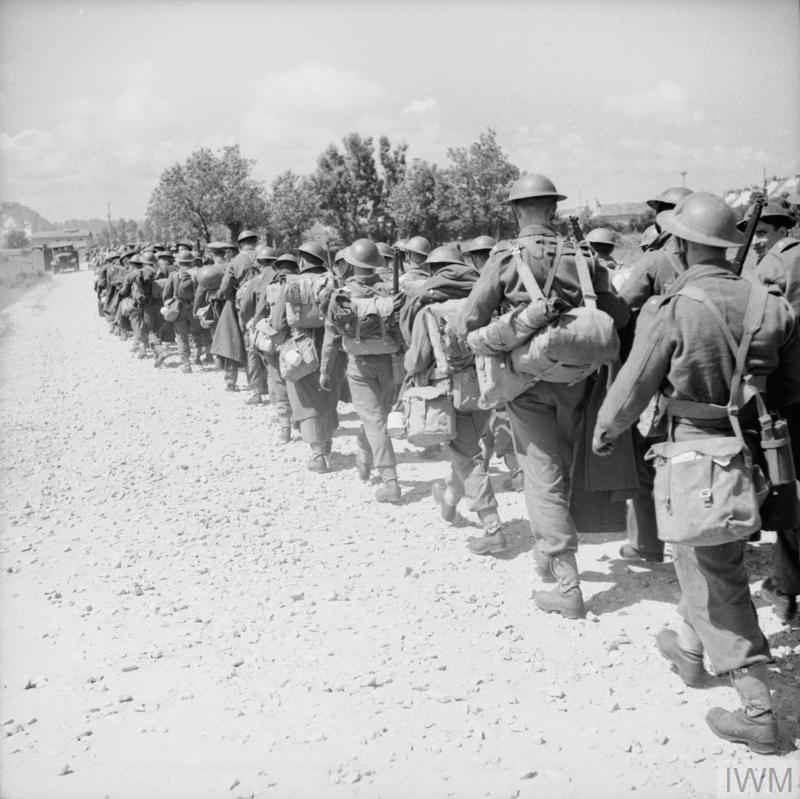
Although many troops entered captivity safely, including those at Calais and St. Valéry-en-Caux, massacres of British POWs did occur; notably, those at Le Paradis and Wormhout have been documented. In the fighting withdrawal from the Dyle to the Channel coast, fatigue was another issue. Men from the Durham Light Infantry talked of ‘hiker’s knock’, whereby an individual had a vacant expression, arms swinging loosely, slavering at the mouth as he plodded on seemingly unaware of his appearance. Some troops became psychiatric casualties under the stress of the campaign. According to Harrison, 53% of these resulted from anxiety neuroses rather than hysteria, as had been common in the First World War where the fighting was static for longer periods.
Equally, there were numerous acts of bravery. In one case the severely wounded CSM George Gristock (2nd Battalion Royal Norfolk Regiment) went forward alone, and single-handedly knocked out a German machine gun position that had been threatening his unit, before returning to continue directing their defence. He received the Victoria Cross posthumously.
© James Goulty 2025
Bibliography/Further Reading
Footnotes
[1] ‘The Memoirs of Field-Marshal The Viscount Montgomery of Alamein’ (London: The Companion Book Club, 1958), p. 45.
[2] Bill Cheall, ‘Fighting Through From Dunkirk to Hamburg: A Green Howard’s Memoir’ (Barnsley: Pen and Sword, 2011), p. 9.
[3] Fred Welsh (ex L/Cpl 9th DLI) quoted in Harry Moses, ‘The Gateshead Gurkhas: A History of 9th Battalion The Durham Light Infantry 1859-1967’ (County Durham Books, 2001), p. 122.
[4] David Scott Daniell, ‘Cap of Honour: The Story of The Gloucestershire Regiment (28th/61st Foot) 1694-1975’ (London: White Lion Publishers, 1975), p. 246.
[5] See: ‘Infantry Training: Training and War 1937’ (Published by the War Office, August 1937).
[6] General Sir Anthony Farrar-Hockley, ‘Infantry Tactics 1939-1945’ (London: Almark, 1976), pp. 10-13.
[7] Major General Julian Thompson, ‘Dunkirk: Retreat to Victory’ (London: Pan, 2008), p. 301.
[8] Nick Murrell (Ed), ‘Dunkirk to the Rhineland: Diaries and Sketches of Sergeant C S Murrell, Welsh Guards’ (Barnsley: Pen and Sword, 2011), p. 15.

About The Author
James Goulty holds a masters degree and doctorate in military history from the University of Leeds, and has a particular interest in the training and combat experience of ordinary soldiers during the world wars and Korean War.
He has published numerous articles and written 5 books for Pen and Sword Ltd, including The Second World War through Soldiers’ Eyes: British Army Life 1939-1945; and Eyewitness Korea: The Experience of British and American Soldiers in the Korean War 1950-1953.

Click to see full BMMHS event listing pages.
Contact us at [email protected]
Copyright © 2025 bmmhs.org – All Rights Reserved
Images © IWM