The Devil's Lost Battalions
by Nick Brazil
The role of foreign "guest" forces
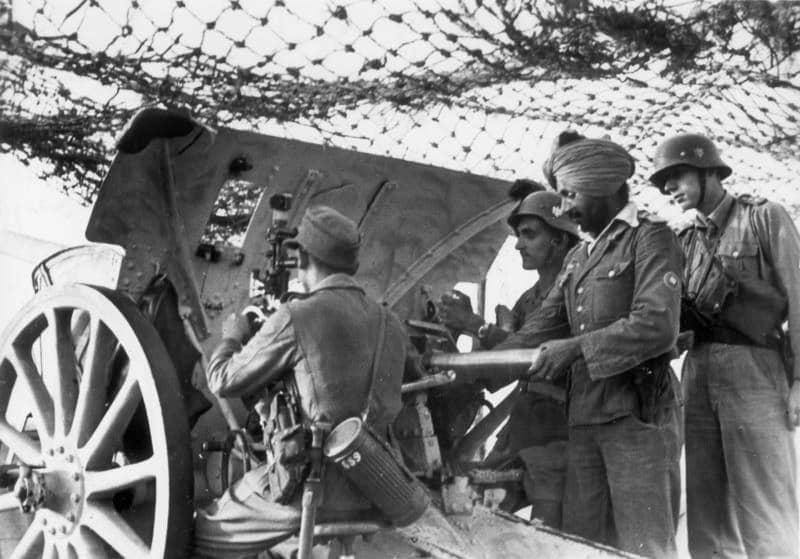
The retelling of the dramatic events of The Second World War in books, films and television has always been dominated by the major campaigns and battles such as The Blitz, Barbarossa and D-Day. So, most people would be surprised to learn of the major role that foreign “guest” forces played as part of the Nazi’s war machine.
In fact, the number of foreign conscripts in the German forces numbered one million. They included a wide range of nationalities from Belgians to Finns and Spaniards. The motivation and effectiveness of these foreign volunteer units varied greatly.
John Amery and The British Free Corps
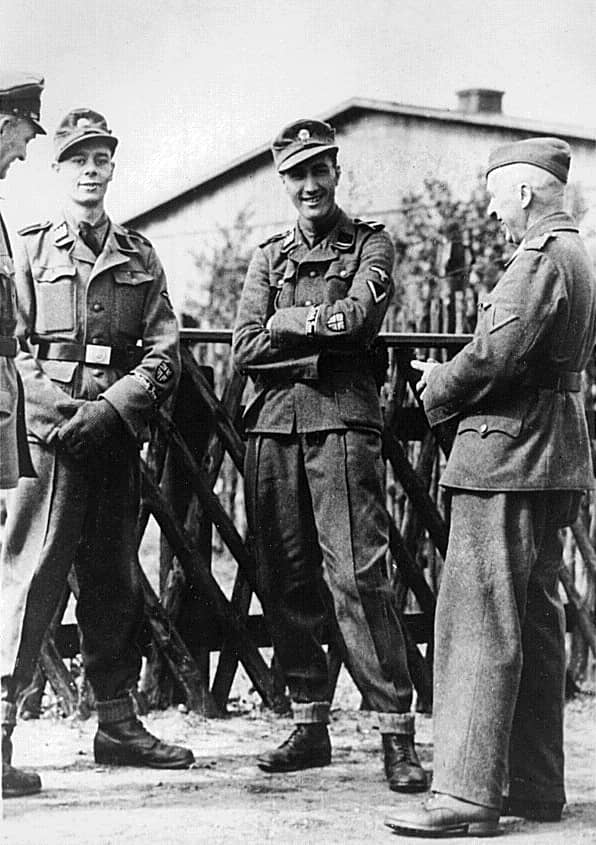
Understandably, most UK readers are interested in the role played by The British Free Corps. This was the brainchild of John Amery an ardent fascist who was the son of Leo Amery, The Secretary of State for India. The Nazi High Command liked his idea and the BFC was established in 1942 as a unit within the Waffen SS. Amery’s idea was to set up a legion of British troops to fight the soviets and communism.
His recruits were made up of PoWs mainly from a camp called Genshagen situated in a Berlin suburb. This prison was a softer camp than others such as Stalag III and had the reputation for being a “holiday camp”. The Germans set it up for British prisoners who were considered to be likely collaborators. By no stretch of imagination could it be regarded as a success. At its height, the BFC only had 54 recruits.
These volunteers were trained to serve on the Eastern Front but never actually saw much or any action. This and the fact that the Germans failed to recruit any British officers to command its small numbers speaks volumes about its lack of effectiveness. Since no members of the BFC are still alive, one can only guess at their motivation. However, most were probably misfits and loners permanently dissatisfied with their lot. A few were no doubt closet fascists who welcomed the chance to fight on the side of the Nazis.
After the war, only a handful of BFC were tried and their sentences were relatively light. In most cases terms of imprisonment of up to ten years were considerably reduced. The exception to this was John Amery who was tried for treason and hanged in December 1945.
Amery's inspiration for the BFC
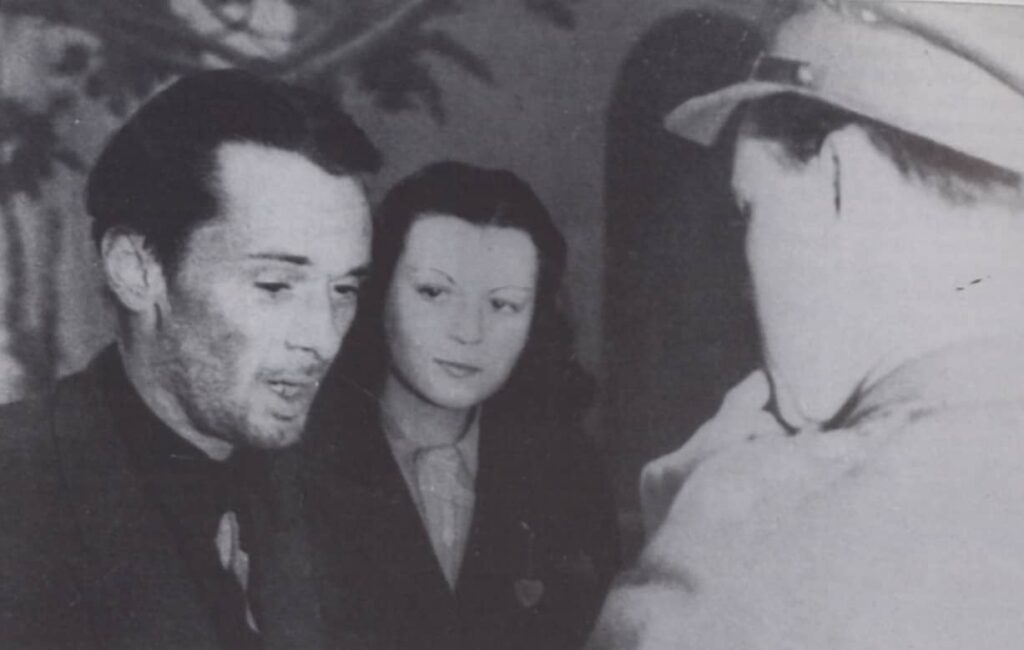
Amery’s original inspiration for the BFC came from another foreign collaborationist unit called The Legion of French Volunteers Against Bolshevism. Formed by a number of French nazi sympathisers including Jaques Doriot, in the summer of 1941 it had a total of 2300 recruits. The Legion actually took part in Operation Barbarossa, the German invasion of The Soviet Union. However, its members did not cover themselves in glory during the Seige of Moscow. As well as suffering high casualty rates, the Legion was bedeviled by poor training, factional infighting and desertions. As a result, the Legion was pulled back from Front Line fighting after only two weeks. It did not see action again until “anti-bandit operations” in Belorussia in 1943.
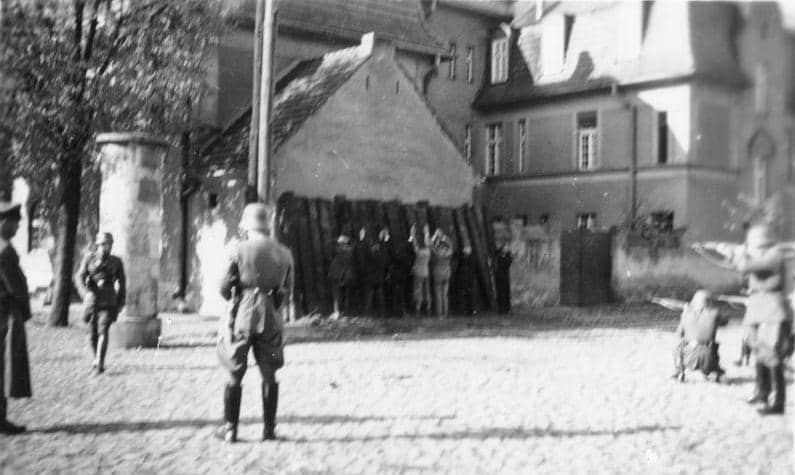
There The Legion involved itself in a dirty war against Soviet partisans. The actions of the ill-disciplined LVF recruits in this theatre was a litany of brute force against the local civilian population, looting and flattening villages. Their motto seems to have been “The only good Russian is a dead Russian.”
Towards the end of the war, the ranks of the LVF had been severely depleted by casualties with its recruits numbering not more than 1000 men. It was absorbed into another group of French volunteers known as The Charlemagne Division. This group was badly mauled by invading Soviet Troops in Germany in 1945 during the Battle of Berlin. Before disbanding or surrendering they took a heavy toll on Soviet troops and tanks.
Soviet oppression spawned a number of units
The violent legacy of Soviet oppression in the lands they occupied, spawned a significant number of foreign units fighting for the Reich. They often threw their lot in with the Hitler in the hope they could free their populations from Soviet Tyranny rather than loyalty to the Nazi creed. The degree of enthusiasm for allying with the Germans also varied.
For example, The Armenian Legion which was formed under the Wehrmacht in 1942 did so as a way to defend Armenia against the threat of aggression from the Turks and, more importantly, Josef Stalin. Most of their members were ex Red Army officers and were, at best, reluctant allies of the Germans. Hitler never completely trusted the Armenians whom he believed were not true Aryans through and through. He had similar reservations about the Georgians who were conscripts in another collaborationist battalion known as The Georgian Legion who he felt could not be entirely trusted.
The Free Arab Legion
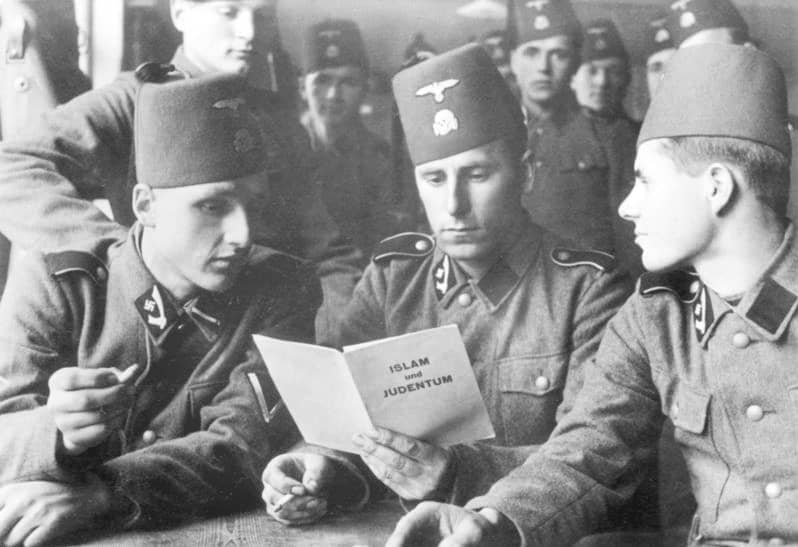
In view of his belief in Aryan racial superiority, it is surprising that The Fuehrer valued the Muslim members of his foreign forces over the others. He regarded. Islam as superior to Christianity being more disciplined and militaristic. The Free Arab Legion was without doubt one of the most loyal foreign military groupings within the Wehrmacht. Consisting of mainly Iraqi, and Syrian Muslims it was formed as a result of a military coup by Iraqi Army Officers known as The Golden Square. In 1941, they overthrew the pro-British Iraqi Government and established a pro-Nazi regime in Baghdad. This sparked a short war in which British forces invaded Iraq and defeated the new government after a month. The Free Arab Legion was created with the revolutionary troops who fled Iraq after their defeat. As well as fighting in Tunisia, the Legion also saw action against partisan forces in Greece and Yugoslavia.
They suffered a high number of casualties in all these theatres. A large proportion of the FAL men were captured with the defeat of the Axis forces in North Africa in 1943. What remained of the Free Arab Legion disintegrated in Austria with the German defeat in 1945.
A collective hatred of Russian Communism
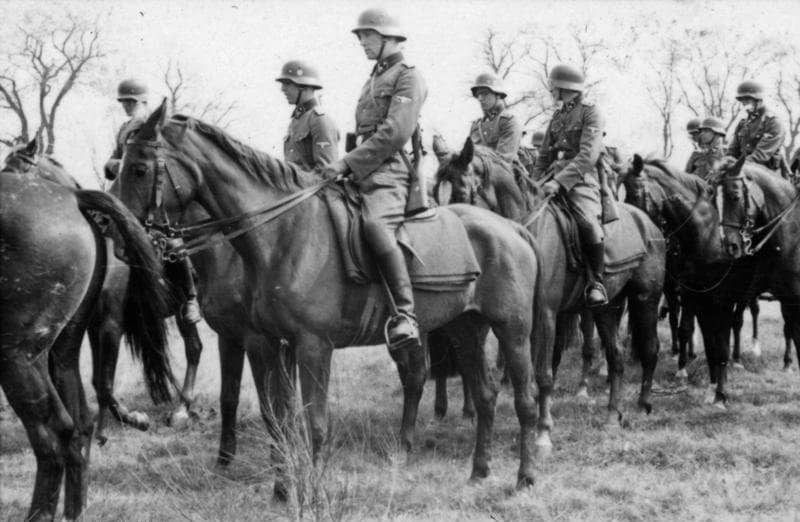
Carried by the winds of war, Hitler’s “Foreign Guest Armies” fought in a wide variety of locations. In the East, 25,000 cavalrymen of the XIV SS Cossack Cavalry Corps confronted Soviet forces. With memories going back to The Russian Civil the Cossacks’ collective hatred for Russian Communism was very deep. As a result, the fighting on the Eastern Front was extremely bitter with no quarter given on either side.
Ukrainian Liberation Army
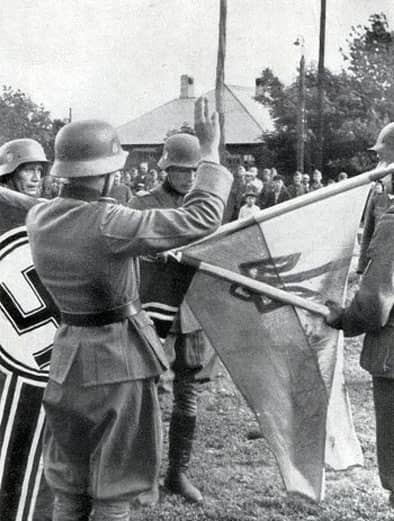
Meanwhile, thousands of Ukrainians were fighting the Soviets alongside the Wehrmacht, under the umbrella grouping of the Ukrainian Liberation Army. Whilst many of these groups were engaging with the Russians in Ukraine itself, others were scattered all over Europe. At the end of the War, the ULA was absorbed into the Ukrainian National Army before surrendering to the allies and disbanding. From there many of its members found their way into The French Foreign Legion.
Their fate was a much better one than many other foreign forces allied to the Nazis. Enslavement, deportation and execution faced most especially if they were captured or surrendered to the Russians. However, this was not always the case. In Southern Austria in 1945 many ethnic Russians who had served with the pro-Nazi Cossack Corps were forcibly repatriated by the British into the hands of Tito’s Communist partisans who summarily executed many of them.
In the years immediately following The Second World War there were other forced repatriations of Cossacks. These smaller numbers were carried out by the Allied Forces in other parts of Austria, Italy, Marseilles and the United Kingdom. There were even 154 Cossacks forced back into Stalin’s deadly embrace from Fort Dix in the United States.
That there was little sympathy showed for them at the time, was because these various forces collaborated with the Nazis. They were also suspected of atrocities against civilians in lands conquered by the Wehrmacht. In many cases these suspicions were correct such as the Cossacks and The Russian Liberation Army in German occupied Russia.
Tragedy and death for chasing the wrong side
Members of these different units and forces were hunted down over the years. Whilst this was in the guise of seeking justice for atrocities they orchestrated, more often than not, the motive was simply vengeance. Across the world from Australia to Estonia, members of collaborationist forces have been unmasked for atrocities. Some like Dinko Sakic a member of the Croatian Pro-Nazi Ustase who ran the notorious Jasenovac extermination camp were imprisoned. Others faced widely different fates like the French survivors of the Waffen – SS Charlemagne Division. Whilst their senior officers were executed, lower ranks were given the choice of prison or fighting for the French in the Indo China War.
The story of those who took up arms for Nazi Germany often against their own countries is yet another thread in the violent tapestry of The Second World War. It is one that inevitably ended in tragedy and death for the hundreds of thousands who ultimately found they had chosen the wrong side.
© Nick Brazil 2024
Photos: Wiki
About The Author
Click to see full BMMHS event listing pages.
Contact us at [email protected]
Copyright © 2024 bmmhs.org – All Rights Reserved
Images © Nick Brazil