THE GREATEST ESCAPE OF WORLD WAR TWO
The Ozbalt Raid 31st August 1944
by Nick Brazil
Allied prisoners in Stalag XVIII - D
Following the Battle of Crete in 1941, large numbers of Allied PoWs were shipped off to prison camps in Styria. This is now a province of the independent country of Slovenia in the northern Balkans. During the Second World War, it was annexed by the Germans who then set about eradicating any traces of Slovenian culture and society in Styria.
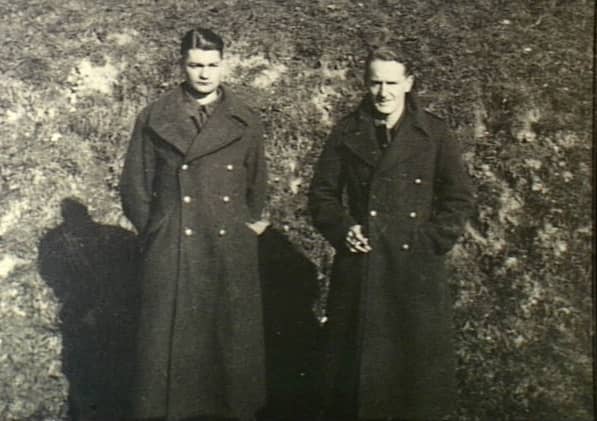
Many of the allied PoWs were housed in Stalag XVIII – D in the city of Maribor which was now called Marburg an Der Drau by Hitler. The Germans used those prisoners who were not officers to work on the main railway line from Maribor to neighbouring Austria. Their leader or “ man of confidence” to liaise with their captors was a tough and canny Australian infantryman called Private Ralph Frederick Churches. His second in command was Leslie Arthur Laws a British soldier who spoke German. At some time in 1944, these two prisoners hatched a plan for a PoW breakout from the railway working party.
The local partisans help
However, to do this, they needed the help of local partisans. By this stage of the War, the Slovene guerillas had managed to capture a number of local towns and villages from the Germans creating a “liberated area.” In spite of this, Churches and Laws found making contact with the partisans quite difficult. Eventually, they had a breakthrough via Elisabeta Zavodnik, a Slovene woman who lived in the cottage where the work group drew their drinking water. She introduced Laws to her cousin Anton who was a partisan. He promised to organise a force of his fellow guerrillas to spring the railways working force. It was at this stage that the two PoWs let their fellow prisoners in on the plan.
At the same time this was happening, Major Franklin Lindsay, an American officer of the Office of Strategic Services was leading a British SOE (Strategic Operations Executive)/MI9 team in the local area helping escaped PoWs to evade capture. This was codenamed Operation Cuckold. Some of these escapees told him about the Maribor railway link and the large number of Allied PoWs maintaining it. Franklin lost no time informing MI9 in London that his force on the ground and local partisans planned to liberate these men. In response, they sent an experienced agent, Major Andrew Losco to assist. Franklin and his people then planned a “freedom raid” with Anton and his partisans.
The POWs train is ambushed
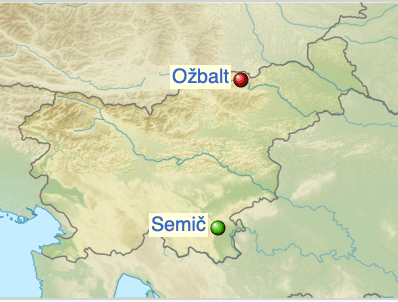
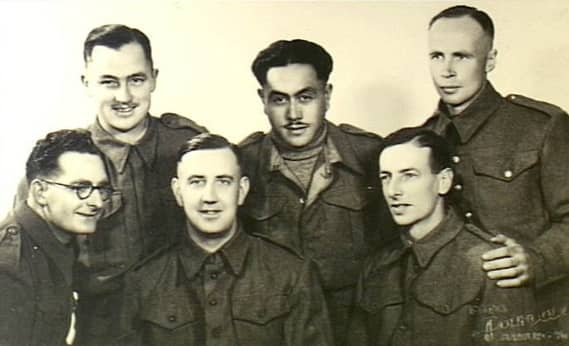
On the early morning of 31st August 1944, Slovenian Partisans ambushed the train bringing the PoWs to work on the line at the village of Ozbalt about twenty miles from Maribor. As a result, they freed nearly eighty PoWs and captured eight German guards and four civilian overseers. In addition, they raided two farms where other PoWs were working and freed a further nine British and twenty French prisoners.
Whilst springing over a hundred prisoners was quite a feat of arms, the job was only half finished. All these men now had to be flown to freedom from a partisan airfield in the south. This involved a trek of 160 miles through occupied territory thick with German patrols. In view of this, it is remarkable that they only tangled with German forces once during that fourteen-day journey. On 3rd September, the group was ambushed by a German patrol causing them to scatter. Mercifully nobody was killed or injured and they eventually regrouped.
The POWs reach Italy
By mid-September, they reached Semic in the province of Carniola in what is now southern Slovenia. After a tense few days of waiting for the weather to clear the now ex-PoWs were flown from an airfield in nearby Otok. On September 21st 1944, they landed at the Southern Italian port of Bari. The most successful PoW escape of the Second World War had finally ended.
For their roles in the escape, Les Laws was awarded the Distinguished Conduct Medal and Ralph Churches the British Empire Medal. Both men made subsequent return visits to the locations of the escape in 1972, 1977 and 1985. These occasions when they met their old Slovene Partisan rescuers must have been emotional indeed.
Whilst the PoW breakout from Stalag 111 in March 1944 has become world famous as The Great Escape, the Ozbalt escape remains virtually unknown. This is strange since it was a total success with all 105 PoWs making it to freedom with no fatalities. In contrast, The Great Escape was an almost total failure. Of the 76 prisoners who broke out of Stalag III, only three made it to freedom. 17 of those captured were returned to Stalag III. The remainder were murdered by the Gestapo.

A Hundred Miles as the Crow Flies.
Ralph Churches wrote an account of The Ozbalt Escape in his book A Hundred Miles as the Crow Flies. This was subsequently featured on an Australian tv programme. Apart from that, this remarkable story has been forgotten. In contrast, Paul Brickhill’s book about the Great Escape still sells well and was made into a highly fictionalised Hollywood film by the same name in 1962. With its stellar cast and imaginary embellishments such as Steve MacQueen fleeing from the Germans on a motorbike, the film was a huge success but hardly true history
In this, its eightieth anniversary year the story of The Raid on Ozbalt certainly deserves to be told as it happened in its own film.
© Nick Brazil 2024
About The Author
Click to see full BMMHS event listing pages.
Contact us at [email protected]
Copyright © 2023 bmmhs.org – All Rights Reserved
Images © Nick Brazil