The Italian Soldier and the Second World War
by James Goulty
The historical legacy of the Italian soldier
In the English speaking world there has been a tendency to denigrate the combat performance of the wartime Italian soldier. Likewise, as the leading historian on Italy during the world wars, John Gooch, has intimated, the Italian military of the late 1930s and 1940s struggled with an historic legacy of partial victories and defeats dating back to well beyond the First World War, which gave rise to the perception that italiani sunt imbelles (the Italians can’t fight). This was reinforced by Italian reversals during the early part of the Second World War. Mussolini’s hastily mounted and disastrous invasion of Greece 1940-1941, for example, witnessed Italian troops paying a very heavy price for being inadequately prepared and under-equipped, especially for mountain warfare in the Greek winter. Similarly, during Operation Compass (9 December 1940-6 February 1941) British and Commonwealth forces overran Cyrenaica (the eastern coastal region of Libya) with the capture of 130,000 Italian troops and 845 guns, plus the destruction of at least 380 Italian tanks.
After 1945 the impression of Italian wartime military ineffectiveness has remained in accounts of the war, and even spilled over into popular culture, as exemplified by the character of Captain Alberto Bertorelli in the long running BBC comedy series Allo Allo. Resplendent in his army uniform, Bertorelli was portrayed as a womaniser rather than efficient soldier. Ever the butt of German scorn, he commanded a rag-bag assortment of scruffily clad, poorly motivated, dirty, ill-disciplined, semi-literate troops.
Gaining a reputation for bravery
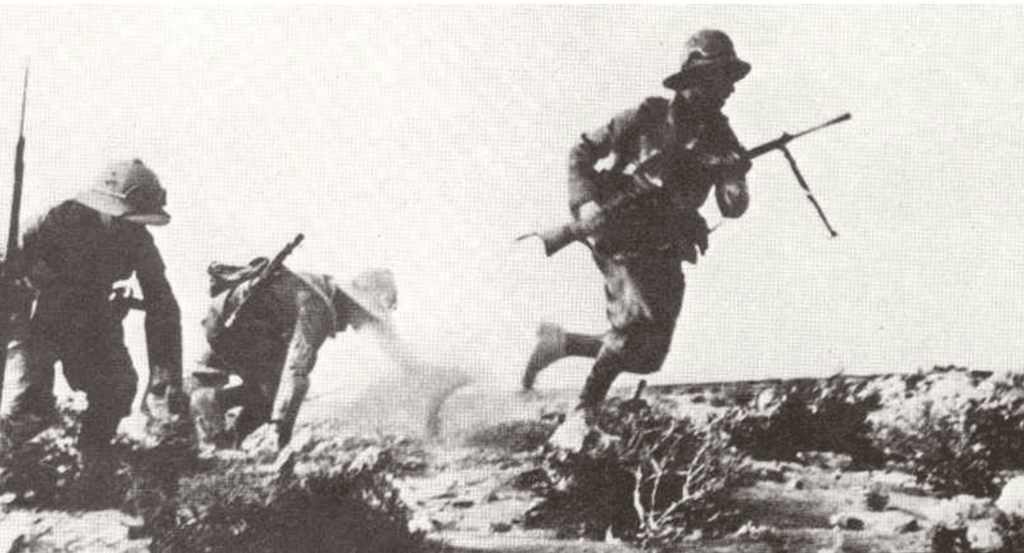
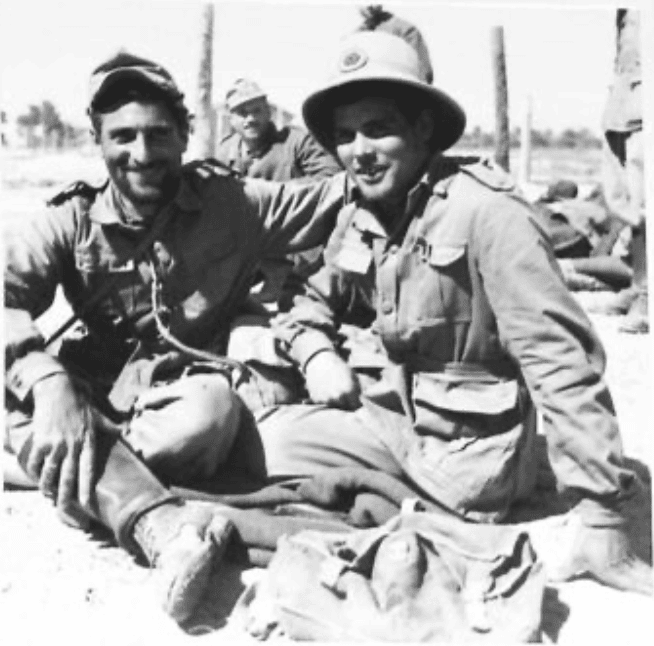
Although the Italian Army’s performance was sometimes poor, the reality of the wartime Italian soldiers’ experience was more nuanced and complex than the populist viewpoint suggests. While often blighted by poor leadership, inadequate training and equipment, there were numerous cases where Italian soldiers fought well. Gurkhas who encountered Italian troops in Ethiopia during the East African campaign in 1940-1941, considered them the bravest opponents they’d ever faced. The Littorio Armoured Division proved equally courageous during the North African campaign of 1940-1943. Before being disbanded on 21 November 1942, it fought with distinction, including during Field Marshal Rommel’s last bid for desert victory at Alam el Halfa. Here it was the only Axis formation to successfully fight its way on schedule into the area designated as the spring-board for the next phase of the advance. Unfortunately for it, as the Ariete Division on the left flank and 21st Panzer Division on the right, failed to arrive, the offensive broke down, and the Littorio had to withdraw through minefield gaps, before facing an inevitable British counterattack.
Another notable facet of the fighting in North Africa was that the artillery gained a reputation for bravery and being the most efficient arm of the Italian Army (Regio Esercito). Notably, it embraced the concept of centralised fire, and under set-piece battlefield conditions this ensured that at times Italian gunners co-operated even more effectively with other arms than was managed by German artillerists.
A wide range of experiences
As indicated, the Regio Esercito fought numberous campaigns during the Second World War. This was in stark variance with First World War experience, when during 1915-1918 the bulk of the army had been engaged in a series of gruelling encounters against Austro-German forces in the Alps. Broadly speaking Italian ground operations in the Second World War during 1940-1943 comprised three phases. War was declared in June 1940 and from then until spring 1941, Italian troops were engaged in: The French Alpine campaign of June 1940, the East African campaign of 10 June 1940-27 November 1941; the Greek-Albanian campaign of October 1940-April 1941, and the first North African campaign of September 1940-February 1941. The second phase was from March-April 1941 until July 1943, and included the rest of the North African campaign, invasion of Yugoslavia, bitter and brutal counter-insurgency operations in Greece, Albania and Yugoslavia, and an expedition by the Corpo di Spedizione (CSIR), to support Hitler’s invasion of Russia (Soviet Union), that later became an even larger commitment, involving over 220,000-men from the Italian 8th Army. The third phase from July-September 1943 incorporated the defence of Sicily, and savage confrontations with the Germans when they rounded on their former ally, as Mussolini was overthrown and succeeded by Marshal Pietro Badoglio, who agreed an armistice with the Allies, announced on 8 September 1943.
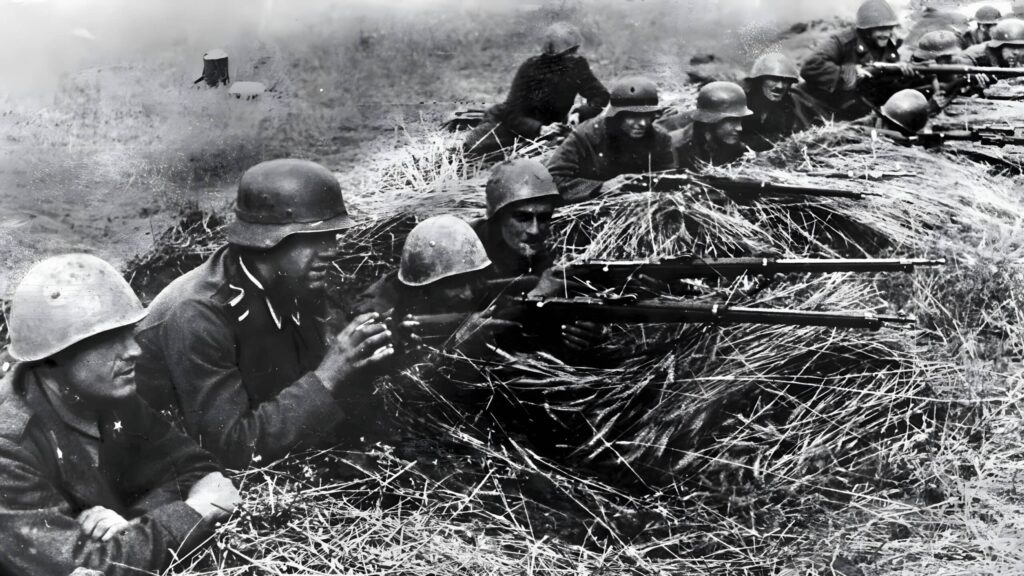
Consequently, Italian soldiers had a diverse range of experiences depending on where they served. While combat in the French Alps in 1940 or Albania that winter where reminiscent of First World War operations on the Italian Front, elsewhere conditions differed considerably, especially in the heat and expanse of the North African desert, on the Russian steppes, and in the mesas of East Africa. In Russia, for example, Italian troops ended up serving on the River Don protecting the German left flank at Stalingrad, and when that front collapsed, mounted an epic withdrawal, fighting several battles against Russian units and partisans along the way, while simultaneously attempting to combat hunger, freezing temperatures, fatigue, exposure and frostbite. Losses were appalling. The Giulia division of the elite Alpine Corps or Alpini (mountain troops) alone suffered 13,000 casualties out of 16,000 men. Troops also faced the dreaded prospect of being captured by the Russians. Of the 70,000 Italian POWs eventually taken by the Russians, only around 10,000 survived their ordeal to return home in 1946. Don Gnocchi, a chaplain who supported the troops in Russia, described conditions during the campaign as simply ‘inhuman.’
The experience after the armistice
To this should be added the experience of Italian soldiers after the armistice. While some continued to support Fascism, many others, including distinguished writer Eugenio Corti, then a youthful lieutenant in the artillery, aligned themselves with the Allied cause in fighting against Nazi Germany for the remainder of the war. A veteran of the Russian front, who’d survived that ordeal to make it home, he stayed in the army and fought alongside the British in the Abruzzi. Another artillerist who followed Corti’s example was Capitano Dino Salsilli. During 1944 he joined other war experienced officers in supporting the British by helping to lead a disparate combat group comprised of soldiers from Corsica who’d resisted the Germans, troops from northern and southern Italy, and even partisans. He considered that the task for such units:
…was not an easy one, and there could be no short-cuts to efficiency. The diligence of the soldiers in learning and applying themselves to their duty, and the zeal of the officers and NCOs in the perfect execution of orders was not always enough to cancel out old habits, laziness, and irrational temperament…
[Yet by VE-Day the Italian soldier fighting with the Allies] reaffirmed his moral resolution [and] had undergone a radical transformation and had become, deservedly so, the model for the Italian soldier of the post-war era.
Similarly, John Gooch informs us, that the Venezia division and remnants of the Taurinense and Italia divisions, plus other small bodies of troops chose to fight with Yugoslav partisans, and its estimated that around 7,000 Italian troops died doing so between the armistice and May 1945.
Motivation during Mussolini's war
Various factors motivated the Italian soldier during Mussolini’s war, and as historian Brian R. Sullivan has demonstrated, his combat performance was initially poor before undergoing a marked improvement, and then collapsing in the summer of 1943. It seems inconceivable that Fascist propaganda, especially in the years leading up to the Second World War, didn’t have some impact on the average soldier. An achievement of the fascist regime was that it fostered national sentiment throughout Italian society. A corollary of which was to encourage resentment at the British presence in the Mediterranean, understandably considered by many Italians to be within Italy’s sphere of influence. Thus, a belief in Fascism was held by personnel, both at officer and other rank level, while other troops possessed a mind-set that was compatible with it or at least could be manipulated by it. This enabled the campaign in Russia, for example, to be portrayed by the regime as an ideological crusade against Bolshevism and Communism, both of which were considered a threat to Europe. Coupled with this were powerful religious overtones that had resonance in a strongly Catholic country such as Italy, with Fascism being viewed by some as Christian, whereas Bolshevism and Communism were deemed decidedly anti-Christian.
However, propaganda’s effectiveness probably waned as the war progressed, and Mussolini failed to reap the benefits of the short, victorious conflict he’d envisaged in June 1940. For others basic patriotism may have been important, as even when the war was going badly, and thoughts of victory had vanished, many Italian soldiers were probably still motivated by a keen desire to defend their homeland. Similarly, in war it is a maxim, particularly regarding the cohesion of small groups such as an infantry platoon, that ‘fighting well is a moral obligation to one’s companions on whom one’s own safety rests.’
The problem of non-mechanisation
For regular soldiers, particularly at officer level, the war represented a chance to demonstrate their professionalism, plus potentially an opportunity to advance their careers. Officers also tended to enjoy far better conditions than their men, wore uniforms of superior cloth and had access to improved rations, all of which reflected social distinctions. Set against this it needs to be understood that in forward areas under the pressure of combat such disparities tended to become diluted. Another issue was a shortage of regular junior officers especially during the early war period. This placed greater emphasis on reserve officers who often lacked adequate training and/or were of an age that ensured they hadn’t the health or fortitude to lead effectively in battle.
Most ordinary soldiers came from peasant stock or were workers, Italy of the inter-war period and early 1940s being far more impoverished than her European contemporaries. Consequently, owing to their background typically soldiers were less healthy and less well educated, than their counterparts in say Germany, Britain and France, neither were they necessarily as conversant with modern technology as troops from those nations.
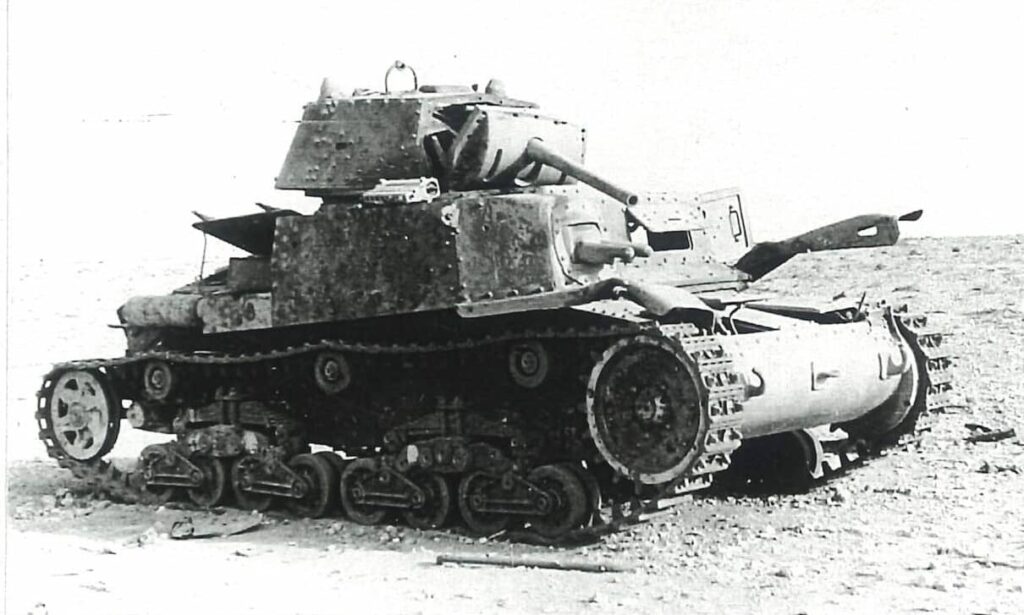
After the war, General Giuseppe Mancielli, who’d served as Italian Military Attache in Berlin in 1939, reasoned that:…the problem of mechanisation, or more appropriately non-mechanisation, of our army represented one of the largest gaps in our organisation, a canker which excluded any capacity for large manoeuvres and lay at the heart of the very painful losses suffered in the course of the various campaigns, especially those in North Africa.
Binaria divisions
The Regio Esercito was organised into field units (unita di campagna) under the overall control of the Chief of the Army Staff responsible for operational issues, and territorial units (enti territoriali). Additionally, there were the Frontier Guards (Guardia alla Frontiera or GaF) and the Voluntary Militia for National defence (Milizia Volontaria par la Sicurezza Nazionale or MVSN). Popularly dubbed ‘the Blackshirts,’ the MVSN was founded by Mussolini shortly after the First World War, and initially recruited groups of ex-servicemen. During October 1939 it was determined that Fascists Militia Legions, of which there were then over 130 in existence, would be absorbed by infantry divisions, albeit they maintained a distinctive identity. There were also units raised and employed in specific theatres, such as The Royal Corps of Libyan Troops (Regio Corpo di Truppe) that was equipped and organised along Italian lines.
Another feature of Italian military organisation, which had drawbacks, was the employment of binaria divisions by the infantry. These consisted of two-regiment brigades, a division being formed by adding artillery and other services to one of these. The thinking was that binaria divisions could advance in a single direction with their component regiments leap-frogging over one another. In practice this often didn’t occur, such as in the French Alps in June 1940, where units advanced parallel with one another on different axis, and became rapidly exhausted. Nonetheless, the Italian Army persisted with this organisational model throughout the war.
Uniform and equipment
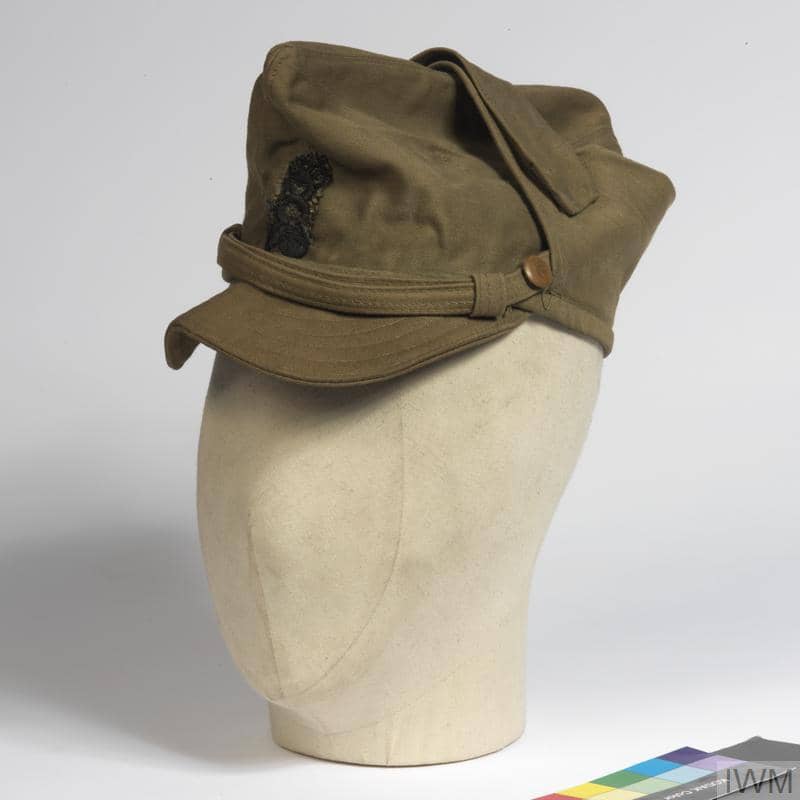
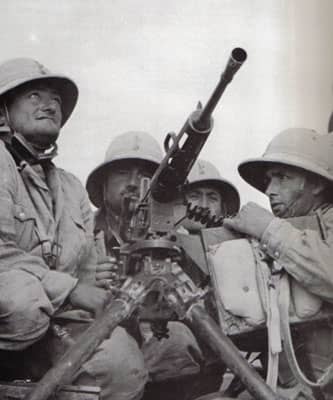
Typically, if they weren’t wearing a steel helmet, soldiers wore a bustina, a form of side-cap with a rounded front flap that the individual could pull down into a peak, and with a neck-and-ear flap, which could be buttoned over the crown of the cap. The standard single-breasted tunic was of a greyish-green cloth, with rank insignia usually being worn on the sleeves. Individual units/formations sometimes had distinctive items of uniform, such as the ‘Tyrolean’ shaped hat of the Alpini. Likewise, soldiers from 7th Bersaglieri (light infantry) who fought with the Trento Division in North Africa, instead of wearing the bustina sported a soft scarlet fez with a bright blue hanging tassel, and in combat displayed a big dark green cock’s-feather plume on the right-hand side of their steel or sun helmet.
Additionally, there were items of uniform for specific theatres such as tropical or winter gear. In Russia waterproof trousers and jackets were issued that could be worn over uniforms and allowed a soldier to comfortably lie out in the snow without suffering any ill effects when on patrol etc. Fur lined hoods with a zipper proved popular, and in winter ideally men would wear boots similar to the Russian valenki (felt boots), widely regarded as offering the best insurance against frostbite. Unfortunately this wasn’t always possible, even for the Alpini, leaving many troops to cope with standard issue leather boots that heightened the risk of succumbing to cold weather injuries. Similarly, the standard issue lightweight boots worn by some Italians as they marched to the Don in 1941 were likened by Alarico Rocchi, an infantryman with the Torino Division, to ‘scarpe da ballerina (ballerina shoes)’ because they proved incredibly flimsy.
Rifles and artillery
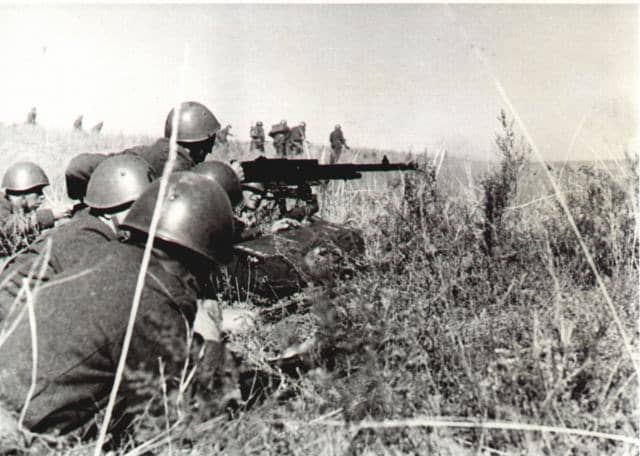
The standard rifle, the Mannlicher-Carcano model 1891, was a good reliable weapon with a clip-loaded magazine, whereas, the Carbine Model 38 had a sight that couldn’t be altered for range, an unenviable design feature. In 1938 it was determined to issue rifles of 7.35 mm calibre rather than 6.5 mm, as experience of colonial warfare had demonstrated the requirement for a round of greater lethality. Unfortunately, when war was declared the army hadn’t fully instigated this change over and was forced to issue rifles of both calibres, which complicated production and ammunition supply. The Beretta 9 mm sub-machine gun was widely respected, but again ammunition supply was complicated as it needed a different 9 mm round from the standard Italian pistol round. Similarly, the various models of machine-gun employed needed seven different types of round between then, which again vastly complicated ammunition supply. Some machine-guns, notably the Breda Model 30, were awkward to operate as well. That particular weapon had a strange hinged magazine fixed to the gun that had to be filled from rifle clips, and was prone to jamming especially in the desert, plus the absence of a carrying handle endured soldiers had to sling it over their shoulders or hold it in their arms when on the move. Neither did soldiers consider that Italian manufactured hand-grenades were that useful, owing to their un-reliability and poor performance.
Although it often performed admirably, the artillery was blighted by the age of its guns, many of which dated from the First World War, and inefficiencies in the production of newer artillery pieces hindered Italy’s war effort. In North Africa this was partly compensated for by having access to limited numbers of larger calibre guns than those held by the enemy. Shortages in artillery also put an emphasis on mortars, albeit their comparatively short range was limited compensation for missing the greater firepower and range of field and other artillery.
Paper thin armour
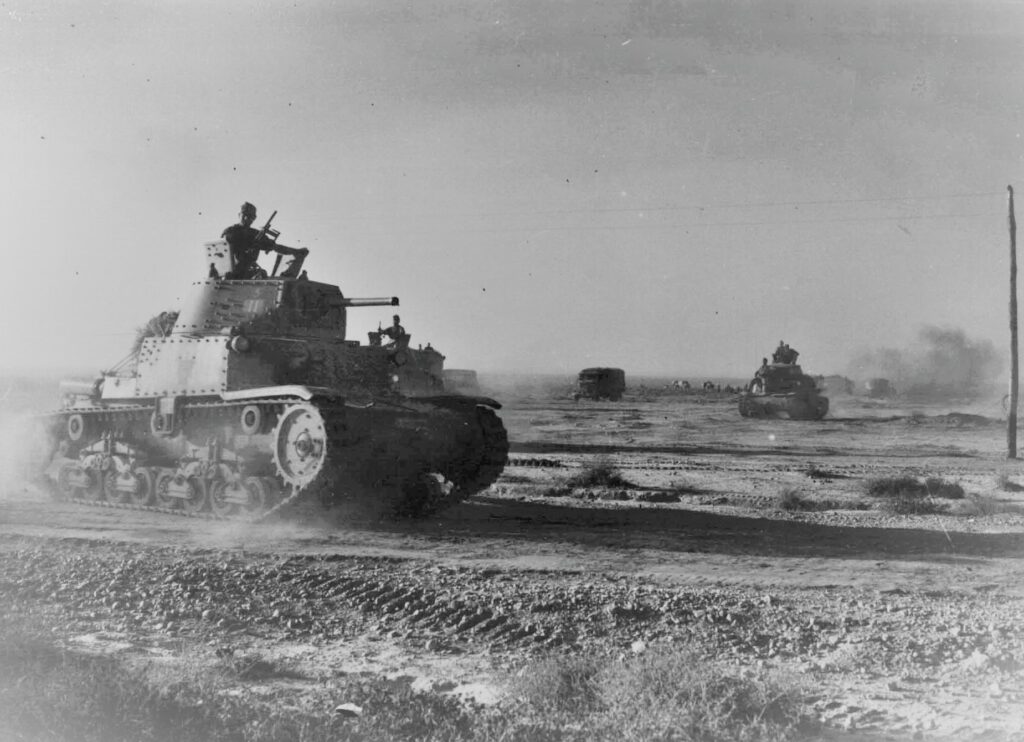
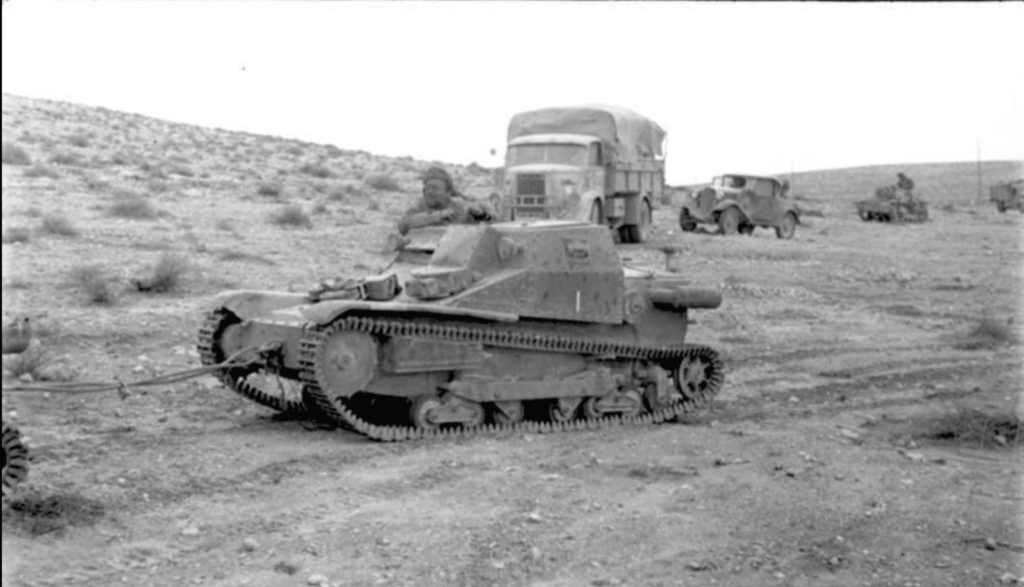
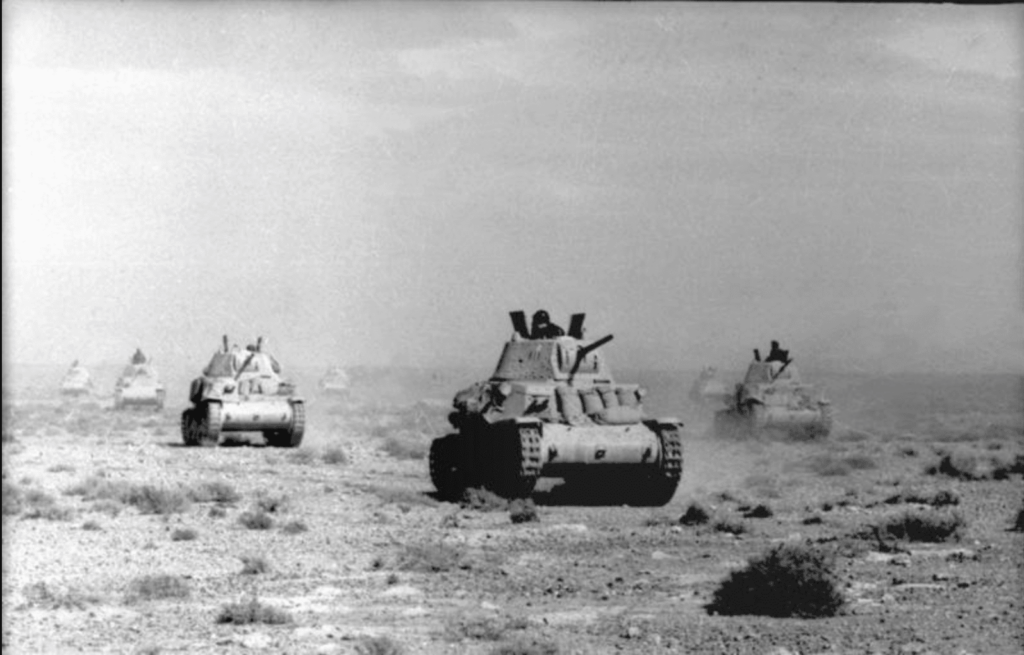
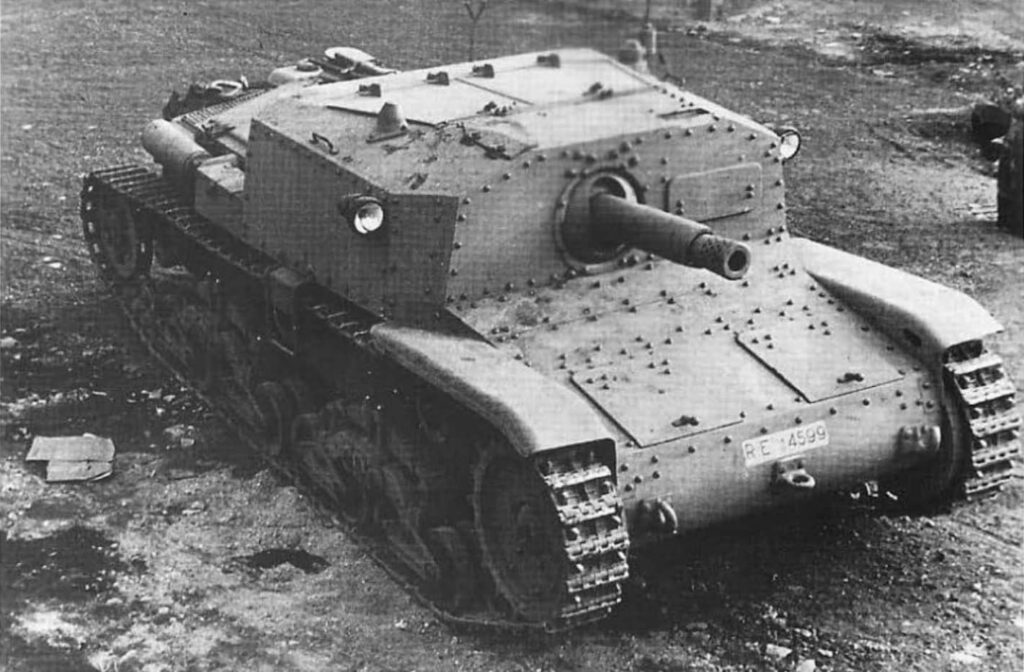
The situation involving armour was even more serious. Italy entered the war with approximately 1,500 tanks but many of these were the two-man L3/35 a form of tankette, a vehicle type that had proved popular during the inter-war years. With its paper thin armour and firepower limited to machine-guns, these were of questionable military value. The FIAT 3000 light tank, an obsolete design based on the French Renault FT-17 of First World War vintage, wasn’t much better. Similarly, the M 11/39, with its hull-mounted 37 mm main armament and a turret with machine-guns, has widely been considered one of the worst designs of the period, its frontal armour being unable to withstand any of the contemporary anti-tank guns. Early on Italian tanks also had no radio which severely hindered their co-ordination in battle, no matter how bravely the crews fought. The M 13/40 and M 14/41 medium tanks, and the M 15/42 a revised version of these models available in limited numbers, were an improvement, as all had a turret mounted 47 mm gun as their main armament. A notable related development built on the chassis of these tanks, was the low-slung looking Semovente, a self-propelled gun, with a powerful 75 mm gun originally intended for anti-tank work.
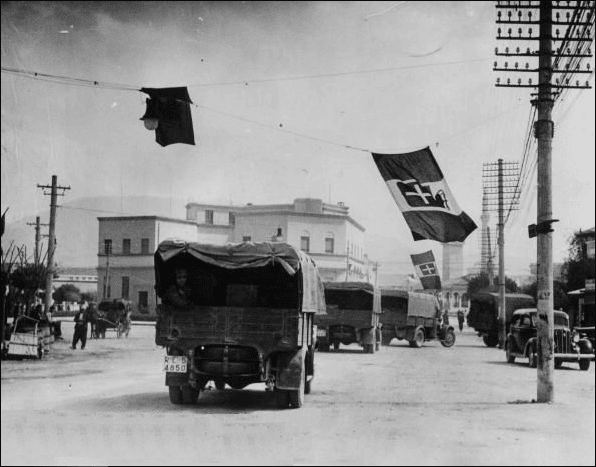
However, the Italians lacked armoured half-tracks, such as those deployed by the Germans and Americans as armoured personnel carriers and in a host of other roles. Neither did the Italian automotive industry have the capacity to satisfy the army’s need for trucks and other motor vehicles. This was a problem throughout the war when needing to move men and supplies and put Italian forces at a decided disadvantage, especially in North Africa and Russia.
The struggle with training
Training was another key area in which the Italian Army struggled, not helped by an overall shortage of NCOs. These were just the type of soldiers who would have provided an invaluable backbone to units, particularly if they were experienced, as well as being a link between officers and the men. Leading up to the war conscripts should have been trained by the Fascist Militia (Blackshirts) but that organisation with its notoriously lax discipline lacked the requisite leadership and experience to carry this out effectively. Each regiment was expected to instigate its own training programme. Some of these were well planned and effective, particularly in elite units such as the Alpini or in artillery and armoured units that required a degree of technical sophistication, but many others were poorly conceived and executed. Notably, infantry training lacked emphasis on live firing, partially owing to ammunition shortages, and there was limited instruction on what men might actually face in combat, including promoting an understanding of current trends in tactical doctrine. This included areas such as fostering co-operation between infantry and other arms. Instead troops were expected to concentrate on close-order drill, PT and route marches with a full pack, not that this wasn’t useful in building stamina and discipline, but in 1940-1941 the average Italian infantryman certainly wasn’t as well prepared for modern warfare as he otherwise might have been had his military training been more realistic and effective.
Around 355,000 Italian troops were killed in combat, died of wounds or as a POW during the Second World War. In reviewing their experience, it’s difficult not to have some sympathy with Brian R. Sullivan’s contention that they fought ‘heroically’ even if their cause during 1940-1943-Fascism-was decidedly an evil one. This was readily apparent for example by the barbarous conduct of Italian troops in countering partisans in the Balkans. In Slovenia over 1,600 people were shot, while thousands more were interned or died in Italian concentration camps. Yet, as Capitano Salsilli implies, Italian soldiers could prove kindly and adaptable to the situations they faced, including in Russia where there was significant fraternisation with local civilians who seem to have appreciated the Italian’s presence. Like all wartime soldiers, Italian troops were frequently compelled to endure considerable privations both on and off the battlefield. It also needs to be borne in mind that a great many troops were conscripts, and so by definition had no control over how they were treated or where they served and what they were ordered to do etc.
List of Sources
See: John Gooch, Mussolini’s War: Fascist Italy from Triumph to Collapse 1935-1943 (Penguin Books, 2020).
Chaplain Don Gnocchi quoted in Hope Hamilton, Sacrifice on the Steppe: The Italian Alpine Corps in the Stalingrad Campaign, 1942-1943(Casemate 2016).
See: Eugenio Corti, The Last Soldiers of the King: Wartime Italy, 1943-1945 (University of Missouri Press, 2003).
Capitano Dino Salsilli, ‘The Italian Soldier’ in History of the Second World War Vol. 7 No. 16 (Purnell & Sons Ltd, 1968) p. 3127.
For further discussion of these points see: Brian R. Sullivan, ‘The Italian Soldier in Combat, June 1940-September 1943: Myths, Realities and Explanations’ in Paul Addison and Angus Calder (Eds) Time to Kill:
The Soldier’s Experience of War in the West 1939-1945 (Pimlico, 1997), pp. 177-205 and Gooch, Mussolini’s War.
Lucio Ceva, ‘The North African Campaign 1940-43: A Reconsideration’ in John Gooch (Ed) Decisive Campaigns of the Second World War (Frank Cass, 1990), p. 101.
General Giuseppe Mancielli quoted in George Forty, The First Victory: General O’Connor’s Desert Triumph Dec 1940-Feb 1941 (Guild Publishing, 1990), p. 31.
Alarico Rocchi quoted in Hamilton, Sacrifice on the Steppe, p. 7.

About The Author
James Goulty holds a masters degree and doctorate in military history from the University of Leeds, and has a particular interest in the training and combat experience of ordinary soldiers during the world wars and Korean War.
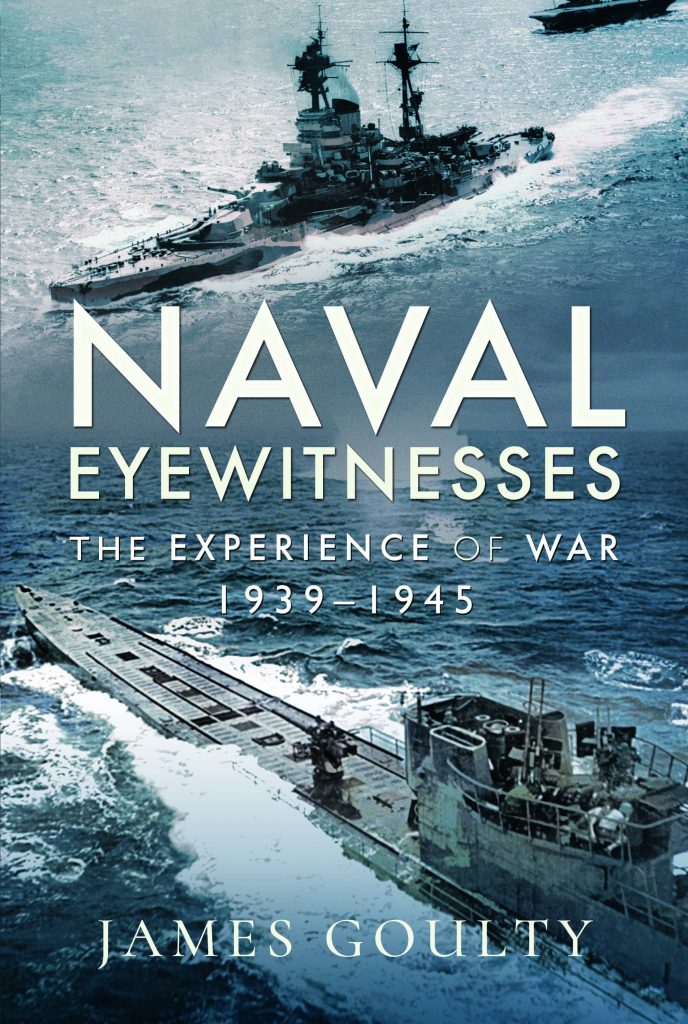
He has published numerous articles and written 5 books for Pen and Sword Ltd, including The Second World War through Soldiers’ Eyes: British Army Life 1939-1945; and Eyewitness Korea: The Experience of British and American Soldiers in the Korean War 1950-1953.

Click to see full BMMHS event listing pages.
Contact us at [email protected]
Copyright © 2024 bmmhs.org – All Rights Reserved
Images © IWM & James Goulty