
The Rum Rebellion
Australia's Only Coup D E'tat
by Nick Brazil
Arriving in the new penal colony
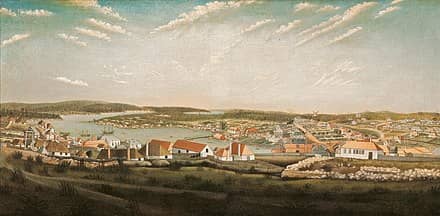
In 1788 Lieutenant George Johnston arrived in the new penal colony of New South Wales in what would become Australia. He was an officer guarding just over 100 female convicts aboard a ship called The Lady Penrhyn. She was one of the eleven ships of the First Fleet carrying 770 convicts to establish the new colony. Like all the crew and guards aboard this ship, Johnston had formed a relationship with one of the female convicts. She was a resourceful girl of twenty called Esther Abrahams. Once on land, Esther became his common-law wife. It was a relationship that would last the rest of their lives.
In 1791 he transferred from The New South Wales Marine Corps to the newly formed New South Wales Corps. It was obviously the right move since it brought him not only a promotion to Captain but a considerable amount of farming land in the form of grants.
The Irish revolt
In 1796, all seemed to be going well with Johnson serving as aide-de-camp to the new Governor John Hunter. Unfortunately, he fell foul of another very important man, Lieutenant Governor William Paterson. By all accounts, Paterson was a hard man and a bit of a stickler for the rules. When he found out that Johnston was paying one of his men partly in rum, he put him on a charge, To this he added “and disobedience of orders.”
When faced with being court-martialled for this by Paterson, Johnston insisted on being tried in England. John Hunter, the Governor agreed to this. However, the trial many thousands of miles away in Britain proved to be completely intractable. With many of the witnesses on the other side of the world in Australia, it collapsed. Johnston was duly acquitted `and returned to New South Wales, a free man. Once there, in 1803, he took over command of the New South Wales Corps from Paterson who had fallen ill. In the following year, he acquitted himself with some credit for his part in putting down a convict rebellion.
This was a revolt by an Irish nationalist called Phillip Cunningham who planned to take over part of the colony from the British authorities. Once that was achieved, he and his rebel convicts would seize a ship and sail it back to Ireland to reignite the struggle for a free Ireland.
The rebellion is snuffed out
The rebellion lasted two days between 4th and 5th March 1804 before being snuffed out by superior government forces led by Johnston and the New South Wales Corps. This action established the Corps as the major authority in New South Wales. From then on, the power and influence of the Corps’ officers grew inexorably. From 1790, the officers of the Corps enriched themselves with the allocation of packets of land. They also ran a highly profitable monopoly in the illicit sale of rum and spirits in the colony. It was with good reason that this military unit became known as ‘The Rum Corps’.
One of the officers in the Corps who played a leading role in this was John Macarthur. An ambitious man with a fiery temperament, he had enlisted in the NSW Corps from England in 1789. According to his wife Elizabeth, his main motivation for this was the belief that a posting in a colonial force offered good opportunities for material advancement. His time in the Corps certainly bore out this promise.
However, this brought him into conflict with Captain Phillip, the first Governor who accused him of misappropriating a keg of rum from the Government stores. Even when faced with threatened arrest, Macarthur refused to return the spirits. It seems he won the day with Phillip returning to England in 1792 without securing either the officer’s arrest or the return of the liquor. Lieutenant General Francis Grose, the commander of the NSW Corps replaced Phillip as the effective Governor. Since he was a fellow bootlegger, this was very good news for Macarthur and Johnston. It was very much a case of business as usual with a vengeance.
The private fiefdom of the Rum Corps
With Phillip gone, Grose turned the colony into a military dictatorship run for and by the New South Wales Corps. One of his most far-reaching changes, when he took over from Phillip, was to replace the civil courts with a magistrate picked from the ranks of the Corps. He created bad feelings amongst the populace by reducing the convicts’ food rations after a poor harvest whilst ensuring Corps members had sufficient supplies. This was in direct contravention of Governor Phillip’s rule that everyone in the colony, whether they were convict or free received the same rations.
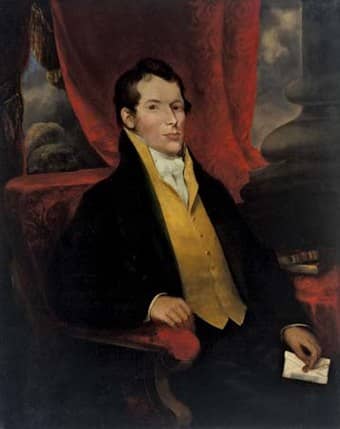
It seems that Macarthur and Grose developed a very close and mutually beneficial relationship during this time. Grose greatly enriched Macarthur with the allocation of a total of 200 acres of prime farming land with 40 convicts to work on it. Macarthur named the property Elizabeth Farm in honour of his wife. Just for good measure, Grose also made Macarthur Paymaster of the Corps and Inspector of Public Works for New South Wales. This would have made him one of the most powerful men in the colony which was effectively the private fiefdom of the Rum Corps.
The colony is a hotbed of drunkeness and crime
By the time Grose left for England at the end of his tenure in 1794, the colony was a hotbed of drunkenness and crime due to the unregulated trade in alcohol. Certain favoured officers of the NSW Corps had also become rich farmers as a result of gifts of land from Grose.
Grose was replaced by yet another Rum Corps man Captain William Paterson. Under his reign, Macarthur enjoyed further enrichment with his land bank growing to 500 acres. One of the reasons Macarthur left England was to escape the taint of failure of his family’s tailoring business in Plymouth. He now set about changing the fortunes of that enterprise.
The government in London clearly did not like the way their penal colony in Australia had become a private fiefdom of the New South Wales Corps and its officers. In 1795 John Hunter an experienced officer was installed as Governor. He was determined to reform the running of the settlement. To do this, he planned to separate the civil running of the colony from the military. This meant that Macarthur had to relinquish the powerful and lucrative post of Inspector of Public Works.
This sparked a power struggle between Governor Hunter and Macarthur. In the event, Hunter was simply not in a strong enough position to withstand the devious activities of the Rum Corps. The coup de grace was a nasty campaign of letters to the Government in London alleging that the condition of the colony, particularly widescale crime and drunkenness was down to Hunter’s mismanagement. After five very difficult years, Hunter threw in the towel and returned to England in 1800. He left behind him a colony still firmly controlled by the corrupt Rum Corps regime with virtually none of his planned reforms in place.
The green pimple in the North Pacific
The third Governor of News South Wales had quite a bit of experience establishing a penal colony. Lt Philip Gidley King was tasked by Phillip, the first Governor of New South Wales to establish a penal colony on Norfolk Island. This green pimple in the Pacific is situated about halfway between Sydney and the northern tip of New Zealand. This, he did, overcoming some difficulties including an attempted rebellion by some of the convicts in his charge. King was an able administrator and on his two stints as Governor of the island colony, he greatly improved conditions for all the inhabitants.
Not all of these appreciated his efforts. Members of the New South Wales Corps stationed on the island complained about unfair treatment by King. They stated that the Governor was giving the convicts an easy ride at the expense of the Corps. When matters threatened to get out of hand, King packed twenty of them off to be court-martialed in Sydney. Since this was during Grose’s time in charge, they were let off with King being censured for his actions by Grose.
A campaign of intimidation
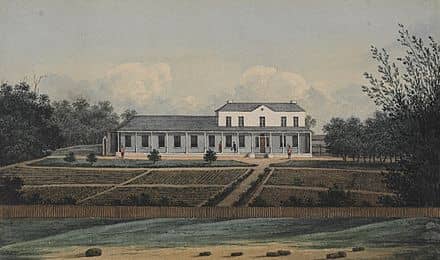
In 1800 King was installed as the third governor of New South Wales. During his time in post, he did manage to make a number of improvements to the running of the colony. He brought prices under control and made the payment of wages more regular. He oversaw the construction and development of the colony’s infrastructure. He worked assiduously to develop crops such as vines, tobacco, cotton and hemp to make the colony self-sufficient. It is fair to say that King was a true philanthropist whose main wish in life was to improve the lot of his fellow human beings whether or not they were convicts.
However, he had less success controlling the illegal consumption and distribution of alcohol. In this, he was up against the nemesis of previous governors, the Rum Corps. In 1801, he incurred the wrath of the powerful and ruthless Macarthur. This concerned the case of Lieutenant James Marshall who had been convicted of assaulting Macarthur. No doubt believing the officer had not received a fair trial in a court stacked with Rum Corps men, he overturned the conviction. This unleashed a campaign of intimidation against the Governor by Macarthur and his fellow officers in the Rum Corps.
This collapsed when Macarthur’s commanding officer Colonel William Paterson refused to co-operate. MacArthur’s subsequent efforts to blackmail Paterson into cooperation led to a duel between the two men in which the Colonel was severely injured. This was a step too far for King. Arresting Macarthur, he packed him off to England to face a trial for this and many other misdemeanours. Accompanying him was a bulging file of incriminating evidence against Macarthur. Strangely, the file vanished on reaching England. Along with it disappeared any chance of a successful trial. Macarthur eventually returned as a civilian to New South Wales in 1805. He brought a herd of Merino sheep which would form the basis of that huge industry that is one of the backbones of modern Australian agriculture.
Friction between Macarthur and the clique controlling the colony eventually forced the Governor out. King left New South Wales for good in 1806 and died two years later in poor health and worn out by his exertions in Australia.
Bligh arrives in Sydney
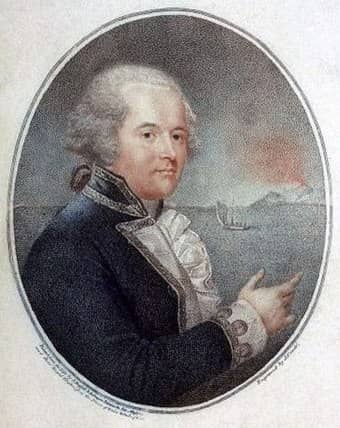
Determined to reform the colony and break the power of the Rum Corps regime, the British Government picked a renowned disciplinarian as the next Governor. William Bligh was already famous for The Mutiny on The Bounty in 1789. His suitability for Governorship lay in his leadership skills and his authoritarian ways. Here was a man who had brought seventeen of his crew to safety after an epic 3,700-mile journey lasting 47 days. He only lost one of his crew in the process. Anyone who could pull off such a miracle could surely deal with a bunch of mutinous bootleggers.
In 1806, Bligh arrived in Sydney with his daughter Mary and her husband Lt John Putland. Mary took the place of his wife who felt she could not face the rigours of the arduous journey to the other side of the world. As subsequent events unfolded, Mary would prove to be a plucky defender of her father.
Almost immediately on arrival, Bligh was confronted by the reality of the Rum Corps’ corrupt rule of the colony. Due to serious flooding in the Hawkesbury River area, the majority of small farmers were facing serious food shortages. In a letter to Bligh, 369 of them alleged this was due to Macarthur and his associates withholding supplies to force up the price of mutton.
It was a contest only one side could win
Bligh rectified this by making the colony’s official food supplies and herds of sheep available to these embattled farmers ensuring the hardest hit were given priority. This and his abolition of the allocation of land to powerful members of the clique running the colony made an enemy of Macarthur and his friends. It is fair to point out that the fact that he then made large land grants to himself and his daughter puts a question mark over his motives.
He further enraged the colony’s rich and powerful by doing away with the barter system of trade that was common in NSW at the time. Until he intervened, spirits, such as rum were effectively used as a form of currency. In doing this, he was acting directly on the orders of The Colonial Office.
He then set about dismantling the Corps’ power structure controlling the running of the colony. This included firing D’Arcy Wentworth from the position of Assistant Surgeon of the Colony and removing another of Macarthur’s long-standing associates, Thomas Jamison from his magistrate’s job. Essentially, Bligh was doing what was asked of him by the Government in London. In the process, he was making New South Wales a fairer and better place to live especially for the poorer members of the community. However, this was severely upsetting powerful people like Macarthur. Something had to give.
From the sale and distribution of alcohol to the dispensation of land, Bligh and the Macarthur faction were in a struggle for the control of New South Wales. It was a contest only one side could win. This power play reached its peak with the case of a convict who escaped the colony by stowing away on Macarthur’s vessel, the Paramatta in June 1807.
As a deterrent to such escapes, the owners of vessels were obliged to lodge a bond with the colony’s authorities. If a prisoner escaped and the owners were suspected of helping them, the bond was forfeited. To force Macarthur to forfeit the bail was a useful way of showing him that Bligh was the ultimate authority in the colony. Because of this, he instructed the Judge Advocate (The leading legal authority in New South Wales),Richard Atkins, to demand Macarthur’s appearance in court to explain why he should not forfeit the bond. However, Macarthur refused to appear which led to his arrest. He also refused to attend his subsequent trial in Sydney because he alleged that Atkins owed him money and was therefore unfit to conduct these legal proceedings. In this, he was backed up by six other court members who were all Rum Corps officers.
Accused of treason
Accusing them of treason, Bligh ordered Lt George Johnston to escort them to Government House. However, Johnston declined, pleading ill health following the wrecking of his boat the night before. This was most likely an excuse to buy time to confer with Macarthur who was in jail by this time. He and Macarthur then concocted the plot to arrest Bligh and take over the colony.
Johnston released Macarthur from jail and the two men drew up a petition signed by their allies mainly from the Corps declaring Bligh unfit to be Governor. At six p.m. on the evening of 26th January 1808, Bligh’s order for the six officers to go to Government House was obeyed, but not in the way he expected. Instead, the New South Wales Corps arrived at Government House with a band and full colours. Their intention to arrest Governor Bligh was clear. They were briefly delayed when Bligh’s plucky daughter Mary attempted to ward the soldiers off with her parasol.
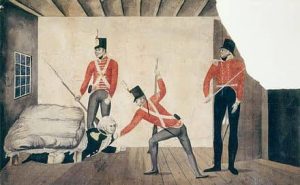
Once inside the building, the troops searched for the Governor. They eventually found him, hiding behind a bed where he was secreting documents. From then on, the accusation would always be that the Governor was a coward hiding underneath a servant’s bed. The other, more likely explanation was that he hoped to escape and lead a counter-rebellion by loyal settlers from the Hawkesbury River area.
With Bligh under house arrst, New South Wales now had a rebel military government. Promoted to the rank of Lieutenant Colonel, George Johnston took over the running of the colony with members of the Corps or its allies in all the other positions of power. The rebellion had been a classic military coup d’etat.
Following the takeover, Johnston contacted his commanding officer Colonel William Paterson to inform him of the events. At that time, Paterson was running Van Diemen’s land, now known as Tasmania. However, if he expected Paterson to take over the reins of Governorship Johnston would be disappointed. Instead, Paterson said he could only act once orders from London were clear. The Colonel was probably hedging his bets knowing the likely ultimate fate of the rebels would be in prison or at the end of a rope.
Escaping the death penalty
Lieutenant-Colonel Joseph Foveau arrived in July 1808 with orders to take over as Governor of the colony. An efficient and capable administrator, he took neither Bligh’s nor the plotter’s side in the matter of the coup. Instead, he concentrated on improving the infrastructure of the colony. Much to the chagrin of Macarthur, he ordered Paterson to send him and Johnston back to England to be court-martialed.
Whilst both men could easily have faced the death penalty for their roles in the coup, they escaped very lightly. Because he was a civilian at that time, Macarthur was not even tried. Instead, he was banned from returning to New South Wales until 1817. Once back there, he went on to become a pioneering developer of the Merino sheep industry in Australia. Johnston was dismissed from the Corps and returned to live out his life as a rich farmer on his land near Sydney.
It seems that Foveau also regarded Bligh as part of the problem of the unrest in the Colony. Probably to get him out of the way, he gave Bligh command of the ship the Porpoise on the understanding that he returned to England. Instead, Bligh sailed to Hobart in Van Diemen’s land. Once there, he hoped to enlist its Lieutenant-Governor, David Collins in retaking New South Wales and re-installing him as Governor.
However, Collins was yet another military man who refused to become enmeshed in the messy world of colonial politics. Bligh found himself, his daughter and his ship holed up in the estuary of a local river until he finally agreed to return quietly to Britain in January 1810. He was promoted to the rank of Rear Admiral and served out the rest of his days at The Admiralty. He died of cancer in 1817.
The Grand Rebellion comes to an end
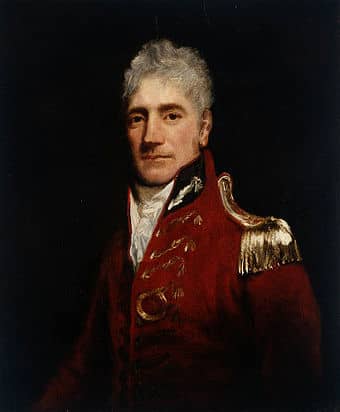
On New Year’s Day 1810, Major General Lachlan Macquarie a tough Scot arrived to take over as the fifth Governor of New South Wales. He brought with him his own force of soldiers in the form of the 73rd Regiment of Foot. This was probably to ensure The Rum Corps did not make any trouble before their imminent return to England.
As a result, Macquarie finally got a grip of the situation in the colony. All those placed in positions of power by the rebel administration were replaced by loyalists. He also cancelled all land grants made by the rebels. With its two ring leaders Macarthur and Johnston facing trial in England, The Great Rebellion as it became known was at an end. Macquarie remained as Governor of New South Wales until 1821. During his time as Governor New South Wales changed from a penal colony into something that was much more akin to the civilian settlement, it would become over the next decades.
Rum Rebellion was actually a misnomer for Australia’s one and only coup. Whilst alcohol indeed played a part in the momentous events of 1808, it was more of a power struggle between the civilian authority and a rebel military force. Its preferred title in Australia is The Great Rebellion which is more accurate.
© Nick Brazil 2024
About The Author




Click to see full BMMHS event listing pages.
Contact us at [email protected]
Copyright © 2026 bmmhs.org – All Rights Reserved
Images © Wiki & Nick Brazil