The Thousand Mile War
The Aleutian Campaign
by Nick Brazil
US and Japanese forces fight a bitter struggle
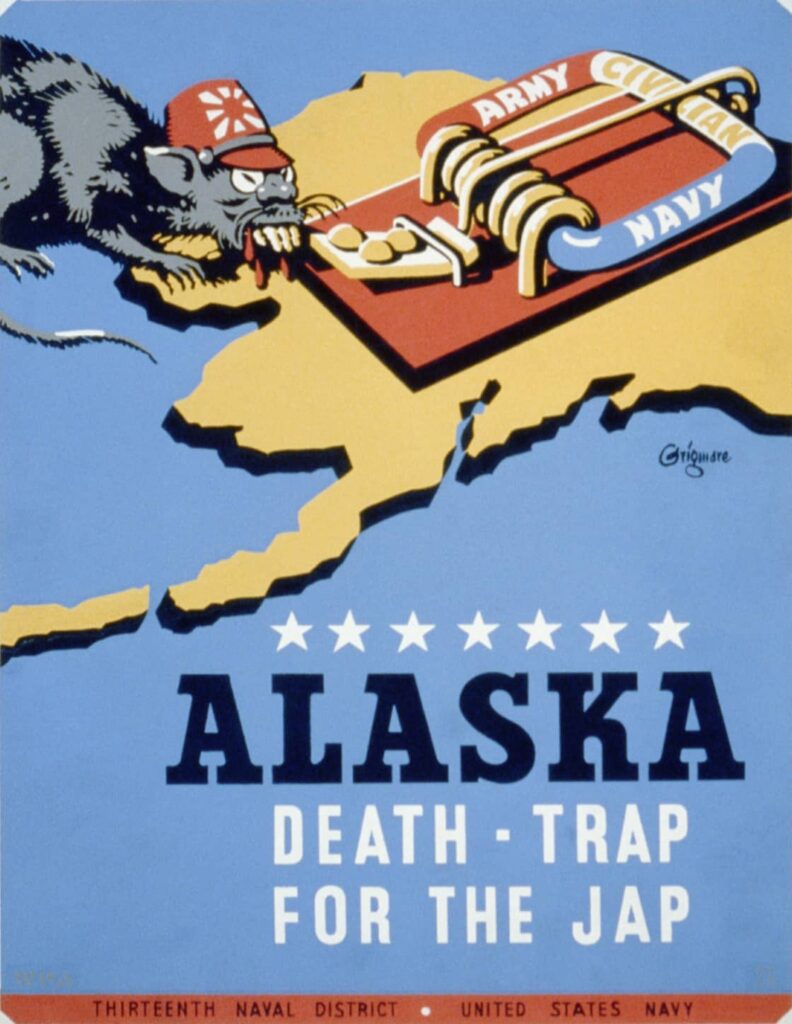
For just over a year between 3rd June 1942 – 15th August 1943, US and Japanese forces fought a bitter campaign for the possession of the Aleutians. They are a string of inhospitable volcanic islands that stretch out for over a thousand miles into the frigid waters of the Northern Pacific. In 1867, the United States purchased Alaska from Russia for $7.2 million. This included the Aleutian Islands making them part of the United States.
In early June 1942, the Japanese sent a naval force of two carriers, five cruisers, twelve destroyers and six submarines into the North Pacific. Their target was the Aleutian Islands the capture of which was of prime strategic importance. If this was achieved, it would not only deny the Americans a springboard to invade Japan via the Kuril Islands but also sever their control of the Pacific sea routes.
Dutch Harbor - the prime target
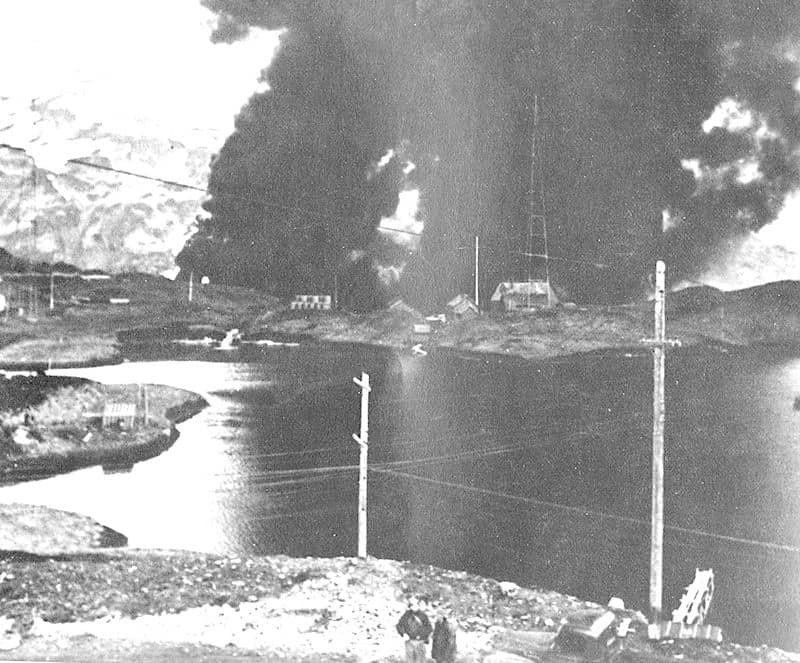
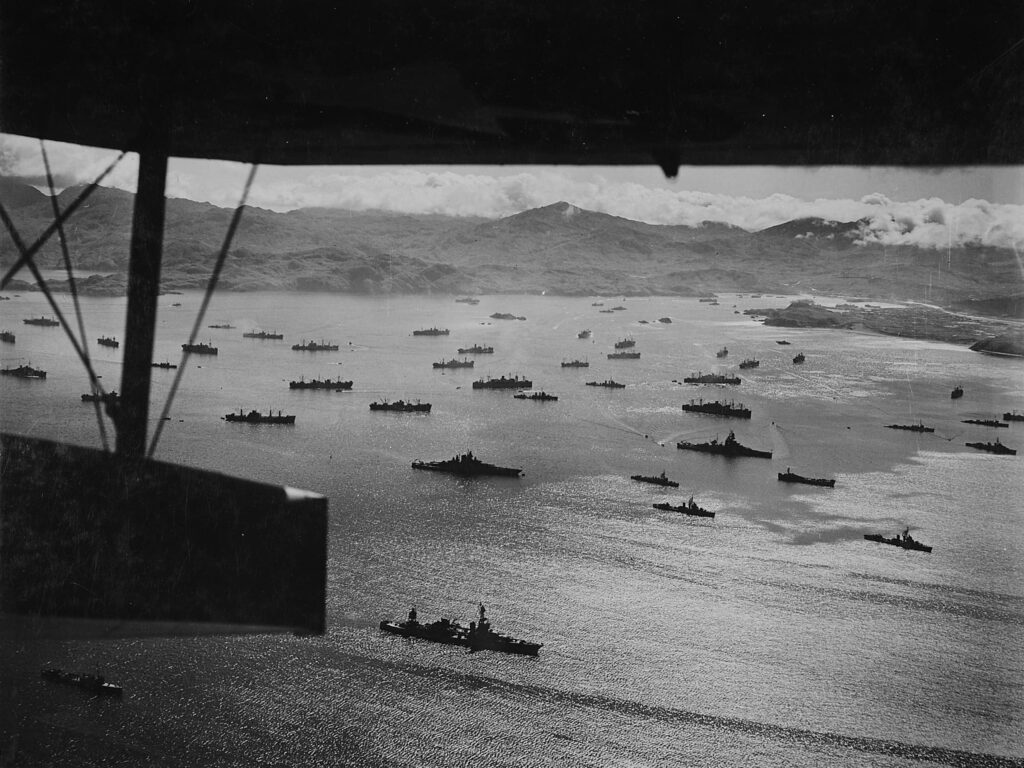
Their initial target was the fishing port and naval base of Dutch Harbor on Amaknak Island in the Aleutians. The Japanese strategy was to render the base inoperable whilst they landed on two of the other islands. Thanks to the fact that the Americans had broken the Japanese codes they knew Dutch Harbor was a prime target and ringed it with a large number of anti aircraft guns. In addition to this, the Eleventh Air Force based in mainland Alaska were given the defence of Dutch Harbor and the Aleutians as their prime defence priority. The Americans knew the Japanese were going to attack Dutch Harbor, but not when.
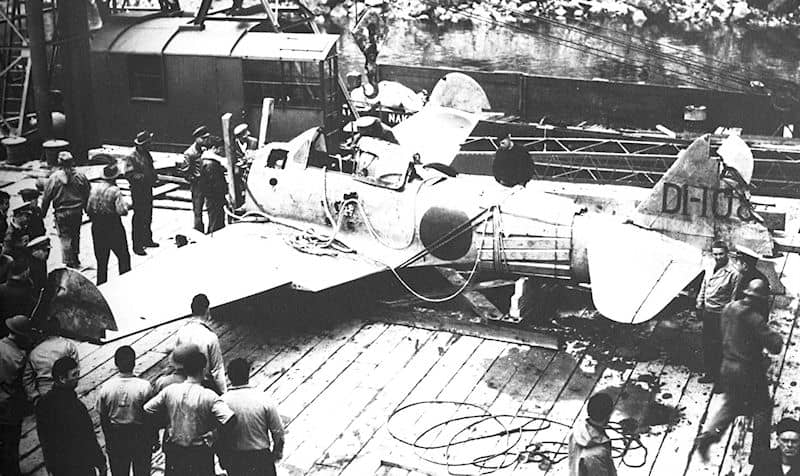
Their answer came at just after four on the morning of 3rd June 1942. Without warning, a mixed force of 33 Japanese aircraft arrived over the port. With one plane crashing on takeoff from the two carriers, they were one aircraft short. Between 3rd and 4th June, the Japanese airccraft attacked in waves. Zero fighters, Nakajima “Kate” Torpedo bombers and Aichi D3A dive bombers rained destruction down onto the port. In answer, the US anti-aircraft batteries poured fire back at the enemy. Many of those gun crews later recalled seeing the faces of the Japanese airmen as their planes strafed and bombed the base.
Japanese special forces land on Kiska and Attu
Two days after the attacks, the Japanese landed 1600 special forces on the islands of Kiska and Attu. They were situated at the far western end of the Aleutian chain at a distance of 1000 miles from Dutch Harbor. This incursion marked the first time a foreign invading force had set foot on sovereign United States Territory for 130 years. With only 12 Americans at a weather station on Kiska, there was little resistance to the invaders. At the time, there were only ten men present. Two of them were killed in the Japanese attack whilst a third, Chief Petty Officer William C. House escaped. He remained free for fifty days until starvation forced him to surrender. He was shipped off to a PoW camp in Japan to join the only other Americans the Japanese encountered in this operation.
On 7th June 1,140 Japanese troops landed on the neighbouring island of Attu. Contrary to what they believed, there were no US forces on the island and during the whole operation only two unfortunate Aleut civilians were killed. Capturing the island’s main settlement, the Japanese took 45 indigenous Aleuts prisoner along with Charles and Etta Jones an American couple living there. When the Japanese discovered Charles was a radio ham, they ordered him to fix one of their radios. He steadfastly refused and as a result, they killed him. Etta Price and the 40 or so surviving Aleuts were sent to Hokkaido in Japan where they were imprisoned. Etta Price spent the rest of the War in captivity and died aged 86 in 1965. Sadly 16 of the Aleuts did not survive this ordeal probably dying from disease and malnutrition.
The Rising Sun flies over Kiska
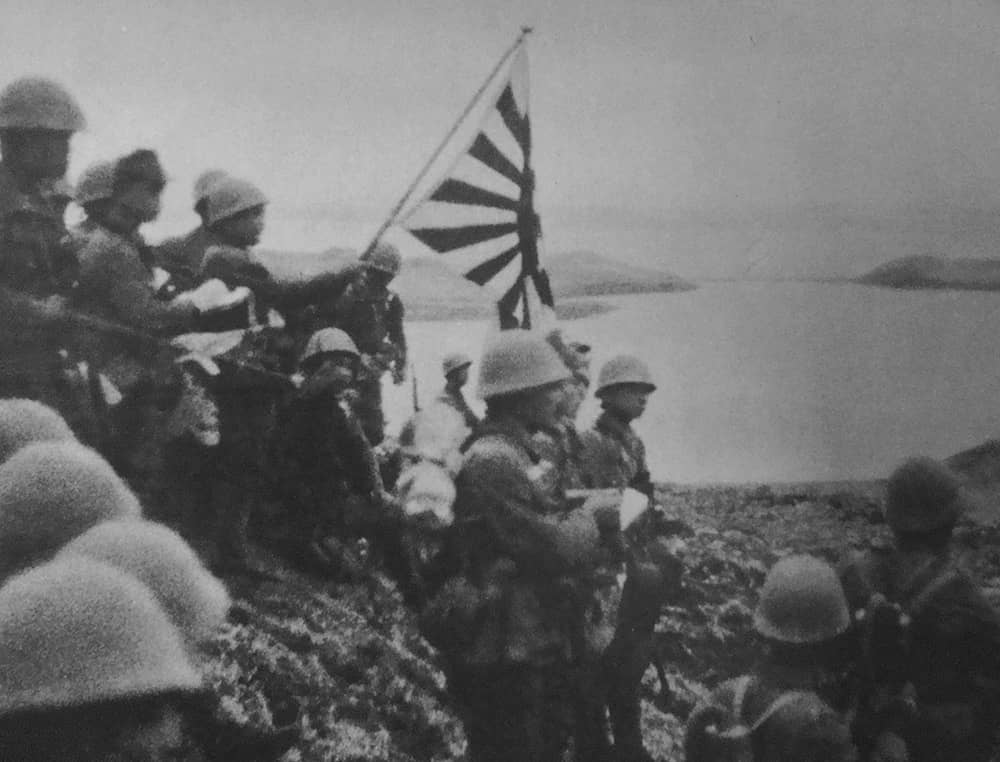
After planting the rising sun flag on Kiska, the Japanese brought in a further 5,400 civilians and soldiers to run the occupied island. This included developing its infrastructure of roads and an air strip. With 250 days a year of freezing rain and howling winds Kiska is an inhospitable posting. However, if the Japanese thought the Americans would leave it at that, they were grievously mistaken. News of the occupation had sent a shock wave through the American public. The US military responded to this with heavy bombing raids on Kiska. The island was also subject to naval bombardments. Eventually, after losing some supply and fighting ships the Japanese had to resort to sending supplies by submarine.
The US fear an attack on Alaska
Although the Japanese toehold on the two islands was tenuous, the US military were all too aware of the continuing threat to Alaska. The longer the invaders remained on Kiska and Attu, the greater the chance they had of launching island hopping attacks up the Aleutian chain. In fact, the Japanese plan was never to attck Alaska proper. Their strategy was to occupy some of the islands to deprive the Americans their control of the Pacific sea routes.
To prevent any further advance of the Japanese, the Americans launched Operation Landcrab to retake Attu Island. On 11th May 1943 15,000 US troops landed on the island at a place with the grimly appropriate name of Massacre Bay. They were backed up with Canadian air reconnassance and fighter bomber support.
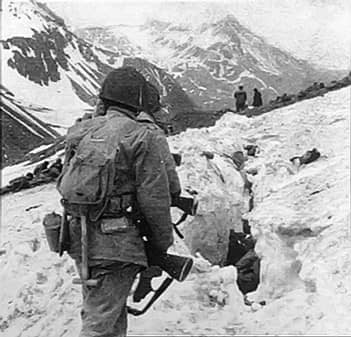
Although the 2,600 Japanese defenders were much fewer in number, they were dug into heavily fortified positions and fought with tenacity verging on fanaticism in freezing Arctic weather. It was the only time in The Second World War that the Japanese and Americans fought each other with snow on their boots. For what seemed an eternity, the Battle ground on with the US forces suffering heavy casualties from both combat and frostbite.
During the Battle, the Japanese High Command put together a formidable naval force to rescue their men on Attu and turn the tide in their favour. However, it was too late since the island was recaptured by US forces before this armada could set sail.
Suicidal Banzai charge
By 29th May the Japanese forces had been forced back into the mountains around the island’s main harbour at Chichagof Settlement. Realising there was no hope of rescue, the Japanese commander, Colonel Yasuyo Yamasaki led his men in a suicidal banzai charge. After terrible hand to hand combat, most of the Japanese lay dead marking the end of The Battle of Attu. It had cost the lives of 549 Americans and injured 1,148. A further 1,814 had succumbed to frostbite and illness. The Japanese had lost 2,351 men including their Commander Yamasaki.
Whilst some of the Japanese had committed suicide to evade capture, others held out until July and September 1943. Meanwhile, the garrison on Kiska Island was secretly evacuated by the Japanese Navy. Although the Battle effectively marked the end of the Japanese campaign to take the Aleutian Islands, it had been a costly victory for the Americans.
Friendly fire between US and Canadian forces
On 15th August a large amphibious invasion force of US and Canadian troops landed on Kiska in freezing fog. Poor visibility and incorrect information about tides doomed the whole operation to a ragged start. The invaders had landed at low tide leaving troops and their vehicles having to negotiate thick muddy beaches ringed by volcanic rock. As darkness fell, firefights broke out. These would continue for the next two days with many of the troops believing they were encountering large forces of fanatical Japanese troops.
It was only on the morning of 17th August that the ugly reality of what had actually happened was revealed. There had been no force of 10,000 battle hardened Japanese fighters. All those firefights had been friendly fire incidents between US and Canadian troops mistaking one another for the enemy. At the end of it all, 28 Americans and 4 Canadians had been killed and fifty wounded.
On 15th August 1943, the Aleutian Campaign ended along with Imperial Japan’s ambitions to take the islands. With their rugged terrain and the extreme and variable weather, fighting a military campaign on the Aleutian Islands was hellish. It cost the lives of 1500 Americans killed with 640 missing. The Japanese dead numbered 4,350 with only 28 being taken prisoner.
The struggle for The Aleutian Islands was a small campaign that is all but forgotten now. Nevertheless, its combatants fought and died in conditions every bit as testing as those of bigger more famous battles.
Note: The Title is borrowed from Brian Garfield’s book about this Campaign.
© Nick Brazil 2024
Photos: Wiki
About The Author
Click to see full BMMHS event listing pages.
Contact us at [email protected]
Copyright © 2026 bmmhs.org – All Rights Reserved
Images © Nick Brazil