Three Artists Who Depicted the Few

By Geoff Simpson

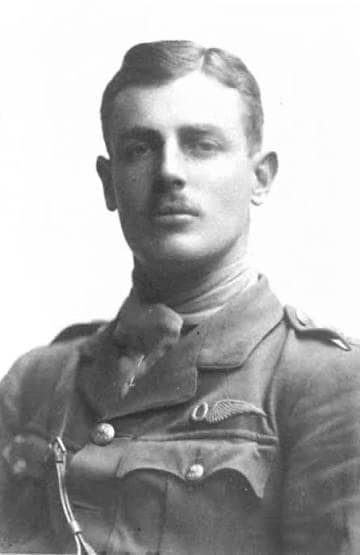
Cuthbert Orde

Three artists who were perhaps the most prolific in depicting the Few during and after the Battle of Britain are the subjects of this article.

Among them Cuthbert Orde, born in Great Yarmouth, Norfolk in 1888, had the advantage of having been both an observer and a pilot in the First World War. He had joined the Royal Flying Corps after time in the Army Service Corps.

In 1940 Orde was assigned to make drawings of bomber stations, but the Air Ministry quickly moved him to Fighter Command to record the aircrew repulsing the Luftwaffe. As Orde recalled, “I went off to find myself in the middle of a world that was the talk of the world.”

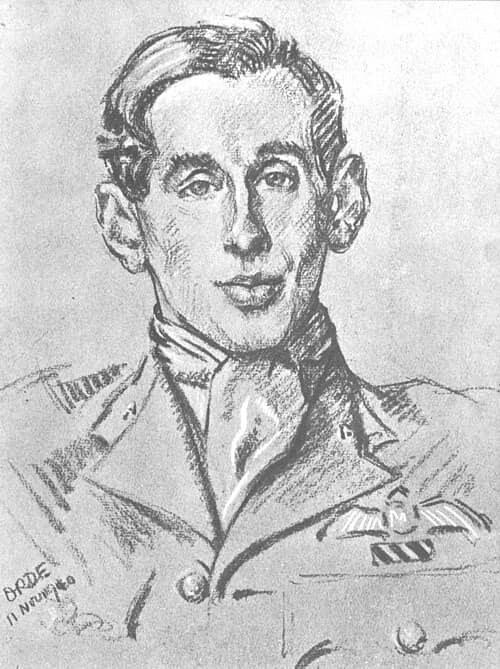
To his new subjects he became “Turps”, “Uncle Orde” and “The Captain”. He later listed 160 fighter pilots he had depicted, usually using charcoal and white chalk, but the total seems to have been much higher. He stated that he was always told who to make his subjects. His habit was to sign his works ORDE.

Men who sat for Orde in between combat sorties included: Tony Bartley, Bob Stanford Tuck, John Freeborn, “Paddy” Finucane, Max Aitken, “Al” Deere, “Sammy” Allard, Brian Kingcome, “Micky” Mount, Malcolm Ravenhill, Harry Broadhurst, Archie McKellar and the brothers “Scruffy” and “Cocky” Dundas.

Orde’s first wife was Lady Eileen Wellesley, daughter of the fourth Duke of Wellington. They had two daughters. Following her death he married Alexandra Dalziel. He was a founder painter member of what became the Guild of Aviation Artists.

Cuthbert Orde died in London on December 19th 1968, the day after his 80th birthday.
Three Artists Who Depicted the Few
Cuthbert Orde
Three Artists Who Depicted the Few
Portrait of John "Scruffy" Dundas by Cuthbert Orde

Eric Kennington

Three Artists Who Depicted the Few
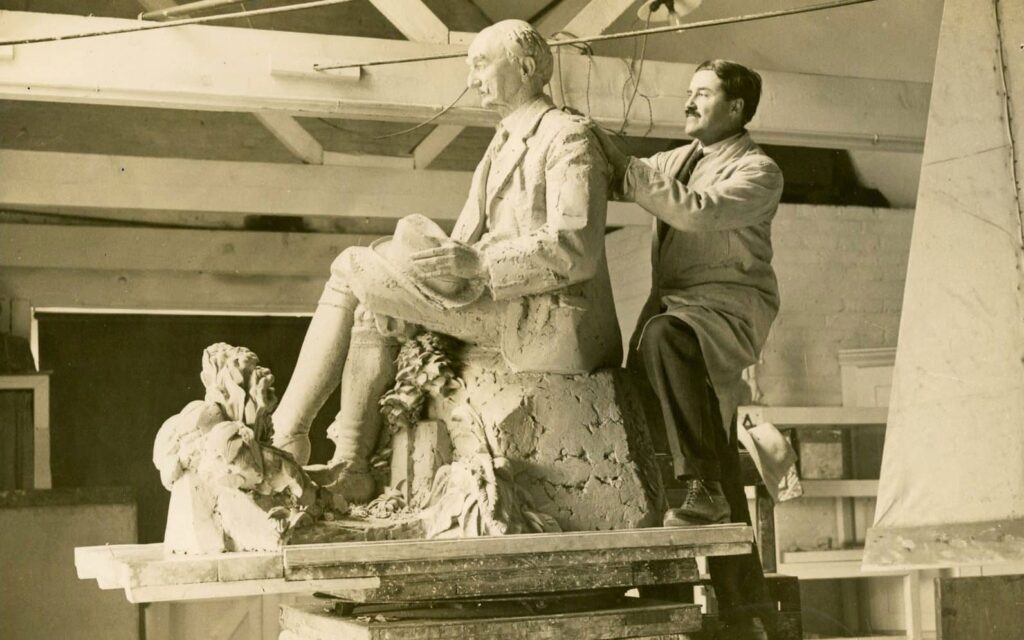
Eric Kennington working on his Thomas Hardy Memorial in 1931
Three Artists Who Depicted the Few
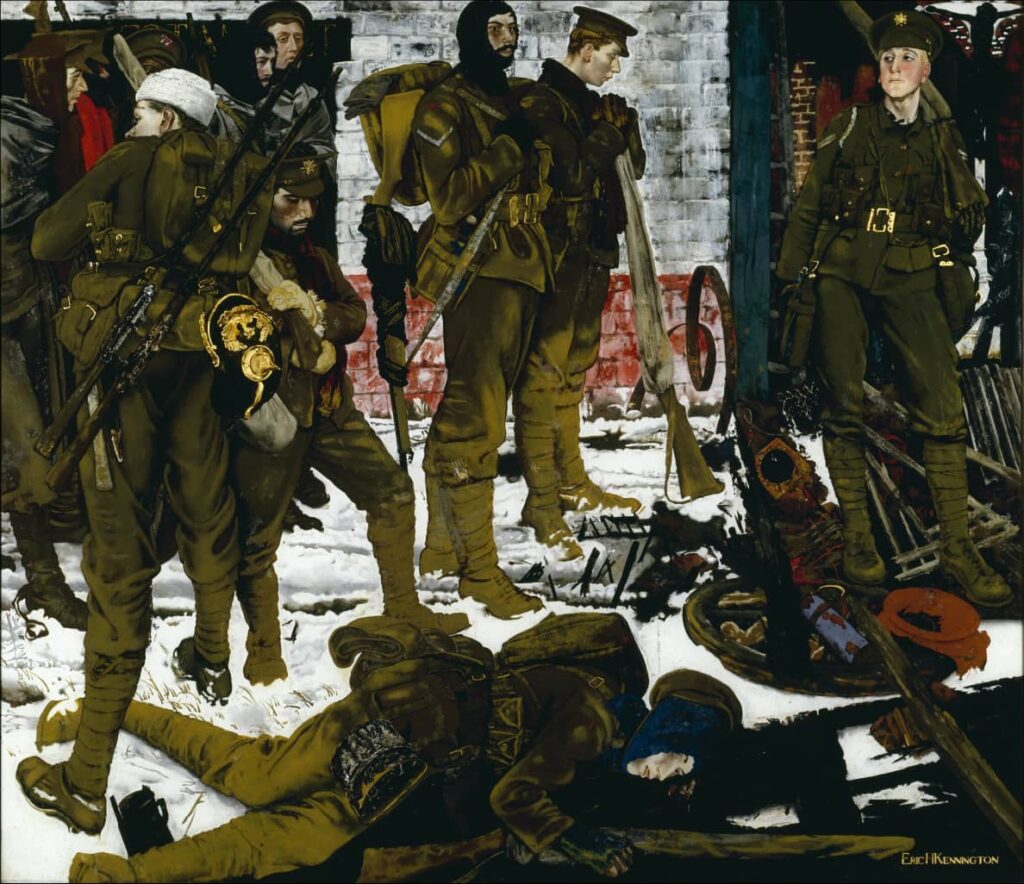
Eric Kennington's depiction of The Kensingtons at Laventie
Three Artists Who Depicted the Few
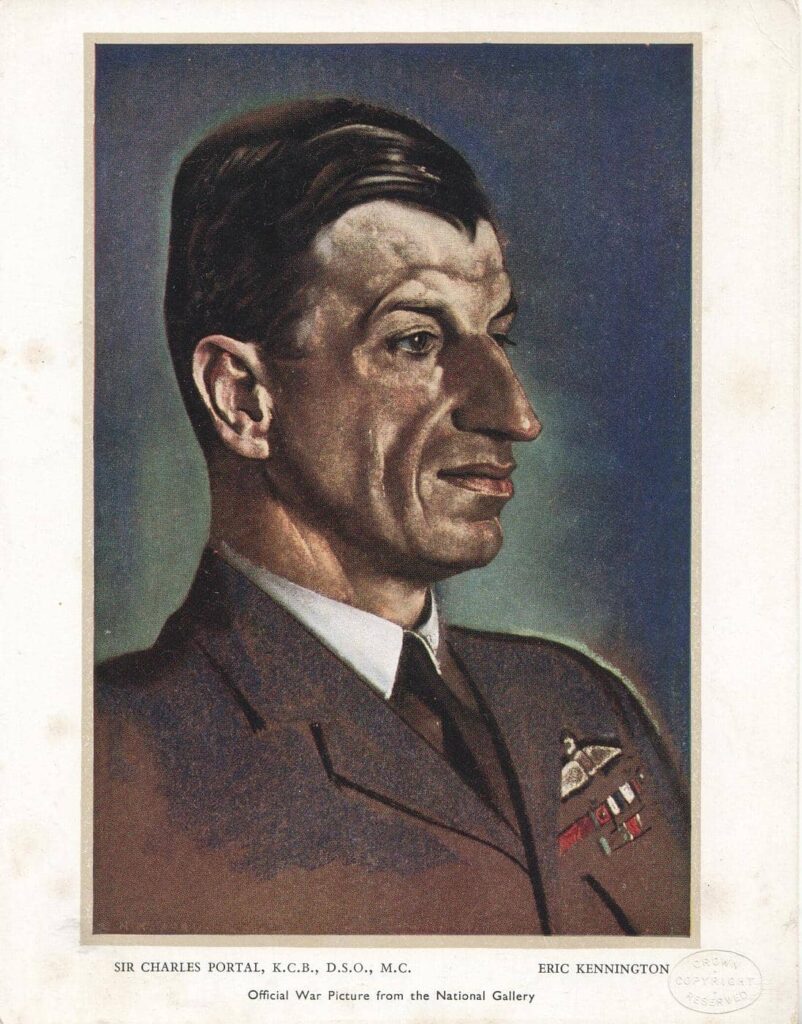
A greeting card of Sir Charles Portal's portrait by Eric Kennington in the National Gallery

To feel the presence of Eric Kenington, RA travel to the Chiltern Hills, to the Oxfordshire village of Checkendon and the church of St Peter and St Paul. Here you will find an etched window by Laurence Whistler, bearing the legend, “Remember Eric Henri Kennington who loved this church”.

Kennington and his wife Edith lie in the churchyard. They lived in the nearby village of Ipsden but Kennington’s devotion to the church at Checkendon included carving gravestones, memorials and fonts. In the 1950s, when the nave roof was renewed, he led a team in the carving of bosses.

Kennington (1888-1960) saw action in the First World War and served in the Observer Corps and the Home Guard in the Second World War. In both conflicts he became an official war artist.

He was somebody who often resisted authority but was, “a simple man fascinated by the staying power of Portland stone, nasturtiums, and his 1925 Fiat car,” according to the Oxford Dictionary of National Biography (ODNB). The interest in endurance comes through in his wartime work. Subjects were shown worn down by combat or the Blitz but determined to carry on to the end of the road.

In the Great War he served in the 1/13th (County of London) Battalion, The London Regiment, known as “The Kensingtons”. He was wounded and invalided out in 1915.

From his service comes Kennington’s acclaimed painting The Kensingtons at Laventie, including a self portrait and showing the soldiers in a ruined village with snow on the ground. They are exhausted after four days and nights without sleep in the trenches in bitter cold and constant snow.

The painting attracted mixed opinions. At first the Ministry of Information regarded it as too stark and Kennington’s acceptance as a war artist was delayed. In the view of the ODNB The Kensingtons at Levantie, “is arguably the first great commemorative painting of the First World War.”

In the Second World War Kennington worked on and off for the War Artists’ Advisory Committee established by Sir Kenneth (later Lord) Clark, then Director of the National Gallery.

In his book, The Face of Courage, published in 2011, Jonathan Black compared the styles of Orde and Kennington.

He wrote: “Orde draws the happy go lucky ‘fighter boys’. Kennington offers the prematurely aged yet highly effective killer of enemy pilots and aircrew.”

In 1942 Eric Kennington produced a book, Drawing the RAF. The foreword was signed by Air Chief Marshal Sir Charles Portal, Chief of the Air Staff.

Portal (himself a subject of Kennington) declared, “I suppose that Eric Kennington gives his portraits something of his own clear and noble vision of life, and if he draws us as he would have us be, then let us try to be as he sees us.” It was Portal who had ensured that Kennington was added to the list of official war artists for the Second World War.

Eric Kennington was close to T E Lawrence and was art editor for Lawrence’s book Seven Pillars of Wisdom.

Three Artists Who Depicted the Few
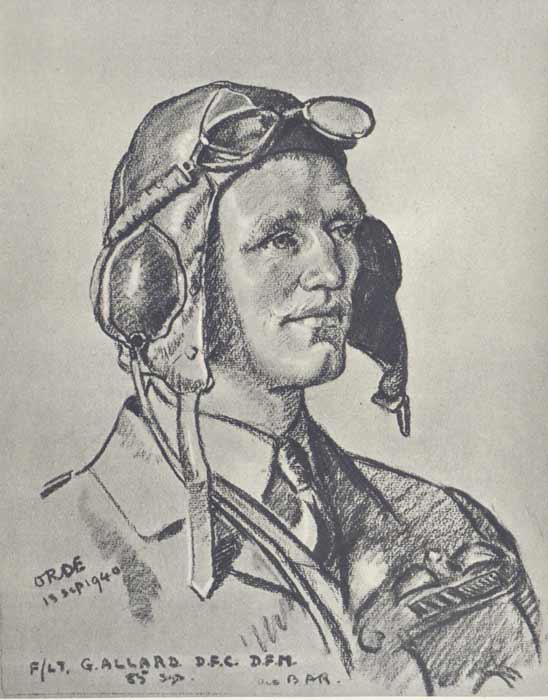
"Sammy" Allard as depicted by Cuthbert Orde
Three Artists Who Depicted the Few
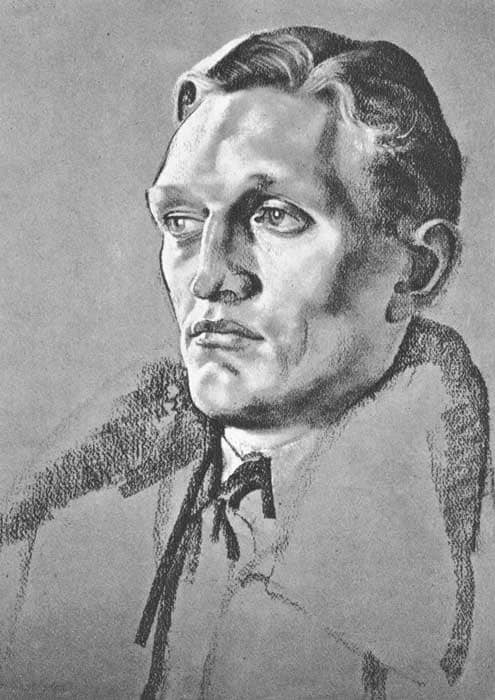
Eric Kennington's image of "Sammy" Allard

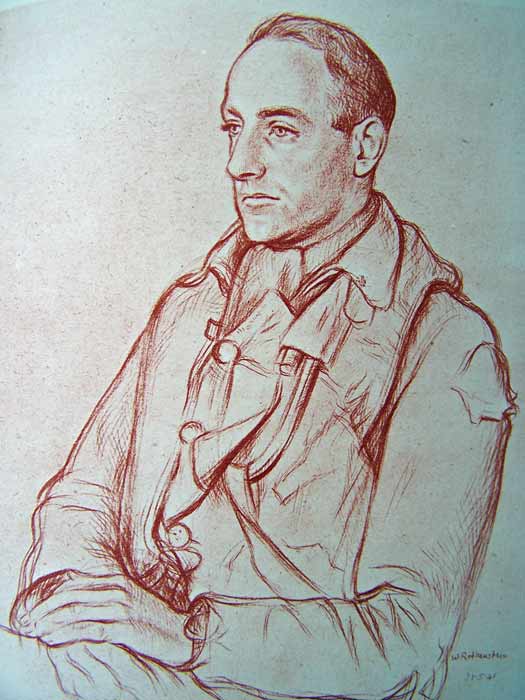
Sir William Rothenstein

My third artist is Sir William Rothenstein, RA (1872-1945, knighted 1931). When he was not at war he often chose to depict scenes of Jewish religious life as well as landscapes. Rothenstein volunteered at the start of the Second World War to make drawings of RAF personnel based near his home in Gloucestershire. This soon became a much wider role.

Members of the Few who sat for Rothenstein included (ranks and names are those used by the artist in the book, Men of the RAF, 1942) Group Captain H Broadhurst, Pilot Officer W D David, Flying Officer A J O Jeffrey, Wing Commander J A Kent, Pilot Officer C F Rawnsley, Squadron Leader W Straight and Group Captain D N Roberts.

Among others drawn by the Yorkshire-born Rothenstein were Air Chief Marshal Sir Hugh Dowding, Air Vice-Marshal Keith Park, Group Captain Lord Willoughby de Broke (senior controller in No 11 Group during the Battle) and Corporal Josie Robins, who earned the MM at Detling.

Rothenstein’s father was German. The son would not change his Germanic surname which hampered his First World War progress as a war artist. He was appointed again for the 1939-1945 war but his activities were limited through poor health and he died before the end of hostilities.

Towards the close of his career Rothenstein was known more as a teacher than an artist.

Three Artists Who Depicted the Few
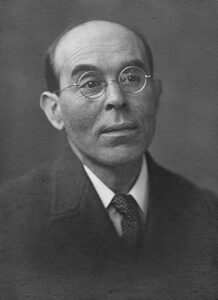
Sir William Rothenstein in 1920
Three Artists Who Depicted the Few
Whitney Straight flew Hurricanes with No 601, "The Millionaires' Squadron"

Geoff Simpson is consulting editor to the Database of the Few.

Click to see full BMMHS event listing pages.

Contact us at [email protected]

Copyright © 2026 bmmhs.org – All Rights Reserved

Images © IWM & NAM