Twixt War and Peace
The Dilemma of Neutral Countries in World War Two
by Nick Brazil
How to deal with the imminent threat of hostilities.
The outbreak of the Second World War placed a significant number of countries around the world in a very difficult position. The big question for the governments of most of these countries was how to deal with the imminent threat of hostilities. This was particularly pertinent in the case of Nazi Germany, with its track record of rolling over smaller and weaker countries regardless of their neutral status. For some, like Switzerland with a tradition of neutrality stretching back many centuries, the decision was simple. She declared her neutrality from the very start.
However, the Swiss Government was not unmindful of the possibility of invasion by Nazi Germany. To counter this threat, it mobilised its citizens into a fighting force of 430,000 troops who would pull back into the country’s mountainous hinterland to fight the invader. At the height of the war, this citizen’s army was increased to 850,000 men. In the event, Switzerland was never invaded, no doubt because the terrain was considered to be too difficult to conquer by the Germans.
The Spanish came close to throwing their lot in with Axis
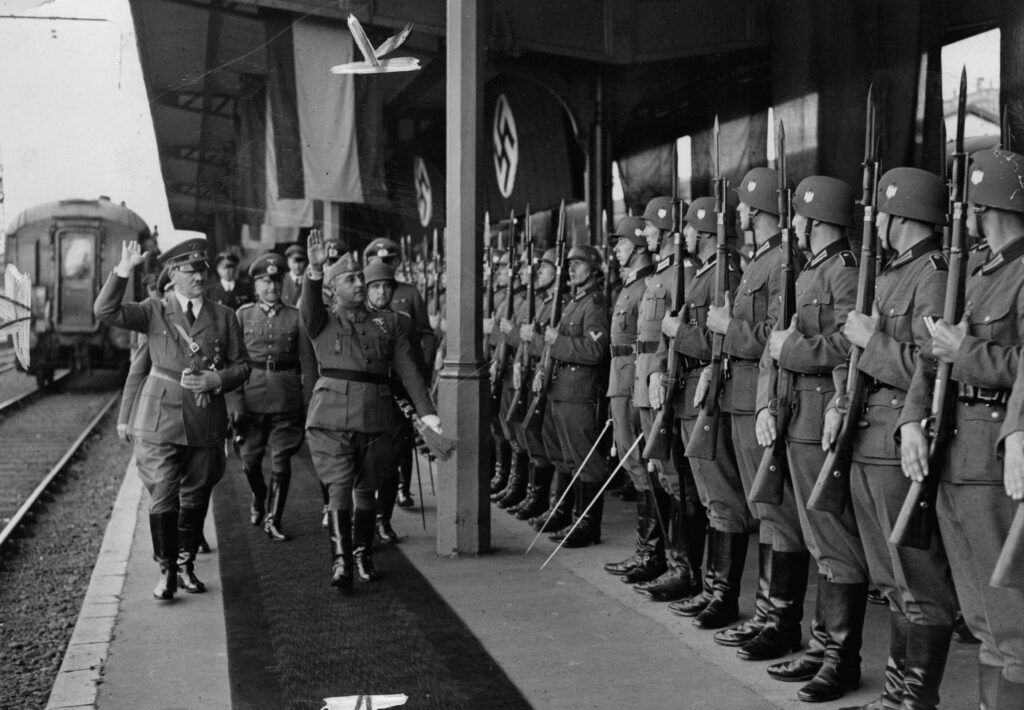
Spain and Portugal which were both governed by dictators during the Second World War were neutral throughout the conflict. In the case of Spain, its fascist leader Francisco Franco not only shared many of Hitler and the Nazi’s ideological beliefs but also was financially indebted to the Germans for their support of his side during the Spanish Civil War. This amounted to a sum of $212 million in 1940. On several occasions, the Spaniards came close to throwing their lot in with Axis powers for these plans to ultimately come to nought.
This might well have been down to Franco’s close relationship with the German admiral Canaris. He was always grateful to Canaris for his advice on avoiding Spain’s active entanglement in the War. Eventually, Canaris was arrested and executed as a traitor for his clandestine anti-Nazi activities. In 1945 Franco awarded the admiral’s widow a lifetime pension in recognition of this.
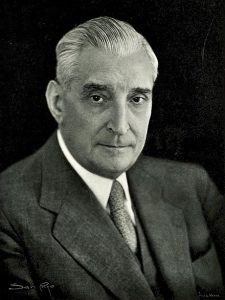
Portugal’s relationship with the Allies during World War Two was more nuanced in view of her long relationship with the United Kingdom. Although Portugal was officially neutral during the War, its Government under Antonio Salazar maintained a cordial relationship with England “our oldest ally”. The country did in fact break the rules of neutrality by secretly making an air base in the Azores available to the United States forces in November 1944.
Ireland was in the most difficult position
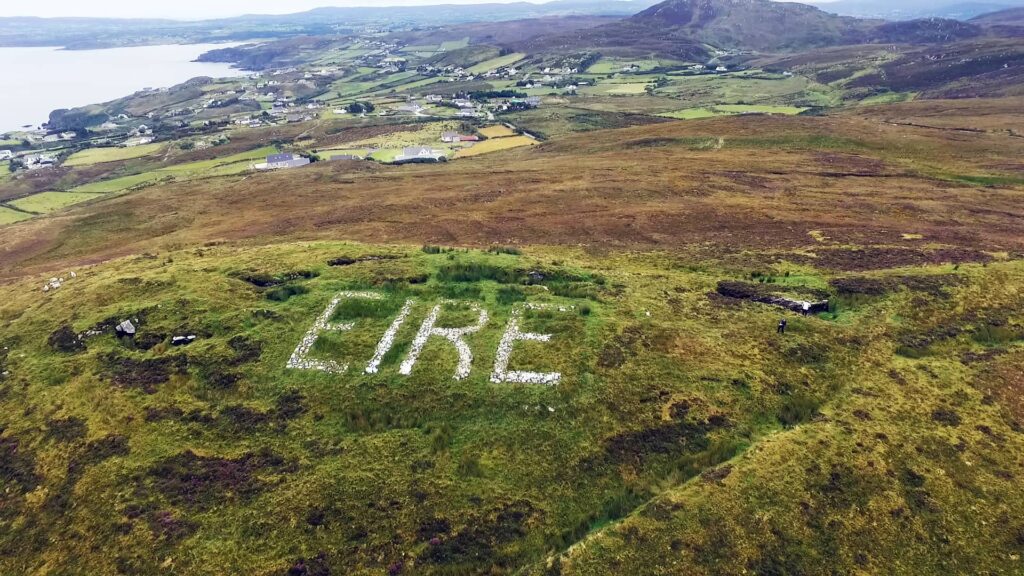
Of all the countries that declared neutrality at the outbreak of The Second World War, Ireland was in the most difficult position. Not only was she a divided country with Britain and the Allies occupying six of her Northern Counties, but she had only recently become independent. In the 17 years since that happened, relations with Great Britain had often been difficult. The whole question of her neutrality during hostilities meant that the Second World War was never referred to directly by Irish officialdom but always described as The Emergency.
However, the widespread idea that the Irish State was sympathetic to and collaborated with Nazi Germany during World War Two is largely mythical. In fact, the Irish helped the Allies much more than they hindered them during hostilities. There are concrete cases to show this happened.
One of the earliest of these occurred on 14th June 1940. Irish home forces rescued the merchant ship Eros which had been damaged by a U-Boat whilst on an Atlantic convoy. After allowing her to be repaired in a remote bay in Donegal, she was allowed to continue her interrupted voyage to Britain. Strictly speaking, under the terms of neutrality the ship should have been impounded by The Irish State until the end of hostilities.
Flying boats and the Donegal Corridor
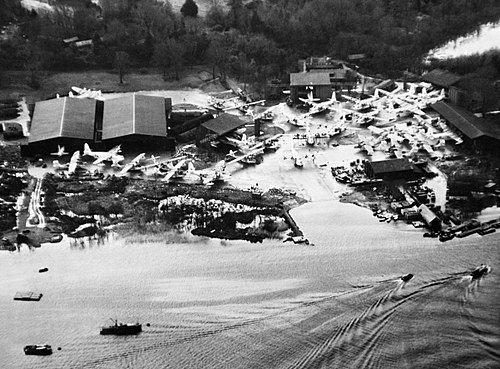
Ireland also permitted British flying boats to use a four-mile strip of its land known as The Donegal Corridor for RAF Sunderland and Catalina sub killers to fly over to the Atlantic from their base in Northern Ireland. Prior to this, these flying boats had to make a lengthy detour around neutral Irish territory when flying out to attack the U-Boat wolf packs threatening the Atlantic Convoys. The Irish also provided the Allies with vital weather reports that made the D-Day landings possible.
Throughout the War, many thousands of Irish citizens also signed up to fight and often die for the Allied cause. At one stage, the British even offered to dispense with Partition if the Irish State joined the Allies. However, this was rejected by Ireland’s government who regarded taking sides as a step too far.
Occupation by the Soviets and the Germans
On the northern edge of Europe, the three Baltic States of Lithuania, Latvia and Estonia jointly declared their neutrality on the outbreak of war. However, this did not save them from occupation firstly by the Soviet Union, then Nazi Germany and once again by Russia for a second time during the conflict.
They would not be the only neutral countries to fall under the control of one warring power or another. The tiny Principality of Monaco found itself initially occupied by the Italians in November 1942. When Mussolini was toppled, the Germans took the place over and would remain until 3rd September 1944.
Iran had also hoped to remain neutral but was occupied by a joint British and Soviet invasion force. These invaders would also not leave until after the cessation of hostilities. Given the Soviet Union’s habit of holding onto the lands they “liberated” it is perhaps remarkable they also did not hang onto their occupied areas of Iran.
The invasion of Iceland
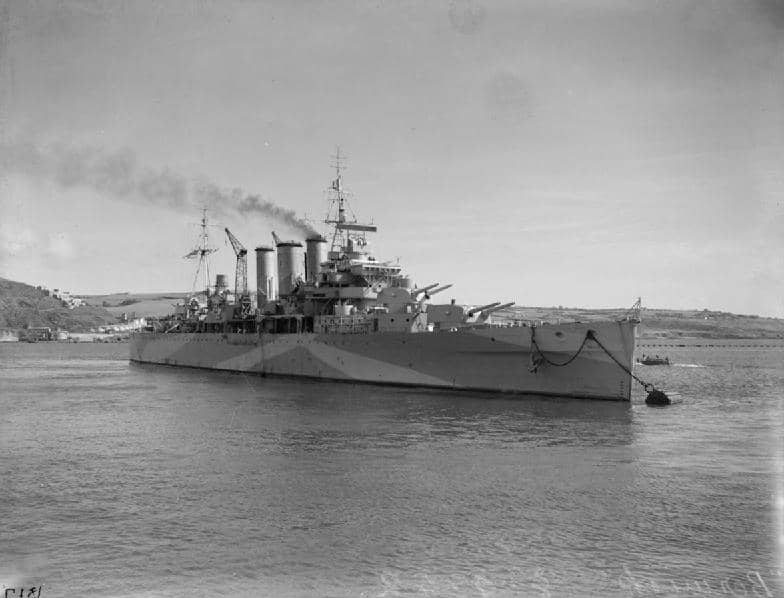
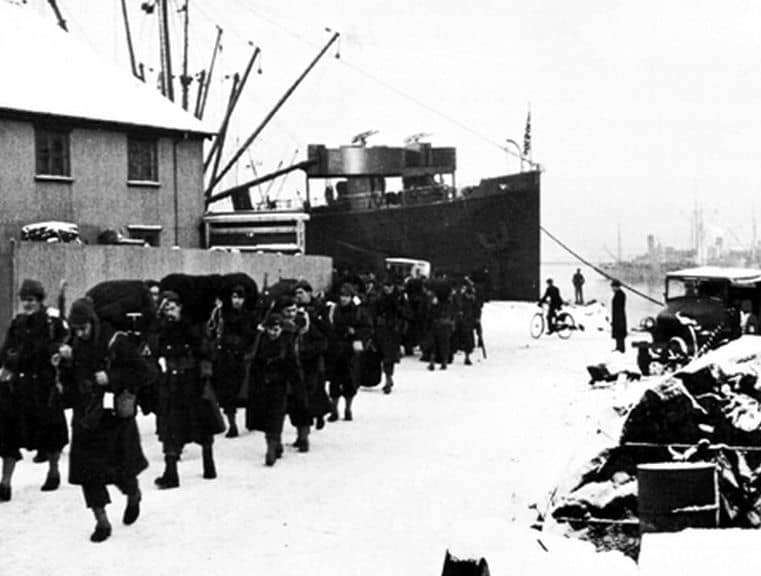
Another country whose neutrality was compromised in The Second World War was Iceland. Afraid that the Germans would overrun the island nation and threaten Britain with a new arctic flank to fight, Winston Churchill’s Government launched an Invasion of Iceland called Operation Fork. This involved the takeover of the country by 746 Royal Marines landed from a Royal Navy warship on 10th May 1940.
As one would expect, the initial Icelandic reaction to the British Invasion was both angry and hostile. However, this attitude mellowed with time. It is likely that seeing how the German occupying forces treated the Danes, to whom the Icelanders were very close, made them realise that it was better to be ruled by Britannia than the Nazis. From the Summer of 1940, Canadian troops took over this task from the British. After them came US Forces in July 1941. In April 1940, the British also occupied The Faeroe Islands, a Danish dependency which lies halfway between Scotland and Iceland.
The British occupation of Iceland remains a matter of controversy in the country to the present day. Social tensions caused by British troops liaising with local women, were particularly sharp at the time.
Sweden - the black cross of collaboration
Sweden played a particularly important role in the neutrality between the belligerents during the Second World War. More often than not, its role in allowing German troops to cross its territory and the supply of iron ore for German armaments has placed the black cross of collaboration with Nazis against its name. Churchill was particularly scathing in this respect believing Swedish neutrality only served to enhance her profits during the Second World War.
However, this does not tell the whole story of this Scandinavian nation’s wartime role. In the case of the bitter Winter War between Finland and The Soviet Union, the Swedish Government allowed thousands of its countrymen to fight as volunteers for the Finnish side. It also allowed a wide variety of goods ranging from foodstuffs and clothes to weapons to be shipped to Finland.
Turkey opted for neutrality
Turkey was another country that opted for neutrality at the outbreak of hostilities. Throughout the Second World War she adopted a strict policy of neutrality towards both sides. Before the war, the Government led by Ismat Inonu signed treaties with Britain, France and Nazi Germany. It sold the strategic metal chromite to the Germans. Towards the very end of the war it declared war on the Axis powers. However, no Turkish soldiers were involved in any actual fighting.
The Vatican received considerable criticism
The neutral country that probably received most criticism for its stance during the Second World War was the Vatican City State. It was believed by many to be pro-Axis. However, as is always the case, a close look at the actual facts reveals a more complex picture.
Whilst it is true that Pope Pius XII always maintained a close relationship with both the Italian and Nazi regimes, his supporters claim there were numerous cases of the Vatican interceding on behalf of Jews. This, they argued saved the lives of thousands of Jews. There was also the case of the Irish priest Hugh O’ Flaherty who risked his life to spirit thousands of allied airmen out of Italy to freedom. His secret network used safe houses throughout Rome and was based within the Vatican’s walls.
The effect of aerial attacks
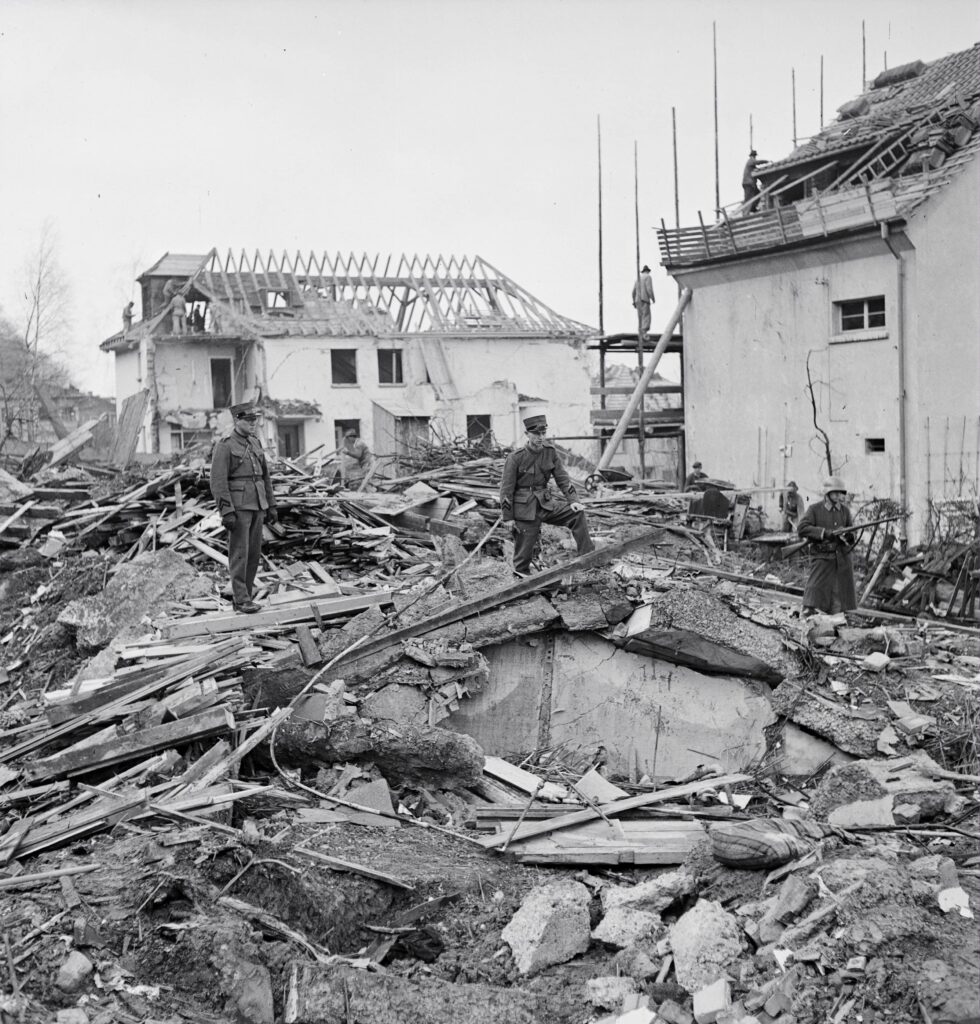
On occasions, neutral countries also found themselves dragged onto the front lines, usually by accident. It was not unknown for Axis forces to sink Irish merchantmen. Ireland also suffered several bombings by the Luftwaffe. On the first of these, three women workers were killed when a German plane bombed the creamery where they were employed. On the second and third occasions bombs were dropped on Dublin suburbs. The most lethal of these attacks was on the North Strand area of the city which killed twenty-eight people. Whether these incidents were simply accidents or a way of “keeping the Irish in line” by the Germans remains a matter of debate.
Switzerland also suffered bombing and aerial attacks, usually by allied aircraft mistaking their territory for neighbouring Germany. The Allies lost 36 airmen in these incidents whilst 84 Swiss civilians were killed.
Throughout the Second World War, a mosaic of different neutral countries lying as far afield as Saudi Arabia and Bhutan dealt with both sides during hostilities. Without doubt, they were a useful conduit for all belligerents to indulge in trade, espionage or clandestine contacts. In many cases, they remained untouched by the hostilities engulfing the world.
Choose neutrality or take a side ?
The countries of the vast land mass of Central and South America with their many cultures and allegiances also found they had to choose neutrality or take a side. The biggest and most important of these countries were Chile, Peru, Argentina and Uruguay. All of these nations had close ties with Germany through their many expatriate German communities and remained neutral throughout the War.
With many Latin American countries run by dictators who greatly admired Hitler, President Roosevelt worried about the growing threat of Nazism in America’s Latin American backyard. With this in mind, he put Nelson Rockefeller in charge of The Coordinator of The Office of Inter-American Affairs (CIAA). The main purpose of this organisation was to counter the growing Nazi influence in Latin America, particularly in Chile and Argentina.
Without doubt, The Second World War rendered great changes to both the Latin American economies and their societies. In most cases these countries were modernised and fell much more into the American orbit of influence. However, only two of these countries, Mexico and Brazil, took any active military involvement in the fighting.
Mexico was neutral at the start of The Second World War. However, its government had a long tradition of hostility to fascist regimes that stretched back to the early 1930s. Her relationship with Stalin’s Russia was equally frosty because the asylum Mexico granted to his arch enemy Trotsky. Relations with the Axis Powers would have remained in this frozen state were it not for the actions of the German Navy.
In May 1941, two Mexican oil tankers were sunk by German U-Boats. As a result, Mexico declared War on the Axis powers, bringing her into the War directly on the side of the Allies.
Her main contribution was a fighter squadron known as The Aztec Eagles who engaged with Japanese forces in the Battle for The Philippines. Like Mexico, Brazil was also neutral at the beginning of the Second World War. This was partially linked to the considerable trade the country conducted with Germany but also because she hosted large German, Italian and Japanese communities within her borders.
Like all other neutral countries that had a merchant shipping fleet in The Second World War Brazil found her ships were often in the sights of German U-Boats. As a result of losing a significant number of merchantmen in this way, Brazil declared war on the Axis powers on 21st August 1942.
She was the only Latin American country to commit her troops to fighting abroad. Approximately 25,000 Brazilian soldiers saw action fighting in Italy with the Americans.
Now, getting on for eighty years since peace was declared, it is easy for us to be judgmental about the actions of those who ruled the neutral countries in the Second World War. At the time, the wrong decision or action could well have affected their status and safety as neutral and independent states. The well-worn phrase “What would you have done in their place” readily springs to mind. The fact of the matter is that whether a country was neutral, occupied or a belligerent, this world of war was a perilous place indeed.
© Nick Brazil 2025
Photos: Wiki
About The Author

Nick’s books are Available on Amazon
Click above to purchase

Click to see full BMMHS event listing pages.
Contact us at [email protected]
Copyright © 2026 bmmhs.org – All Rights Reserved
Images © Nick Brazil