New Zoom Talk Booked – The US Eighth Air Force Over Europe

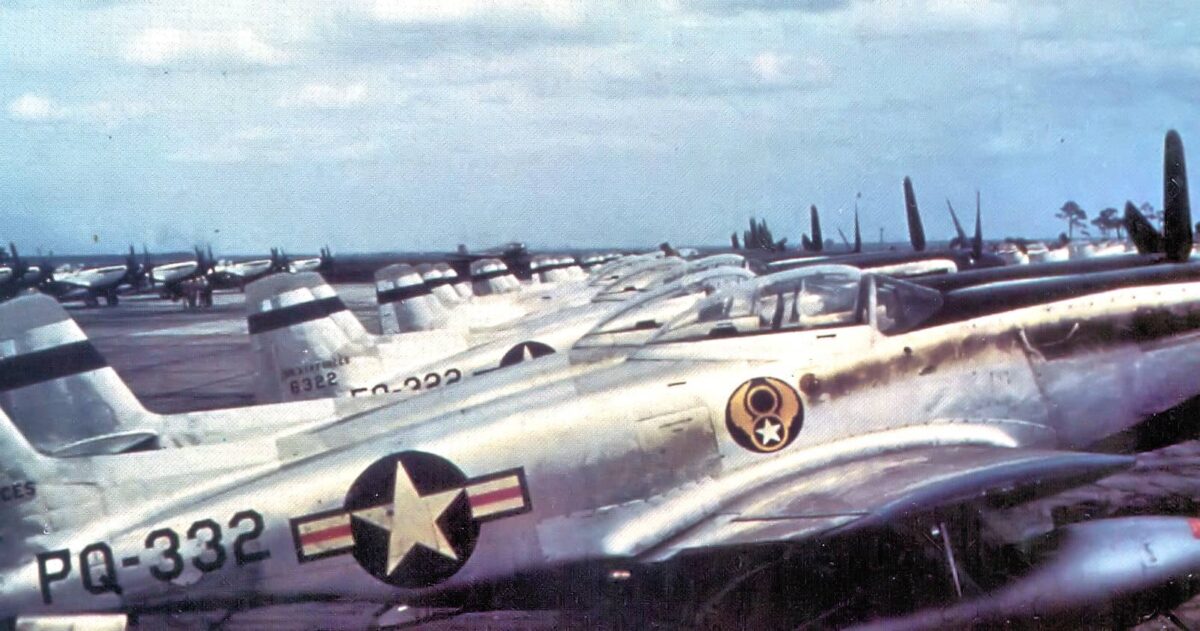
The VIII Fighter Command adapted to the challenges of the air war by prioritising bomber escort missions and implementing new tactics to combat German fighters. These adjustments were crucial in the success of the Combined Bomber Offensive, as they provided protection to bombers, disrupted enemy fighters, and established air superiority over western Europe.

BMMHS Zoom talk Booked for 2026

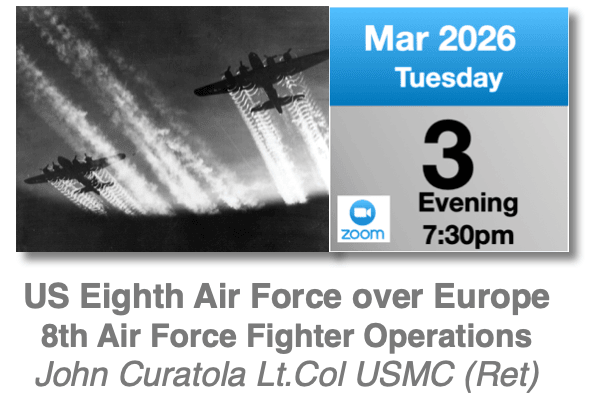
The Eighth Air Force Over Europe

In this Zoom talk Dr John Curatola of the US National World War II Museum in New Orleans will explore 8th Air Force Fighter Operations.  

During the war, VIII Fighter Command was an essential part of the Combined Bomber Offensive. As with most military campaigns, the execution of combat operations adjusted and changed over time.
 
  • How and why did VIII Fighter Command adjust to the challenges of the emerging air war?
  • What were the consequences of these actions?
During this talk Dr Curatola will address the doctrinal, material, and leadership adjustments of the American fighter force over the skies of western Europe.      
Eighth Air Force
US 8th Air Force Over Europe
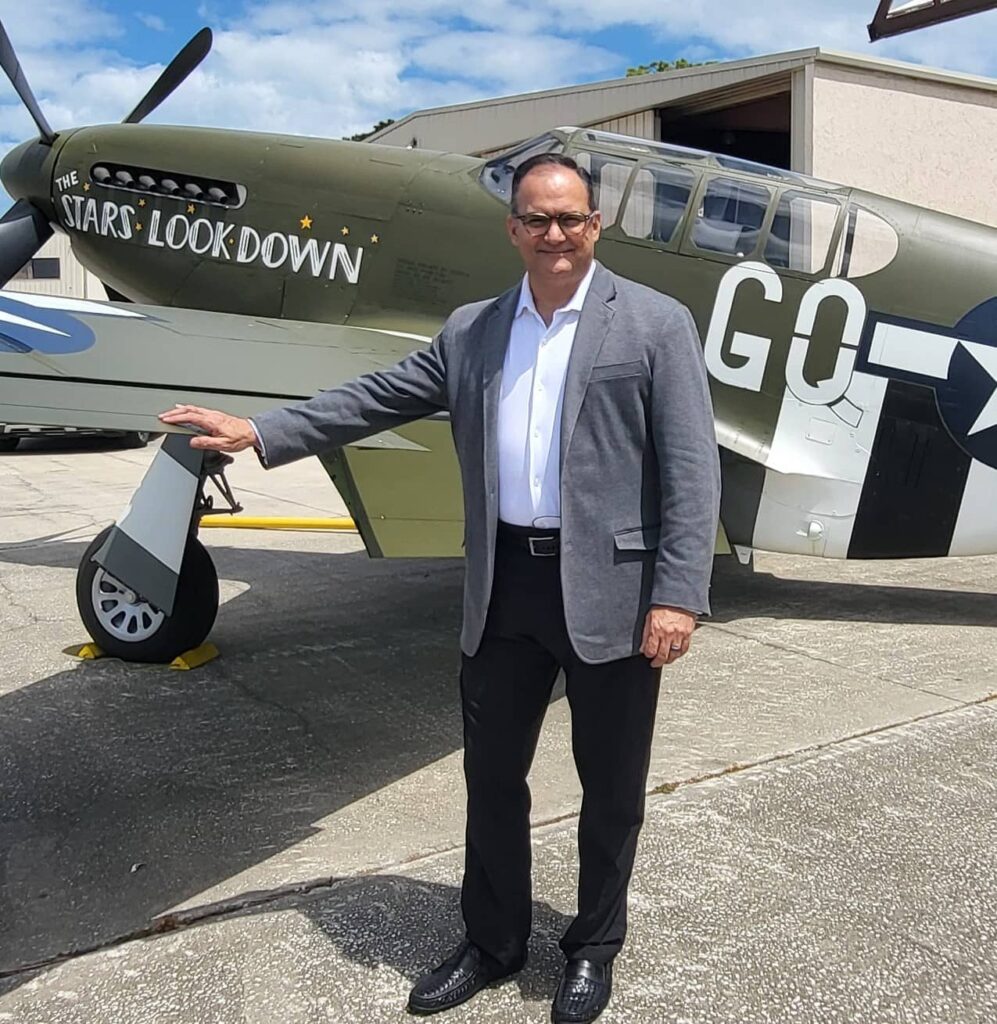
Dr John Curatola Lt Col USMC (Ret)

New Zoom Talk Booked – The German Occupation of the Channel Islands

Join speaker James Porter for a talk on the German occupation of the Channel Islands in WW2 – the only British territories occupied by the Germans during the war. What was life like for the locals, and how did they live alongside the German occupiers?

BMMHS Zoom talk

The German Occupation of the Channel Islands

In this talk James Porter will explore the events leading up to the German occupation of the Channel Islands in 1940 after the fall of France, and the soul-searching around the evacuation of part of the populations. Then he will describe the arrival of the German forces, their reception and their everyday life in the islands. James will examine the changing relations between occupying forces and island authorities and the massive construction programme of fortifications whereby the islands were incorporated into Hitler’s ‘Atlantic Wall’. He will look at the British commando raids and the life and privations of the civilian population as the War progressed and food became increasingly scarce for both islanders and occupiers.

German Occupation of the Channel Islands
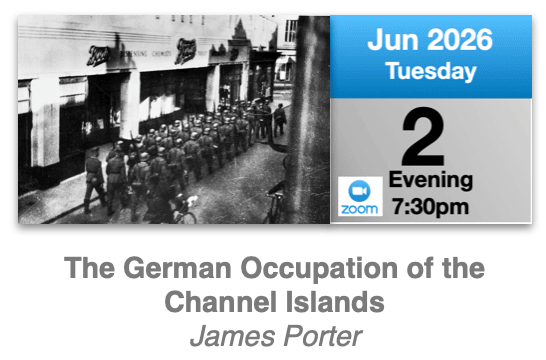
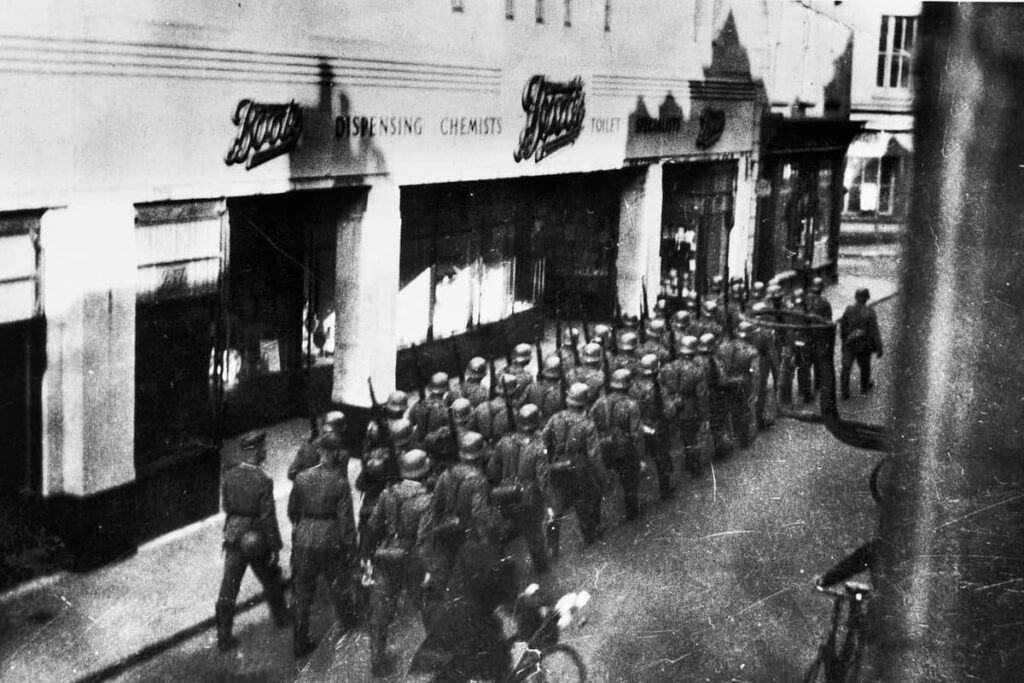
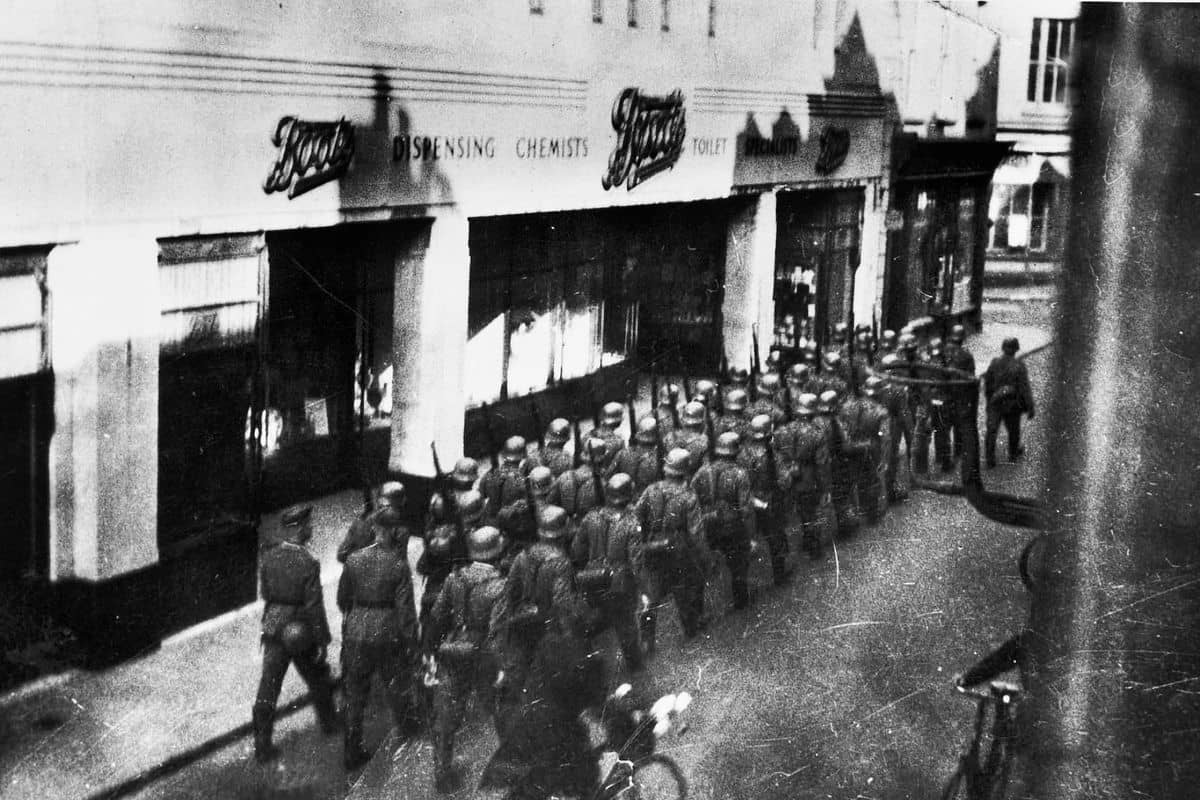
German soldiers marching by a Boots pharmacy in the British Channel Islands, 1940s. Source Wiki
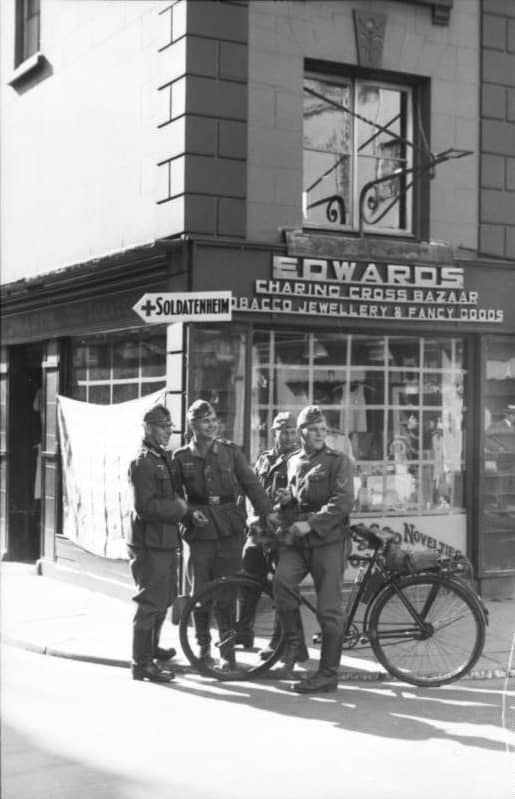
German soldiers standing in King Street, Saint Helier, at Charing Cross (now site of La Croix de la Reine monument) during Occupation of Jersey. Source Bundesarchiv Bild 101I-228-0326-34A. Wiki

BMMHS New Zoom Talk Booked – The Sinking of the Bismarck

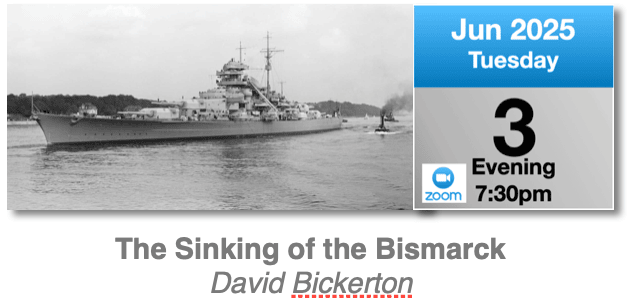
More than a hundred British warships were involved in a desperate 5 day, 1,750 mile hunt for the mighty German battleship Bismarck, which disappeared for more than 24 hours and was almost within reach of safety before it was tracked down. David Bickerton’s father was a crewman aboard HMS Dorsetshire which was involved in the pursuit and sinking of the Bismarck.

BMMHS Zoom Talk - The Sinking of the Bismarck

More than a hundred British warships were involved in a desperate 5 day, 1,750 mile hunt for the mighty German battleship Bismarck, which disappeared for more than 24 hours and was almost within reach of safety before it was tracked down. David Bickerton’s father was a crewman aboard HMS Dorsetshire which was involved in the final showdown. David’s talk will focus on the pursuit and sinking of the Bismarck.

The Sinking of the Bismarck
The Sinking Of The Bismarck
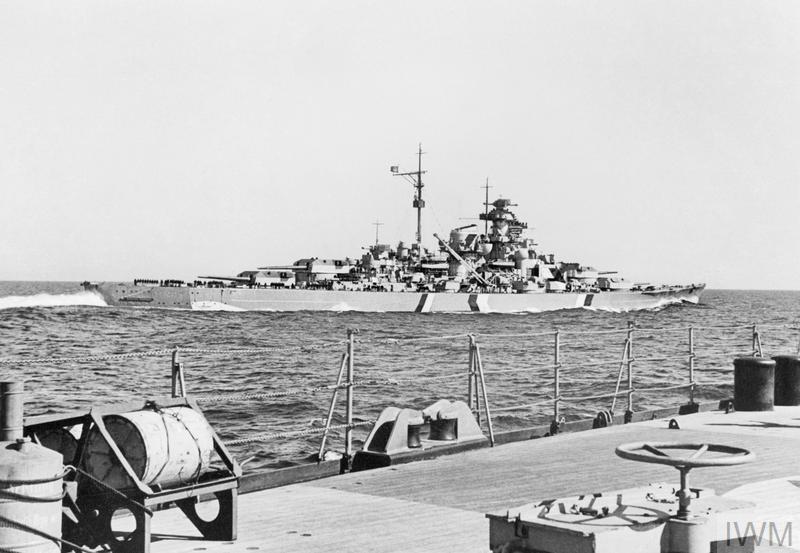
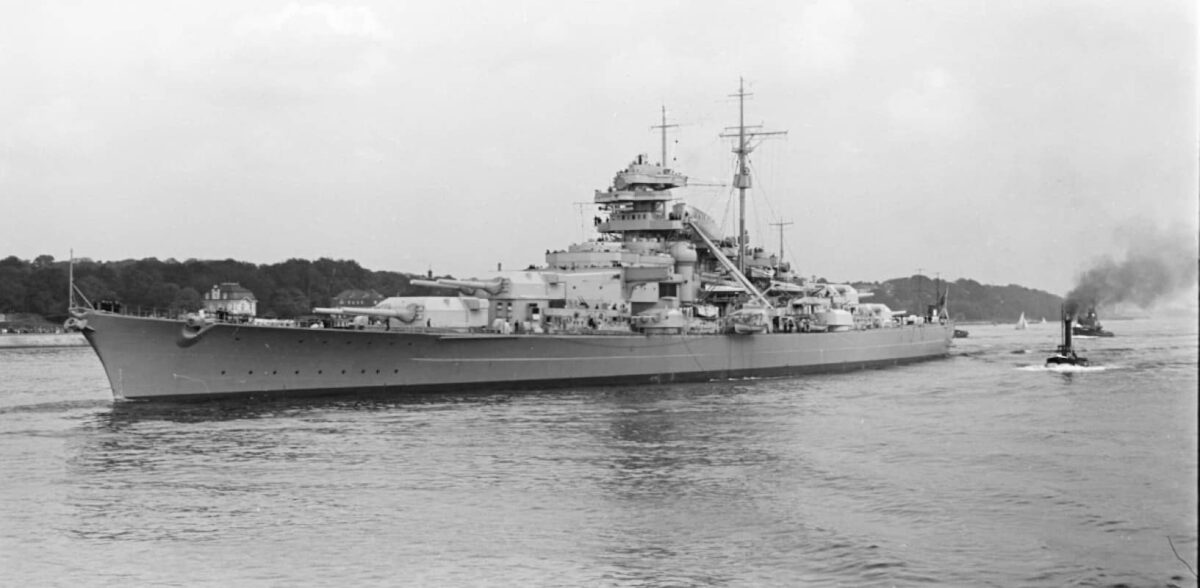
The breakout into the Atlantic 19 - 23 May 1941: The German battleship BISMARCK underway in the North Sea, photographed from the heavy cruiser PRINZ EUGEN. Copyright: © IWM. (HU 374) Original Source: http://www.iwm.org.uk/collections/item/object/205087095
The Sinking Of The Bismarck
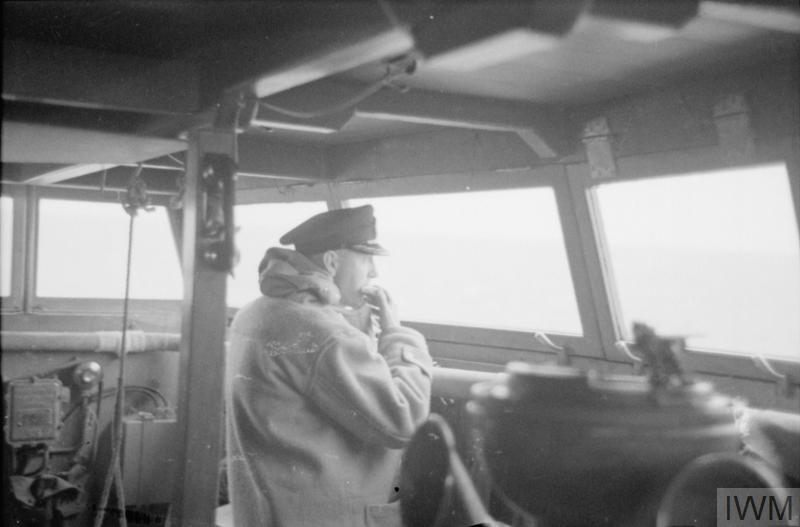
THE ROYAL NAVY DURING THE SECOND WORLD WAR (A 4330) The Captain on the bridge of HMS SUFFOLK while shadowing BISMARCK. The Captain does not leave the bridge on these occasions; here he is seen having a sandwich for his lunch. Copyright: © IWM. Original Source: http://www.iwm.org.uk/collections/item/object/205185331
The Sinking Of The Bismarck
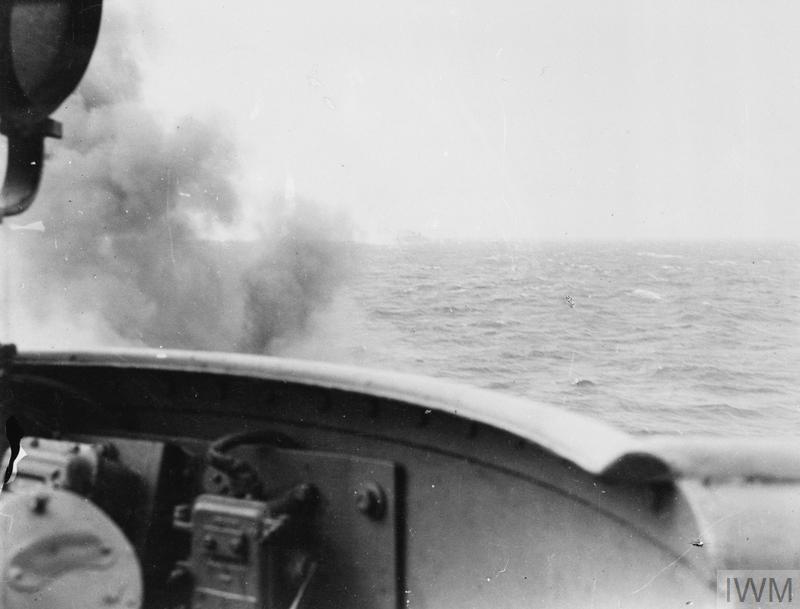
BISMARCK ACTION. 27 MAY, ON BOARD ONE OF THE ATTACKING WARSHIPS CHASING AND SINKING THE GERMAN BATTLESHIP BISMARCK. (A 4387) BISMARCK on fire, at the closing stages of the battle. Copyright: © IWM. Original Source: http://www.iwm.org.uk/collections/item/object/205138675
The Sinking Of The Bismarck
Sinking of the Bismarck
The chosen charity for this talk

BMMHS Zoom Talk: 1942: Britain At The Brink Tuesday 4th July 2023 7:30pm

1942 Britain At The Brink Taylor Downing

Tuesday 4th July; 7:30pm

Click above for FAQs on BMMHS Zoom Talks

1942: Britain At The Brink

Taylor Downing
 
Most people think that Britain’s worst moment of the war was in 1940 when the nation stood up against the threat of German invasion with the Battle of Britain and the Blitz. But I argue that Britain’s darkest hour was actually in 1942 when a string of military disasters engulfed Britain in rapid succession. The collapse in Malaya, the surrender at Singapore, three large German warships passing through the Straits of Dover, failures and defeat of the Eighth Army in North Africa and the surrender at Tobruk. All of this against the backdrop of catastrophic shipping losses in the Atlantic and in supplying Russia in the Arctic convoys. The run of military failures created a crisis for Winston Churchill and his government. People began to claim that Churchill was not up to the job and his leadership was failing badly. Public morale collapsed. I will explain how unpopular Churchill became in 1942 with two votes attacking his leadership in the Commons and the emergence of a serious political rival. After El Alamein and Stalingrad the war took a favourable turn for the Allies but I want to bring a fresh eye on the events of eighty years ago.
‘Taylor Downing vividly brings to life a terrible year’ Max Hastings, Sunday Times
 
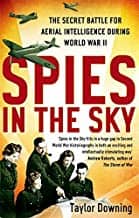
Taylor Downing has written a run of popular history books looking at different aspects of the two world wars and the Cold War. They include Breakdown on shell shock, Spies in the Sky on photo intelligence in WW2, The World at War on the popular TV series, ColdWar and 1983 – The World at the Brink. His books have been widely praised, translated into many languages and the last three have been serialised in the Daily Mail. Before this Taylor worked at the Imperial War Museum and then became a television producer who made about 300 historical documentaries many of which won international awards.
 

Useful links

Copyright © 2023 bmmhs.org – All Rights Reserved

Images © IWM & NAM

BMMHS Zoom Talk: Battle of the Bulge: Tuesday 2nd May 2023 7:30pm

Battle of the Bulge

Tuesday 2nd May; 7:30pm

Click above for FAQs on BMMHS Zoom Talks

The Battle of the Bulge

Edwin Popken
In late 1944, the roughly 120 kilometer frontline in The Ardennes was guarded by four US Infantry Divisions and two cavalry units, which another infantry division and an armoured division in reserve. The Ardennes front was considered a quiet one and subsequently most American units were either green or had been badly mauled in the Hurtgen Forest a few weeks before. On 16 December 1944, the German Army launched twelve Infantry Divisions and five Panzer Divisions against them. Their goal was to break through the Ardennes, as the German had done before in 1914 and in 1940, and recapture Antwerp. This would trap the British and Canadian armies. Hitler hoped that this would force a surrender by the British, which in turn would convince the Americans to make peace with Germany and withdraw from Europe. Though initially successful, the Americans quickly recuperated from the initial shock. Fighting a delaying fight where possible, they bought time for other American and allied units to come in to successfully stop and beat back the German race for the Meuse and beyond. Before the battle ended by 28 January 1945, no less than 29 German, 31 American and three British divisions would become involved, totalling almost 1.5 million men, of which an estimated 155,000 to 190,000 became casualties. The Battle of the Bulge became and the largest and toughest land battle the US Armed Forces fought in their history, a ‘record’ that still stands today. 
Battle of the Bulge
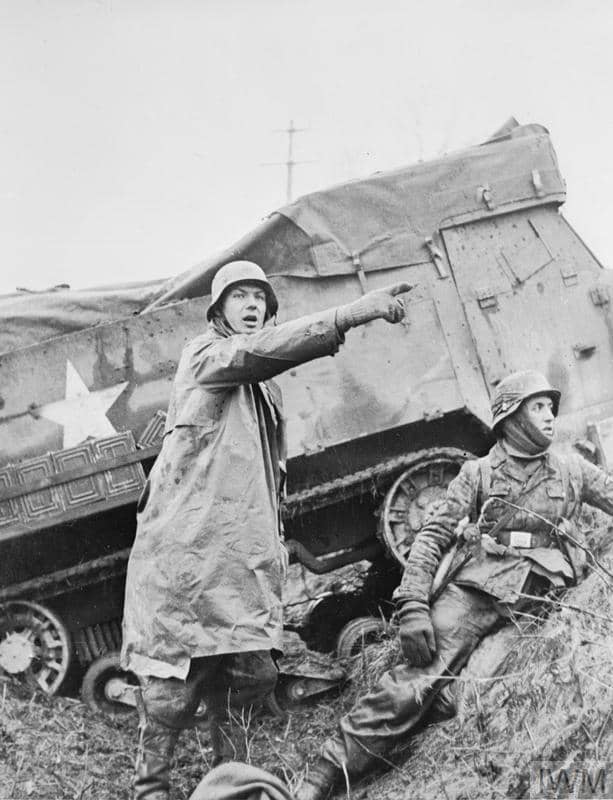
A German soldier beside a disabled American M3 half track signalling his unit to advance during the German counter-offensive in the Ardennes. Known as the Battle of the Bulge, Generalfeldmarschall von Rundstedt launched this last German offensive in the West on 16 December 1944 in the hope of capturing Antwerp and thereby cutting off supplies from the British and American armies preparing to invade Germany. Despite atrocious weather conditions the Germans were thrown back in early January 1945. © IWM EA 47959
Battle of the Bulge
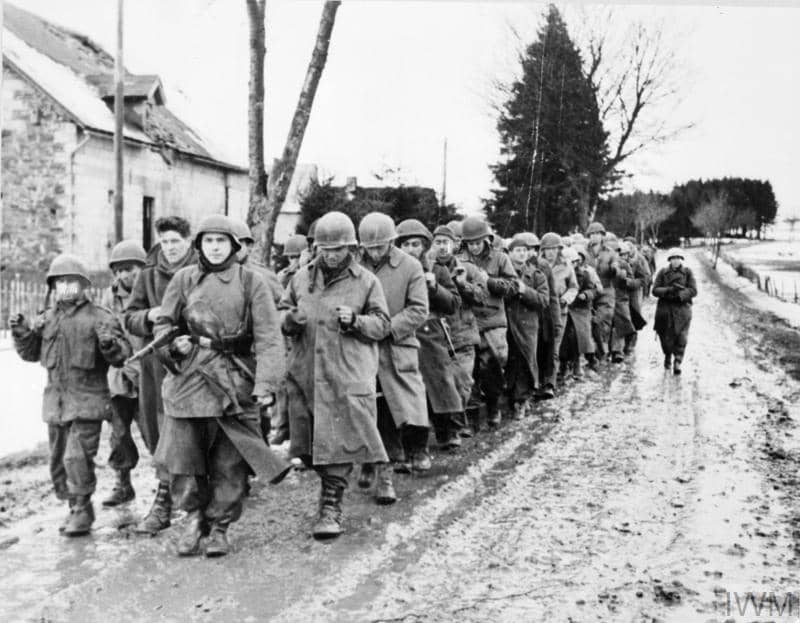
American soldiers being marched down a road after capture by German troops in the Ardennes, December 1944. © IWM MH 20575
Battle of the Bulge
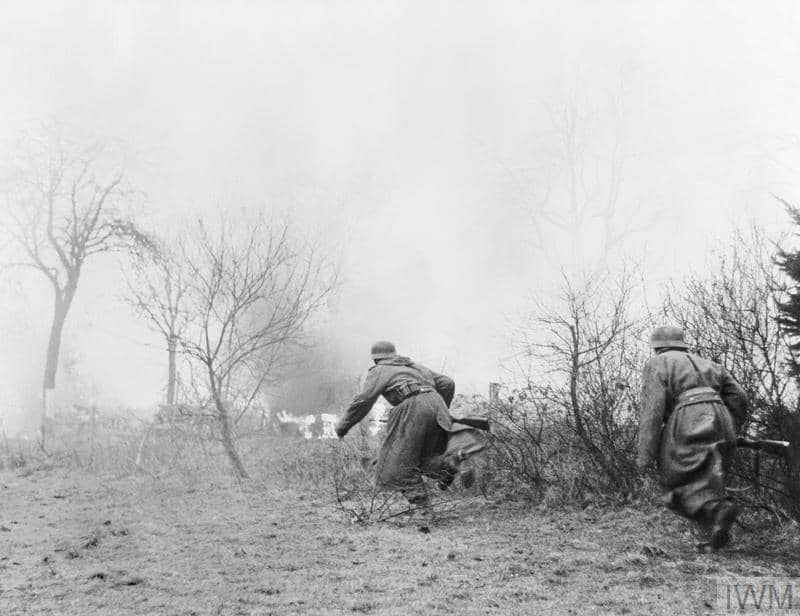
The German Counter Offensive 16-22 December 1944: Two German soldiers advance towards burning vehicles during the breakthrough in the Ardennes. © IWM EA 48006
Battle of the Bulge
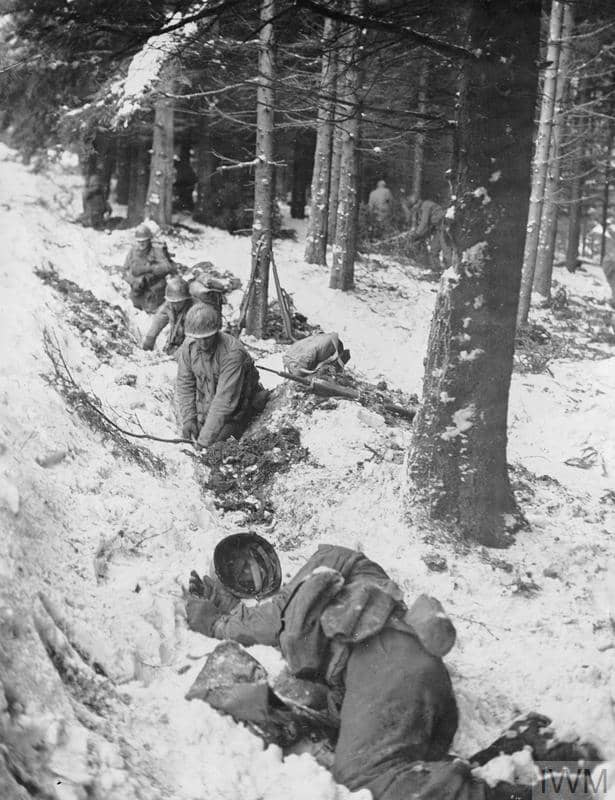
The Allied Counter Attack 25 December 1944 - 28 January 1945: American soldiers dig hasty foxholes in snow covered terrain as enemy fire opens up near Berismenil. A dead soldier lies in the foreground. © IWM EA 50367
Edwin Popken is a military historian with Masters in Modern Military History. He specialises in the post-Normandy period of World War Two in Northwestern Europe (August 1944 – May 1945). Edwin has led many tours in The Netherlands, Belgium, Eastern France and Belgium for the past 15 years, taking private individuals, veterans’ families, tourist groups, school groups and military groups to both well known and lesser known 1944-45 battlefields. In his work, he cooperates with museums and tour operators from around the world. Additionally, he is a member of both the International Guild of Battlefield Guides (accredited) and the Liberation Route Europe Guide Network. Apart from guiding, Edwin is also active as a historical consultant for media and tourism organisations and regularly gives lectures on different battles and topics within his research interest, both online and in the real world.
Guild of Battlefield Guides
International Guild of Battlefield Guides

Useful links

Copyright © 2023 bmmhs.org – All Rights Reserved

Images © IWM & NAM

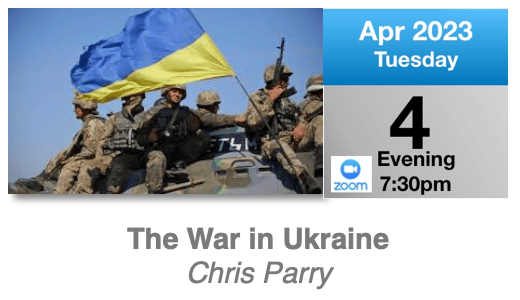
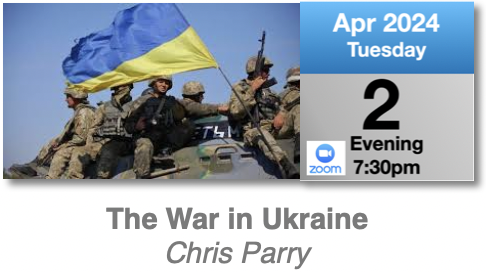
BMMHS Zoom Talk: The War in Ukraine: Tuesday 4th April 2023 7:30pm

Zoom War in Ukraine Chris Parry

Tuesday 4th April; 7:30pm

Click above for FAQs on BMMHS Zoom Talks

What has happened and is happening in Ukraine

Chris Parry
Chris Parry will review the Ukrainian and Russian military campaigns in Ukraine, highlight some of the salient lessons and forecast what the conflict might mean for the future of geopolitics and warfare.

After reading Modern History at Jesus College Oxford, Chris Parry spent 36 enjoyable, rewarding years in the Royal Navy as an aviator and warfare officer. He commanded the destroyer HMS GLOUCESTER, the Amphibious Assault Ship HMS FEARLESS, the UK’s Amphibious Task Group and the Maritime Warfare Centre. He also held five senior Joint and UK Ministry of Defence appointments, with responsibility for the strategic development, policy, effectiveness and operational deployment of all three armed forces out to 2030. 

As well as sailing every sea, he experienced regular operational tours and combat operations in Northern Ireland, the Gulf and the Falklands, where he rescued 16 SAS troopers from a glacier during a hurricane in South Georgia and disabled the Argentinian submarine SANTA FE. He was awarded the Guild of Air Pilots and Air Navigators Helicopter Rescue Award in 1983 and his Falklands War diary was published as the best- selling ‘Down South’ in 2012.

Nowadays, he runs his own strategic forecasting and trouble-shooting company, advising governments, leading commercial companies and banks about geo-political and strategic issues, future trends and systemic risk. The founding Chair of the UK’s Marine Management Organization, he is an internationally recognized authority on maritime issues, as well as in countering terrorism, criminality and unconventional conflict.

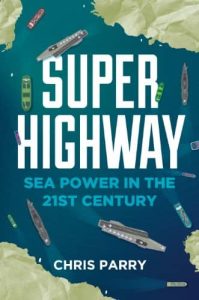
With a doctorate in organisational psychology, Chris is a visiting Fellow at Churchill College Cambridge and presents on strategic issues, geopolitics and risk at several universities in the UK (Oxford, Reading, Swansea), the US (Ivy League institutions and the US Naval War College) and elsewhere. He also teaches strategic leadership, risk management and organisational psychology within a number of corporates and at the UK Defence Academy and the Global Leadership Academy. He appears as a regular broadcaster and commentator in international and UK media and is an active author, most recently with the prescient Super Highway: Sea Power in the 21st Century’.

Rear Admiral Chris Parry, CBE
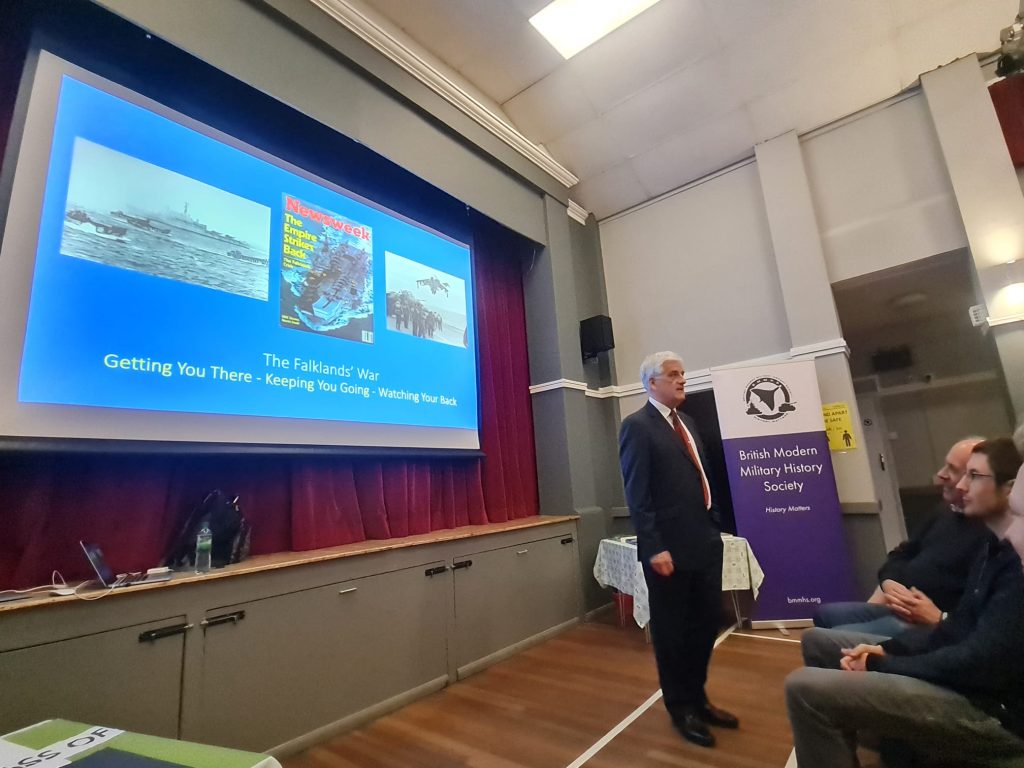
Chris gave us an excellent talk on his experiences in the Falklands War

Useful links

Copyright © 2023 bmmhs.org – All Rights Reserved

Images © IWM & NAM

The War in Ukraine – Chris Parry – Zoom Talk Booked

We are delighted to announce that Rear Admiral Dr Chris Parry has kindly offered to give a Zoom talk to BMMHS on Tuesday 4th April 2023 on The War in Ukraine.
 
What has happened and is happening in Ukraine.
 
Rear Admiral Dr Chris Parry will review the Ukrainian and Russian military campaigns in Ukraine, highlight some of the salient lessons and forecast what the conflict might mean for the future of geopolitics and warfare.
 
Chris Parry is well-known as a successful strategic forecaster, broadcaster and best selling author.  He was mentioned in dispatches during the Falklands War for disabling an enemy submarine and rescuing 16 SAS from a glacier in South Georgia. 
 
 
Last year Chris gave us an excellent talk based on historical and personal insights in which he described the difficulties and challenges the task force faced in the successful liberation of the Falkland Islands. 
Rear Admiral Chris Parry, CBE

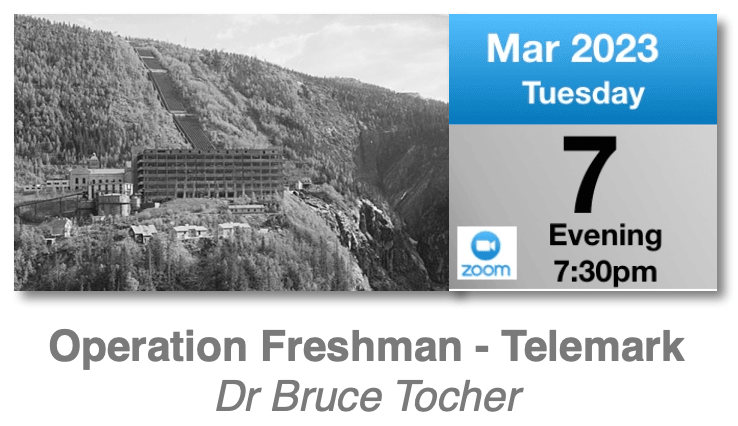
BMMHS Zoom Talk: Operation Freshman – The attack on Vemork Norsk Hydro Plant: Tuesday 7th March 2023 7:30pm

Operation Freshman

Tuesday 7th March; 7:30pm

Click above for FAQ's on BMMHS Zoom Talks

Operation Freshman - The attack on Vemork Norsk Hydro Plant

 Speaker: Dr Bruce Tocher

In July 1942, the British War Cabinet decided to try to destroy the heavy water production facilities at the Norsk Hydro facility near Vemork, Norway. The reason was the concern that the heavy water was being used as part of Nazi Germany’s program to develop a nuclear bomb.  After much discussion, it was decided to use specially trained Royal Engineers to carry out the task. They were to be flown to a landing site on the Hardanger Plateau, near the Vemork facility, using two Horsa gliders, each towed by a Halifax bomber. 
 
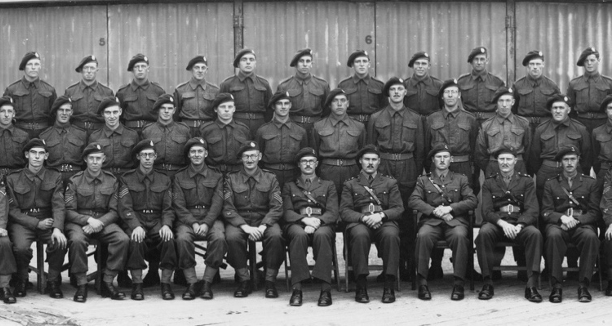
The Royal Engineers who took part were all volunteers.  Twenty men came from the 9th (Airborne) Field Company and ten from the 261 (Airborne) Field Park Company.
 
On the evening of November 19th, 1942, despite some misgivings regarding the weather over the objective, two Halifax bombers, each towing a Horsa Glider took off from RAF  Skitten, near Wick in NE Scotland. On board each glider were 15 Royal Engineers, and two pilots. Their top-secret mission was code-named Operation Freshman.  
 
Bruce will describe the events leading up to the decision to carry out the raid, personnel selection, the training involved, the raid itself, and the tragic outcome for the men who took part.
Operation Freshman
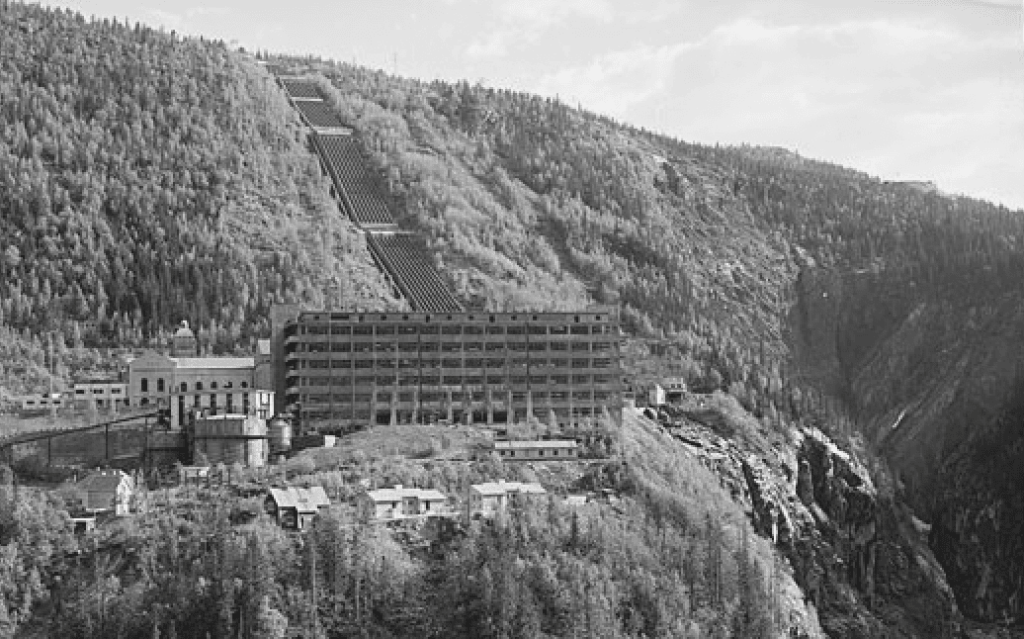
The Norsk-Hydro Plant
Operation Freshman
The Royal Engineers who took part were all volunteers.
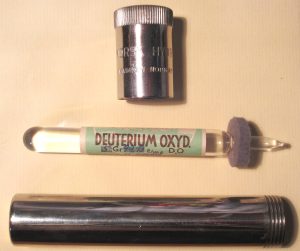
Heavy Water. Photo courtesy Nigel Parker

The operation Freshman Project

The successful attack on the Heavy Water facility at Vemork in Norway in February 1943 is rightly regarded as one of the most daring special forces raids of WWII. Over the years many books have been written about this raid, Operation Gunnerside, and it has been portrayed in films (The Heroes of Telemark, starring Kirk Douglas), television series (The Heavy Water War) and numerous documentaries. However, what is less well known is that there was an earlier attempt to destroy this target. This raid, Operation Freshman, which was launched on the 19th November 1942, failed tragically with 41 of the 48 soldiers and airmen involved losing their lives.

Several books have been published in which Operation Freshman is described, e.g., by Richard Wiggan (1986) and Jostein Berglyd (2005). The latter publication, in particular,  provided important new information based on interviews with some of the German soldiers who witnessed the events at Slettebø. In 2011, Ion Drew et al. published Silent Heroes which, in addition to the details of the raid, also provided an insight into the personal lives of the individual servicemen and their families. At the time of publication, however, details of only some of the men were available. Efforts are now being made to address this gap and to publish a new book on Operation Freshman which includes information on all of the men who took part in the mission. 

With this in mind, The Operation Freshman Project is trying to trace any surviving relatives or people who have stories or anecdotes concerning the servicemen who participated in the raid, or who were involved in the planning, training and support roles, and who may have photographs, letters or other documentary information relating to the servicemen. The idea is to tell the story of these incredibly courageous young men through their lives, and lives of their families, rather than more conventional histories which focus primarily on the events themselves.  Since the start of 2020, the project has managed to establish contact with relatives of 37 of the 48 soldiers and aircrew who took part in Operation Freshman. This effort is ongoing. 

A series of events to mark the 80th Anniversary of the raid has also been organized and the first of these, a Memorial visit by families of the soldiers and aircrew to the Freshman-related sites in Norway, took place in September. In total, 67 family members, representing 23 families attended.

In November, 2022, two public lectures were given, marking the 80th Anniversary. The first was held at the Royal Engineers Museum, Gillingham on the 17th of November), and the second, at the Army Flying Museum, near Andover, on the 22nd November.  This BMMHS Zoom online lecture is the third talk to mark  the anniversary.
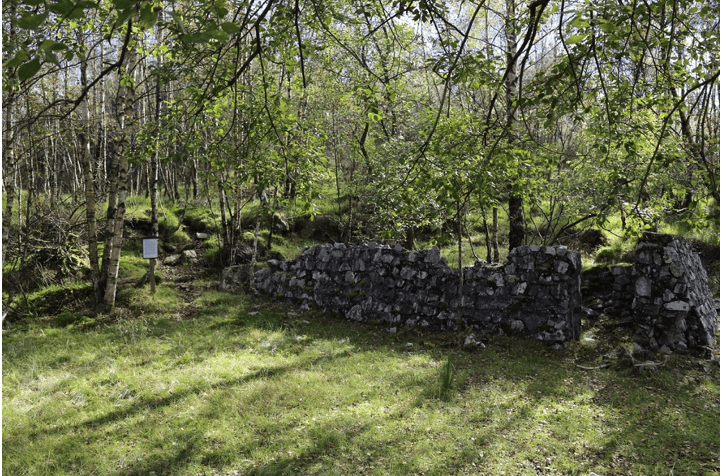
Operation Freshman
Original burial site of the 8 men killed when Glider A crashed in Fyljesdalen, Lysebotn, Norway. Photograph by Dr. Bruce A. Tocher
Operation Freshman 1942
Execution site of 14 British soldiers from Operation Freshman at Slettebø Camp, near Egersund, Norway. Photograph by Dr. Bruce A. Tocher
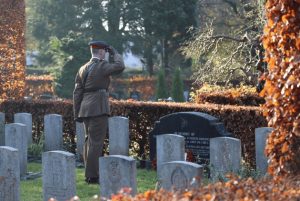
Operation Freshman attack on Norsk Hydro
Remembrance Sunday 2020, Commonwealth Grave Section, Eiganes Cemetery, Stavanger, Norway. Photograph by Dr. Bruce A. Tocher
Dr. Bruce A. Tocher has a PhD in Geology and was a University Lecturer in the UK for 10 years before moving to Norway to join their largest oil & gas company, Statoil. He spent 20 years there working in their Research & Development Division, before taking early retirement in 2016. He then spent two years as an International Trade & Investment Senior Executive with Scottish Enterprise before deciding to focus full time on military history, in particular Operation Freshman. Bruce has spent three years researching this topic with the aim of publishing a new book on the raid, hopefully in 2023.
Support our Paras logo
Our speaker's nominated charity for this event.

Useful links

Copyright © 2023 bmmhs.org – All Rights Reserved

Images © IWM & NAM