The Origins of the Schlieffen Plan – Additional Reading

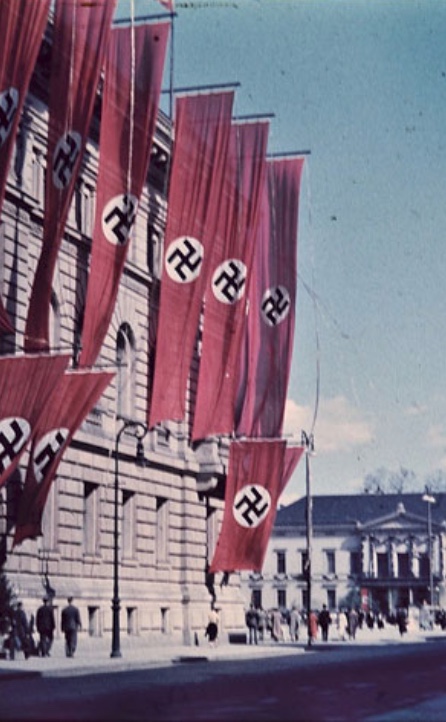
The Schlieffen Plan was a German military strategy for attacking France and Russia in World War I. The plan was developed by Field Marshal Alfred von Schlieffen and put into action in 1914 by his successor, Helmuth von Moltke. Following Ross’ excellent talk – attached is his additional reading list.
Additional Reading Material Following Ross' Zoom Talk

The Origins of the Schlieffen Plan

German War Planning up to July 1914

By Ross Beadle

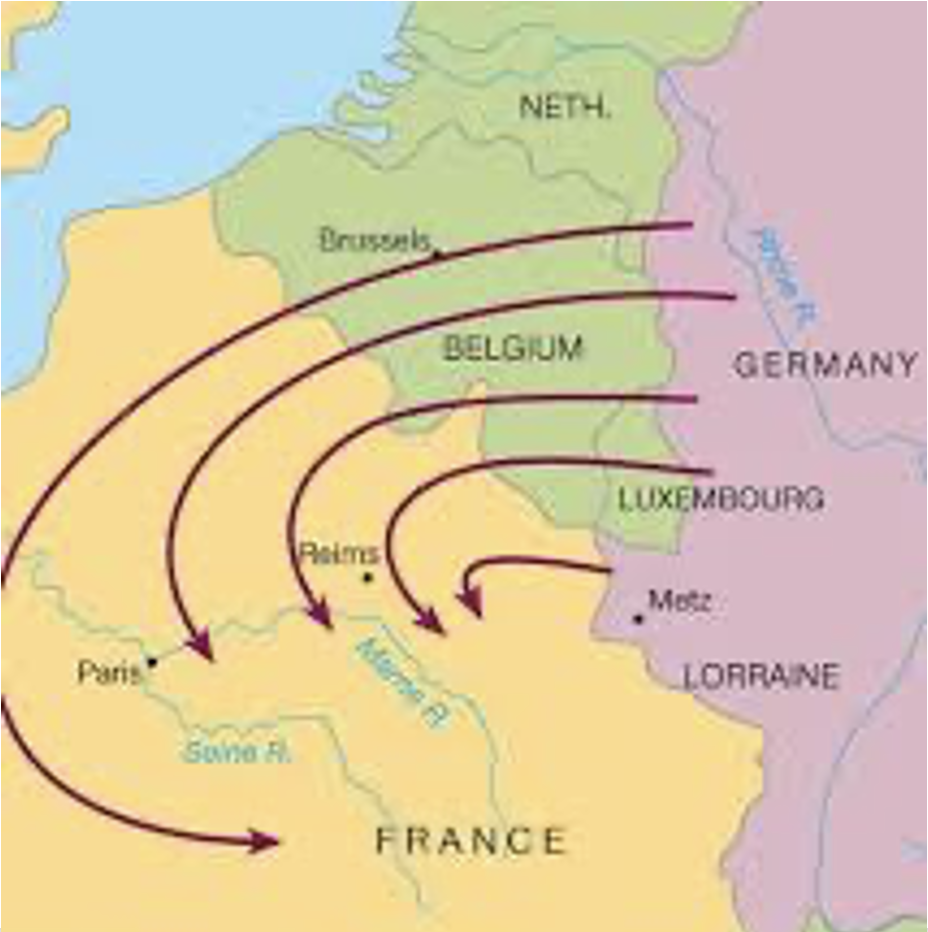
The Schlieffen Plan is a name given after the First World War to German war plans, due to the influence of Field Marshal Alfred von Schlieffen and his thinking on an invasion of France and Belgium, which began on 4 August 1914. Schlieffen was Chief of the General Staff of the German Army from 1891 to 1906. In 1905 and 1906, Schlieffen devised an army deployment plan for a decisive (war-winning) offensive against the French Third Republic. German forces were to invade France through the Netherlands and Belgium rather than across the common border.
Schlieffen Plan: German War Planning

Books & articles on the origins of Schlieffen and Moltke’s strategic plans

To see the reading list from Ross’ Zoom talk click here

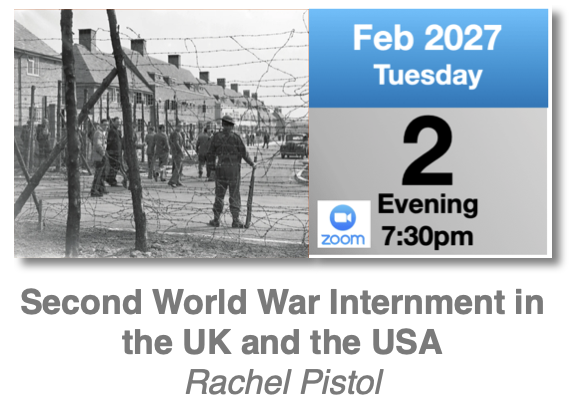
New Zoom Talk Booked for 2027 – Second World War Internment in the UK and USA

In this talk, Rachel Pistol will share insights from her book, Internment During the Second World War: A Comparative Study of Great Britain and the USA. She will explore how wartime fears led to the internment of civilians, many of them refugees in Britain and people of Japanese ancestry in the United States.

BMMHS Zoom talk Booked for February 2027

Second World War Internment in the Uk and USA Rachel Pistol
In this talk, Rachel will share insights from her book, Internment During the Second World War: A Comparative Study of Great Britain and the USA. She will explore how wartime fears led to the internment of civilians, many of them refugees in Britain and people of Japanese ancestry in the United States.

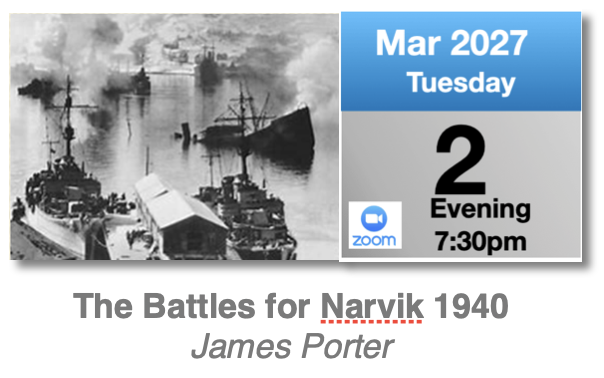
New Zoom Talk Booked for 2027 – The Battles for Narvik 1940

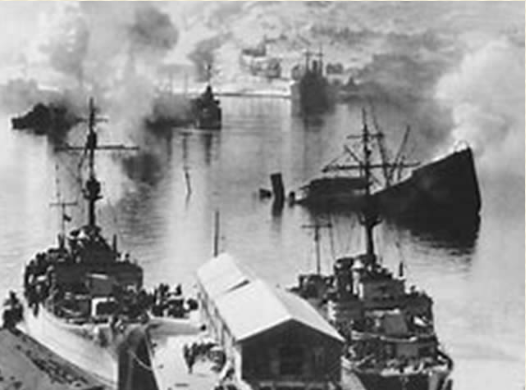
The Battles of Narvik unfolded between 9 April and 8 June 1940 during World War Two’s Norwegian Campaign. Germany swiftly captured Narvik using ten destroyers and mountain troops to secure its valuable ice-free iron-ore port. The Allies struck back with two naval engagements: on 10 April, five British destroyers launched a surprise dawn attack, sinking German destroyers but suffering losses themselves and claiming the first Victoria Cross of the war. Three days later, a larger British force including the battleship HMS Warspite destroyed the remaining German ships. A multinational Allied land force then recaptured Narvik by 28 May, marking Hitler’s first strategic defeat, though the campaign ended with Allied evacuation in early June.

BMMHS Zoom talk Booked for March 2027

The Battles for Narvik 1940 James Porter
With the last few months of the ‘Phony War’ slipping away, at the end of 1939, Britain, France on the one hand and Germany on the other both became interested in Norway which had been clinging to its neutral status. Both sides prepared an invasion – Germany to ensure iron-ore traffic from Sweden, provide U-Boat bases for the sea war against Britain, and to clear the flanks prior to the planned Blitzkrieg invasion of France. The Allies, for their part, wanted to prevent a German occupation Norway. The German invasion took place first, by a hairsbreadth! Unusually for Germany it was a seaborne invasion, and her various invasion ship groups all managed to avoid the Royal Navy’s blockade. One group of destroyers reached Narvik, landed troops which captured the town, but were then surprised by a small group of British destroyers which attacked Narvik sinking some German ships. The British destroyers were then intercepted by other German destroyers on their withdrawal from Narvik and some of the force were sunk. Before the surviving German destroyers could escape back to Germany, the battleship HMS Warspite plus destroyers sailed up the fjords and systematically annihilated the German destroyers which gallantly fought to the end. In just a few days Germany had lost half her destroyer force.

New Zoom Talk Booked – German Spies in Britain in WWII

Richard’s talk will focus on just a few of them: some failures, some successes — though not for Germany. How Britain’s MI5 ran all Germany’s WW2 spying operations in Britain for Britain’s benefit.

BMMHS Zoom talk Booked for November 2026

German Spies in Britain in World War II

By Richard Philips

German Spies in Britain in World War II
Richard’s talk will focus on just a few of them: some failures, some successes — though not for Germany. How Britain’s MI5 ran all Germany’s WW2 spying operations in Britain for Britain’s benefit.

New Zoom Talk Booked – Arnhem and the Cambridge Spies

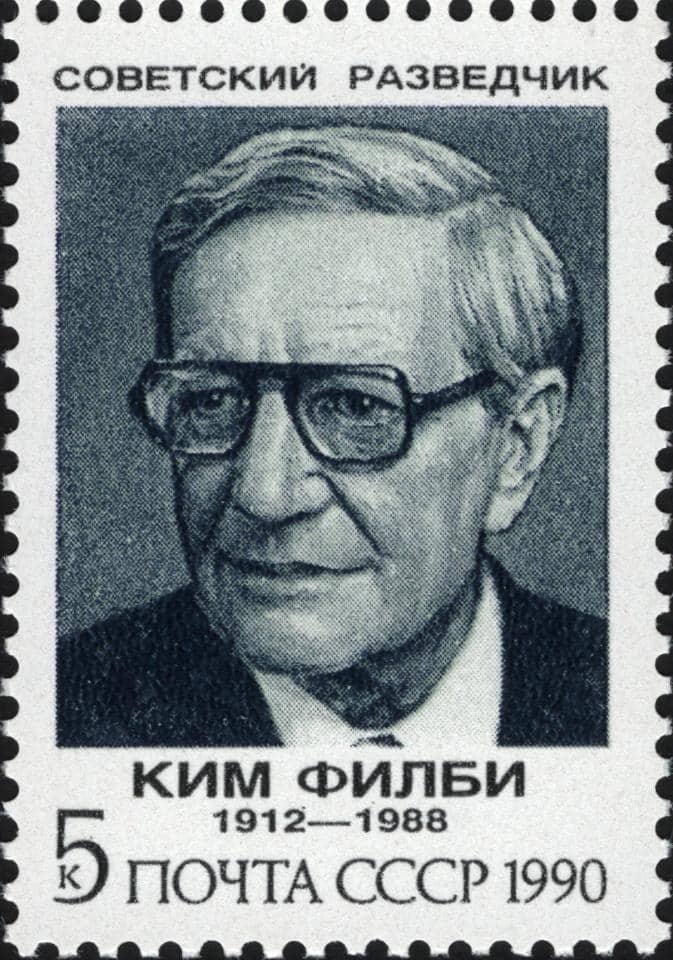
Arnhem and the Cambridge Spies reveals the hidden role of the Cambridge Spies in the Allied defeat during World War II. Robert’s talk tells the story of Operation Market Garden, a bold Allied operation that ultimately failed due to betrayal by spies working for the Russians. The traitors, one a supposed hero of the resistance and the other an English gentleman, caused the catastrophic defeat that led to the deaths of thousands of soldiers. Drawing from newly released archives, the book sheds light on the spies responsible for the failure of the operation and how their actions changed the course of the war and set the stage for the Cold War.

BMMHS Zoom talk Booked for July 2026

Arnhem and the Cambridge Spies

By Robert Verkaik

Arnhem and the Cambridge Spies reveals the hidden role of the Cambridge Spies in the Allied defeat during World War II. Robert’s talk tells the story of Operation Market Garden, a bold Allied operation that ultimately failed due to betrayal by spies working for the Russians. The traitors, one a supposed hero of the resistance and the other an English gentleman, caused the catastrophic defeat that led to the deaths of thousands of soldiers. Drawing from newly released archives, the talk sheds light on the spies responsible for the failure of the operation and how their actions changed the course of the war and set the stage for the Cold War.
Arnhem and the Cambridge Spies
Robert Verkaik
Arnhem and the Cambridge Spies
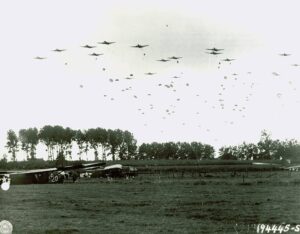
The 82nd Airborne Division drops near Grave. Source Wiki
Arnhem and the Cambridge Spies
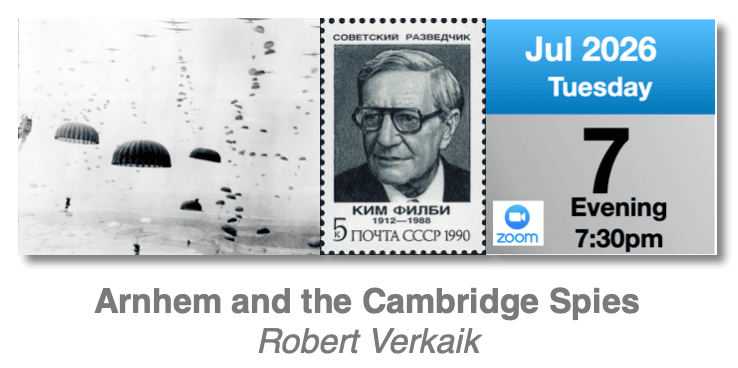
Kim Philby, as depicted on a Soviet Union stamp. Source Wiki
Arnhem and the Cambridge Spies
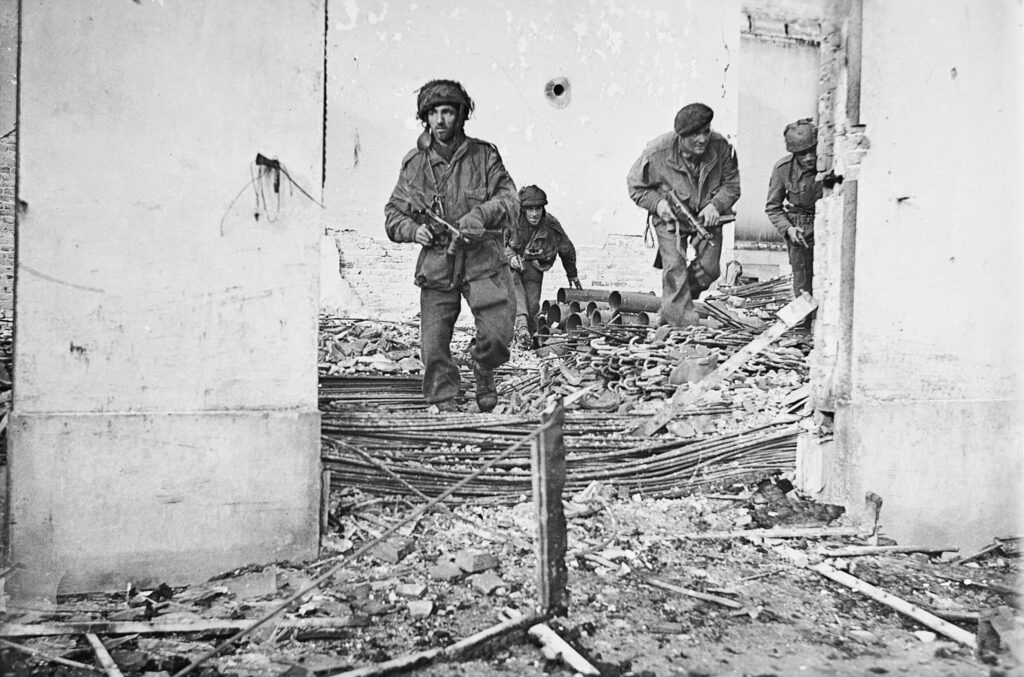
Four British paratroopers moving through a shell-damaged house in Oosterbeek to which they had retreated after being driven out of Arnhem. Source Wiki

New Zoom Talk Booked – The Origins of the Schlieffen Plan

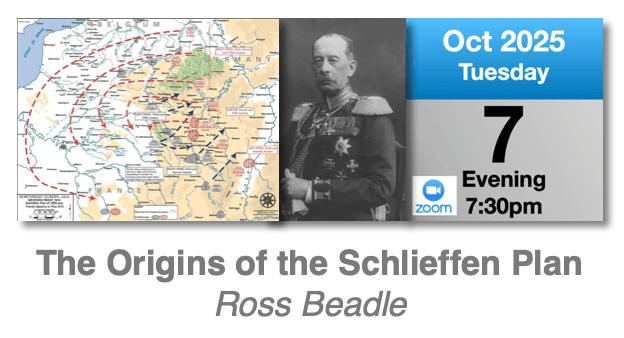
The Schlieffen Plan was a German military strategy for attacking France and Russia in World War I. The plan was developed by Field Marshal Alfred von Schlieffen and put into action in 1914 by his successor, Helmuth von Moltke.

BMMHS Zoom talk Booked for October 2025

The Origins of the Schlieffen Plan

German War Planning up to July 1914

By Ross Beadle

The Schlieffen Plan is a name given after the First World War to German war plans, due to the influence of Field Marshal Alfred von Schlieffen and his thinking on an invasion of France and Belgium, which began on 4 August 1914. Schlieffen was Chief of the General Staff of the German Army from 1891 to 1906. In 1905 and 1906, Schlieffen devised an army deployment plan for a decisive (war-winning) offensive against the French Third Republic. German forces were to invade France through the Netherlands and Belgium rather than across the common border.
Schlieffen Plan: German War Planning
The Origins of the Schlieffen Plan
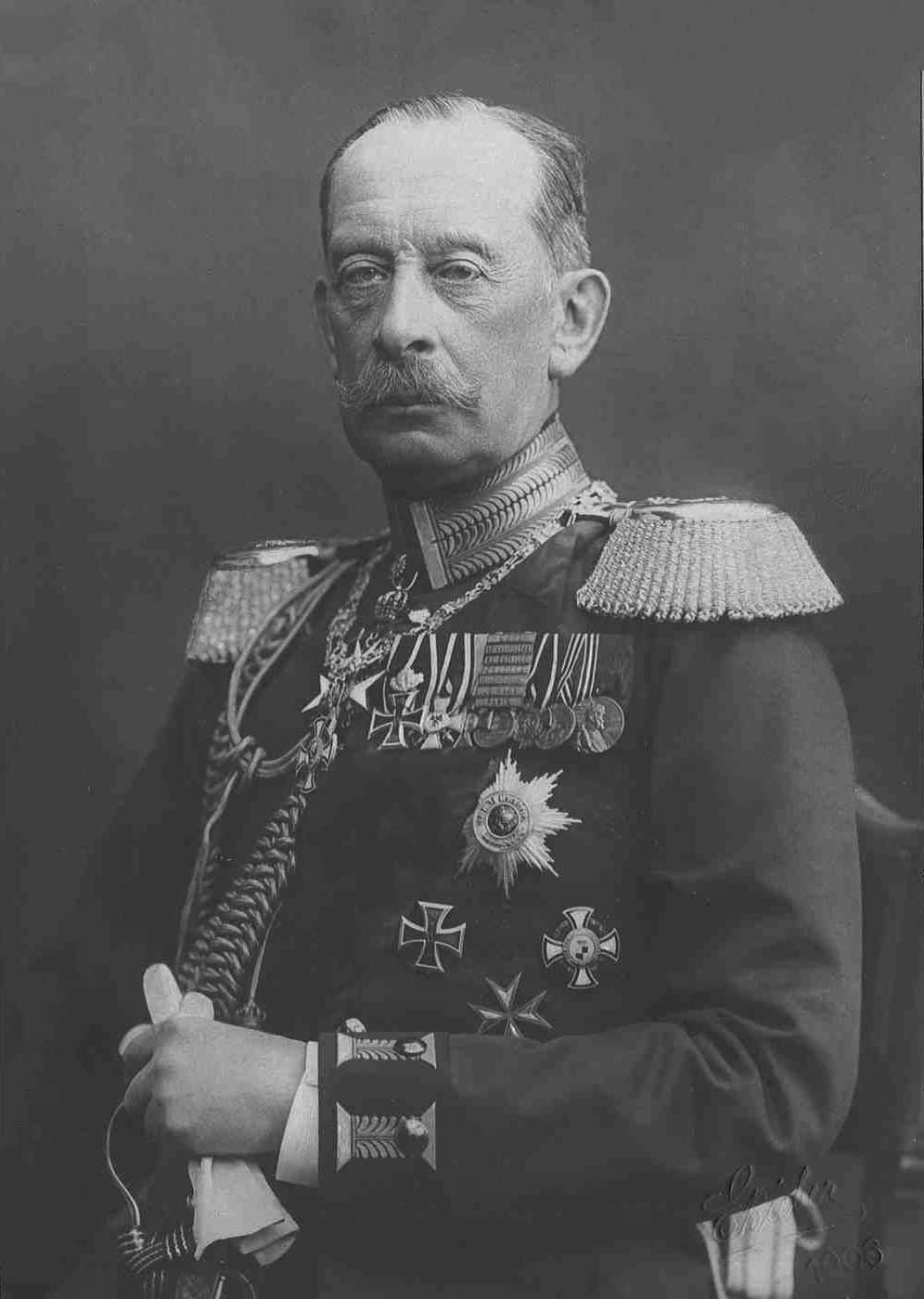
Alfred von Schlieffen. Source Wiki

New Zoom Talk Booked – Operation Nimrod – The SAS in Action

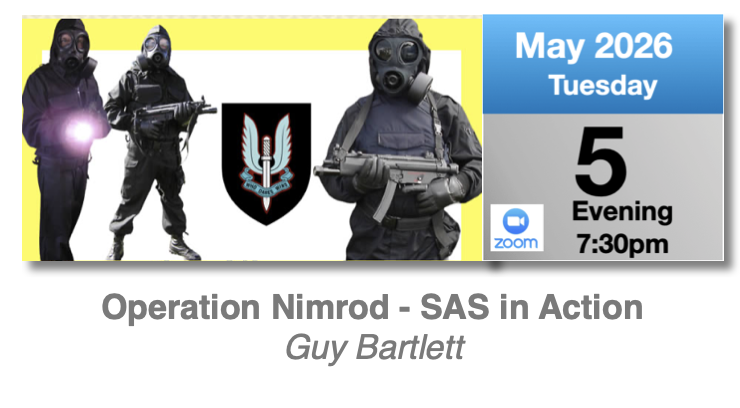
On May 5, 1980, the Special Air Service (SAS) made their public debut under the direct command of Prime Minister Margaret Thatcher. Their mission was to rescue hostages held captive within the Iranian Embassy at Princes Gate, London, by six armed terrorists.

BMMHS Zoom talk Booked for May 2026

Operation Nimrod - The SAS in Action

By Guy Bartlett

On May 5, 1980, the Special Air Service (SAS) made their public debut under the direct command of Prime Minister Margaret Thatcher. Their mission was to rescue hostages held captive within the Iranian Embassy at Princes Gate, London, by six armed terrorists.
 
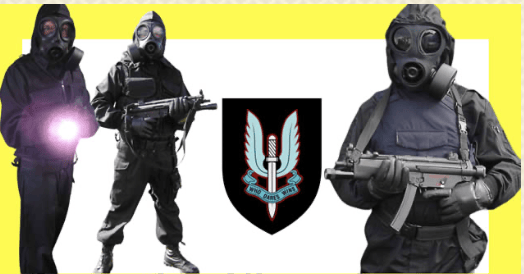
The events of that day, broadcast live on national peak-time television, became a defining moment in history. The exploits of the SAS troopers, depicted in black assault suits, as they scaled balconies, planted explosives, and abseiled into the unknown, have left an indelible impression on the memories of those who witnessed them.
 
Join military historian Guy Bartlett as he delves into the intricate details leading up to the raid, exploring the meticulous gathering of intelligence, and examining the harrowing circumstances that nearly resulted in a catastrophic outcome.
 
This mission solidified the SAS’s reputation as one of, if not the, premier Special Forces, cementing its status as an elite force in the annals of military history.
Operation Nimrod SAS in Action
Guy Bartlett

New Zoom Talk Booked – River Kwai Railway – The True Story

After a brief summary of the disastrous Malayan Campaign and the fall of Fortress Singapore, the talk covers the urgent need for the railway by the Japanese, its construction, operation, and the partial post-war revival of train services.

Actual events are then contrasted with the fiction of the 1957 acclaimed film ‘Bridge on the River Kwai’, a production both award-winning but also controversial in several respects.

BMMHS Zoom talk Booked for April 2026

River Kwai Railway - The True Story

By Paul Whittle

After a brief summary of the disastrous Malayan Campaign and the fall of Fortress Singapore, the talk covers the urgent need for the railway by the Japanese, its construction, operation, and the partial post-war revival of train services.

Actual events are then contrasted with the fiction of the 1957 acclaimed film ‘Bridge on the River Kwai’, a production both award-winning but also controversial in several respects.

River Kwai Railway The True Story
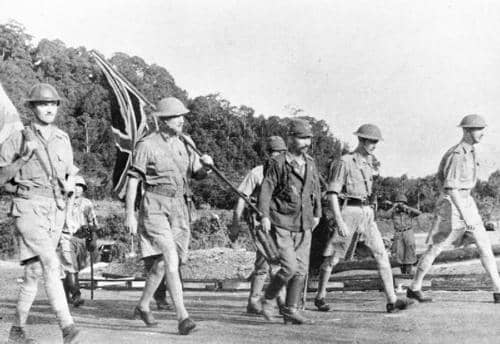
Lieutenant-General Percival and his party carry the Union flag on their way to surrender Singapore to the Japanese. Left to Right: Major Cyril Wild (carrying white flag) interpreter; Brigadier T. K. Newbigging (carrying the Union flag) Chief Administrative Officer, Malaya Command; Lieutenant-Colonel Kazushi Sugita; Brigadier K. S. Torrance, Brigadier General Staff Malaya Command; Lieutenant General Arthur Percival, General Officer Commanding, Malaya Command. Source IWM

New Zoom Talk Booked – Berlin – Divided City

Richard’s talk will provide a detailed look at the Berlin Airlift, the disastrous superpower summits, the Berlin crises and the role of Berlin in the Cold War itself.

BMMHS Zoom talk Booked for October 2026

Berlin - Divided City

By Richard Gibbons

Richard’s talk will provide a detailed look at the Berlin Airlift, the disastrous superpower summits, the Berlin crises and the role of Berlin in the Cold War itself.
Berlin Divided City
Berlin Divided City
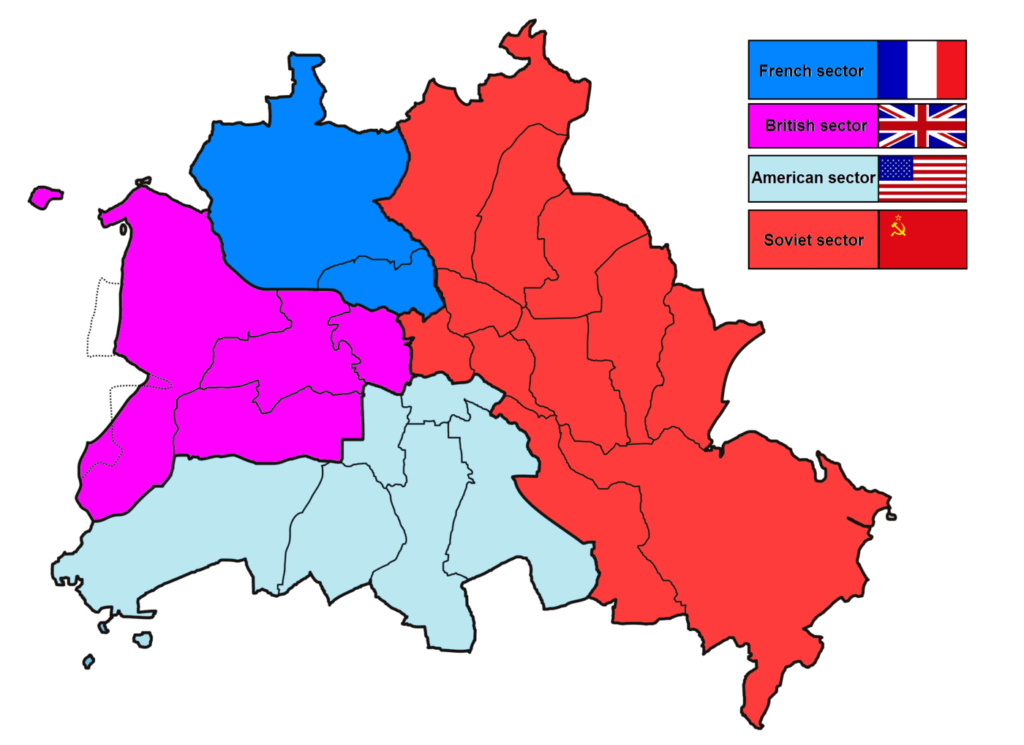
The four occupation sectors of Berlin. West Berlin is in light blue, dark blue, and purple, with several exclaves shown. Borough borders are as of 1987. Source Paasikivi. Wiki
Berlin Divided City
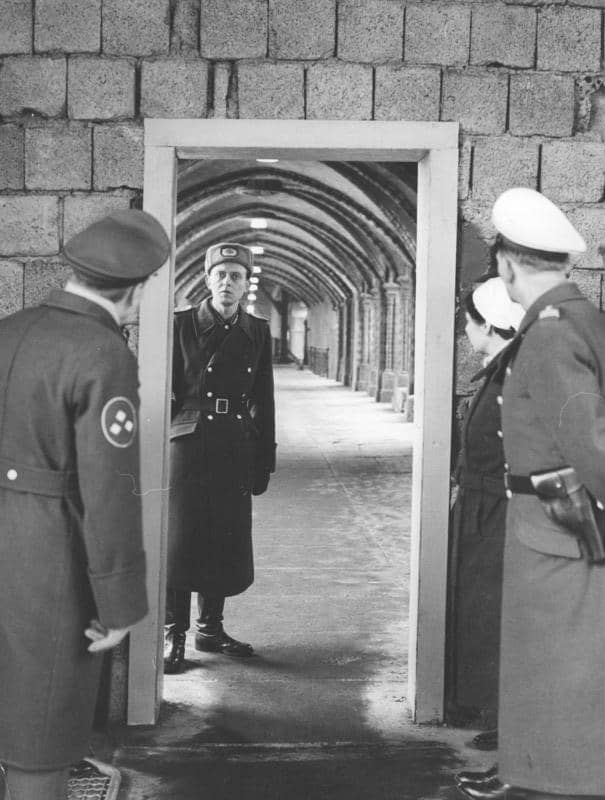
West German police awaiting an eastern border controller at the opening of a new pedestrian border crossing. View into the vaults of Oberbaumbrücke, 21 December 1963. Source Bundesarchiv B 145 Bild-P086547, Wiki
Berlin Divided City
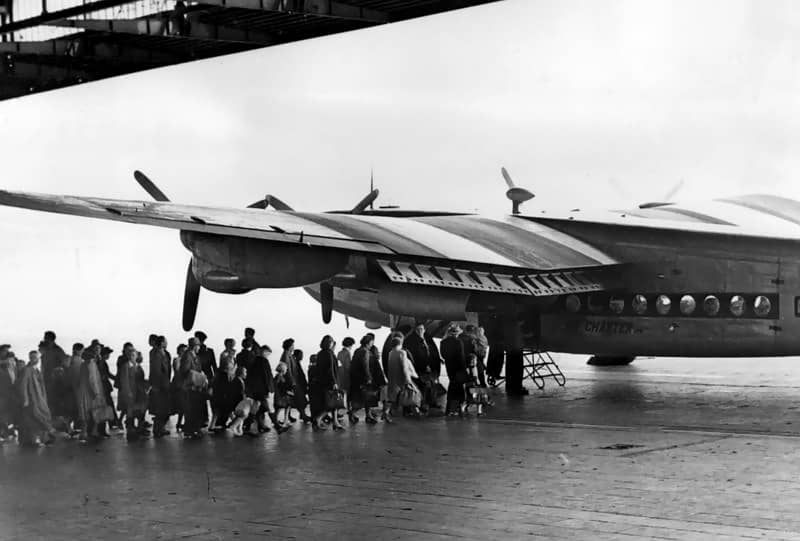
Eastern refugees boarding an Avro York at Tempelhof Airport to fly into West Germany, 1953. Bundesarchiv B 145 Bild-P004762 Wiki
Berlin Divided City
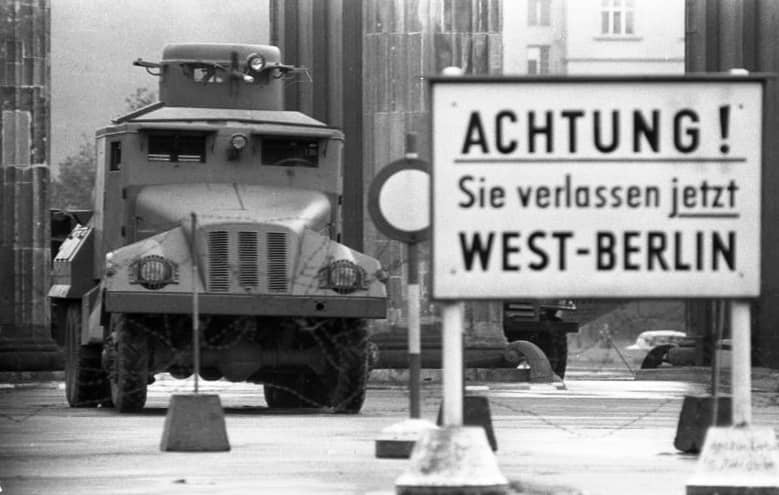
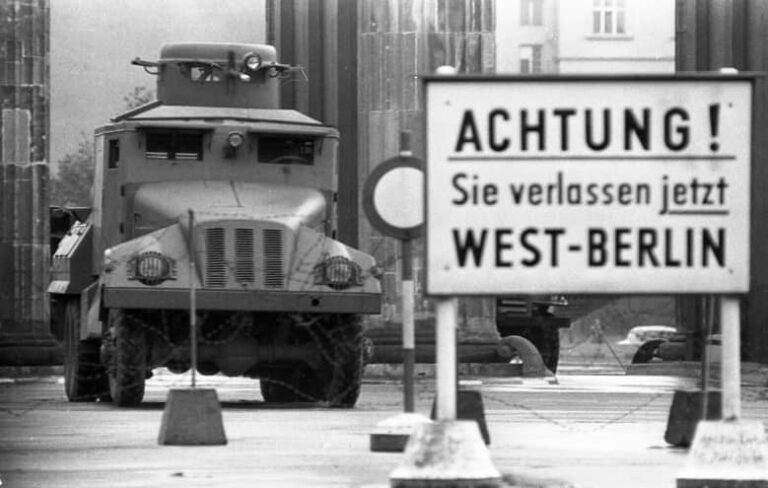
East German water cannon vehicle directed at western protesters in front of the Brandenburg Gate, August 1961. Source: Bundesarchiv Bild 173-1282 Wiki
Berlin Divided City
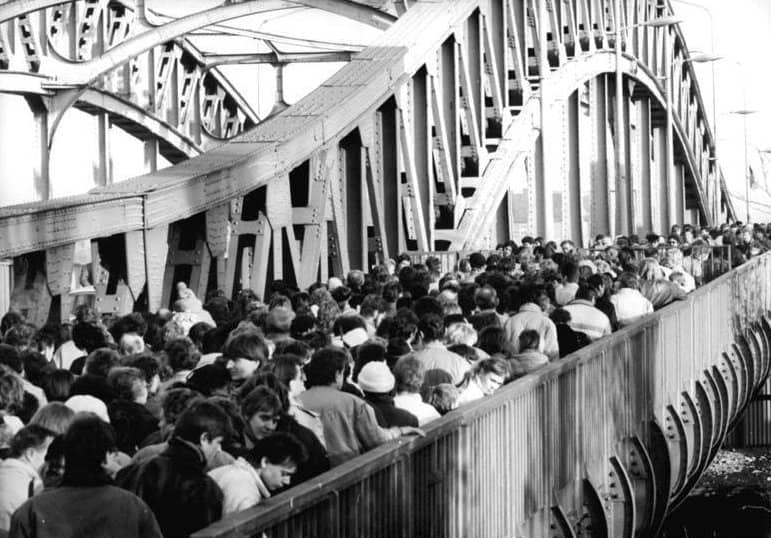
East Berliners, just having passed the now-open eastern checkpoint Bornholmer Straße, passing Bösebrücke into the French sector of Berlin on 18 November 1989. Bundesarchiv Bild 183-1989-1118-018 Wiki

New Zoom Talk Booked – 1983 The World At The Brink

Following on from Taylor’s excellent Zoom talk on The Army That Never Was he has Kindly agreed to give another Zoom talk to BMMS next year on 1983 The World At The Brink.
Taylor’s talk is a chilling reminder of how close the world came to nuclear destruction during the tense days of the Cold War. The events of 1983 serve as a stark warning of the dangers of miscalculation, miscommunication, and brinkmanship in international relations. The story of Able Archer 83 serves as a cautionary tale of the potential consequences of escalating tensions and the importance of diplomacy and communication in preventing catastrophic conflict.

BMMHS Zoom talk Booked for February 2026

1983 The World At The Brink

By Taylor Downing

1983 was a supremely dangerous year – even more dangerous than 1962, the year of the Cuban Missile Crisis. In the US, President Reagan massively increased defence spending, described the Soviet Union as an ‘evil empire’ and announced his ‘Star Wars’ programme, calling for a shield in space to defend the US from incoming missiles.
 
Yuri Andropov, the paranoid Soviet leader, saw all this as signs of American aggression and convinced himself that the US really meant to attack the Soviet Union. He put the KGB on alert to look for signs of an imminent nuclear attack. When a Soviet fighter jet shot down Korean Air Lines flight KAL 007 after straying off course over a sensitive Soviet military area, President Reagan described it as a ‘terrorist act’ and ‘a crime against humanity’. The temperature was rising fast.
 
Then at the height of the tension, NATO began a war game called Able Archer 83. In this exercise, NATO requested permission to use the codes to launch nuclear weapons. The nervous Soviets convinced themselves this was no exercise but the real thing.
 
This is an extraordinary and largely unknown Cold War story of spies and double agents, of missiles being readied, of intelligence failures, misunderstandings and the panic of world leaders. With access to hundreds of extraordinary new documents just released in the US, Taylor Downing is able to tell for the first time the gripping but true story of how near the world came to the brink of nuclear war in 1983.
Taylor Downing 1983
Taylor Downing
Taylor Downing