History reloaded as AI puts ethics in the firing line
Autonomous and semi-autonomous platforms are reshaping modern force structure and accelerating debates about command, accountability and ethics, writes Dr Linda Parker

Autonomous and semi-autonomous platforms are reshaping modern force structure and accelerating debates about command, accountability and ethics, writes Dr Linda Parker

Greenland became a strategic prize during the Second World War, when the United States occupied the island to block Nazi advances, shield Atlantic convoys and gather the meteorological intelligence that helped time D-Day. It later formed the backbone of NATO’s Arctic early-warning system during the Cold War. Trump’s latest claim that America “has to have” Greenland has revived that history, alarmed Denmark and unsettled the alliance. Yet Greenland’s future remains a matter for Greenlanders, not Washington, writes historian Dr Linda Parker

On Sunday 14 February 1942, Lt Gen Percival GOC Malaya Command travelled from is underground headquarters to an abandoned car factory. He was ushered into a meeting room where he met General Yamashita from the Imperial Japanese Army. 70 days previously 30,000 Japanese had landed on the east coast of Malaya and Siam and fought a blistering campaign against 85,000 Indian, Gurkha, Malay, Chinese, British and Australian troops. That afternoon, Percival would agree to surrender. Join Mike Tickner to learn more about the greatest and most humiliating defeat British Army’s history.

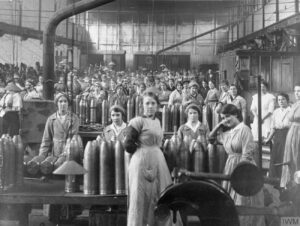
The history of Britain’s munitions industry during World War I details initial shortages due to an expanding army, the growth of private and state factories, and new industrial regulations. It highlights resource challenges, workforce changes, including increased women’s participation, and examines shifting government-labour relations amid industrial unrest and post-war uncertainty.

“Behind Enemy Lines” by Nick Brazil highlights the evolution and role of Special Forces in military history. It focuses on units like the Long Range Desert Group and the Special Air Service during World War II, detailing their covert operations, innovations, and impact on the war. Nick’s article also covers their controversial missions and their legacy in modern military strategy.

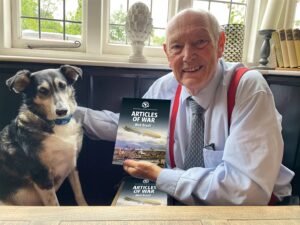
The concept and inspiration of this new book, Articles of War, came from historian and BMMHS supporter Nick Brazil. Nick, ably assisted by his faithful and loveable dog Harold, has regularly researched and written numerous articles for the BMMHS website. These articles have centred on some of the more obscure and lesser-known aspects of military and international conflict. All fascinating and enlightening, they range from the bizarre and incredible to the most frightening and dangerous. Nick has kindly offered to donate the royalties from Articles of War to BMMHS/Veterans with Dogs, and we thank him for this most generous offer.

While much popular attention has been given to the Battle of Isandlwana and the Defence of Rorke’s Drift, the events of the final engagement of the Zulu War, at King Cetshwayo’s capital of Ulundi, are often overlooked.
Despite earlier victories in the conflict, the Zulu army was ultimately defeated on 4 July 1879 at the Battle of Ulundi. This resulted in the fall of the famous dynasty, the division of this part of Africa, and widespread heartbreak for years to come.
In this revealing talk, Michael Nicholas will focus on the events leading up to and including the Battle of Ulundi, as well as its tragic aftermath.

George Alfred Gregson, known as Alf, wrote his memoirs of his experiences during World War I, which were discovered by his grandsons after his death. Alf, a Lancashire man, served in the Lancashire Fusiliers and fought in Gallipoli and the Somme. The memoirs offer a unique perspective on the war, highlighting Alf’s running abilities and compassion for others.
This afternoon talk took place on Tuesday 23rd June. Jerry Cockeram opened with an update on BMMHS during the lockdown and also the progress of Operation Bookworm.
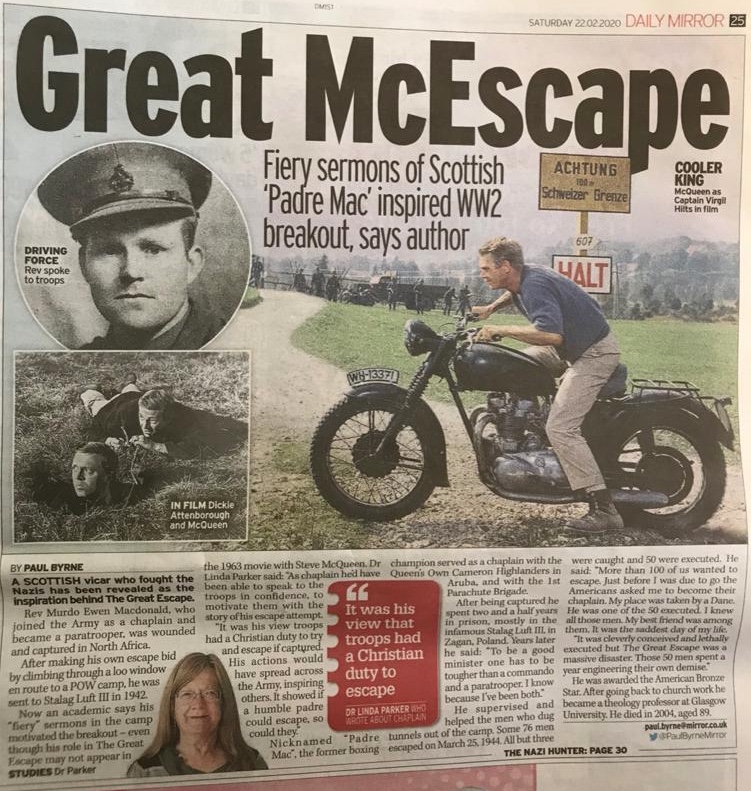
Then Linda Parker gave an interesting talk on Airborne Padres in the Second World War which was well received by the audience of 27 people. It was nice to see some familiar faces and some new ones too and there was also an interesting Q&A session at the end. The talk went well with only a few minor technical glitches, which we are working to overcome. Feedback from members on the “Zoom” was enthusiastic and appreciative, with most people willing to make a donation or contribution towards the cost of future Zoom talks.
Ice Stations to Action Stations by Linda Parker.
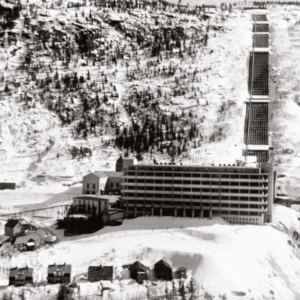
This talk tells the story of the “curious little war” that took place on the Arctic Archipelago of Svalbard 1941-1945. The island of Spitsbergen was the site of confrontation between the allies and Germany as the weather stations both sides attempted to maintain there were strategically important for the course of the war in Europe, Including D day.
The men involved on both sides had been prominent polar explorers in the interwar years, and Alexander ‘Sandy’ Glen in particular used the skills he had acquired in his pre-war exploration of the archipelago in the game of cat and mouse that took place as each side sought to obtain the advantage of obtaining regular weather forecasts and knowledge of Atlantic and Arctic conditions.
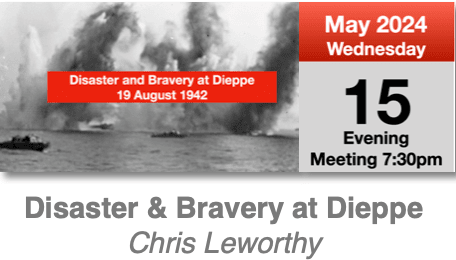
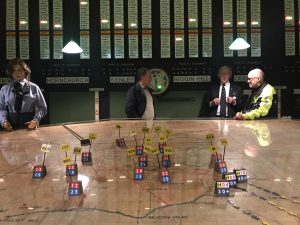
The BMMHS had a successful visit yesterday to the Battle of Britain Bunker the former underground operations room used by No 11 Group Fighter Command RAF during WW2. Fighter aircraft operations were controlled from here throughout the war but most noteably during the Battle of Britain and on D-Day. There is also a new visitors centre opened in March 2018. The tour guide Chris Leworthy was excellent and the day was enjoyed by all. A highly recommended place to visit.
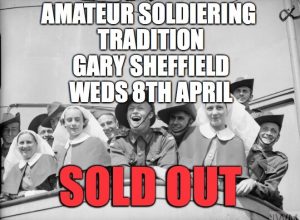
The Main Hall, will be redecorated at the time of this April talk by Gary Sheffield. Gary’s talk will go ahead in the next door Function Room. However this has halved our capacity to 50 people for this one talk and all seats have now been reserved. Apologies to those who had hoped to attend. Normal service in the refurbished Main Hall will resume in May for all future talks.
BMMHS is pleased to announce that we have appointed Linda Parker as our Schools Liaison Officer. Linda’s role now includes a focus on establishing links with local schools and colleges with a view to broadening our audiences into a younger generation.
Please if you can provide us with contacts and advice in this area then contact us via [email protected]
Our previous talks have been sold out but thanks to the help from both Jenny & the Yoga team, we are now moving into the Larger Main Hall, in Woodcote Village Hall.
In order to secure a seat for future events, please contact us on [email protected] and we will confirm availability.
Watch this space!
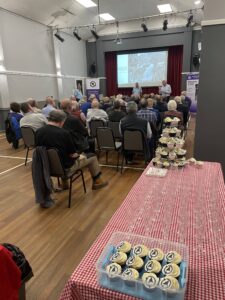
An excellent talk followed by a book signing by naval author, Philip K Allan, author of the Alexander Clay series. Following a lifetime’s love of the wooden warships of the Napoleonic era, Philip took a packed house through a fascinating presentation of what it was like to live and work in the navies of the day.

Last night saw the first event of the BMMHS, with a fascinating talk by local historian Bill King, assisted by his wife Flora, on how Britain intended to repel a German invasion in 1940 through the use of ‘underground’ resistance fighters.
Copyright © 2026 bmmhs.org – All Rights Reserved