Battle of the Arctic: The Maritime Epic of World War Two

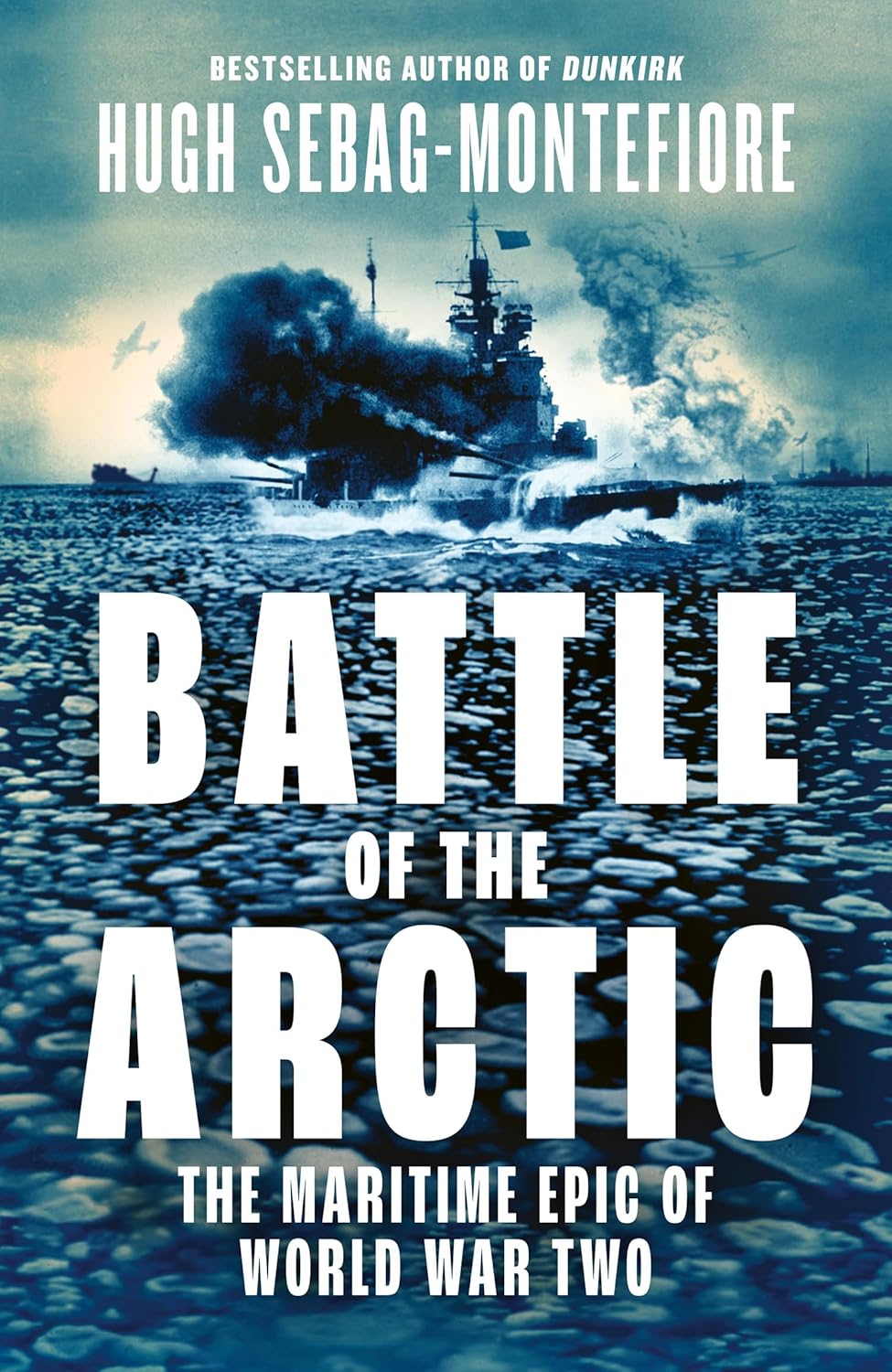
Historian Hugh Sebag-Montefiore’s Battle of the Arctic: The Maritime Epic of World War Two is published in paperback on 5 November (£12.99, William Collins). This compelling account of the Arctic convoys highlights the extraordinary courage and endurance of Allied sailors facing brutal weather, relentless German attacks, and unimaginable hardship in one of the Second World War’s most overlooked campaigns.

Book News

Battle of the Arctic: The Maritime Epic of World War Two.

Hugh Sebag-Montefiore

Readers might like to hear about the paperback edition of historian Hugh Sebag-Montefiore’s Battle of the Arctic: The Maritime Epic of World War Two. It is to be published by William Collins price £12.99 on 5th November. The hardback was published near the end of last year.

As the book’s title implies, Battle of the Arctic, about the Arctic convoys’ carrying arms to Russia during WW2, tells a unique story. Progress through the Barents Sea, north of Norway, was complicated by terrific storms, snow, ice, and fog, not to mention whales and Arctic mirages.

The action unfolded as Allied naval and merchant seamen, airmen, submariners, soldiers and intelligence officers delivered on their countries’ promises to take the aid to Russia notwithstanding the German attempts to hunt them in their aircraft, U-boats and surface fleet spearheaded by the warships Tirpitz and Scharnhorst. When ships were attacked, and went down in seas so cold that a man could die after five minutes of immersion, it triggered events reminiscent of the do-or-die moments during the sinking of the Titanic. Men perished one by one in lifeboats, and as castaways on deserted Arctic islands where they were stalked by polar bears. Frostbitten and wounded survivors ended up in primitive Russian hospitals where amputations were carried out without anesthetics. Others, while stranded for months in the communist state they were aiding, experienced the murky worlds of the NKVD, and the gulag, as well as famine and prostitution.

Most readers will have heard about the heroism exhibited by our seamen during the Battle of the Atlantic. This book shows comparable but undeservedly unappreciated bravery in a different theatre.

Review of Battle of the Arctic by Linda Parker

Battle of the Arctic. Hugh Seabag-Montefiore

William Collins: London, 2025     ISBN-13: ‏:   978-0008335779

816 pp, black and white illustrations.

Britain has a long history of exploration and seafaring in the Arctic Ocean, with may tales of courage, disaster and tragedy. In this book the author had described the fate of ships in the Second World War Arctic Convoys which equals any in the history of Arctic exploration, with the perils of sinking shipwreck and Ice being faced in maritime battle conditions previously   never encountered.

In the Summer of 194 Russia was desperate for help in the shape of a second European front or substantial military aid. An agreement between Moscow and London on 12th July had been practical sign that Britain and the United States were committed not to let Russia fight alone.

In view of Stalin’s repeated demands for second front in Europe and his grumbles about the volume of aid being delivered it was crucial that the promised aid reached Russia as quickly and efficiently as possible, mainly by the Arctic convoys.

Hugh Seabag-Montefiore  has written  a new history of the convoys  in which he describes in detail the experiences of the British Merchant Navy, the US Merchant Marine  and  the Royal Navy as they fought German aeroplanes, U boats and surface ships hampered by atrocious Arctic weather in efforts to deliver the promised military aid . Using new sources and  detailed research, the book is an exhaustive ,and sometimes exhausting at over 800 pages, description of the complex story of the Arctic convoys

The narrative is largely chronological but concentrates on the actions which show the changing strengths and tactics of both sides as they reacted to changing circumstances. The controversial fate of the PQ17 is covered in detail with some fresh insights and incisive analysis by the author. The decision to provide the convoys with increased cover in the aftermath of the PQ17 convoy improved the chances of subsequent convoys.

Detailed research into new sources both primary and published from Norway, Germany, Russia and America have allowed the story to be told through the words of the men on the convoys and their hunters. We follow the many tales of death and injury on sinking ships and some miraculous escapes and rescues. Especially vivid and dramatic are the accounts of what it was like to be in small lifeboats in the Arctic Sea and the extreme difficulty in surviving in those conditions, retold with some shocking and gruesome details.

When the injured and shipwrecked sailors arrived at Kola inlet their troubles were not over, as they found themselves in hospitals with little staff, medication or equipment conditions in the hospitals were grim. The Russian Doctors answer to severely frost bitten limps was to amputate them, often without anaesthetic. They also faced hostility and sometimes violence from Russian citizens. (here the chap who was sunk, rescued and sent home to be sunk again)

The description of two of the ships in the unprotected F8 convoy who were sunk in Nov 1942 is worthy of the most dramatic and heroic stories of Arctic survival. The story of the Russian ship Dekabrist is from the testimony of the ship’s female doctor, Ndezdah Natalich, who describes their ordeal of surviving in a lifeboat until being shipwrecked on Hope Island at the mercy of the winter weather and polar bears. The injured captain was rescued by a German U-boat in July 1943 but the other 2 survivors were eventually rescued in October 1943. The Chulmleigh ran aground on Spitsbergen in November 1942 and faced similar conditions of cold and starvation until the 9 survivors were rescued by Norwegian troops in July 1943.

The plentiful maps add interest and diagrams of the way in which the convoys were set up and organised are helpful to the non-naval reader.

There is plenty to appeal in the book, which contains human interest, analysis of the tactics, both successful and mistaken, and movements of the convoys alongside the context of the strategic and political background.  It is highly recommended as a splendid and possibly definitive addition to the history of the brave men who served on the Arctic Convoys.

Dr Linda Parker

About the Author - Hugh Sebag-Montifiore

Hugh Sebag-Montefiore was a barrister before becoming a journalist and historian. He has written for the Sunday Times, Sunday Telegraph, Observer, Independent on Sunday, and Mail On Sunday. His first book Kings On The Catwalk: The Louis Vuitton and Moët-Hennessy Affair was published in 1992.

Bletchley Park, the backdrop to much of the action in his first history book Enigma: The Battle For The Code (published in 2000), used to be owned by Hugh’s great great grandfather, Sir Herbert Leon. Hugh’s father, Stephen, used to stay at Bletchley Park every Christmas, at a time when the house was humming with servants, and when the garden was tended by no less than forty gardeners. During the run up to the 70th anniversary of the capture of the Enigma codebooks from German U-boat U-110, Hugh was commissioned by Bletchley Park to supply the text and photos for an exhibition describing the capture.

The location for the climax of his next book, Dunkirk: Fight To The Last Man(published in 2006), also summoned up forgotten memories within Hugh’s family. His cousin Denzil Sebag-Montefiore lost his precious ivory backed hair brushes engraved, with his initials, which had to be thrown into the sea at Dunkirk, along with other heavy items in his backpack, so that he would be more buoyant. He eventually made it back to England, after being heaved into one of the boats ferrying British soldiers out to the larger ships waiting off shore. Another cousin, Basil Jaffé, passed the time waiting to be rescued from the shallows near one of the Dunkirk beaches by reading his miniature edition of Shakespeare’s plays.

The Western Front, where the World War 1 action portrayed in his most recent book Somme: Into The Breach took place, has a mixed reception when it is discussed in Hugh’s family. On his father’s side, Tom Sebag-Montefiore, Hugh’s grandfather’s first cousin, thrived as a gunner on the Somme, and elsewhere on the Western Front. Tom’s letters to his mother describe how although he was a mere captain at the time, he sometimes dined with generals on the Somme, with whom he had become acquainted while riding for Great Britain in a pre-war international horse show. His letters also disclose the extraordinary steps he took to practice his religion in the trenches, fasting on the Day of Atonement until he was too weak to walk back to his unit after attending the service, and ordering his mother to send him matzah, the biscuit like unleavened ‘bread’, and the flourless cakes, that observant Jews eat instead of normal bread and cakes during the 8 day festival of Passover. Cecil Sebag-Montefiore, Hugh’s great grandfather, was less fortunate: he sustained a serious head injury on the Western Front and never fully recovered. Shortly after the War he took his own life. Bertie Woolf, the step brother of Hugh’s grandmother, on his mother’s side, survived his service as a gunner on the Somme, only to be killed in the trenches the following year.

Book Review: The Heavy Water War: Beating Hitler to the Bomb

John Sadler’s *The Heavy Water War* recounts the Allied campaign to stop Nazi Germany acquiring heavy water for atomic research. Drawing on extensive sources, it vividly describes SOE operations Grouse, Freshman and Gunnerside, highlighting extraordinary bravery, hardship and sabotage efforts that helped prevent Hitler from developing an atomic bomb.

Book Review

The Heavy Water War: Beating Hitler to the Bomb

Author: John Sadler

A review by James Goulty

Click above to read James Goulty’s book review

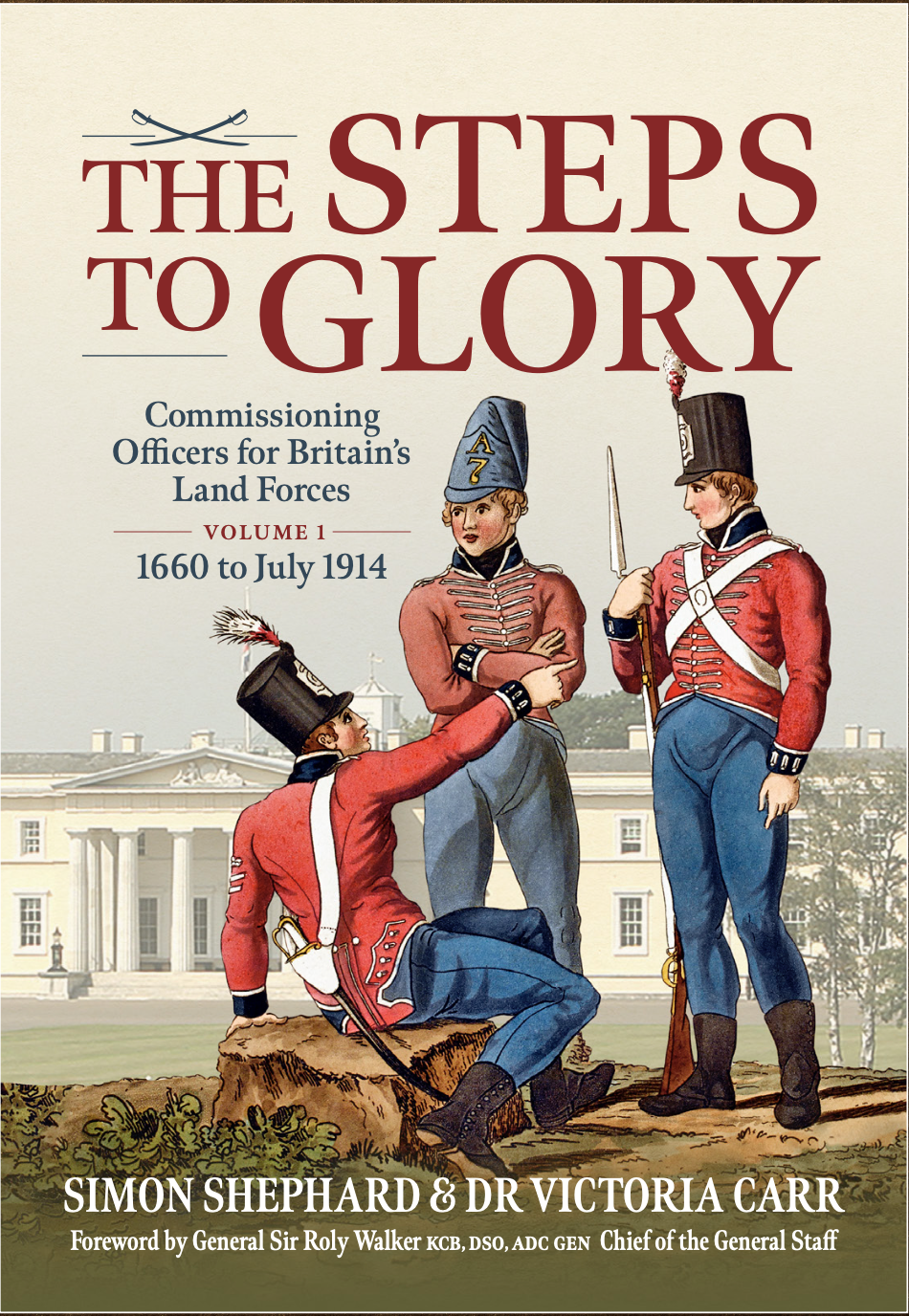
The Steps To Glory – Book Launch Invitation

Steps To Glory Book Launch. Volume 1 covering 1660 to July 1914 is being launched at a talk and reception ‘An Evening in Conversation’ on 22 July 2026 in the Indian Army Memorial Room in Old College, Royal Military Academy Sandhurst, Camberley, Surrey.

Click to see the full details The cost of the evening ticket can be deducted from the purchase price of the book at the event. Booking in is via Eventbrite

An Evening in Conversation

Lt Col (Retd) Simon Shephard and Dr Victoria Carr

with

Dr Ed Flint

Indian Army Memorial Room

Royal Military Academy Sandhurst

on

Wednesday 22 July from 1830 to1930 hrs

In conjunction with the Academy Library, Sandhurst Collection and Sandhurst Trust

By kind permission of

Major General Nick Cowley OBE

General Officer Commanding Army Initial Training Command

and

Commandant of the Royal Military Academy Sandhurst

The Steps to Glory is the first volume in a landmark study of the commissioning of officers for Britain’s Land Forces. From the Restoration to the eve of the Great War, it explores how class, conflict and changing policy shaped the initial entry of officers into Britain’s armies.

Have you ever wondered what kind of people seek a commission in the British Army: who they are, where they come from, how they are selected and what training they undergo? Perhaps you’ve held a commission yourself? How do your experiences compare with those of your predecessors?

Having analysed the concept of a commission and the societal position of those holding one before the Restoration, The Steps to Glory traces the evolution of commissioning into Britain’s armies from 1660 to July 1914. It examines all routes, from purchase and patronage to competitive exams. It also considers officer commissioning from the ranks along with those for the militia, yeomanry, volunteer and cadet forces.

Drawing on an exceptional and expansive range of sources from across the UK and abroad, the authors blend established scholarship with previously unpublished material from The National Archives, National Army Museum and the British Library. Their research is further enriched by personal accounts and access to multiple regimental, school and regional collections – including full use of the Sandhurst Collection and the library of the Royal Military Academy Sandhurst.

Volume Two will carry the story forward from the outbreak of the First World War to the present day.

Programme and Dress

1800 to 1830 hrs: Drinks Reception – Old College Main Entrance

1830 to 1930 hrs: Discussion and Q&A session – Indian Army Memorial Room

1930 to 2030 hrs: Book Signing – Le Marchant Room

                             Drinks and Canapes – Old College Main Entrance

                             Access to the Sandhurst Museum

Lounge suits or equivalent.

Tickets

Ticket are price at £20 per head and are available from Eventbrite using this link.

The ticket price will be deducted from the cost of a signed copy of The Steps to Glory.

Additional copies will be available on the night for £40 (RRP £45)

Point of Contact

Simon Shephard at [email protected] or on 07818 720156

The Authors:

Lt Colonel (Retd) Simon Shephard MA. Simon served in the Army for 42 years joining in 1983 and attended Sandhurst in 1991. He commanded a Personnel Recovery Unit and served as a Deputy President at AOSB. Simon provided chapters for The Darkest Year (Helion, 2022) and London Pride (Helion, 2026). He is the chair of his local WFA Branch and sits on the Council of the SAHR.

Dr Victoria Carr EdD. Vic is a Headteacher with a Doctorate in educational leadership underpinned by two MAs. She is also a captain in the Intelligence Corps Reserve having commissioned in 2021.  She has supported her military career by completing a further two MAs. Vic is also a Senior Research Fellow of the Centre for Army Leadership and sits on the board of Women Empowering Defence.
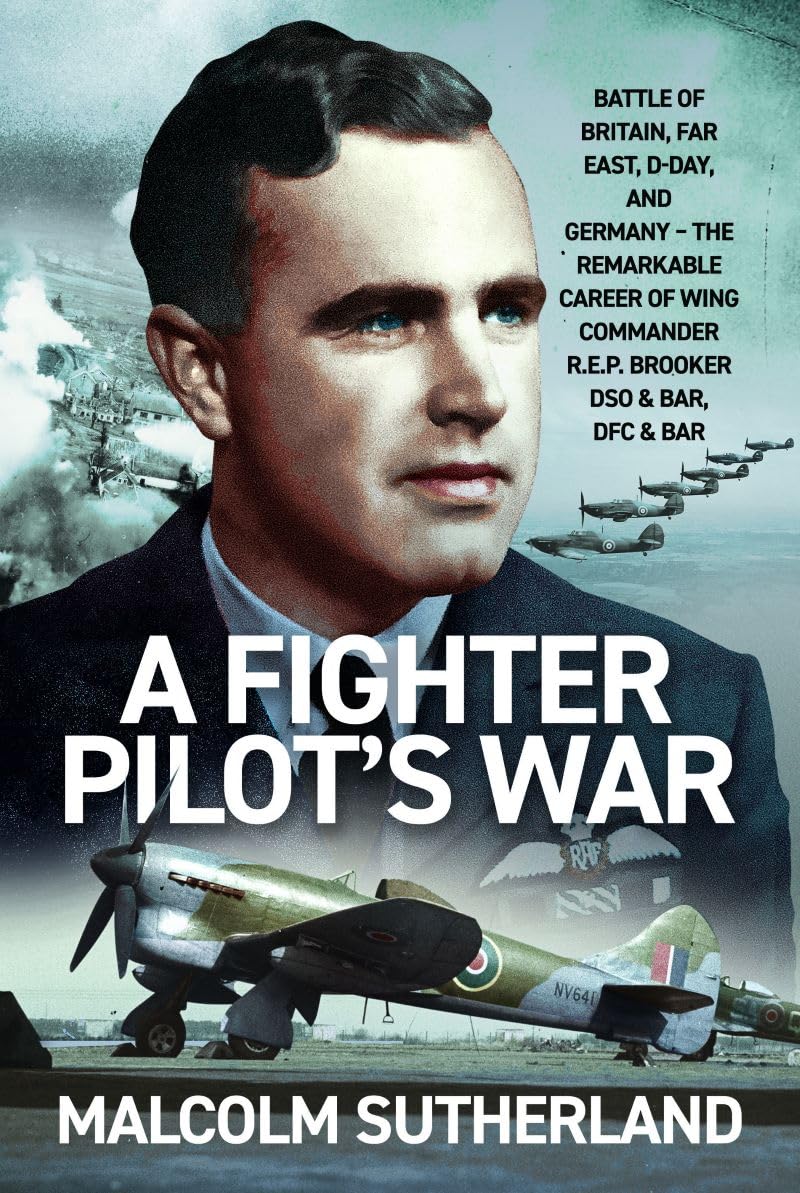
Book Review: A Fighter Pilot’s War

Peter Brooker, an RAF officer, served in pivotal WWII roles including the Battle of Britain, Singapore’s defense, and post-D-Day operations. Awarded the DFC and DSO, he vanished without a trace on April 16, 1945. His mysterious disappearance and valor are explored in a detailed biography.

Book Review

A Fighter Pilot’s War

Author: James R. Smither

A review by Geoff Simpson

Click above to read Geoff’s book review

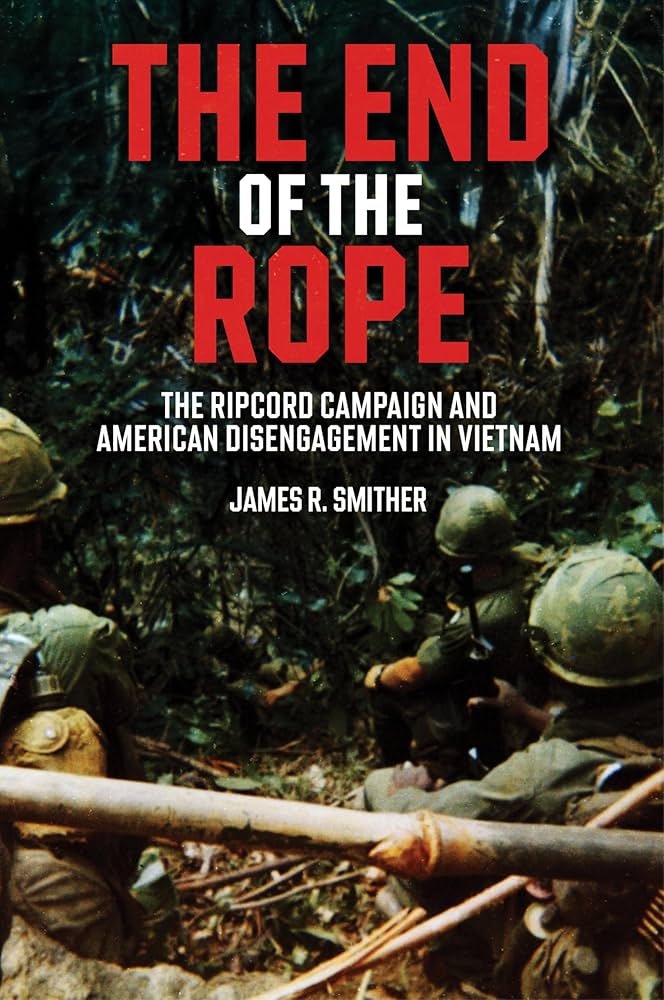
Book Review: The End of the Rope: The Ripcord Campaign and American Disengagement in Vietnam

The 1970 Firebase Ripcord campaign, the last major American offensive in the Vietnam War, failed due to strong enemy resistance, resource scarcity, and command issues. Despite multiple attempts and a weak American position, the North Vietnamese intensified attacks. The ineffective command rotations and inexperienced leaders compounded the campaign’s challenges.

Book Review

The End of the Rope: The Ripcord Campaign and American Disengagement in Vietnam

Author: James R. Smither

A review by James Goulty

Click above to read James Goulty’s book review

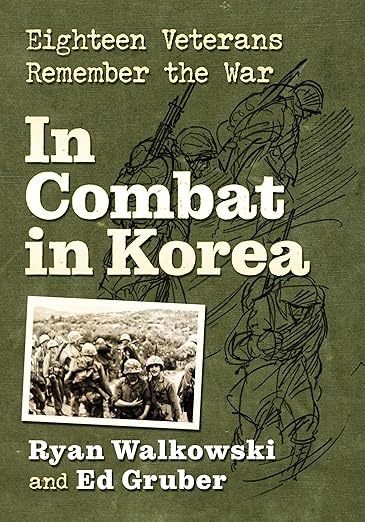
Book Review: In Combat in Korea

How can a war–labeled a police action yet costing millions of lives, traumatizing countless other individuals, and razing cities and villages–be forgotten?

Despite its widespread effects, the Korean War received less media attention than World War II with its global scope and the Vietnam War with its stormy protests and inglorious conclusion. Ryan Walkowski took on a mission to ensure this war–in which his grandfather and great-uncle fought–would be remembered. Taking overnight drives across the United States, he interviewed Korean War veterans who recounted the most terrifying times of their lives. Walkowski and author Ed Gruber–a Navy and Korean War veteran–sought to present these stories of battles in frigid and monsoon conditions, of fierce warfare in rugged mountains and muddy paddies, of bugle-blaring enemies attacking in waves. Blunt, profane, hesitant, and tearful, these firsthand accounts of vicious hand-to-hand fighting and other harrowing experiences provide a stark reminder of the immense devastation that was the Korean War.

Book Review

In Combat in Korea: Eighteen Veterans Remember the Korean War

Authors: Ryan Walkowski & Ed Gruber

A review by James Goulty

Click above to read James Goulty’s book review

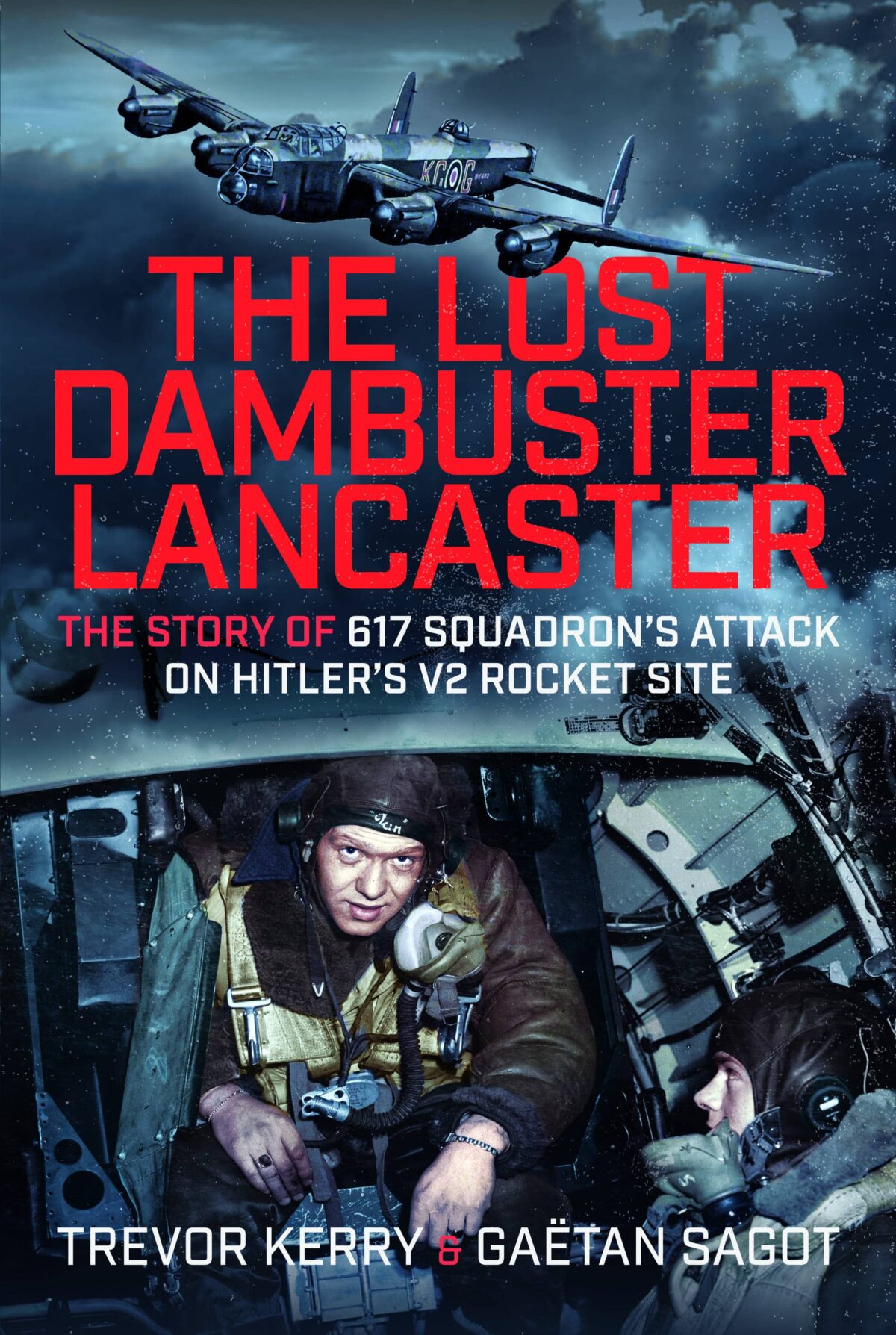
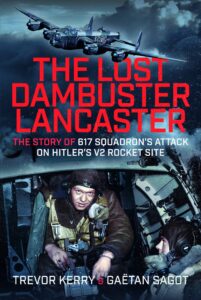
Book Review: The Lost Dambuster Lancaster

In the late afternoon of 24 June 1944, eighteen aircraft from 617 Squadron, led to fame by Wing Commander Guy Gibson during the attack on the dams raid in May 1943, took off from their base at Woodhall Spa. Their target was the vast V2 rocket site at Wizernes in the Pas de Calais. Known today as La Coupole, this bunker complex had been built to serve as a reinforced launch site for the V2s that Hitler hoped would terrorise the British population.

Book Review

Authors: Trevor Kerry and Gaëtan Sagot

A review by Geoff Simpson

Click above to read Geoff’s book review

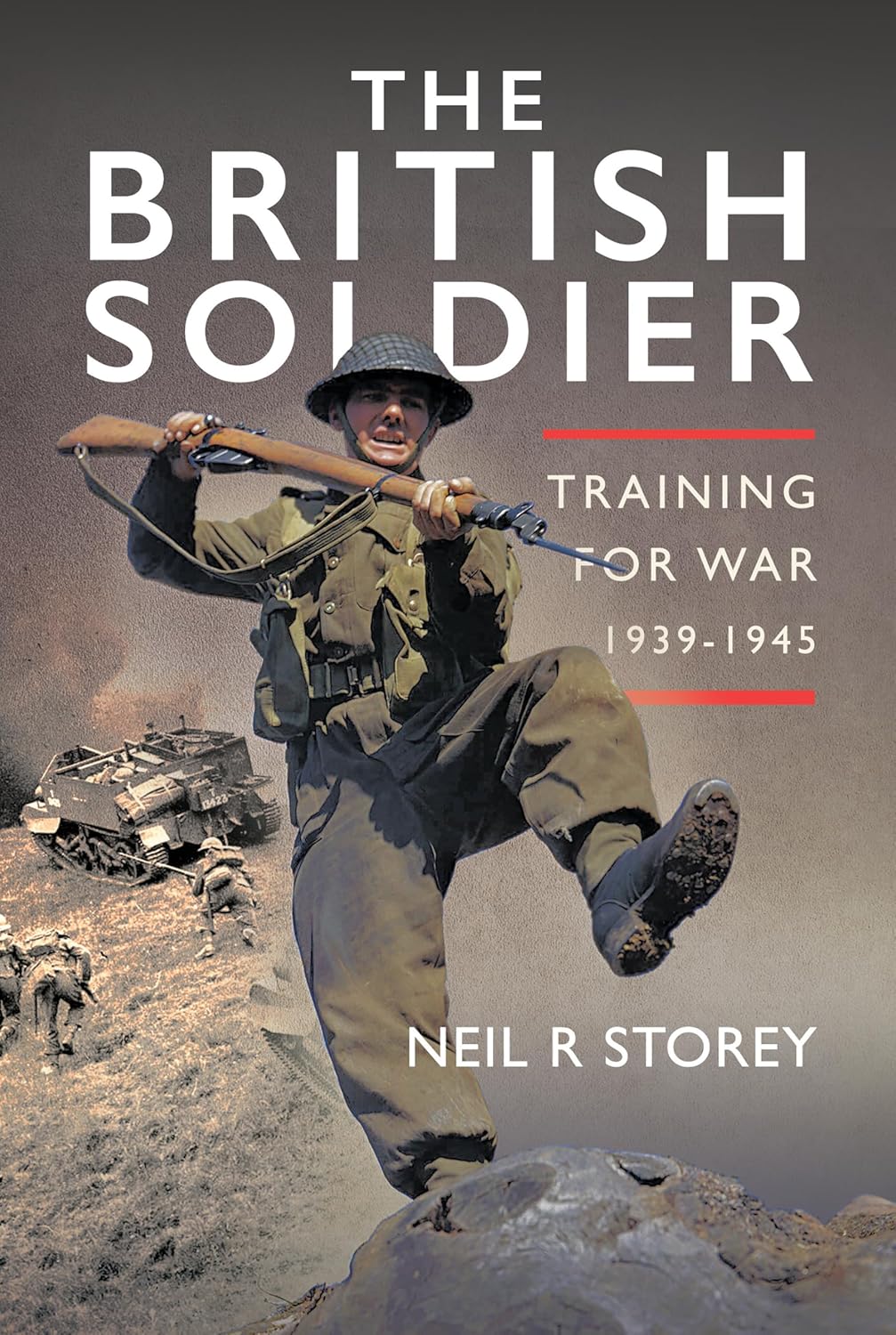
Book Review: The British Soldier: Training for War 1939-1945

The British Soldier: Training for War explores how WWII British infantry, commandos, and paratroopers were trained in the British Isles. Utilising diverse historical sources, it reveals their preparation through drills, weapon skills, battle schools, and exercises, ultimately building their combat skills, endurance, and confidence for global conflict.

Book Review

The British Soldier: Training for War 1939-1945

Author Neil R Storey

A review by James Goulty

Click above to read James Goulty’s book review

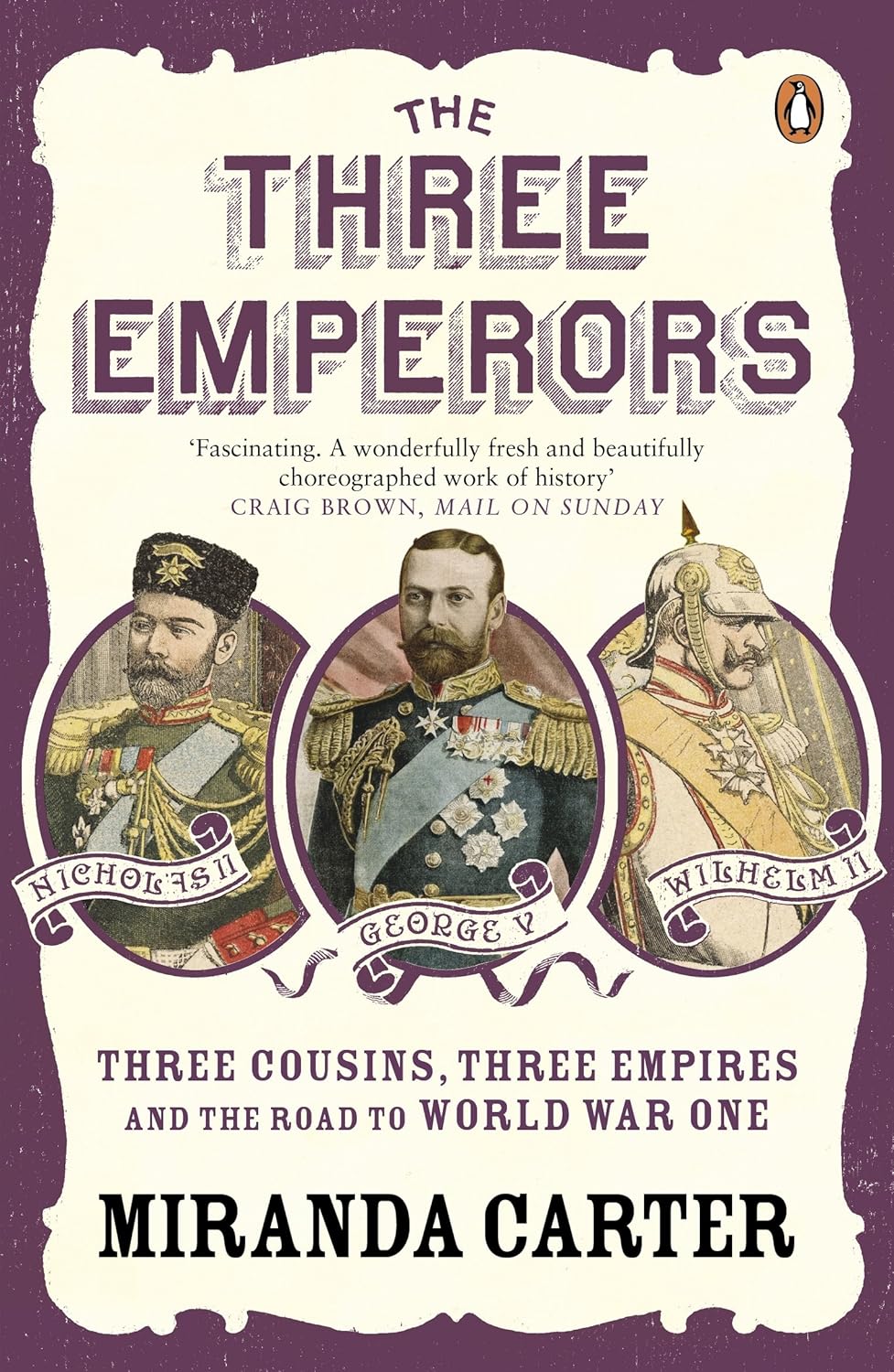
Book Reviews: The Three Emperors: Three Cousins, Three Empires and the road to World War One

The Three Emperors by Miranda Carter is the juicy, funny story of the three dysfunctional rulers of Germany, Russia and Great Britain at the turn of the last century, combined with a study of the larger forces around them.

Book Review

The Three Emperors: Three Cousins, Three Empires and the road to World War One

A review by Barbara Taylor

Click above to read Barbara’s review of these books

Book Review: With the Royal Tank Regiment in Korea

“This book tells of the awe in which the veterans of World War 2 were held by the post war generation, the close bonds of trust and loyalty within tank crews and the deep respect, often expressed through humour, between tanks and infantry. It also gives a human feel for the early Cold War conditions in the British Army of the Rhine.”- Brigadier Gavin Thompson, Colonel Commandant, The Royal Tank Regiment

Book Review

With the Royal Tank Regiment in Korea

Centurions on The Hook

Author Jim Selway

A review by James Goulty

Click above to read James Goulty’s book review