New Article – The 66th Berkshires and St. Helena

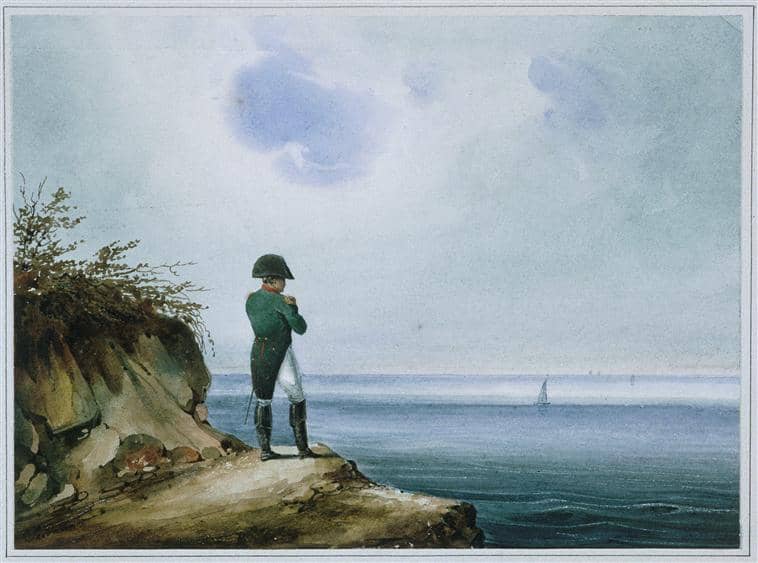
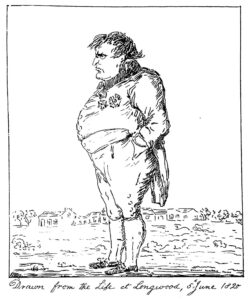
After the Battle of Waterloo, the defeated Napoleon was exiled to the remote island of St. Helena by the British government, despite objections from some. The 66th Berkshires regiment was tasked with guarding him until his death in 1821. Life on the island was monotonous for the soldiers, with no shots fired and strict surveillance. Governor Hudson Lowe’s paranoia and Napoleon’s passive resistance created tension. Napoleon’s death was met with mixed emotions, and he was buried with military honors. Lowe’s controversial tenure on the island ended soon after. The 66th eventually left for England, facing further hardships in colonial service before their tragic end in Afghanistan.

Latest Article

The 66th Berkshires and St. Helena

by Veronica Baker-Smith

Click above to read Veronica’s article

New Article – ‘War Booty’ Tanks and the German Military 1939-1945

During both World Wars, the Germans made extensive use of captured tanks and armored vehicles, known as Beutepanzers, to supplement their own forces. Captured tanks were reconditioned, repaired, and put back into service, often with modifications to suit German needs. Examples include the use of British, French, Russian, Italian, and American tanks in various theatres of war. Hauptmann Alfred Becker played a key role in converting captured tanks into self-propelled guns, increasing their mobility and firepower. The use of Beutepanzers provided the Germans with additional armored support, especially in situations where their own tank production fell short.

Latest Article

‘War Booty’ Tanks and the German Military c. 1939-1945

by James Goulty

Click above to read James’ article on Beutepanzers

New Article – The LST: ‘the queen of the amphibious warfare ships’

Amphibious operations were a key aspect of WWII for the Allies, requiring specialized landing craft. The Royal Navy developed multiple types, including the LCA and LST. The LST(2) and LST(3) were essential for transporting tanks and supplies to invasion beaches. Crews faced challenges from enemy attacks, rough seas, and logistical issues, but the LST proved vital in successful amphibious warfare.

Latest Article

The LST: ‘the queen of the amphibious warfare ships’

by James Goulty

Click above to read James’ article on LST’s

New Article – Battle of Britain Imprecision

Geoff Simpson’s article on the Battle of Britain reveals the inherent imprecision and uncertainties surrounding the topic. From the challenge of determining the last survivor of the Few to the ever-changing list of qualified aircrew, exactitude is difficult to achieve. Simpson discusses the complexities in establishing the number of Allied aircrew involved in the Battle, the criteria for inclusion in the list of the Few, and the confusion over the nationalities of the pilots. Despite the discrepancies in casualties and nationalities, Simpson finds researching the Few to be a captivating and fulfilling pursuit, shedding light on the intricacies of the Battle of Britain.

Latest Article

Battle of Britain Imprecision

Claiming exactitude is rarely sensible when considering the Battle of Britain.

by Geoff Simpson

Click above to read Geoff’s insight into just who were The Few

New Article – A New Year Coup – The Jameson raid

In December 1895, Cecil Rhodes sent Dr Leander Jameson and 500 armed troops to take over the Transvaal Republic for its gold. The raid failed, leading to Rhodes’ resignation and Jameson’s imprisonment. The fallout included the Second Matabele War and strained relations with the Boers, ultimately contributing to the First and Second Boer Wars.

Latest Article

A New Year Coup - The Jameson Raid The Jameson Raid

by Nick Brazil

The Jameson Raid
Arrest of Jameson after the raid – Petit Parisien 1896. Source Wiki

Click above to read Nick’s article

New Article – T. E. Lawrence & Captain Shakespear – Two Heroes of the Arab Revolt 1917

The first dozen years of the twentieth century were tumultuous for the Middle East, with the British having a complicated relationship with the Arabs and the Ottoman Turk regime. The British struggled to decide if the Turks were allies or enemies, causing frustration for their men on the ground. Two British men played key roles in helping the Arabs gain independence, with one remaining famous today and the other forgotten by history.

Latest Article

T. E. Lawrence & Captain Shakespear

Two Heroes of the Arab Revolt 1917

by Nick Brazil

Shakespear and Lawrence Two Heroes of the Arab Revolt
Poster for the film Lawrence of Arabia (1963). Artwork by Herbert Terpning. Source Wiki

Click above to read Nick’s article

New Article – Napoleon’s Spies

During the turbulent times of the Eighteenth and early Nineteenth Century in Europe, espionage thrived. From gentleman spies like Louis-Alexandre de Launay to lady spies like Mrs. Rachel Charlotte Williams Biggs, the era was filled with intrigue. Napoleon’s spies like Karl Schulmeister and L. de Longastre played vital roles, with some meeting mysterious ends. The birth of British intelligence can be traced back to Evan Nepean, who oversaw a network of spies including Richard Cadman Etches and George Parker. The strange reputation of Tarrare, a man with an insatiable appetite who served as a courier by swallowing messages, adds a bizarre twist to the world of espionage in this era.

Latest Article

Napoleon's Spies

by Nick Brazil

Napoleon's Spies
The 'M" of the day - Sir Evan Nepean (1751-1822). Source Wiki

Click above to read Nick’s article

New Article – The Enigma of Napoleon

Napoleon Bonaparte, born in Corsica to an Italian family, had a complex and colorful life. Rising from military school to become Emperor of France, he led many successful campaigns but suffered defeats as well. Exiled to St. Helena, he died in 1821. Historians still debate his true nature and legacy.

Latest Article

The Enigma of Napoleon

by Nick Brazil

Click above to read Nick’s article

New Article -Cochrane’s Castle

In 1808, Lord Thomas Cochrane led the defense of the fortress at Rosas against the French invaders during the Peninsula War. Despite being outnumbered, Cochrane’s strategic leadership and bravery, along with support from the British Navy, allowed the defenders to hold out for almost five months before ultimately evacuating the fortress.

Latest Article

Cochrane’s Castle – Lord Thomas Cochrane and the siege of Rosas

by Philip K Allan

Click above to read Philip K Allan’s fascinating article 

New Article – The ‘Dirty War’: First Indo China War, 1946-54

The First Indochinese War, also known as the ‘Dirty War’, was a conflict that took place from 1946 to 1954 between French colonial forces and the Viet Minh, a communist-led nationalist movement in Vietnam. The war was characterised by fierce fighting, brutal tactics, and heavy casualties on both sides. The decisive Battle of Dien Bien Phu in 1954 led to the French surrender and the end of French colonial rule in Vietnam. The war set the stage for the subsequent Vietnam War and had far-reaching consequences for the region.

Latest Article

The ‘Dirty War’: First Indo China War, 1946-54

by James Goulty

Click above to read James’ article on the French in Indo China